
Not sure if you need storage during your move? Learn when a storage unit actually helps, which size to pick, and how to pack it so nothing gets damaged.
Moving with a storage unit makes sense when your move-out date and move-in date do not line up, when you are downsizing and need time to decide what stays, or when a renovation means your new place is not ready for furniture yet. It does not make sense for everyone, and renting one out of habit can cost you money and add an extra stop to a move that was already complicated enough. The trick is knowing when storage actually solves a problem versus when it just delays a decision.
Below is how to figure out if you need one, what size to get, and how to load it so your things come out in the same condition they went in.
You need temporary storage if there is a gap between leaving your old home and getting full access to your new one, or if you are moving into a smaller space and have not finished sorting what to keep. If your closing dates and move-in dates line up cleanly and you already know what is coming with you, you probably do not.
Common situations where storage earns its cost: a lease ends before the new home closes, a house sale falls through on the buyer's financing after you have already packed, a renovation is running long, or you are combining two households and need a staging area while you sort duplicates. Storage is less useful as a substitute for decluttering. If the plan is "put it in storage and deal with it later," that later often never comes, and you end up paying monthly for boxes you will eventually donate anyway. A straightforward residential move with matching dates rarely needs a storage stop at all.
Storage unit size should match the number of rooms you are storing, not guesswork. A studio or one-bedroom's worth of boxes and furniture generally fits in a 5x10 unit, a two to three bedroom home needs a 10x15, and a full four-bedroom house with major appliances usually needs a 10x20 or larger.
When in doubt, size up rather than down. A unit that is too small means stacking items in ways that risk damage, or paying for a second unit at a worse rate than if you had booked the right size from the start. Most facilities will let you view the unit in person before signing, which is worth doing if this is your first time estimating.
Climate control matters most for wood furniture, electronics, musical instruments, artwork, and anything with fabric upholstery. Temperature swings and humidity cause warping, mold, and cracked finishes over months in a standard unit, especially in climates with hot summers or damp winters. If you are storing anything for longer than a few weeks, or storing wood, leather, or electronics at all, pay the difference for climate control. Anyone storing a fragile piece long-term should read our guide on moving antiques and family heirlooms before deciding whether a unit is even the right home for it.
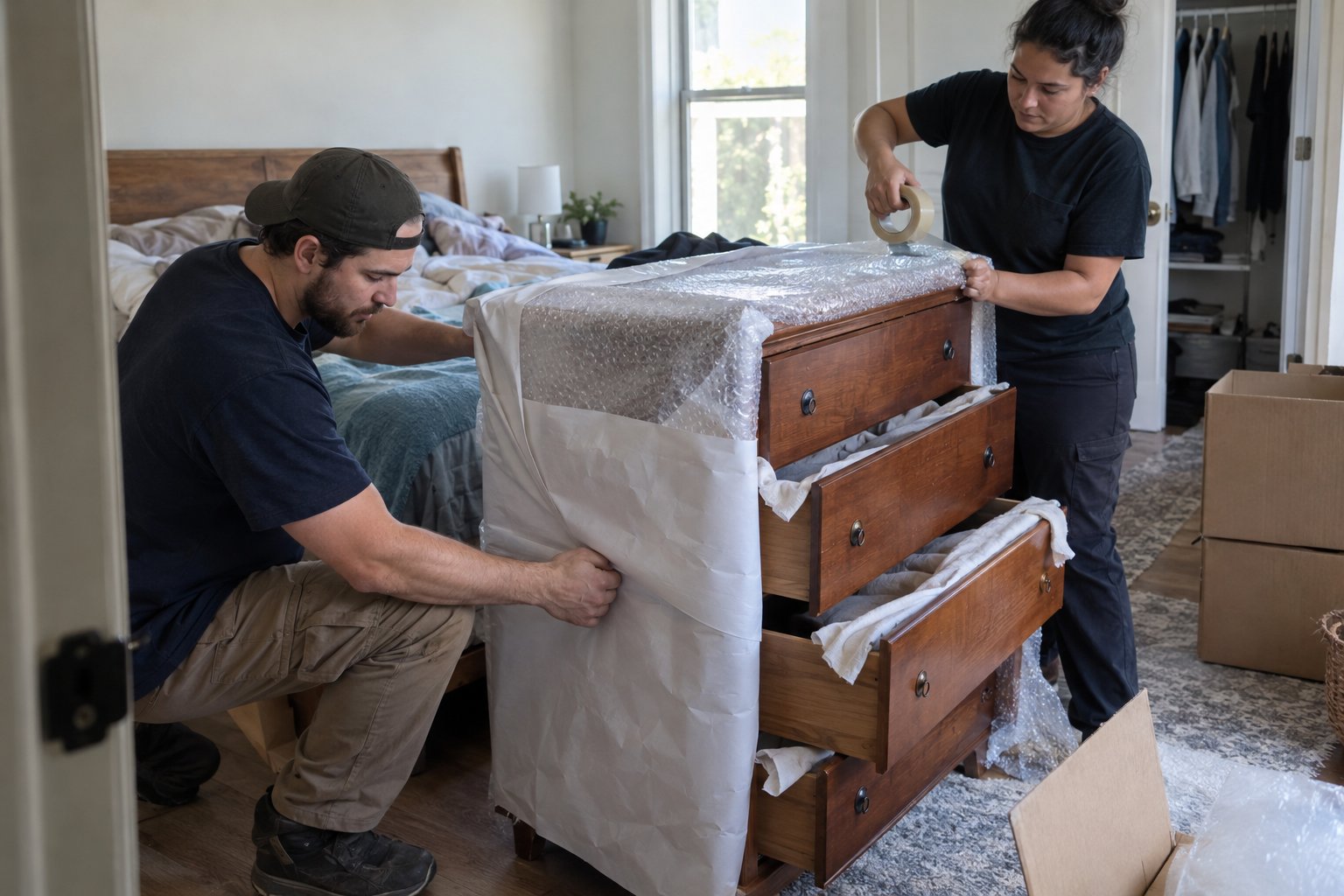
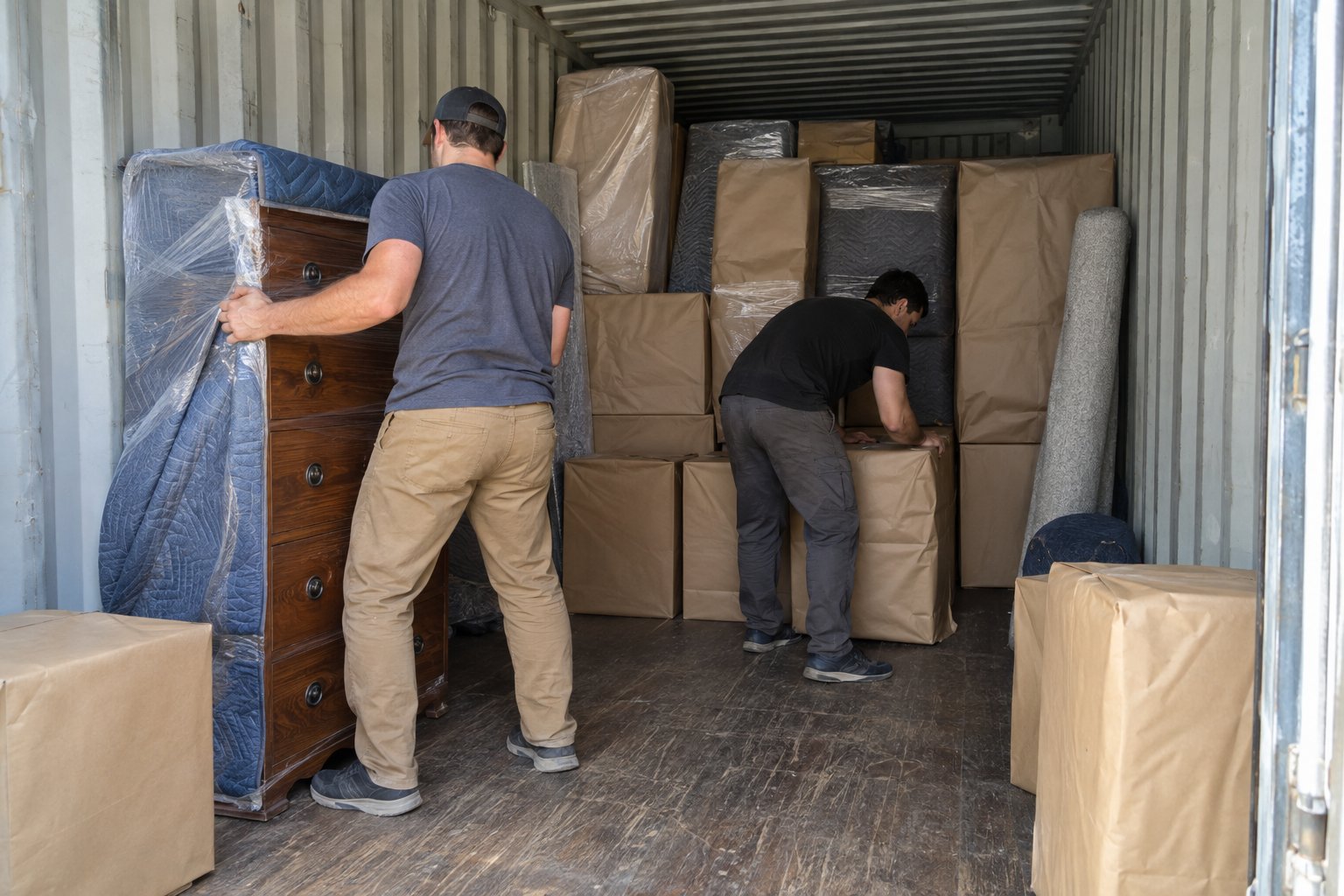
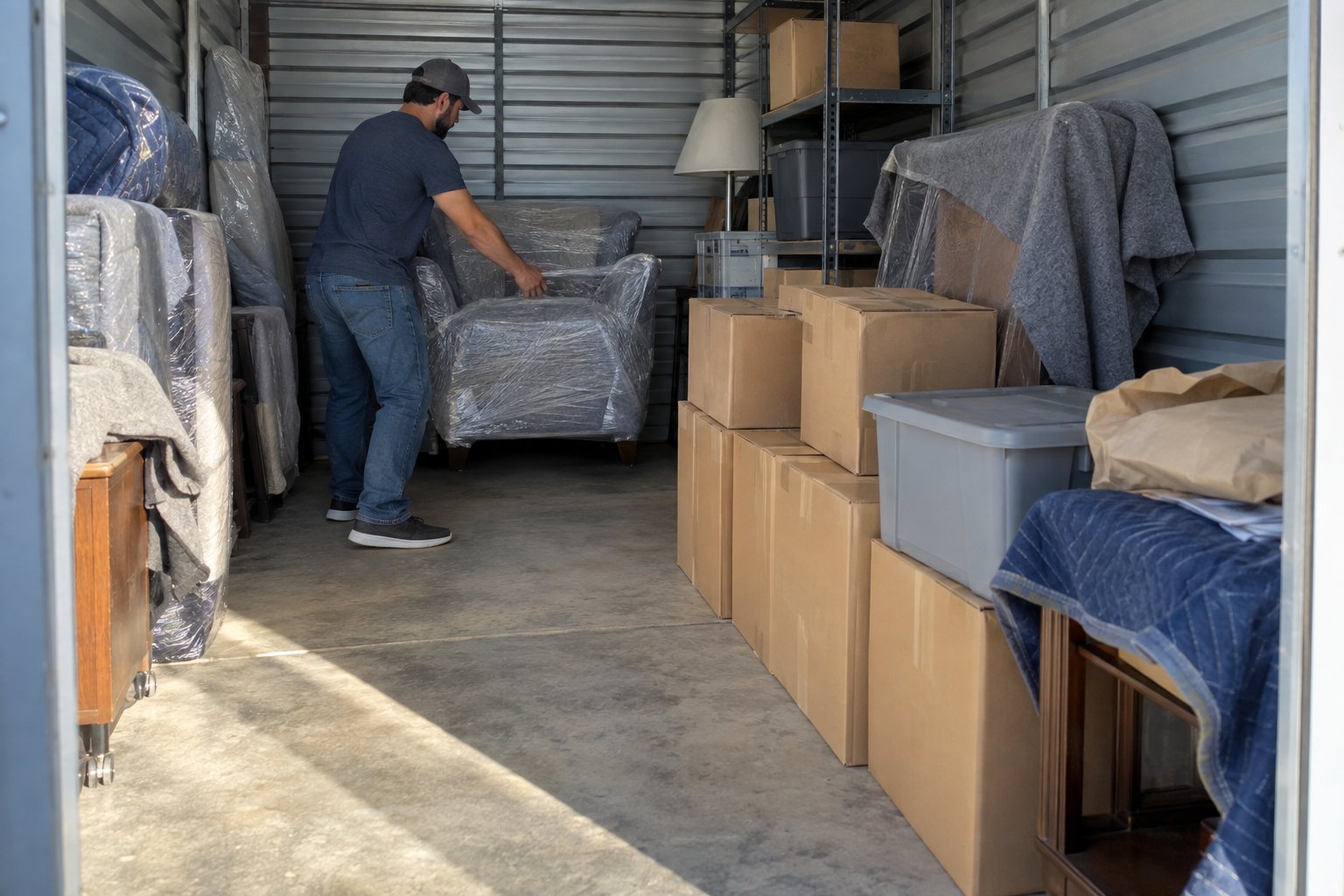
Pack a storage unit the way you would pack a moving truck: heaviest and sturdiest items on the bottom and along the back wall, an aisle down the middle for access, and nothing fabric or wood touching the concrete floor directly. A unit packed without a plan turns into a wall of boxes you cannot get behind, and anything you need mid-storage becomes unreachable.
Start with furniture and appliances against the back and side walls, stood on end where possible to save floor space. Place pallets, old moving blankets, or plastic sheeting under anything wooden or upholstered so it is not sitting directly on concrete, which holds moisture. Boxes go next, heaviest on the bottom, labeled and stacked by room so you are not unpacking the whole unit to find one thing. If you are storing garage or workshop overflow, the loading logic in our garage packing guide carries over well to a storage unit's tighter footprint. Leave a walking path from the door to the back if you expect to need anything before the unit gets fully emptied.
A few packing details matter more in storage than in a short truck ride: leave a small gap between the unit's walls and your stored items for airflow, do not store anything perishable or flammable, and empty fuel from anything with a motor (mowers, generators) before it goes in. If you are storing mattresses or fabric furniture, standing mattresses on end in breathable covers protects them better than laying them flat under boxes.
Short-term storage (under three months) is usually about bridging a timing gap and prioritizes convenience: portable containers or a unit close to both properties. Long-term storage shifts the priority toward protection and cost, since a few extra dollars a month for climate control or a slightly larger unit adds up less painfully than damaged furniture six months in.
If you are not sure how long you will need the unit, ask about month-to-month terms before committing to a long lease. Facilities often price long-term contracts lower per month, but that only pays off if you are confident about the timeline. When the timeline is genuinely unclear, such as waiting on a home sale, flexibility is worth more than a small discount.
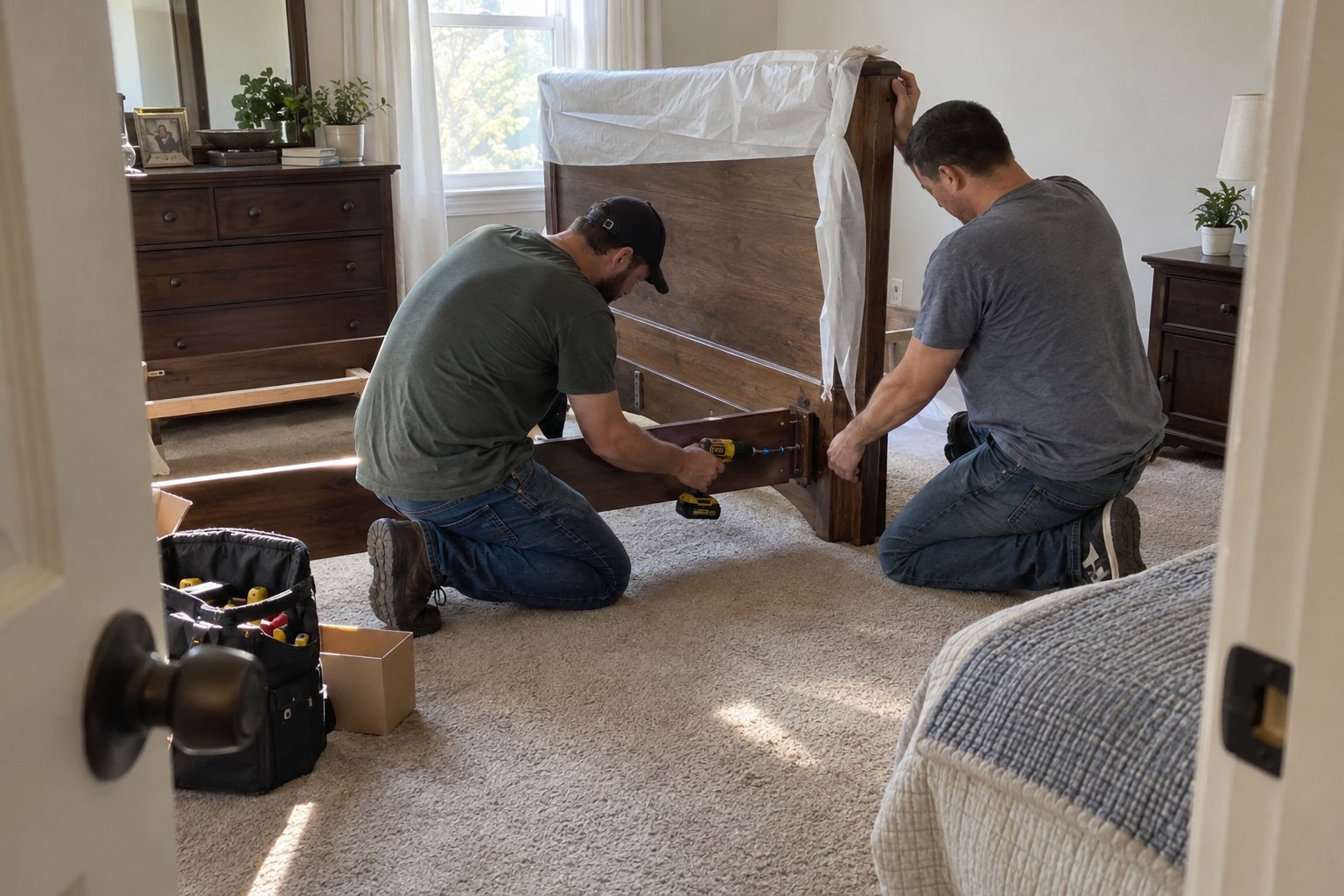
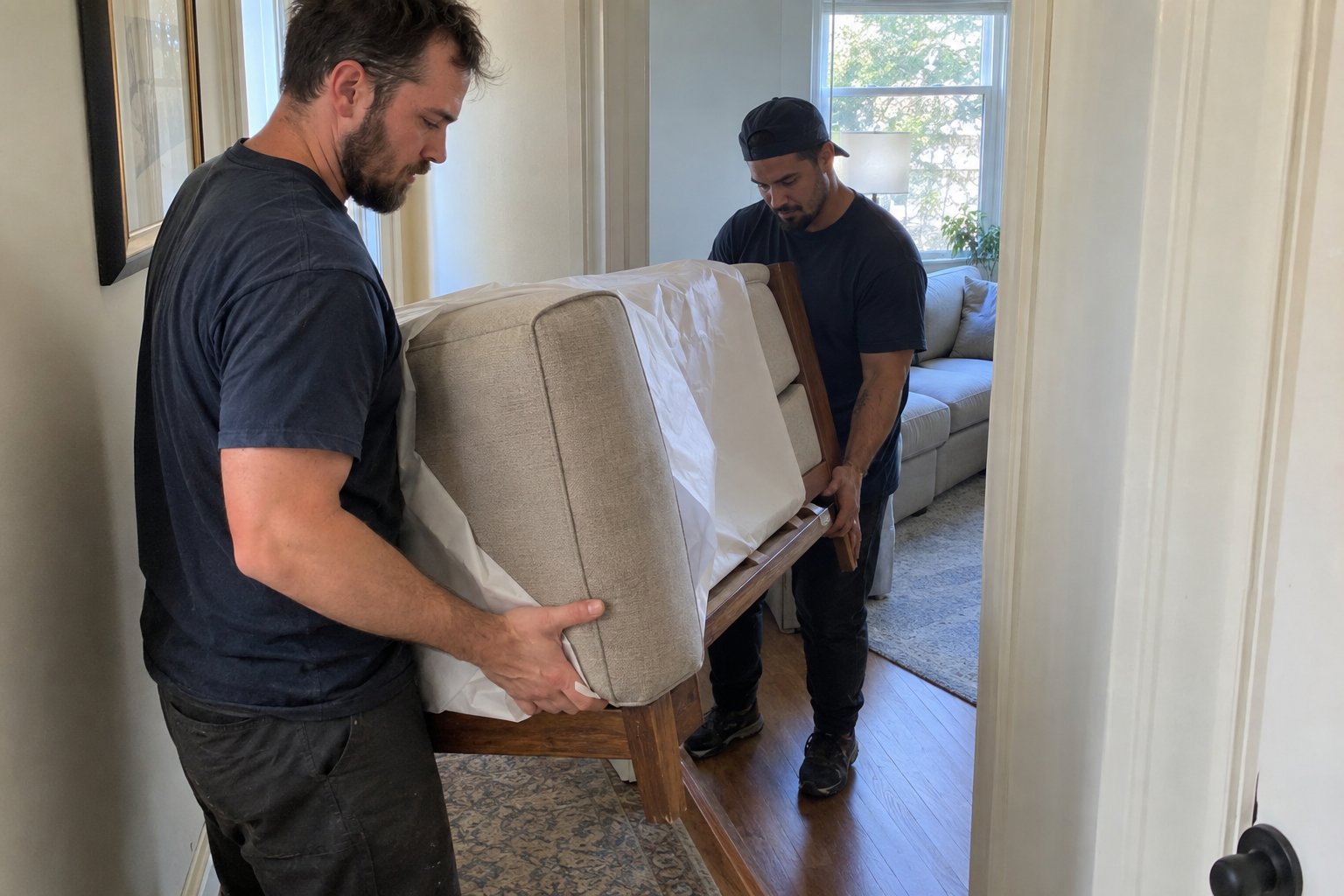
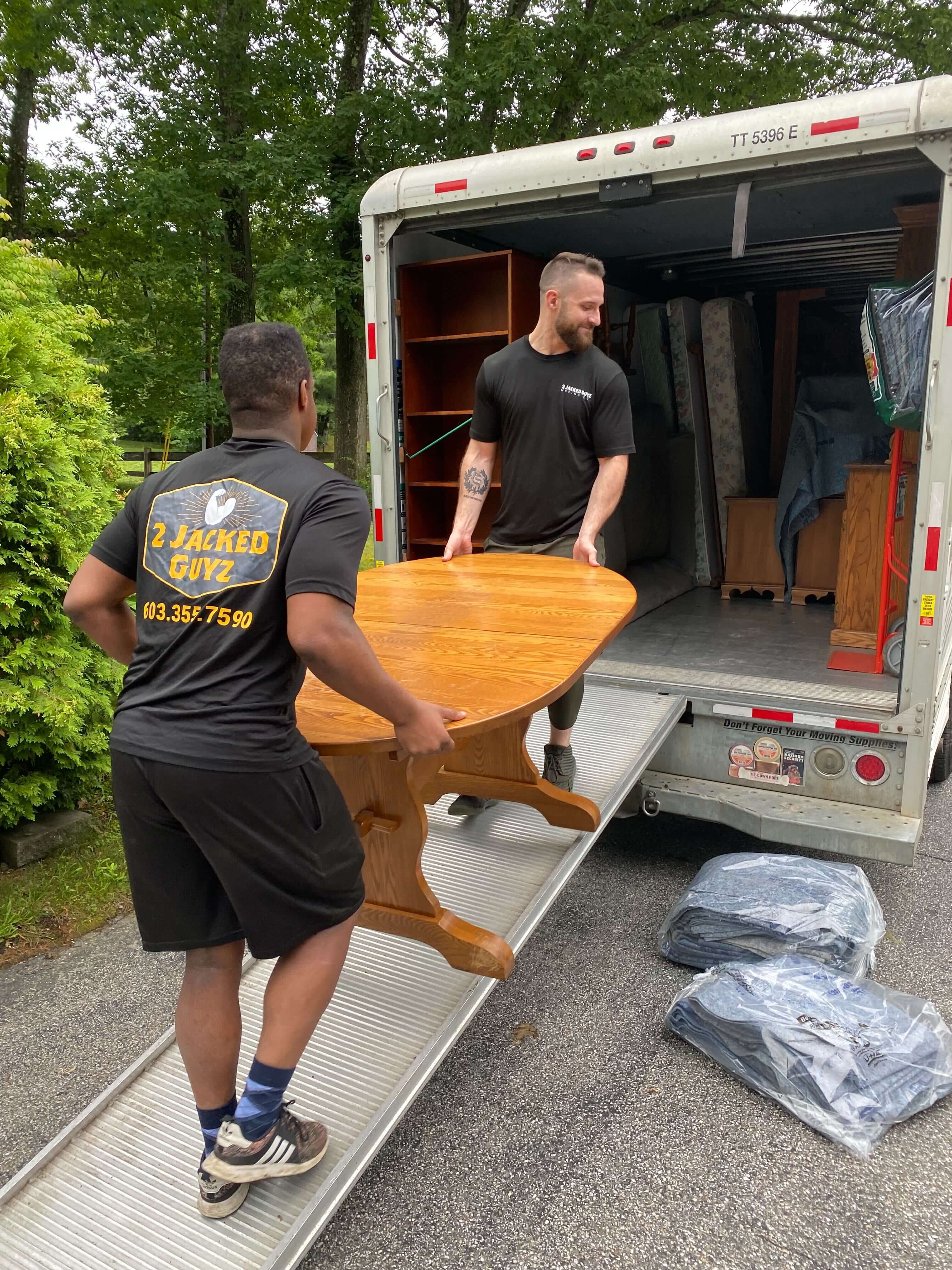
If the storage unit is a stop on the way to your new home, it usually makes more sense to have your moving crew handle it than to rent a separate truck and do it yourself. Movers are already loading and unloading heavy furniture that day, and adding a storage drop-off to that same trip is far less physically demanding than a second, separate trip later with a truck you rent and load alone.
This is worth discussing when you book your move rather than adding it as a surprise on moving day. A crew that knows in advance you have a storage stop can plan the truck loading order so storage-bound items come off first, without having to dig through everything else to reach them. Bringing this up while choosing a moving company is the right time to confirm whether storage drop-off is included or billed as an add-on, since policies vary between providers.
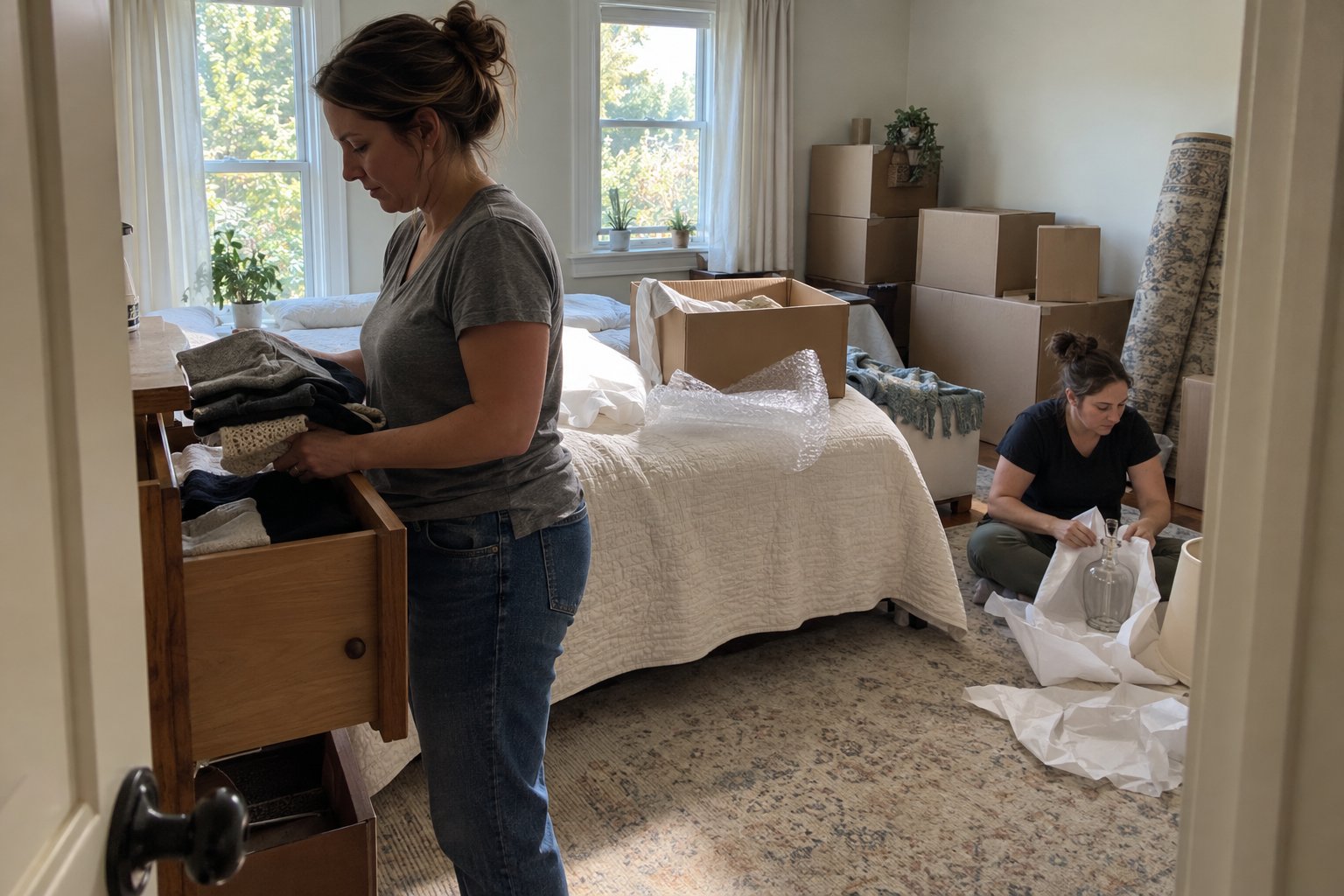
The most common mistake is renting a unit before decluttering, which means paying to store things you will never unpack again. The second is packing boxes without labels, which turns "getting one thing out of storage" into a full afternoon of digging. The third is skipping insurance or a rider on a homeowner's policy, leaving stored belongings uncovered if something happens to the facility.
Before you sign a storage contract, walk through what is going in and ask honestly whether each category earns a spot. Seasonal items, furniture for a room you have not furnished yet, and boxes from a move you have not finished unpacking are reasonable. Boxes you have not opened since the last move are a sign it is time to donate, not store.
If you are weighing a storage stop against your move date, talk it through with your crew ahead of time so the truck gets loaded in the right order and nothing sits in the wrong place. Get a moving quote and mention the storage stop when you book.
Request a personalized quote and see how careful planning and reliable service make every move smoother. Our team prepares each step to handle challenges safely and efficiently.
Most facilities allow month-to-month rentals with no fixed maximum, so you can keep items stored as long as you keep paying rent. For moves where the timeline is uncertain, such as waiting on a home sale, a month-to-month agreement is safer than a long-term lease you might need to break early.
Portable containers usually cost more per month than a fixed self-storage unit but save you a separate loading and unloading trip, since the container comes to you and later gets delivered to your new address. For short gaps of a few weeks, the convenience often outweighs the higher price.
For short stays of a few weeks in a mild climate, standard units are usually fine for most furniture. For longer storage, or in areas with hot summers or humid winters, wood, leather, and upholstered pieces are at real risk of warping or mold without climate control.
A two-bedroom apartment typically fits in a 10x10 unit if you are storing most of your furniture and boxes, or a 10x15 if you have larger furniture pieces like a sectional or dining set. Viewing the unit in person before booking helps confirm it will actually fit everything.
Many moving companies will add a storage stop to your move for an additional fee based on the extra time and mileage involved, rather than charging for a fully separate trip. It is worth confirming this detail when you book so there are no surprises on moving day.
No long forms, no delays. Just a move that’s ready when you are. Secure your moving date today.