

Learn how to move a large mirror without cracking the glass, from wrapping and padding to safe loading and carrying techniques for tight hallways.
Moving a large mirror safely comes down to three things: building a rigid protective layer around the glass, carrying it on its edge rather than flat, and securing it so it can't shift or tip in transit. A full-length or oversized wall mirror is heavier and more awkward than most people expect, and a crack usually happens in the five seconds right before or after loading, not during the actual carry. Get the prep and the handling right and a mirror that's been hanging in your hallway for ten years can make the trip without a scratch.
This is a different problem from framed art or decorative wall pieces. Glass under pressure cracks from flex and point impact, not just drops, so the goal is to eliminate any bending of the frame and any direct contact with hard surfaces.
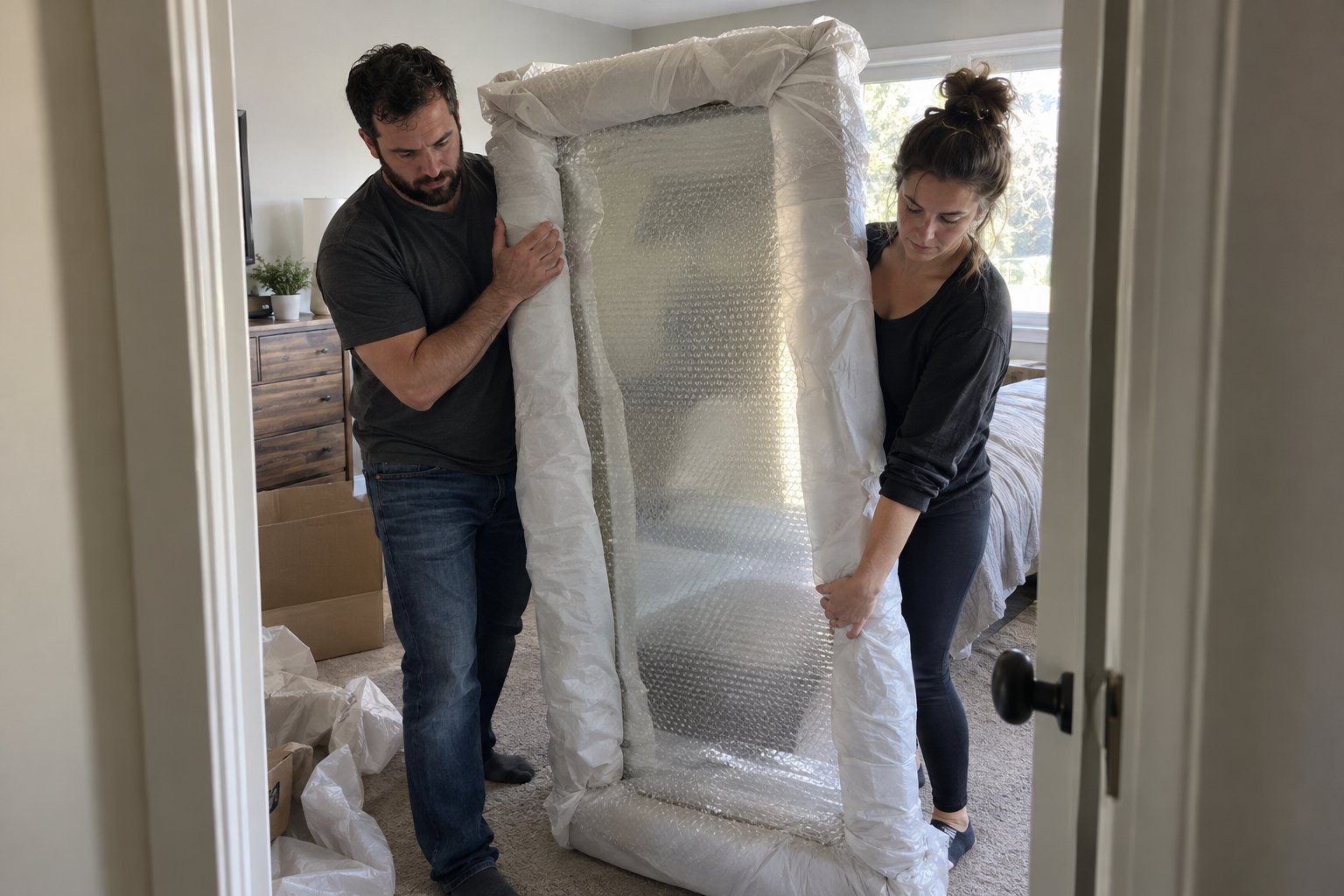
Wrap a large mirror by taping an X across the glass with painter's tape, covering the entire surface in packing paper or a moving blanket, then sandwiching it between two pieces of rigid cardboard cut to size. The X of tape won't stop a crack, but it keeps shattered glass from spraying if the worst happens.
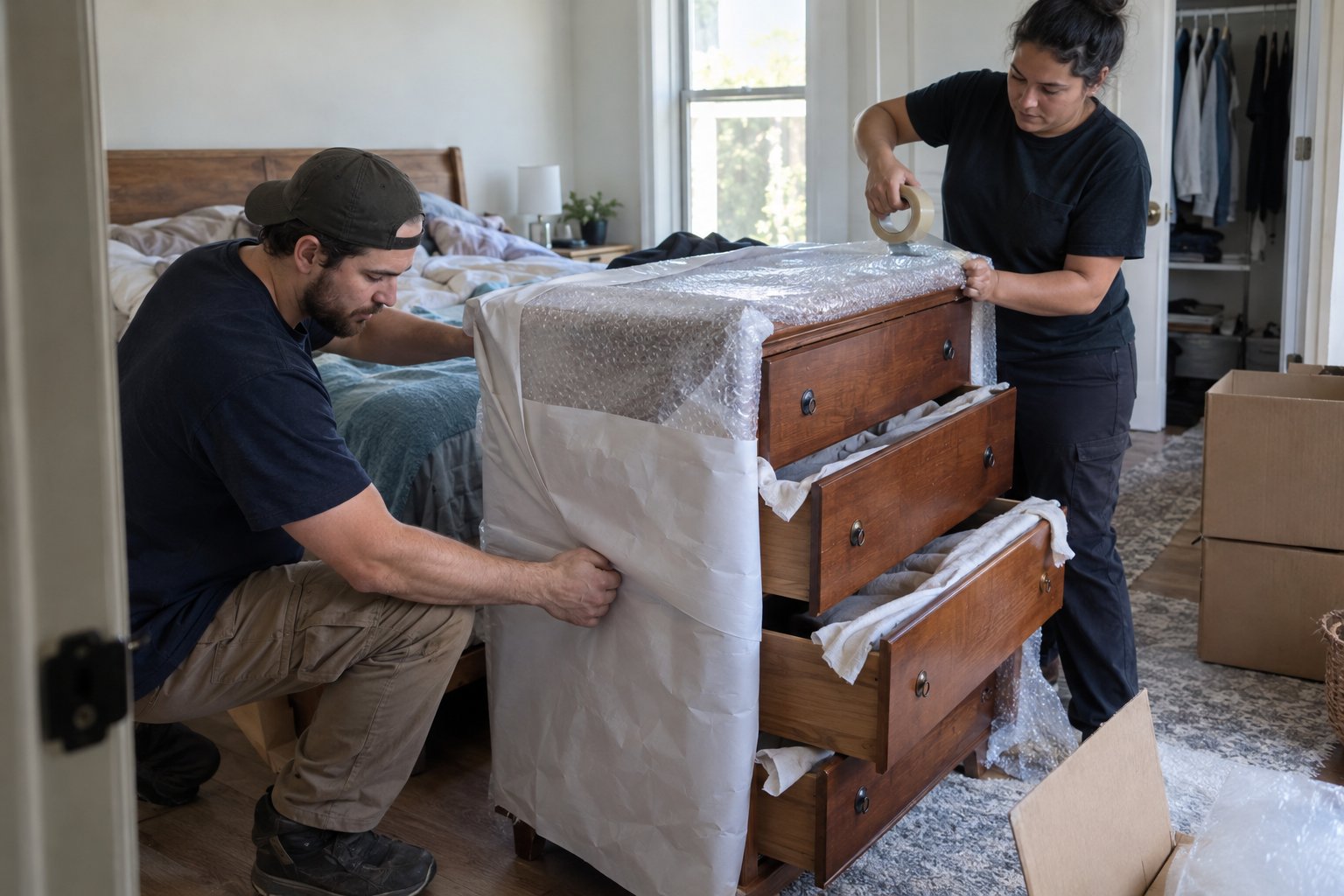
Start with a layer of glassine or packing paper directly against the glass to prevent scratches, then add a moving blanket or foam sheet for cushioning. Cardboard sheets on both sides (cut a few inches larger than the mirror on every side) create a rigid shell that resists bending. Tape the cardboard corners together rather than taping directly to the frame or glass, since adhesive can pull off finish or leave residue.
A mirror box is the easiest option if your mirror fits a standard size, since it adds structured corner protection that loose cardboard can't match. If your mirror is oversized or an odd shape, a custom cardboard-and-blanket wrap built to the exact dimensions does the same job without the extra cost of a box that won't fit anyway.
Always carry a large mirror on its edge, never flat, and always with two people for anything wider than about three feet. Carrying it vertically puts the weight along the strongest axis of the frame and glass, while carrying it flat (like a tray) lets the center flex under its own weight, which is exactly how glass cracks without ever being dropped.
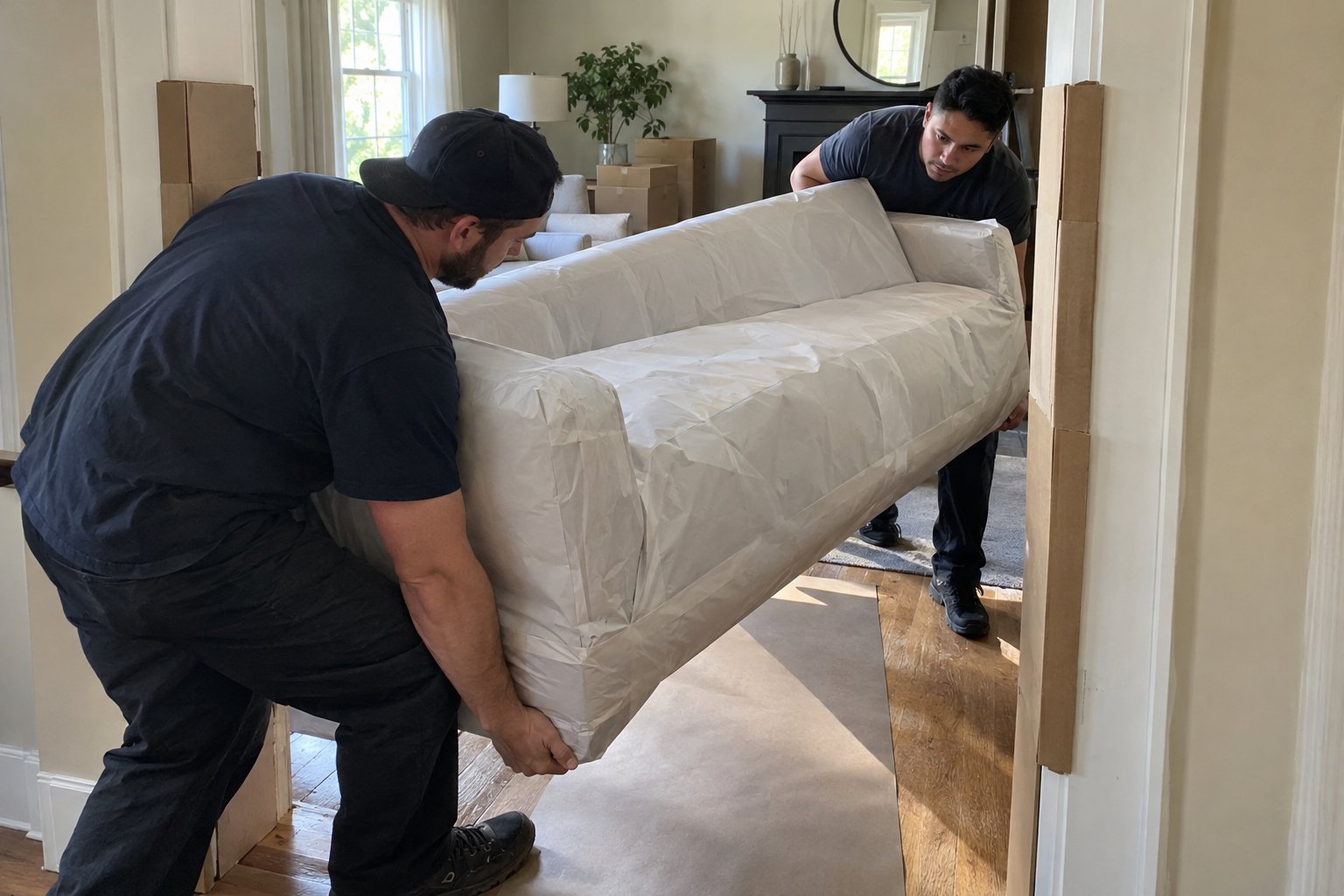
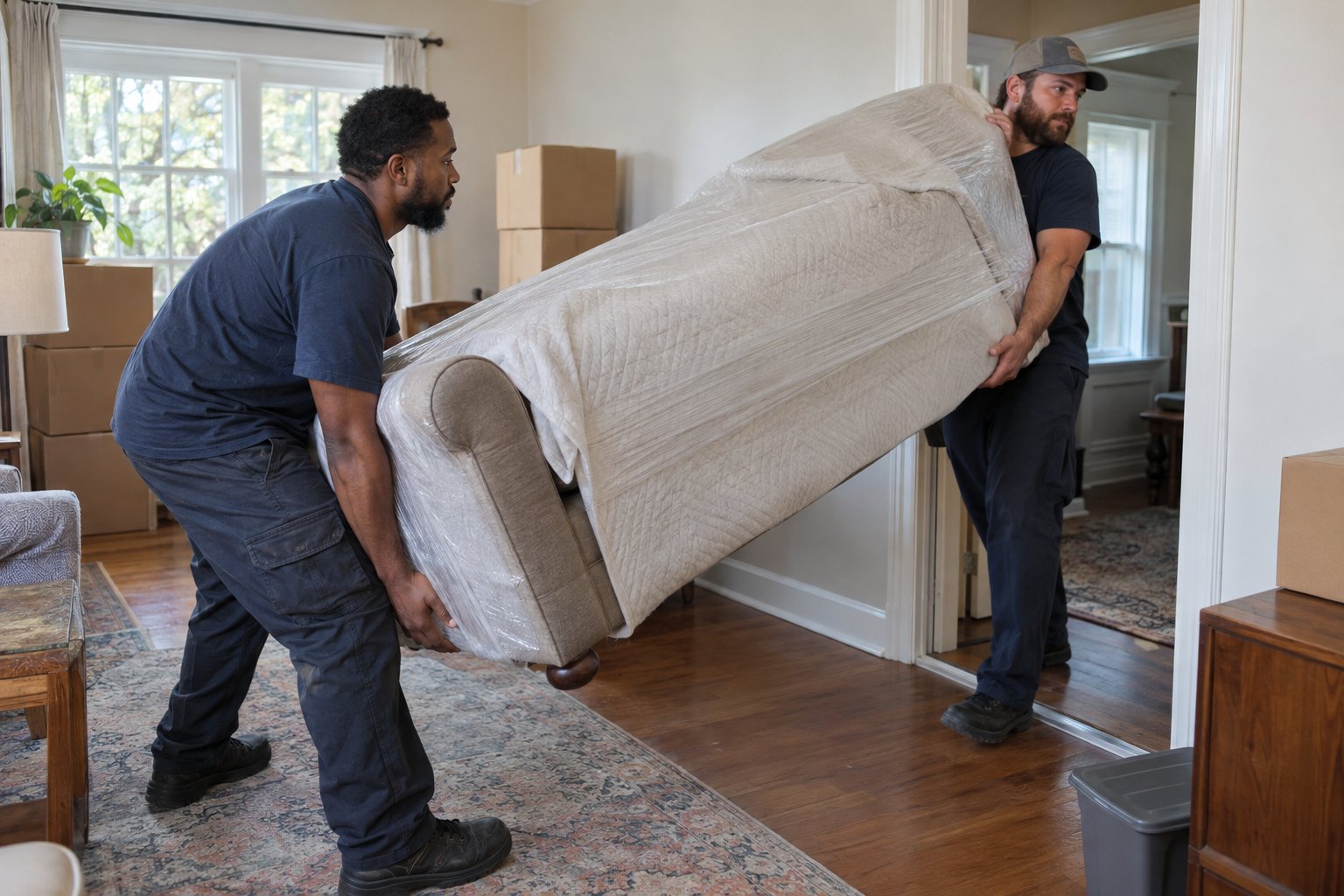
Grip the frame at the bottom corners and along one side rather than gripping the center of the glass area, even through padding. One person should call out doorway and turn warnings since the carrier facing backward usually can't see obstacles. Move slowly through doorways at an angle if the mirror is wider than the opening, tilting the top slightly rather than forcing it straight through.
Measure the mirror's height, width, and diagonal against every doorway, stairwell, and hallway turn it has to pass through before you pick it up. The diagonal measurement matters most on tight turns, since a mirror that won't pass straight through an opening often will at a slight angle.
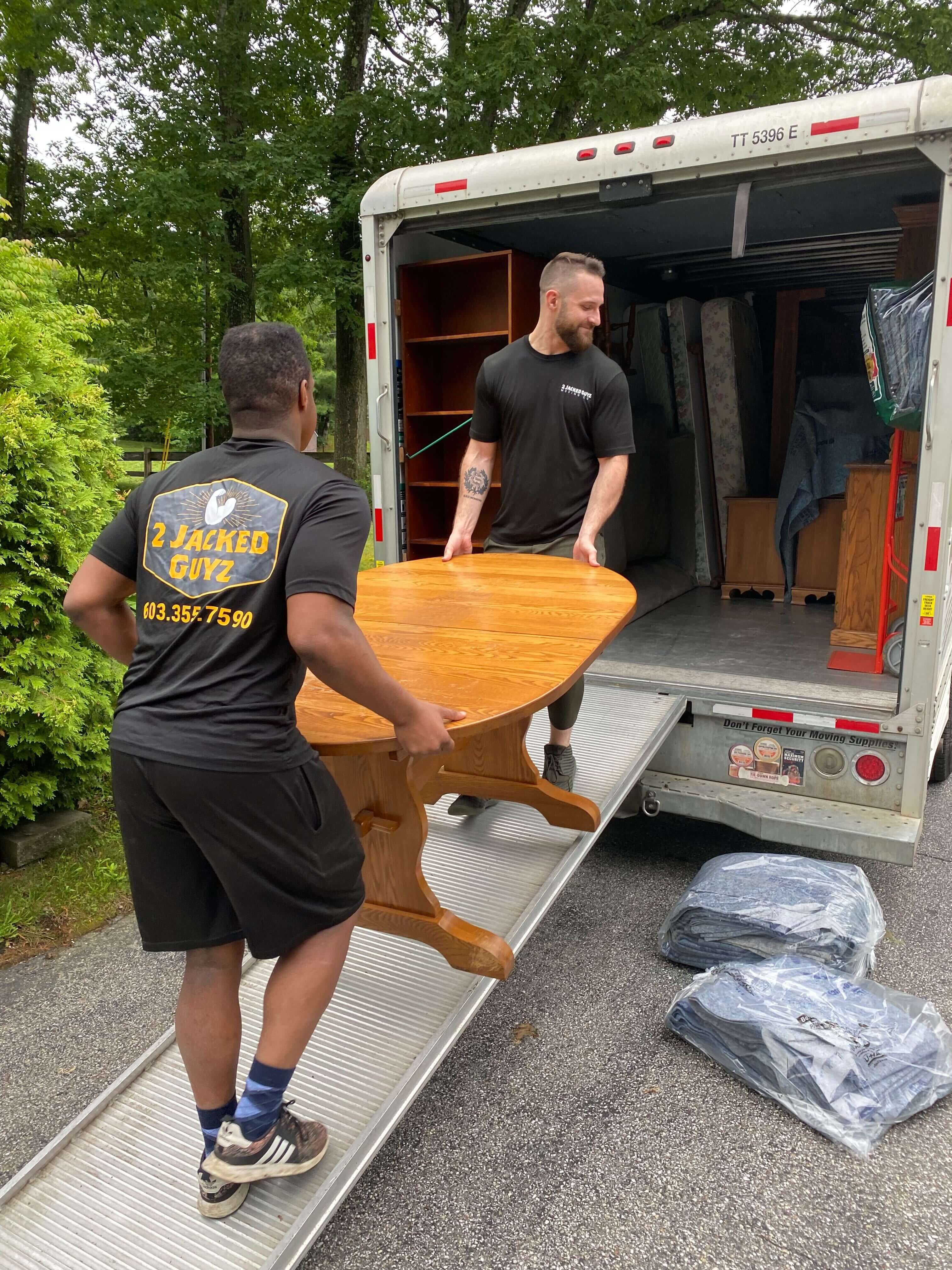
Load a wrapped mirror standing on its edge against the wall of the truck, braced between soft items like mattresses or padded furniture, never laid flat under other boxes. Standing it upright keeps weight off the glass surface and uses gravity to hold it in place rather than fighting it.
Secure it with a strap or rope across the frame (not across the glass) to a wall anchor point so it can't tip during turns or braking. Keep it away from anything with sharp corners, like dresser edges or tool cases, that could puncture the wrapping on a sudden stop. If you're loading a truck with several fragile pieces, planning the layout before anything goes in the door makes it much easier to keep mirrors upright and protected the whole way; our guide to packing a moving truck efficiently covers how to sequence fragile and heavy items together.
Wall-mounted mirrors need to come off their brackets before any wrapping begins, and oversized mirrors (floor-length, sectional, or antique) often need a second layer of plywood backing in addition to cardboard for the trip. Removing a mounted mirror means locating the bracket type first; cleat mounts lift straight up and off, while screw-mounted mirrors need the screws backed out rather than pried loose.
For genuinely oversized or antique mirrors, the weight and age of the frame mean there's less margin for error with a rushed DIY wrap, so take the extra time on prep rather than cutting corners. If you're also relocating other fragile heirlooms in the same move, our guide on moving antiques and family heirlooms covers additional handling considerations for aged glass and veneer.
Hiring movers makes sense when a mirror is one of several fragile pieces in a larger move, since a trained two-person crew and proper carrying technique reduce the handling risk compared to a rushed DIY carry down a tight stairwell. A single mirror on its own usually isn't worth booking a whole crew for, but when it's part of a bigger household move, it's worth asking what gets handled along the way.
At 2 Jacked Guyz, our residential moving service covers carrying and loading heavy or awkward items like a wrapped mirror as part of the full move, so you're not the one worrying about a crack on moving day. Get a moving quote to see what that looks like for your home.
A large mirror is one of the easiest items to crack and one of the easiest to protect, as long as you wrap it rigidly, carry it on edge, and load it standing up and braced. Skipping any one of those steps is usually where the damage happens. Measure twice, wrap generously, and don't carry it alone.
Request a personalized quote and see how careful planning and reliable service make every move smoother. Our team prepares each step to handle challenges safely and efficiently.
It's best to avoid laying a mirror flat, even wrapped. Laying it flat lets the center of the glass flex under its own weight or under anything stacked on top, which is a common cause of cracks that have nothing to do with dropping it. Standing it on edge, braced against a wall or padded furniture, keeps the weight distributed along the frame instead.
Moving blankets, bath towels, or couch cushions can work as cushioning layers, paired with flattened cardboard boxes cut to size for rigidity on both sides. The combination of a soft inner layer and a rigid outer shell is what a mirror box provides, so replicating both layers with household materials gets you most of the same protection.
Bubble wrap alone isn't enough for a large mirror because it cushions against impact but doesn't stop the glass from flexing if pressure is applied to the center. Pair bubble wrap or packing paper with rigid cardboard or plywood on both sides so the mirror can't bend under its own weight or from pressure in a loaded truck.
Measure the staircase width and any turns before you start, then carry the mirror on its edge at a slight angle if it's close to the width of the stairwell. Use two people, with the person in front watching the steps and the person behind controlling the tilt, and take it slowly rather than trying to rush a tight turn.
That's a superstition, not a moving concern, so don't worry about anything beyond the practical cost and hassle of replacing a cracked mirror. The real risk is to your wallet and your schedule, which is exactly why proper wrapping and careful handling matter more than any folklore.
No long forms, no delays. Just a move that’s ready when you are. Secure your moving date today.