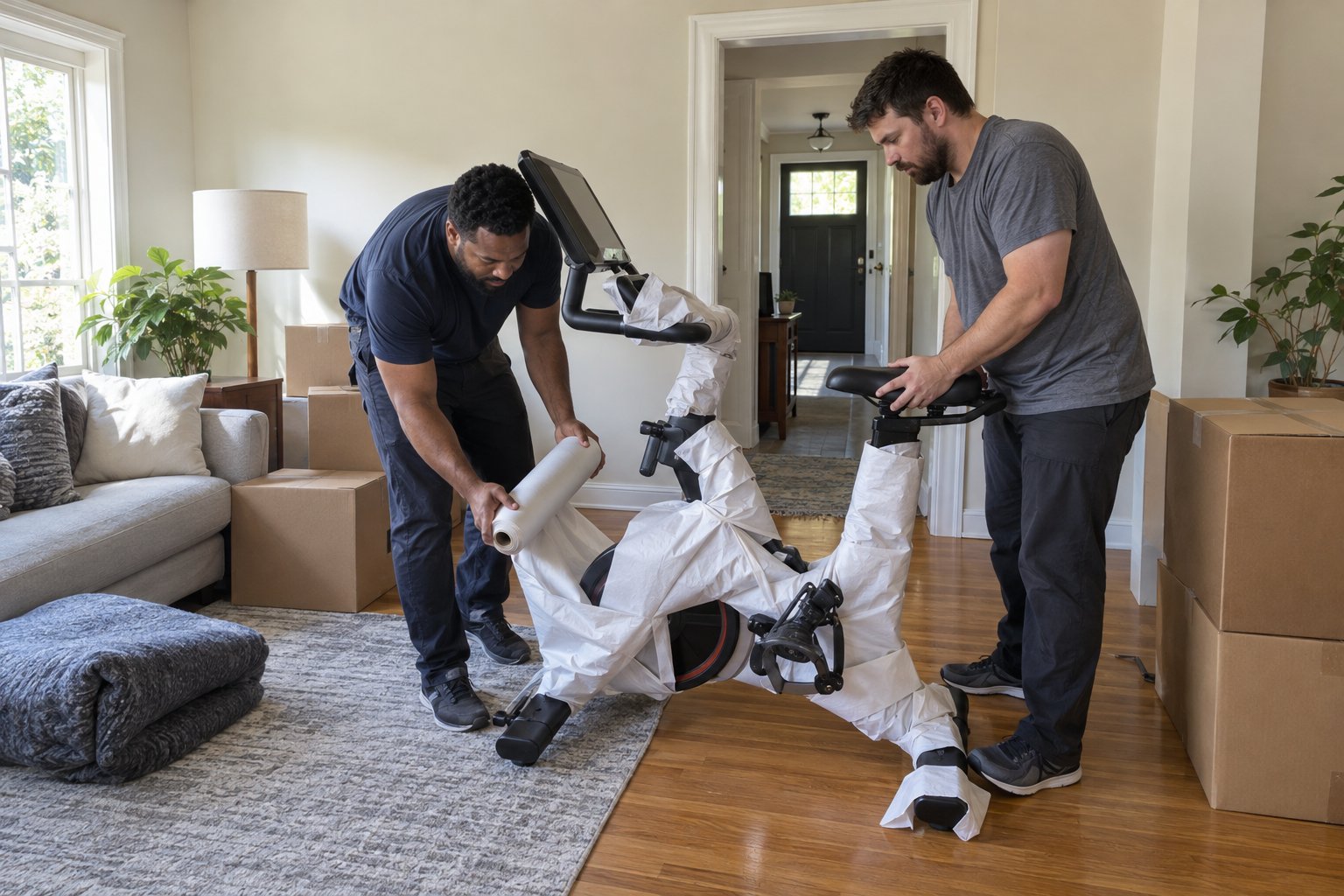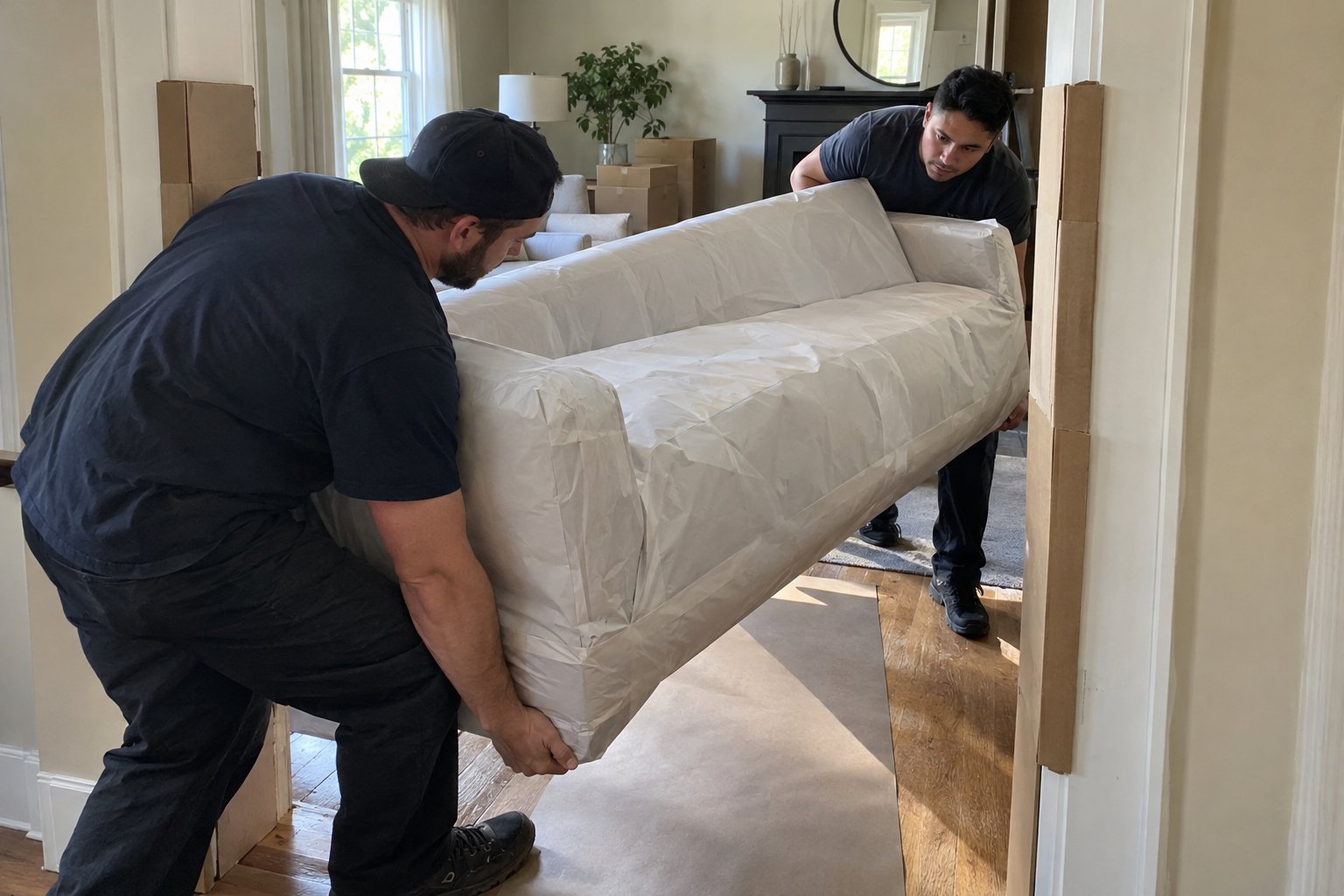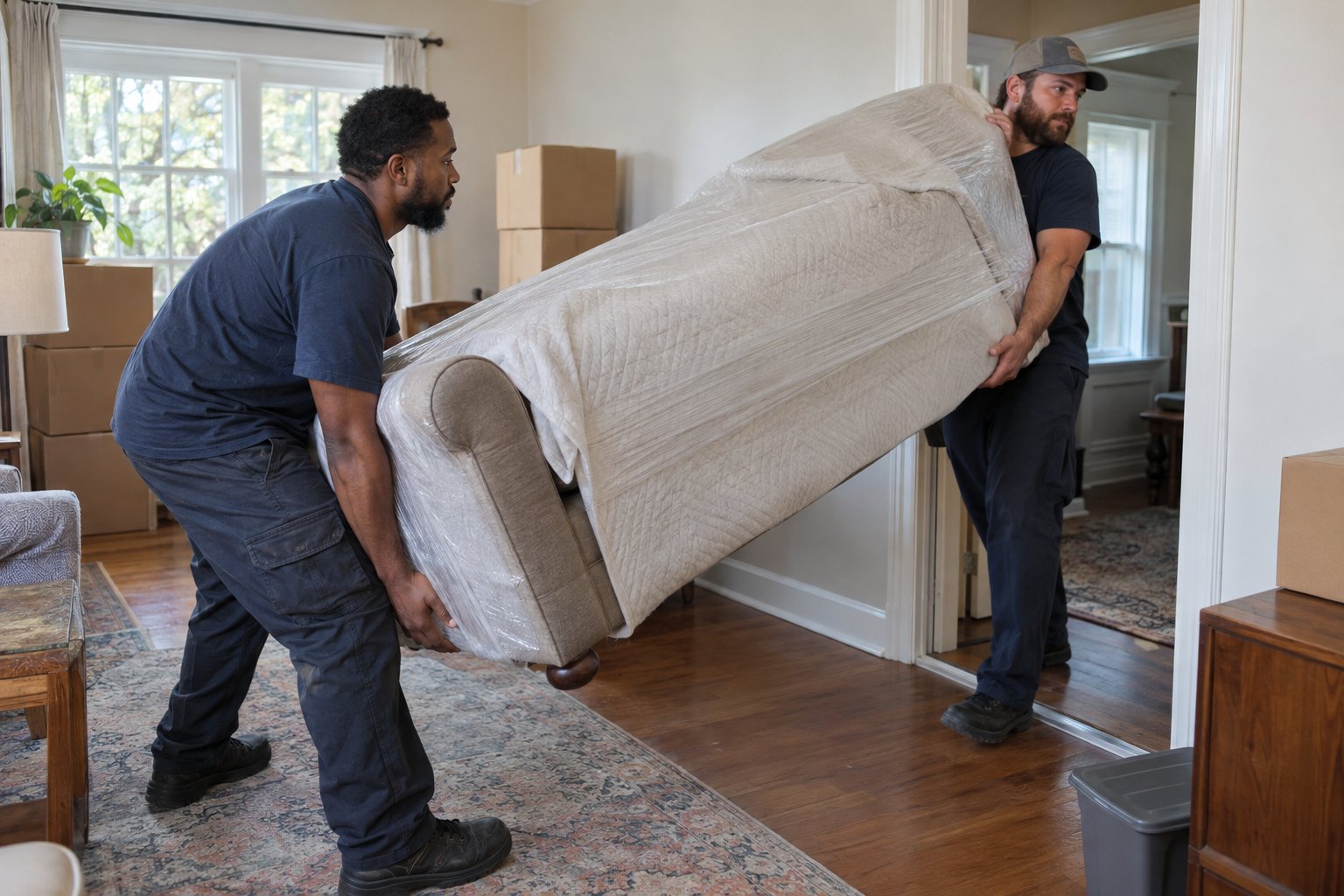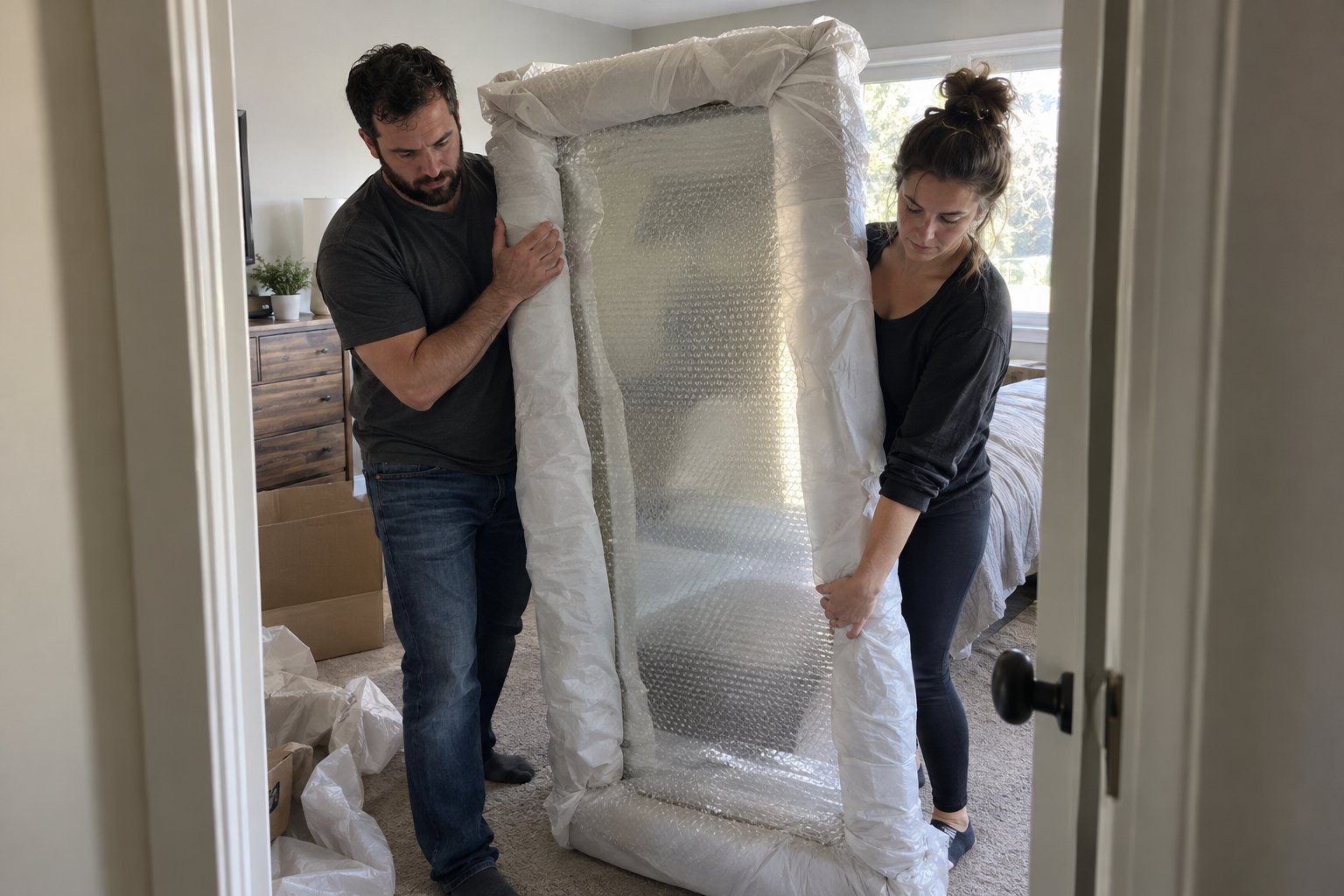

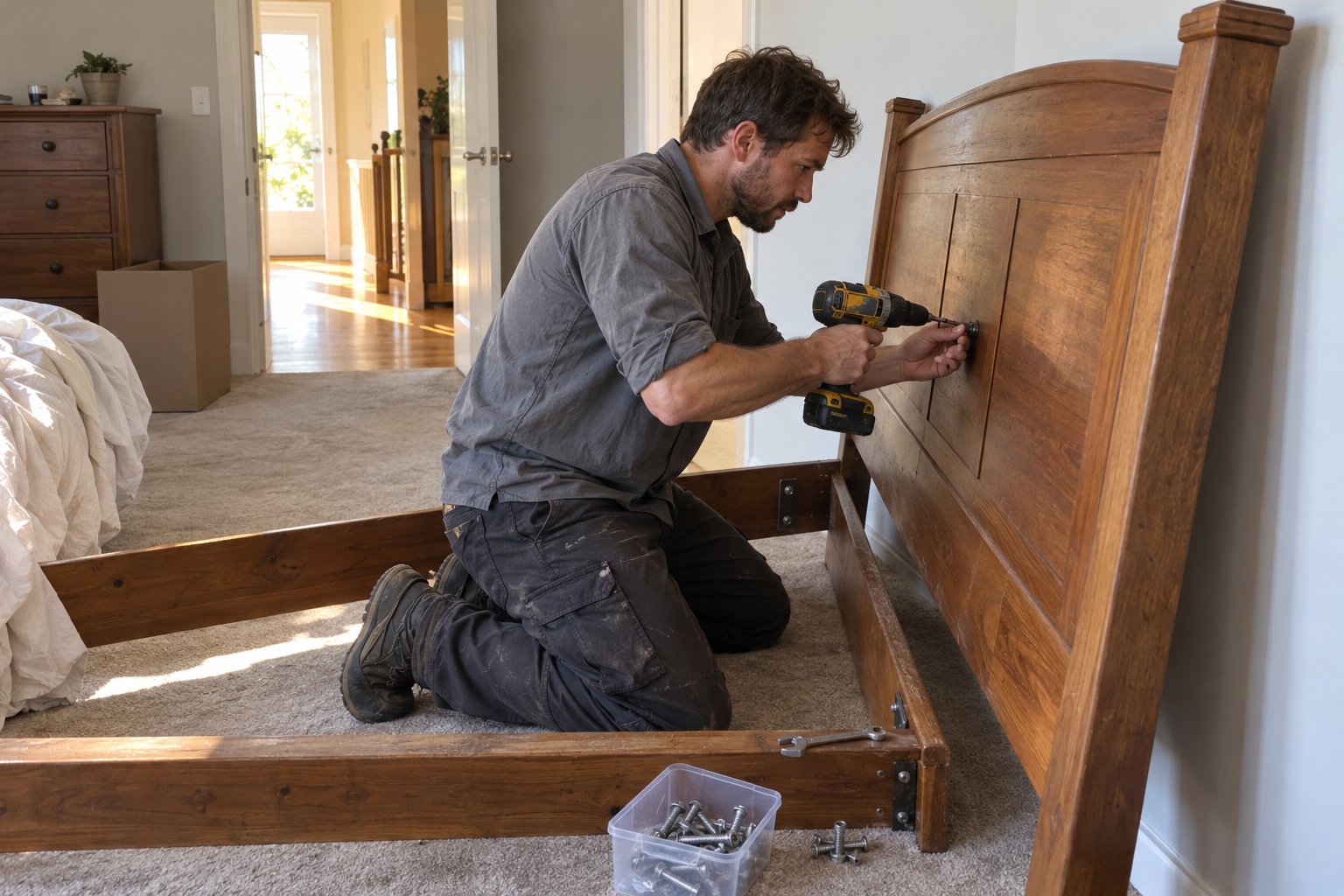
Wondering which furniture gets taken apart on moving day and how it goes back together? Here's what to expect, what to prep, and what stays assembled.
Furniture disassembly and reassembly for moving usually covers beds, tables, and anything held together with bolts or cam locks rather than nails or glue. The goal is simple: get bulky pieces through doorways and stairwells safely, then put them back together correctly at the new place without missing a single bolt. Knowing what typically comes apart, what stays whole, and how to keep hardware organized saves a lot of frustration on both ends of the move.
This is different from learning how to carry one specific heavy piece without scuffing a wall. It's about the broader process: deciding what gets taken apart, tracking the pieces, and making sure reassembly goes smoothly once the truck is unloaded.
Bed frames, headboards and footboards, dining and kitchen tables with removable legs, bunk beds, large bookshelves, and some desks are the most common candidates. Anything that won't clear a doorway, hallway turn, or stairwell at full size usually needs to come apart first.
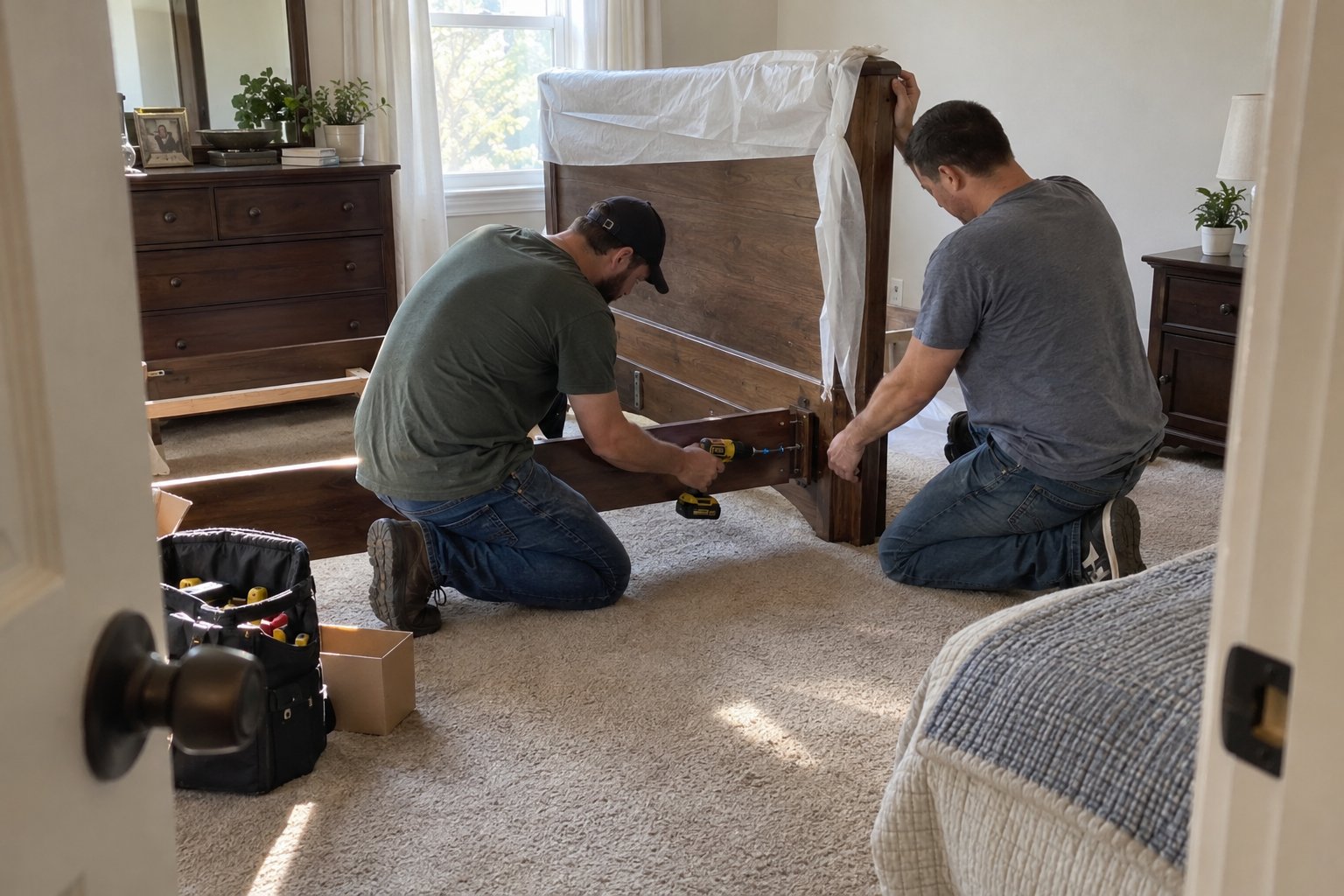
Platform beds and frames with side rails are nearly always broken down since they're long, awkward, and prone to racking (twisting out of square) if carried assembled. Dining tables often need their legs or leaf extensions removed to fit through standard doorways, especially pedestal-style tables. Bunk beds have to be separated into individual components both for size and for safety during transport. Modular or sectional shelving units usually come apart at their joints rather than traveling as one rigid piece.
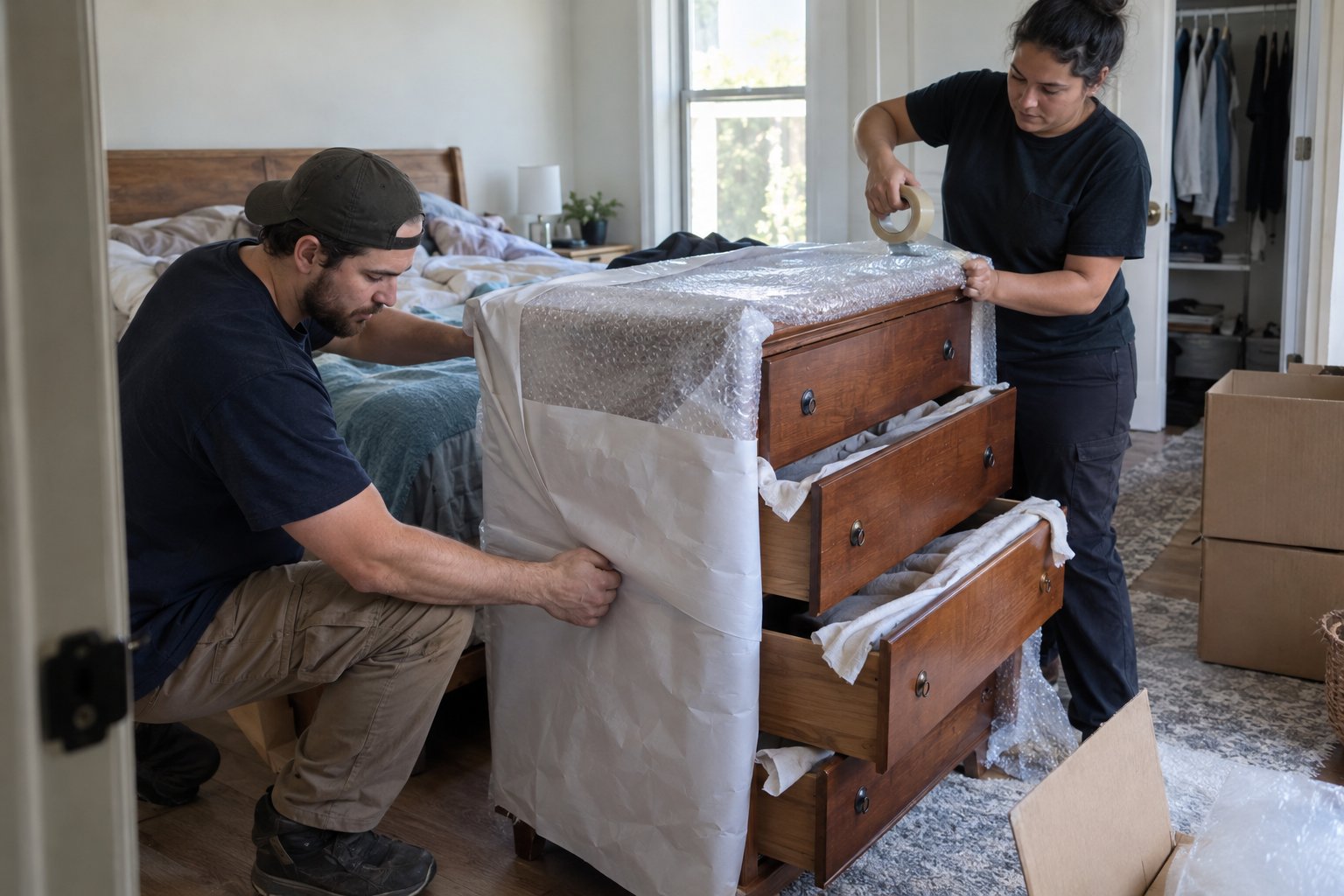
On the other end, dressers, nightstands, and most upholstered furniture typically stay assembled. They're carried whole, sometimes with drawers removed or taped shut for stability, but the frame itself isn't taken apart.
Solid wood dressers, armoires without removable tops, sofas, loveseats, and recliners are generally moved intact. Taking these apart often does more harm than good since many aren't designed to be reassembled repeatedly, and their joints can loosen with each disassembly.
The short answer: each piece of furniture gets its own labeled, sealed bag of hardware, and that bag travels taped directly to the furniture it came from rather than loose in a box. This single habit prevents the single most common reassembly headache: a missing bolt with no idea which dresser it belonged to.
A reliable system usually looks like this: small parts go into a zip-top bag, the bag gets labeled with the furniture piece and room it belongs to, and it's taped to a flat, visible section of that same piece, such as the underside of a tabletop or the inside of a headboard. Loose hardware that gets tossed into a general "miscellaneous parts" box is where things get lost.
If you're coordinating disassembly yourself ahead of movers arriving, take a quick photo of each piece before you start taking it apart. It only takes a few seconds and gives you a reference for how rails, brackets, and panels were originally oriented.
Keep any specialty tools, like the hex key that came with a particular bed frame, with that frame's hardware bag rather than in a general toolbox. Many furniture pieces require a specific wrench size, and generic tools don't always fit cam lock fasteners or proprietary bracket systems.
In most cases, yes, as long as hardware was kept organized and the piece wasn't already loose or damaged before the move. Furniture that was tight and stable going into disassembly should reassemble just as solidly, provided nothing was forced or stripped during the process.
Older furniture or pieces that have already been assembled and disassembled multiple times are the exception. Particleboard furniture especially can develop stripped screw holes over repeated use, which makes joints looser each time they're rebuilt. If a piece was already wobbly before the move, expect it to need some reinforcement (wood glue, slightly larger screws, or corner brackets) once it's reassembled at the new home.
Reassembly order matters too. Bed frames generally go together rails first, then slats, then headboard and footboard attachment. Tables usually need the base or legs secured to the underside bracket before the top is flipped upright. Rushing this sequence is a common reason pieces end up unstable even when every screw is present.
If you're using professional movers for residential moving, it's generally better to let the crew handle disassembly rather than doing it in advance. They know which pieces need to come apart to clear your specific doorways and stairs, and they'll pack the hardware in a system they can account for when it's time to put things back together.
That said, there are a few things worth doing yourself ahead of time regardless of who handles the heavy lifting: empty dresser drawers and desk contents, remove any fragile items like glass shelves or mirrored panels from furniture pieces, and unplug or detach anything electronic. If you have a piece you know is already unstable, such as a bookshelf with a cracked side panel, flag it before moving day so it can be handled with extra care or extra padding rather than full disassembly.
For large or multi-room moves where a lot of furniture needs to come apart and go back together, having it bundled into your packing services can save a significant amount of time, since the same team handling your boxes can also prep and label furniture hardware consistently.
Occasionally a fully disassembled piece still won't clear a particularly narrow stairwell or tight turn, usually because of an oversized tabletop, a wide headboard, or an awkwardly shaped frame. In these cases, movers may need to remove a door from its hinges, tilt the piece at specific angles, or in rare cases, partially disassemble a piece further than usual, such as removing a tabletop from its base entirely rather than just detaching the legs.
This is less common with standard bedroom and dining furniture but comes up more often with oversized specialty pieces. If you know in advance that a piece was a tight squeeze coming into your current home, mention it when you book your move so the crew can plan for it rather than discovering the problem on moving day.
Most moves involve at least a few pieces of furniture coming apart and going back together, and the difference between a smooth reassembly and a frustrating one usually comes down to hardware organization, not raw skill. Label everything, keep bags attached to their furniture, and don't force pieces back together if something doesn't line up the way it should.
If you'd rather not manage disassembly logistics yourself, get a moving quote from 2 Jacked Guyz and let an experienced crew handle the breakdown, transport, and reassembly of your furniture from start to finish.
Request a personalized quote and see how careful planning and reliable service make every move smoother. Our team prepares each step to handle challenges safely and efficiently.
Professional moving crews typically carry a standard set of tools, including various screwdrivers, wrenches, and hex keys, that cover most common furniture hardware. If a piece uses an unusual or proprietary fastener, keeping its original tool with the hardware bag helps avoid delays.
It varies by how much furniture needs to come apart, but a typical bedroom set with a bed frame and one or two other pieces might add fifteen to thirty minutes per room. Homes with several large pieces, like bunk beds or oversized dining tables, will add more time than a studio apartment.
If a bag of screws or brackets goes missing, most hardware for standard bed frames, tables, and shelving can be replaced with generic equivalents from a hardware store, though matching the exact thread size and length is important for a stable rebuild. This is exactly why labeling and taping bags to their furniture matters so much before moving day.
Most furniture reassembles just as sturdily as it started, provided the joints weren't already worn and nothing was forced during disassembly. Pieces made from particleboard or that have been assembled and disassembled multiple times in the past are more likely to need minor reinforcement afterward.
Light items like folded clothing can often stay in drawers for a short local move, but dressers are generally lighter and safer to carry when drawers are removed or at least secured. For longer moves or heavier dressers, emptying drawers reduces strain on the frame's joints during transport.
No long forms, no delays. Just a move that’s ready when you are. Secure your moving date today.