
Learn how to pack and move a garage the right way — tools, sports gear, heavy equipment, and hazardous materials. Step-by-step guide from 2 Jacked Guyz.
Figuring out how to pack and move a garage is something most people leave to the very end of the moving process — and then immediately wish they had started a month earlier. The garage is one of the most deceptively large spaces in any home. It looks like a room full of miscellaneous clutter, but when moving day actually arrives, you are staring down power tools, lawn equipment, a collection of half-empty paint cans, sports gear, automotive supplies, holiday decorations, and enough random hardware to build a small structure from scratch. None of it packs like a bedroom. None of it moves like a kitchen. And quite a bit of it requires special handling before it can go anywhere near a moving truck.
The good news is that a garage move is completely manageable when you approach it in the right order. And if you would rather hand the whole job to professionals who have seen every variety of chaotic garage imaginable, the team at 2 Jacked Guyz professional movers is ready to take it from overwhelming to done.
The garage is the room in most homes where things go to be forgotten. Before you touch a box or a roll of tape, walk through the entire space with honest eyes and ask yourself whether each item genuinely deserves a spot in your new home.
Sort everything into four categories: keep, donate or sell, recycle, and discard. Sports equipment your kids outgrew three years ago, duplicate hand tools, broken lawn chairs, empty spray cans, and outdated automotive parts are all strong candidates for the discard pile. Power tools in working condition can often be sold quickly at a garage sale or through local online marketplaces. Hardware stores and tool libraries sometimes accept donations of usable hand tools as well.
The goal here is not perfection — it is reduction. Every item you eliminate from the garage is one fewer thing to wrap, box, load, unload, and find a place for at the other end. The garage has a way of rewarding this effort more than almost any other room because the items tend to be heavy, awkward, and time-consuming to handle. Less is genuinely better.
This step is non-negotiable, and it needs to happen before any packing begins. The garage is where most households store items that cannot legally or safely travel in a moving truck. Identifying and properly disposing of these materials early prevents delays, damage, and potential safety issues on moving day.
Common hazardous garage items include:
Taking care of this category early gives you a clear picture of what is actually moving, and it removes the risk of discovering a problem at the worst possible time.
Tools are among the heaviest and most injury-prone items in any garage. Packing them properly protects both the tools themselves and the people handling the boxes.
Wrap individual cutting tools — chisels, box cutters, saw blades, pruning shears — in several layers of packing paper or newspaper and secure with tape before placing them in a box. A cut through a box is one of the more common moving injuries, and it is entirely preventable. Group similar tools together and fill a sturdy, medium-weight box without overloading it. Tools are dense — even a box that is only half full can be too heavy to lift safely if it is packed with wrenches and hammers.
If you kept the original packaging for your power tools, use it. The foam inserts are purpose-built for each tool and provide the best protection during transit. For tools without original packaging, wrap the tool body in bubble wrap or moving blankets and secure any removable components — blades, bits, batteries — separately. Never transport power tools with batteries installed in the tool; remove all batteries and pack them separately to prevent accidental activation and potential damage.
Small screws, bolts, nails, and assorted hardware deserve their own attention. Use small zip-lock bags to group fasteners by type and size, label each bag clearly, and place all bags together in a single labeled box. This may feel tedious, but arriving at your new home with a jumbled, mixed-up hardware collection makes every future project significantly harder. A little organization here pays off for months.
Toolboxes can be moved intact if the drawers and lids latch securely. If there is any risk of drawers sliding open in transit, use stretch wrap or moving straps to keep everything closed.
Large items — lawn mowers, bicycles, kayaks, workout equipment, and outdoor furniture — require a different approach than boxed items. Most of them will not fit in boxes at all, and they need to be prepared individually for the truck.
Drain all fuel and oil from lawn mowers, leaf blowers, chain saws, and similar equipment before moving day. This is both a safety requirement for the moving truck and a practical measure to prevent spills. Clean the equipment as well as you reasonably can — grass buildup, dirt, and oil residue transfer onto everything they touch in a packed truck. Let equipment air-dry completely before loading.
For a local move, bikes can often be transported as-is with minimal preparation. Remove the front wheel and pedals if needed to reduce the footprint, and protect the frame with moving blankets or foam tubing around the handlebars and any exposed metal. Stand bikes upright in the truck against a wall and secure them so they cannot tip or shift.
Kayaks, paddleboards, and canoes are awkward but not particularly fragile — they just need to be secured properly in the truck so they do not slide. Protect any fiberglass or gel-coat surfaces with moving blankets. Camping gear, fishing equipment, and golf clubs can generally be bundled together in large duffel bags or wardrobe boxes and labeled clearly.
Free weights and weight plates are extremely dense and heavy. Pack them in small boxes only — never fill a large box with weights, as it will become impossible to move safely. Disassemble any weight benches, squat racks, or cable machines according to the manufacturer's instructions and keep all hardware in labeled bags taped to the frame.
Garages are often home to a significant amount of shelving — metal wire shelves, freestanding units, pegboard walls — as well as bins and totes full of holiday decorations, camping supplies, and seasonal gear. These are actually among the easier items in the garage to handle, provided you approach them in the right order.
Empty all shelving and storage units before attempting to move them. Even shelves that appear light become surprisingly heavy and unwieldy when they are full. Pack the contents of bins and totes into appropriately sized boxes or back into the same tote, and label everything clearly on the lid and on at least one side.
Freestanding metal shelving units typically disassemble by pulling the shelves free from the uprights. Wrap shelves in moving blankets to protect their finishes and stack them flat for transport. Keep all hardware — bolts, clips, shelf pins — in labeled bags.
Holiday decorations packed in large totes can often travel in those totes directly, provided the lids seal securely. Fragile ornaments or breakable decorations inside those totes should be individually wrapped in tissue paper or packing paper and cushioned with packing peanuts or crumpled paper to prevent rattling during transit.
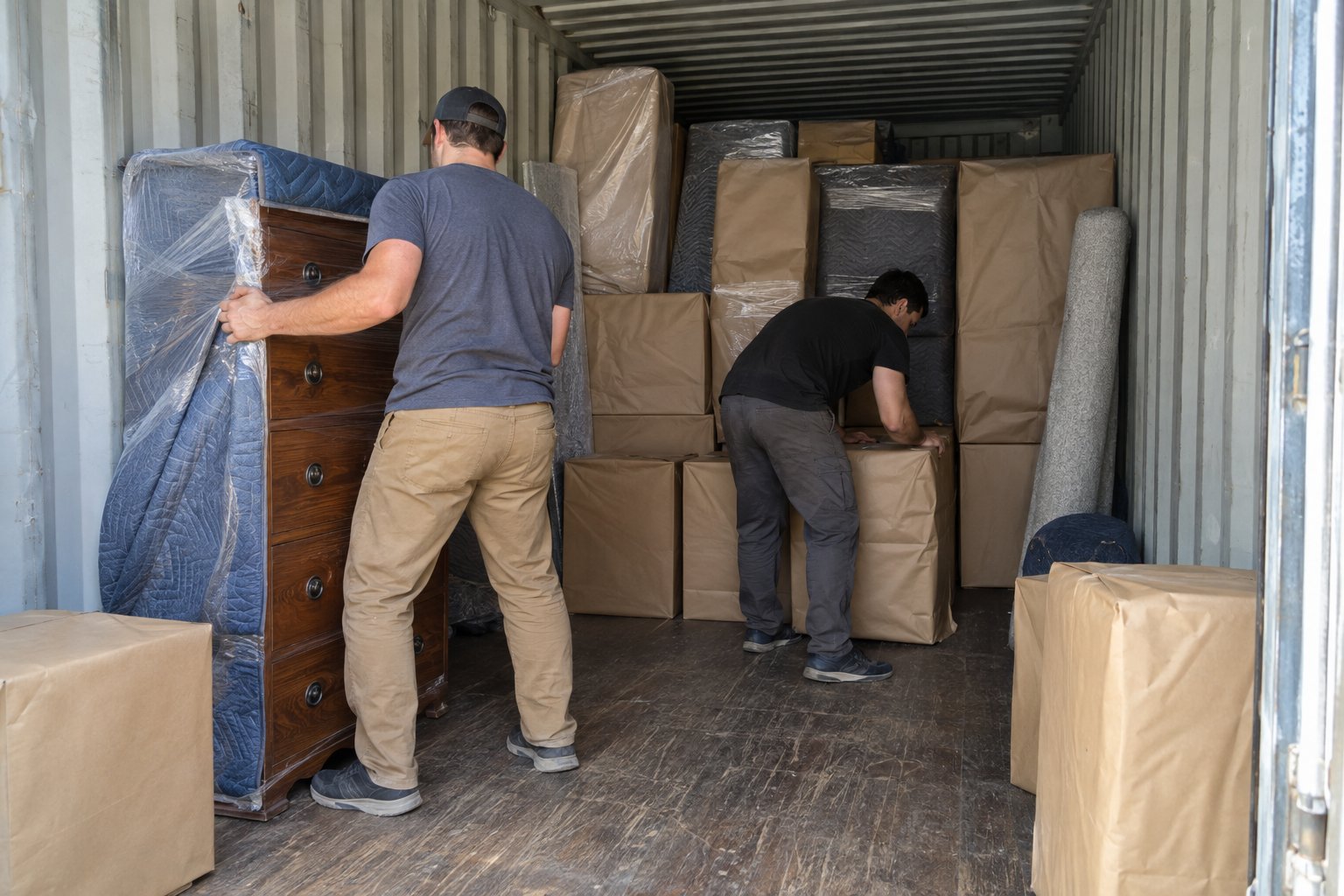
One of the most useful strategic decisions you can make is to load garage items last onto the truck and unload them first at the destination. This works for two reasons: garage items tend to be the bulkiest and most awkward, making them ideal for the back of the truck near the door, and unloading them first clears space in the garage at the new home before the furniture and boxes arrive, giving you a staging area.
Heavy equipment and large furniture should always go against the truck walls with lighter boxes stacked on top. Make sure nothing is stacked in a way that could shift or tip during transit. Moving blankets and furniture pads should be used liberally around metal equipment to protect both the equipment and anything it might contact during the drive.
If the scope of your garage move feels like more than a weekend project, it is worth talking to professionals about your options. The team at 2 Jacked Guyz — get a free quote today and find out how quickly a professional crew can take the garage off your plate entirely.
Request a personalized quote and see how careful planning and reliable service make every move smoother. Our team prepares each step to handle challenges safely and efficiently.
Gasoline, propane tanks, liquid paint, oil-based solvents, pesticides, herbicides, automotive fluids like motor oil and coolant, and fire extinguishers are all items that typically cannot travel in a moving truck. These materials are flammable, corrosive, or otherwise hazardous. Use them up before your move, give them to a neighbor, or take them to a local hazardous waste collection facility. Most municipalities offer periodic drop-off events specifically for household hazardous waste.
Before moving a lawn mower, drain all fuel and oil completely. This is required for safety in an enclosed moving truck and also prevents spills that can damage other items. Clean off grass buildup and residue as thoroughly as you can, then allow the mower to dry completely before loading. If the mower has a bag or any removable components, detach them and pack them separately. For riding mowers, consider whether a flatbed or specialty transport might be more appropriate than a standard moving truck.
Wrap all cutting tools — blades, chisels, shears — individually in packing paper and secure with tape to prevent injury during handling. Use sturdy, medium-weight boxes and avoid overloading them, since tools are very dense. For power tools, use the original packaging if you have it. Otherwise, wrap each tool in bubble wrap or moving blankets. Always remove batteries from power tools before packing and transport batteries separately to prevent accidental activation and heat buildup.
Yes, and it pays off long after the move is over. Use small zip-lock bags to group screws, bolts, nails, and other hardware by type and size, then label each bag clearly. Place all bags in a single labeled box. Taking the time to do this before the move means you will not spend your first few weeks in the new home hunting through a jumbled box every time you need a specific fastener. It takes maybe an hour and saves a disproportionate amount of frustration later.
Professional movers bring the equipment, experience, and manpower to handle the most difficult parts of a garage move — heavy tools, large appliances, awkward sports equipment, and bulky shelving units — safely and efficiently. They know how to load a truck so items do not shift or damage each other in transit, and they can disassemble and reassemble equipment as needed. If your garage is packed with years of accumulated gear, hiring professionals is often the fastest and most cost-effective path to getting it done right.
No long forms, no delays. Just a move that’s ready when you are. Secure your moving date today.