
Learn how to pack and move an outdoor patio — furniture, grills, planters, and all. Step-by-step tips from the professionals at 2 Jacked Guyz.
Figuring out how to pack and move an outdoor patio is one of those moving challenges that catches people off guard almost every time. The patio always gets added to the list last — after the bedrooms, the kitchen, the garage — and by the time moving day arrives, it is still sitting there in full outdoor glory: a heavy sectional sofa that has not moved since it was assembled on the deck, a grill with a propane tank that may or may not be legal to transport as-is, terracotta and ceramic planters filled with soil and living plants, string lights threaded through every post and railing, and a patio table with a glass top that nobody quite knows how to separate safely. Add in the fact that patio furniture was never really designed to be disassembled, boxed, or stacked in a moving truck, and you start to understand why outdoor spaces deserve their own dedicated moving plan.
The good news is that moving an outdoor patio — even a large, fully furnished, and heavily planted one — is completely manageable when you approach it with the right materials, the right sequence, and a clear understanding of what each category of item actually needs. And if you would rather hand the heavy lifting to professionals who know how to handle everything from a wrought-iron dining set to a built-in grill island, the team at 2 Jacked Guyz professional movers is ready to take it from overwhelming to done.
Before you drag a single piece of furniture across the deck or reach for the bubble wrap, walk your entire outdoor space and take a thorough inventory of everything that lives there. This step is easy to dismiss — the patio feels simpler than the inside of the house — but it is one of the most valuable things you can do before moving day arrives.
As you walk through, ask honest questions about each item. Is this patio sectional worth the cost and effort of moving, or has it weathered enough seasons that replacing it makes more sense than transporting it? Is that clay pot cracked at the base in a way that will not survive being lifted and loaded? Are those string lights in good enough shape to reinstall at the new place, or have two winters in the elements made them a hazard? Moving is the single best opportunity to reset your outdoor space, and being realistic during the inventory saves you significant time, money, and frustration.
Sort everything into three categories: move it, donate or sell it, and discard it. Heavy items in poor condition, broken outdoor rugs, and dried-out planters with no living plants left are strong discard candidates. Gently used furniture that you are upgrading anyway may be better donated or sold locally than loaded onto the truck. Whatever survives the cut is what you plan for — and that focused list is what the rest of your packing strategy should be built around.
Outdoor furniture presents a specific set of challenges that indoor furniture does not. It tends to be heavy, oversized, and built for permanence rather than mobility. Sectional sofas have interlocking pieces that need to be separated carefully. Dining tables often have glass tops that rest in a groove and can slide or shatter if the table is tilted. Chairs stack, but not always neatly, and the legs catch on everything. Here is how to approach each category.
Start by separating every modular piece of your sectional individually. Most outdoor sectionals are designed to be disconnected — look for locking clips or connecting brackets along the inner edges and release them before you try to lift anything. Once separated, each piece becomes a manageable individual item. Remove all seat cushions and back cushions, and pack them in large, sealed plastic bags or clean garbage bags to keep them dry and contained during the move. If your cushions have removable covers that can be laundered, consider removing them for the move and washing them at the new place before reassembly.
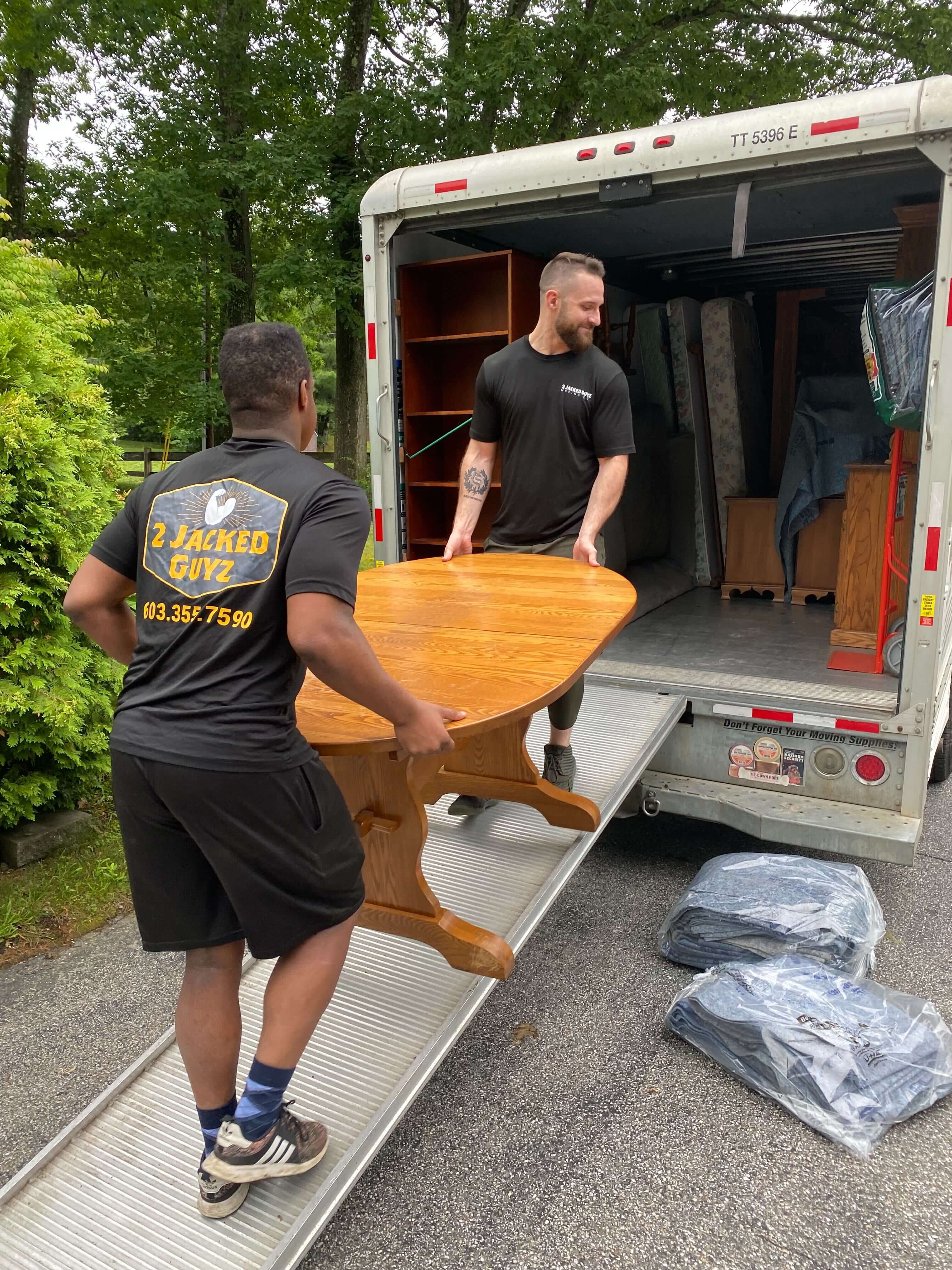
For the furniture frames themselves — whether they are made of aluminum, resin wicker, teak, or powder-coated steel — wrap any protruding legs, arms, and corners in moving blankets or stretch wrap to prevent scratches during loading. Heavy-duty outdoor furniture is dense and awkward to carry, so always use a two-person lift and never drag pieces across decking or flooring surfaces.
Glass-top patio tables require the same care as any large piece of glass — actually more, because outdoor glass is often thicker and heavier than indoor counterparts. Always remove the glass top from the table base before moving either piece. Lift the glass straight up, not at an angle, and transport it vertically rather than flat whenever possible — glass is significantly stronger and more stable on edge than lying horizontal. Wrap the glass in moving blankets, secure with stretch wrap or moving tape, and mark it clearly on both sides. Stand it upright in the truck against a padded wall, not flat on the truck floor under other items.
Patio chairs and side tables are best grouped, wrapped together in moving blankets, and banded with stretch wrap as a cluster. Stack chairs that are designed to nest, but limit your stacks to a height that can still be safely lifted and maneuvered. For metal or wrought-iron chairs with sharp decorative edges, wrap each piece individually before grouping to prevent scratching.
The grill is often the most logistically complicated item on the patio — not because of its size, but because of its fuel source. Propane tanks are regulated materials, and most professional moving companies will not transport full or even partially full tanks in an enclosed moving truck. If you are working with a moving company, confirm their propane policy well in advance.
The safest approach for a standard 20-pound propane tank is to use it down to empty in the weeks before your move — time the grilling sessions to run it out naturally. If the tank still has fuel remaining by moving week, contact a local propane dealer about safe disposal or exchange options. Many hardware stores and home improvement retailers have exchange programs. Do not attempt to store a propane tank inside an enclosed moving truck, and do not leave a full tank in a hot vehicle during summer moves.
For the grill itself, once the tank is disconnected and removed, clean out the grease trap and drip pan thoroughly before moving day. Grease is flammable, and a grill that has not been cleaned is one you really do not want tipping over in a truck. Remove the grates, wrap them in newspaper or kraft paper, and pack them flat. Fold down any side shelves or remove them if they detach easily, and wrap the entire grill body in a moving blanket before loading.
If your patio includes a built-in grill or an outdoor kitchen island, the situation becomes considerably more complex. Built-in units are typically mortared or bolted into a masonry or concrete structure and are not designed to be removed casually. Before your move, assess honestly whether the built-in is something your lease or sale agreement requires you to leave, whether it can be safely extracted without damaging the surrounding structure, and whether the cost of professional removal and reinstallation is justified. In many cases, built-in outdoor kitchens are negotiated as part of a home sale rather than transported with the seller — but that is a decision to make early and document clearly.
Planters and living plants are among the most fragile and perishable items on any patio, and they require a completely different approach than furniture or equipment. Ceramic, terracotta, and stone planters crack easily under pressure and are surprisingly heavy once filled with soil. Living plants have specific needs around water, light, and temperature that a moving truck does not naturally accommodate.
For any planter you are moving without a living plant in it, empty the soil completely before packing. Wet soil adds significant weight and can shift during transport, making the pot unstable and increasing the risk of cracking. Once emptied, nest smaller pots inside larger ones with packing paper between them, or wrap each pot individually in bubble wrap and pack upright in medium-weight boxes. Always fill void space inside boxes with crumpled paper or foam to prevent pots from moving during transit.
For large, heavy statement planters — the kind that sit on a deck corner and have been there for years — assess carefully whether the weight and fragility make the move worthwhile. A large terracotta pot with a crack at the base is unlikely to survive the trip. A high-quality glazed ceramic planter in good condition is worth wrapping carefully and loading last, so it does not get buried under other items.
Moving live plants across town is achievable with some care. Water plants thoroughly a day or two before the move — not on moving day, when wet soil increases weight and mess — and transport them in the passenger cab of your vehicle rather than in the back of the truck, where temperature swings and darkness can stress them quickly. Wrap pots in plastic bags secured at the base to contain any soil that shifts, and keep plants upright throughout the move.
Long-distance moves with plants are more complicated. Many states have regulations about transporting certain types of plants across state lines, and a cross-country truck ride in an unventilated trailer is likely to kill most plants regardless. For a long-distance move, consider giving beloved plants to neighbors or friends and purchasing similar plants once you are settled at the new location.
String lights, outdoor rugs, lanterns, decorative stakes, wind chimes, and patio umbrellas tend to be the category everyone underestimates — not because any single item is difficult, but because there are always more of them than you think, and they take a surprisingly long time to remove, wrap, and pack properly.
Remove string lights before moving day if at all possible. Threading lights through railing posts, pergola beams, and fencing takes time, and trying to do it on moving day when the clock is running adds unnecessary stress. Coil each strand loosely — not tight — and secure with a twist tie. Pack coiled lights in small- to medium-sized boxes with crumpled paper to prevent tangling and protect the bulbs. Label each box clearly, and note which outlet or fixture each strand was connected to so reinstallation is faster.
Remove the umbrella canopy from the pole if the design allows it, and fold or roll the canopy separately. The pole and base can be moved as separate items — umbrella bases are almost always extremely heavy (that is by design), so use a hand truck or dolly rather than trying to carry them by hand. If the base is filled with sand, consider emptying it before the move and refilling at the new place to reduce weight.
Roll outdoor rugs tightly, secure them with moving straps or stretch wrap, and clean them before rolling if they have been sitting on a dirty deck all season. A dirty, rolled outdoor rug is one of those items that gets loaded without a second thought and then sits in a corner of the garage at the new place for six months because nobody wants to unroll something that smells like a wet deck. Clean it before the move and it will be far more likely to find its rightful place quickly.
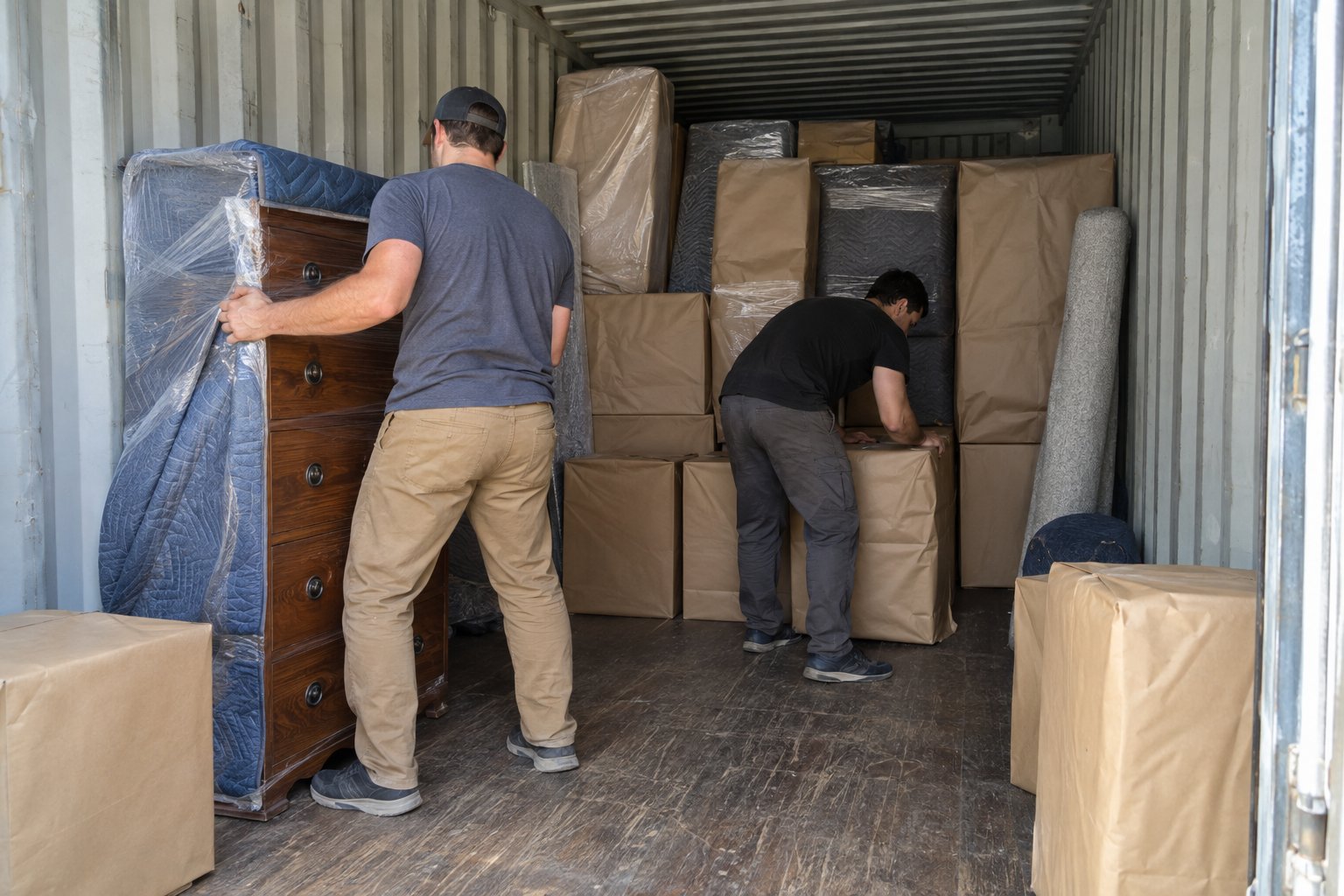
Patio items present specific loading challenges because of their irregular shapes, fragility, and weight distribution. Heavy furniture goes in first, against the truck walls, with moving blankets between pieces to prevent scratching. Glass items — table tops, lanterns with glass panels, decorative mirrors — should always be loaded vertically against padded walls, never flat under other items. Planters and pots go near the top of the load, not at the bottom where they will be crushed. The grill, once cleaned and prepped, can be placed against the truck wall with its legs stabilized by surrounding boxes.
If you are managing the move yourself, resist the temptation to load the patio last just because it was lowest on the priority list. The awkward shapes and heavy weights of outdoor furniture make a last-minute, disorganized load genuinely risky — both for the items and for the people doing the lifting. Plan the patio load as deliberately as you plan every other room in the house.
And if the scope of what you are looking at — a full outdoor sectional, a gas grill, a dozen planters, a pergola's worth of string lights — feels like more than you want to manage on top of an entire house move, that is exactly what the team at 2 Jacked Guyz professional movers is built for. The patio does not have to be the thing that breaks the move.
Request a personalized quote and see how careful planning and reliable service make every move smoother. Our team prepares each step to handle challenges safely and efficiently.
Most professional moving companies will not transport full or partially full propane tanks in an enclosed moving truck due to safety regulations. The safest approach is to use the tank down to empty before your move, or exchange it at a local hardware or home improvement store. The grill itself — cleaned out, with the tank removed — can typically be moved without issue.
Start by disconnecting all modular pieces individually — most outdoor sectionals have locking clips or connecting brackets along the inner edges. Remove all seat and back cushions and pack them in sealed bags. Wrap each frame piece in moving blankets, paying attention to protruding legs and arms. Always use a two-person lift, and never drag pieces across decking or flooring.
For local moves, yes — water plants a day or two before the move, transport them upright in your personal vehicle rather than the moving truck, and wrap pots in plastic bags to contain soil. For long-distance moves, it becomes more complicated: temperature extremes in a moving truck can stress or kill most plants quickly, and some states have regulations about transporting certain plant species across state lines. In those cases, gifting plants to neighbors and repurchasing at the destination is often the more practical choice.
Always remove the glass top from the table base before moving either piece. Lift the glass straight up and transport it vertically — on edge — rather than lying flat, since glass is significantly stronger and more stable in that position. Wrap it in moving blankets, secure with stretch wrap, and mark it clearly on both sides. Stand it upright against a padded truck wall during transport, never flat on the floor.
Items that are genuinely not worth the cost and effort of moving include cracked or damaged terracotta and ceramic planters, weathered furniture in poor structural condition, dried-out or dying plants, outdoor rugs that are heavily soiled or worn, and very heavy concrete or stone décor that would be expensive to transport relative to its replacement cost. Moving is an ideal time to reset your outdoor space — being honest during your pre-move inventory about what is worth transporting saves time, money, and truck space.
No long forms, no delays. Just a move that’s ready when you are. Secure your moving date today.