


Practical tips for moving with pets, from prepping cats and dogs weeks ahead to keeping them safe and calm while movers load the truck.
Moving with pets means managing two moves at once: the physical relocation of your belongings and the emotional experience of an animal who has no idea why strangers are carrying the couch out the front door. Cats and dogs read chaos and unfamiliar smells as threats long before they understand a new house is coming. The goal on moving day is not to explain the move to them, since you cannot, but to limit what they see, hear, and are exposed to until the disruption is over.
Most pet-related moving problems are predictable: bolting through an open door, refusing to eat, hiding for days after arrival, or getting underfoot while movers are carrying something heavy. Almost all of them come down to timing and containment, not temperament. A skittish cat and a laid-back dog can both come through a move without incident if you plan around their instincts instead of against them.
Pets get stressed during a move because their environment changes faster than they can process it: familiar scents disappear, furniture that anchored their territory vanishes, and strangers keep entering the house. Dogs pick up on your own tension through body language and tone of voice, while cats rely heavily on scent-marked territory and panic when that territory is dismantled piece by piece.
This is why the days leading up to the move often feel worse for your pet than the move itself. Boxes appearing weeks in advance, furniture being wrapped, and unfamiliar noise from packing tape and paper all signal that something is wrong, even before a single mover walks through the door.
Preparing a pet for a move starts with keeping as much of their routine intact as possible while gradually introducing the sights and sounds of packing. Feed, walk, and play with them on the same schedule you always have, even as the house around them changes shape.
Update your pet's microchip registration and ID tag with your new address before the move, not after. A spooked animal that slips out during loading with outdated tags is much harder to reunite with you if you have already left the area.
If your cat only sees the carrier on vet days, it becomes a warning sign the moment it comes out of the closet. Leave it out with a blanket and treats inside for a couple of weeks so it reads as neutral, or even comfortable, by moving day.
Set aside a bag with your pet's regular food, a favorite toy, a worn blanket, and any medication so it never gets buried in a box. Familiar scent is one of the fastest ways to settle an anxious animal in a new space.
Pets should be confined to one quiet, closed-off room, boarded, or kept with a friend while the truck is being loaded, not left loose in a house full of open doors and unfamiliar people. This single decision prevents the majority of moving-day pet emergencies.
If a sitter or boarding isn't an option, pick a bathroom or bedroom far from the front door, set up food, water, a litter box or pee pad, and their crate, and put a sign on the door so movers know not to open it. Check in periodically, but resist the urge to let them "see what's going on." Curiosity is exactly what leads to a dog slipping past a mover's legs while they're carrying a dresser out.
For a long-distance relocation, plan stops every few hours for water, bathroom breaks, and a stretch, and never leave a pet alone in a parked vehicle. Secure cats in a carrier for the entire trip and dogs with a crate or a crash-tested harness, since a loose animal in a moving vehicle is a safety risk for everyone in the car.
Pets settle fastest when you set up one familiar-smelling room first and let them explore the rest of the house gradually instead of all at once. Put their bed, bowls, and litter box in the same relative layout they had before, if possible, since consistency matters more than square footage to most animals.
Expect a few days of hiding, reduced appetite, or clinginess as normal. Cats especially may not use a litter box confidently until they've mapped a few safe routes through the house. Keep walks and feeding times as close to the old schedule as you can, since routine is what tells a nervous animal that things are actually okay.
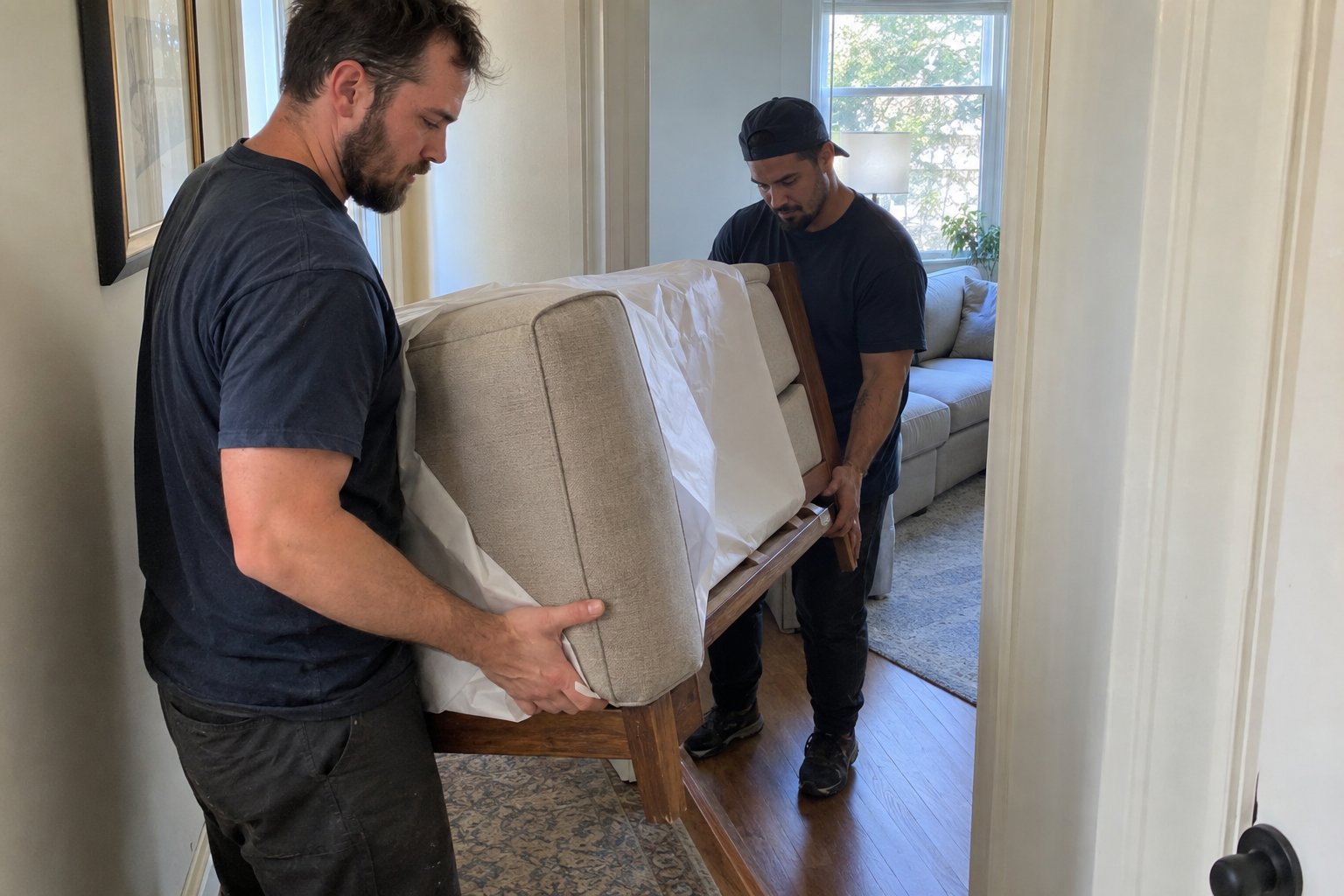
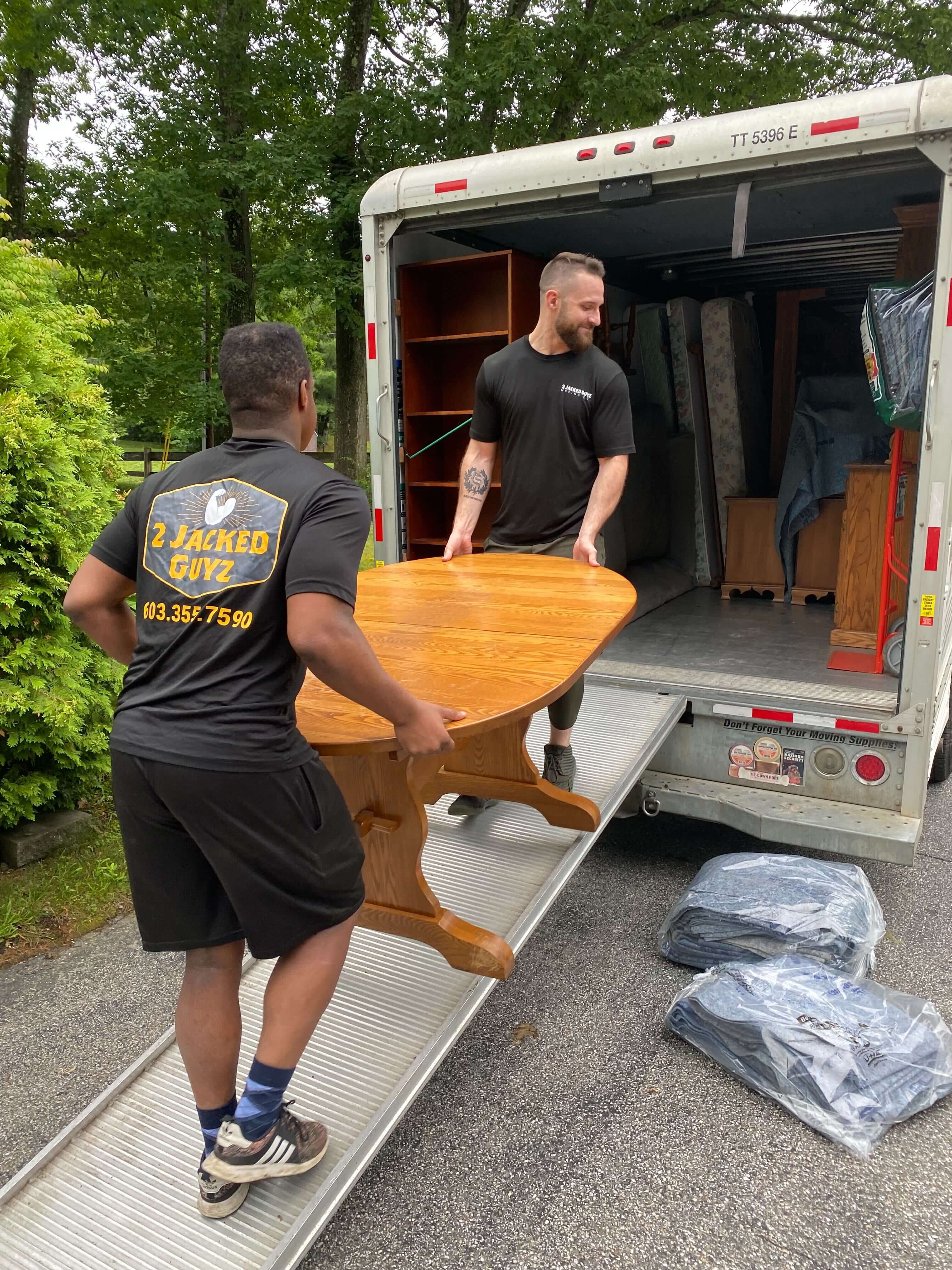
Hiring professional movers is often easier on anxious pets than a DIY move, since a trained crew works faster and more predictably than a house full of friends and family carrying furniture in and out over an entire weekend. Less time with the front door propped open means less time for something to go wrong.
When you book residential moving services, mention upfront that you have pets in the home. A good crew will confirm which room is off-limits and keep an eye on doors during the heaviest traffic. If you're also relying on movers to handle the boxes and wrapping, our packing services can take that noisy, days-long process off your plate entirely, which shortens the window your pet has to feel unsettled.
If your move covers real distance and your pet will be in the car or crate for hours, it helps to plan the household side and the travel side separately. Our guide on packing for long distance trips and relocations covers how to keep a travel bag organized when you and your pet are both living out of a vehicle for a stretch of the trip.
A calmer moving day for your pets usually starts with a calmer moving day for you. When the loading and hauling is handled by an experienced crew, you have the bandwidth to actually manage your dog or cat instead of splitting attention between them and the movers. Get a moving quote and let us know about your pets when you book so we can plan around them from the start.
Request a personalized quote and see how careful planning and reliable service make every move smoother. Our team prepares each step to handle challenges safely and efficiently.
Only under guidance from your veterinarian. Some anxious pets benefit from a vet-prescribed calming aid for moving day, but over-the-counter sedatives are not appropriate for every animal and dosing without professional advice can backfire. Ask your vet a few weeks ahead so you have a plan in place, not a last-minute scramble.
Most cats take anywhere from a few days to a couple of weeks to act normally in a new home, though shy cats can take longer. Hiding, skipped meals for a day, or over-grooming are common short-term reactions. If a cat refuses food for more than 24 to 48 hours, contact your vet.
Boarding removes the risk entirely and is worth considering if your dog is prone to escaping or extreme anxiety around strangers. If boarding isn't practical, a closed-off room away from the front door with familiar bedding is the next best option.
Pack enough food and water for at least 48 hours, medication, a leash and collar with updated ID, a favorite toy or blanket, waste bags or a litter box with litter, and copies of vaccination records. Keep this bag separate from moving boxes so it never ends up loaded onto the truck by mistake.
It's best not to. Even calm pets can be startled by heavy furniture, strangers moving quickly, and repeated open doors, and a curious pet near an open door during loading is the most common way animals go missing on moving day. Keep them in a separate, closed room until the truck is loaded and the door traffic has stopped.
No long forms, no delays. Just a move that’s ready when you are. Secure your moving date today.