

Learn how to load a moving truck so nothing shifts, breaks, or gets left behind. A room-by-room loading order and space-saving tips from the pros.
Learning how to load a moving truck correctly is the difference between a move that goes smoothly and one where furniture shifts, boxes crush, and you run out of room before the truck is even half full. The goal is not just fitting everything in. It is loading in an order that protects your belongings and keeps the truck balanced on the road. A well-loaded truck also unloads faster, since everything comes off in a logical sequence instead of a chaotic pile.
Most people load a truck the way they pack a car trunk: biggest items first, everything else jammed in around them. That approach wastes space and puts fragile items at risk. Professional movers work from a plan built around weight, fragility, and what needs to come off first at the new place.
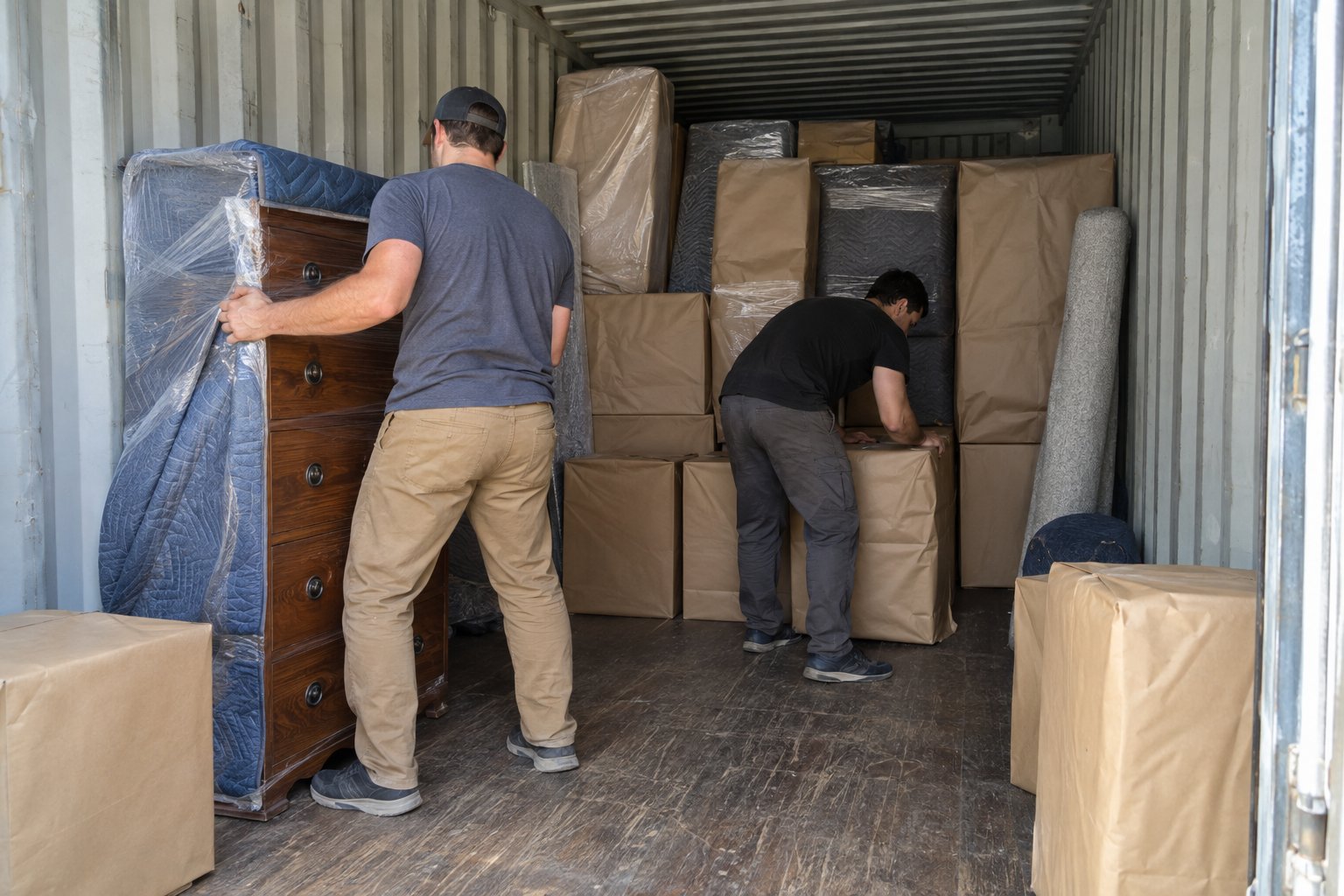
The correct loading order is heaviest and largest items first, along the walls and floor of the truck, followed by mid-size furniture, then boxes stacked by weight, with fragile and frequently needed items loaded last. This keeps weight low and centered, and it means the last things loaded are the first things you need when you arrive.
A practical sequence looks like this:
Weight should be concentrated low and toward the front of the truck, distributed evenly across both sides. An unbalanced load can make the truck harder to control, especially on turns and highway driving during a long distance move.
Keep about 60 percent of the total weight toward the front half of the cargo area. Avoid stacking all the heavy items on one side, since that creates a lean that is noticeable at highway speed. If you are renting a truck yourself rather than hiring a crew, check the load periodically at rest stops on longer hauls. A shift of even one large piece can throw off the balance you built in.
Use ratchet straps or rope to anchor large furniture to the truck's built-in rails or D-rings. Every open gap between items should be filled with soft goods (pillows, folded blankets, rugs) so nothing has room to slide during braking or turns.
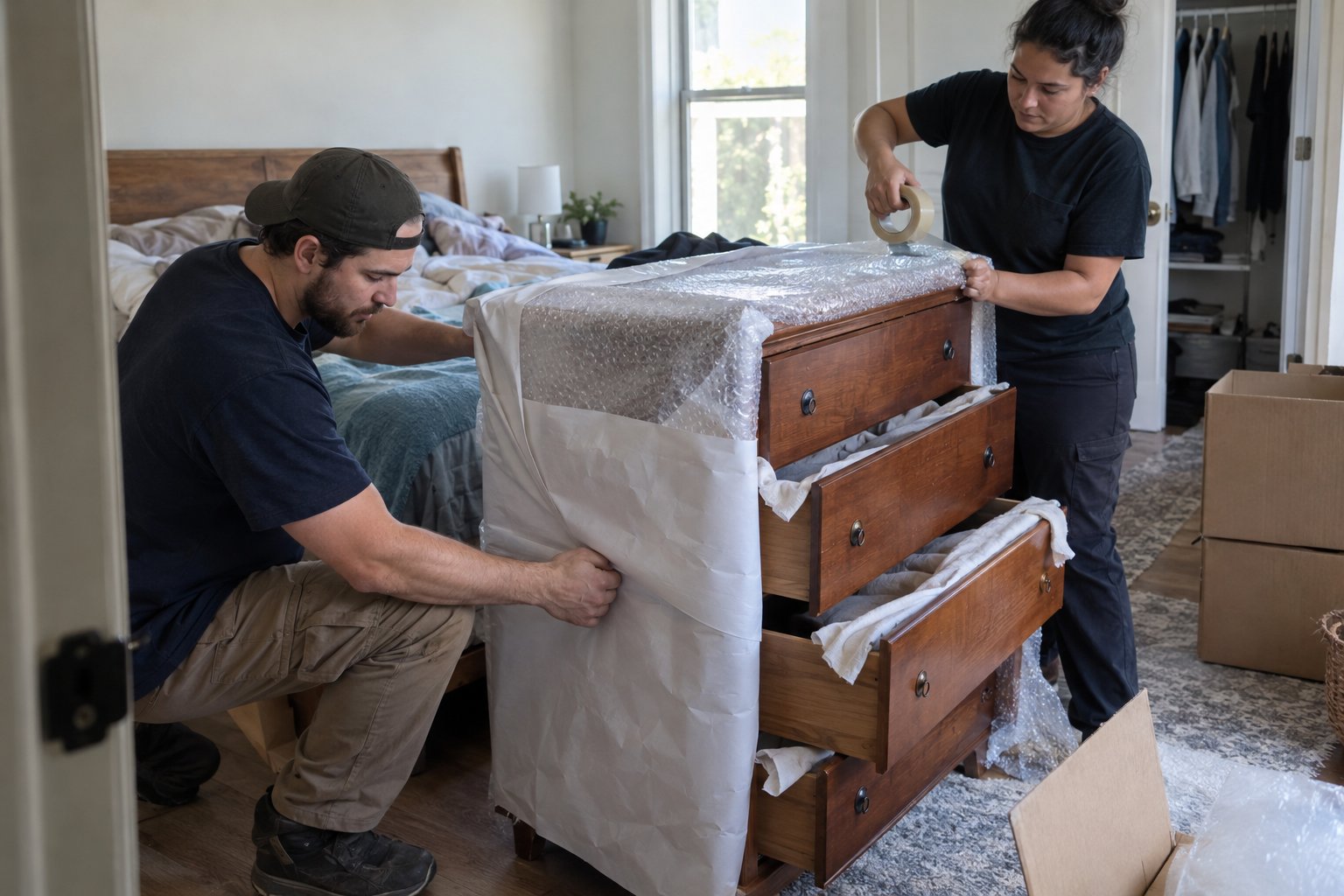
Different furniture types need different orientations to avoid damage and wasted space. Flat, rigid pieces go against walls; soft or oddly shaped pieces get wrapped and wedged into gaps.
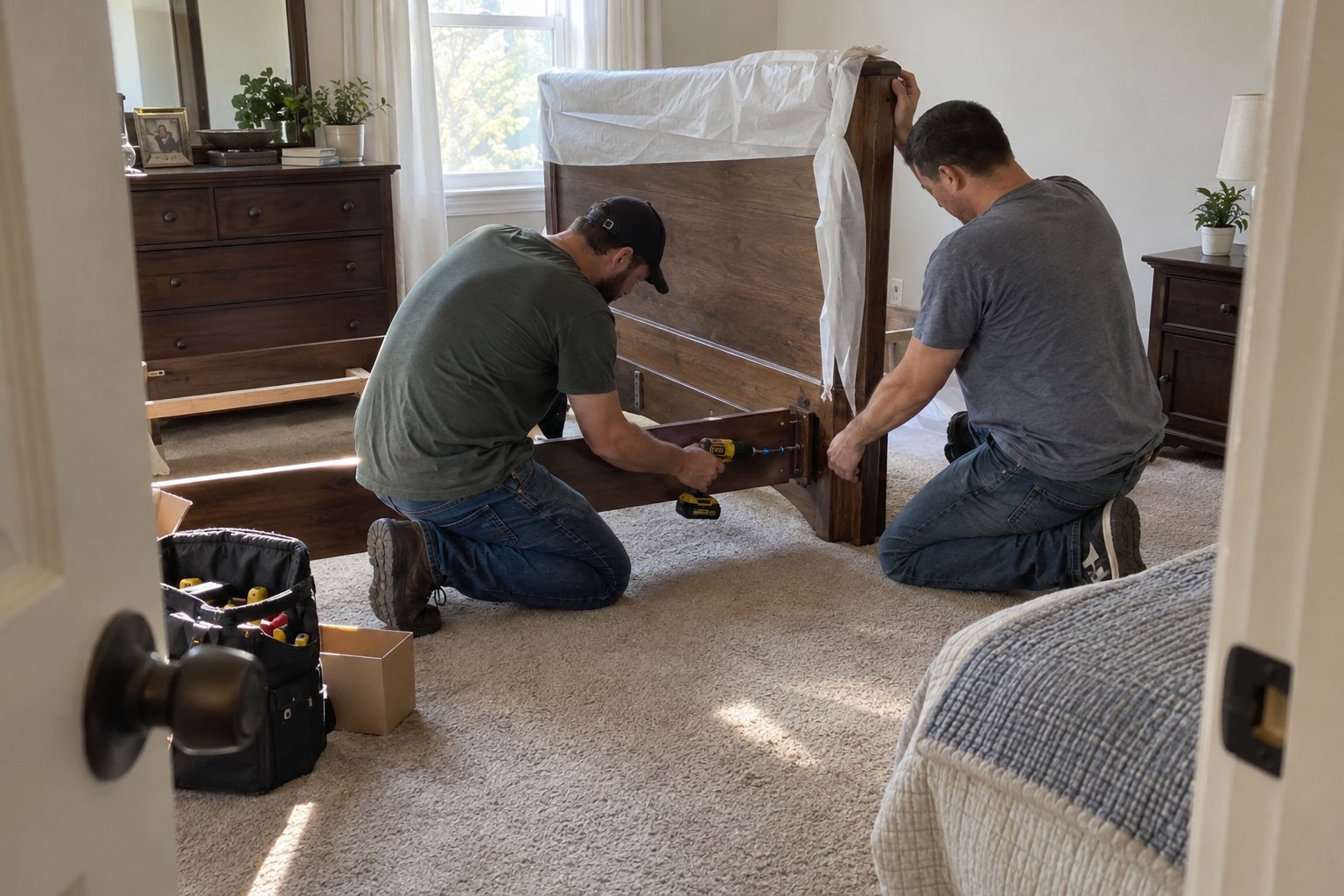
The biggest space savers are disassembling furniture, filling every gap with soft items, and stacking boxes by uniform size rather than by room. A truck loaded with irregular gaps can waste 20 to 30 percent of usable space, which often means paying for a bigger truck or a second trip.
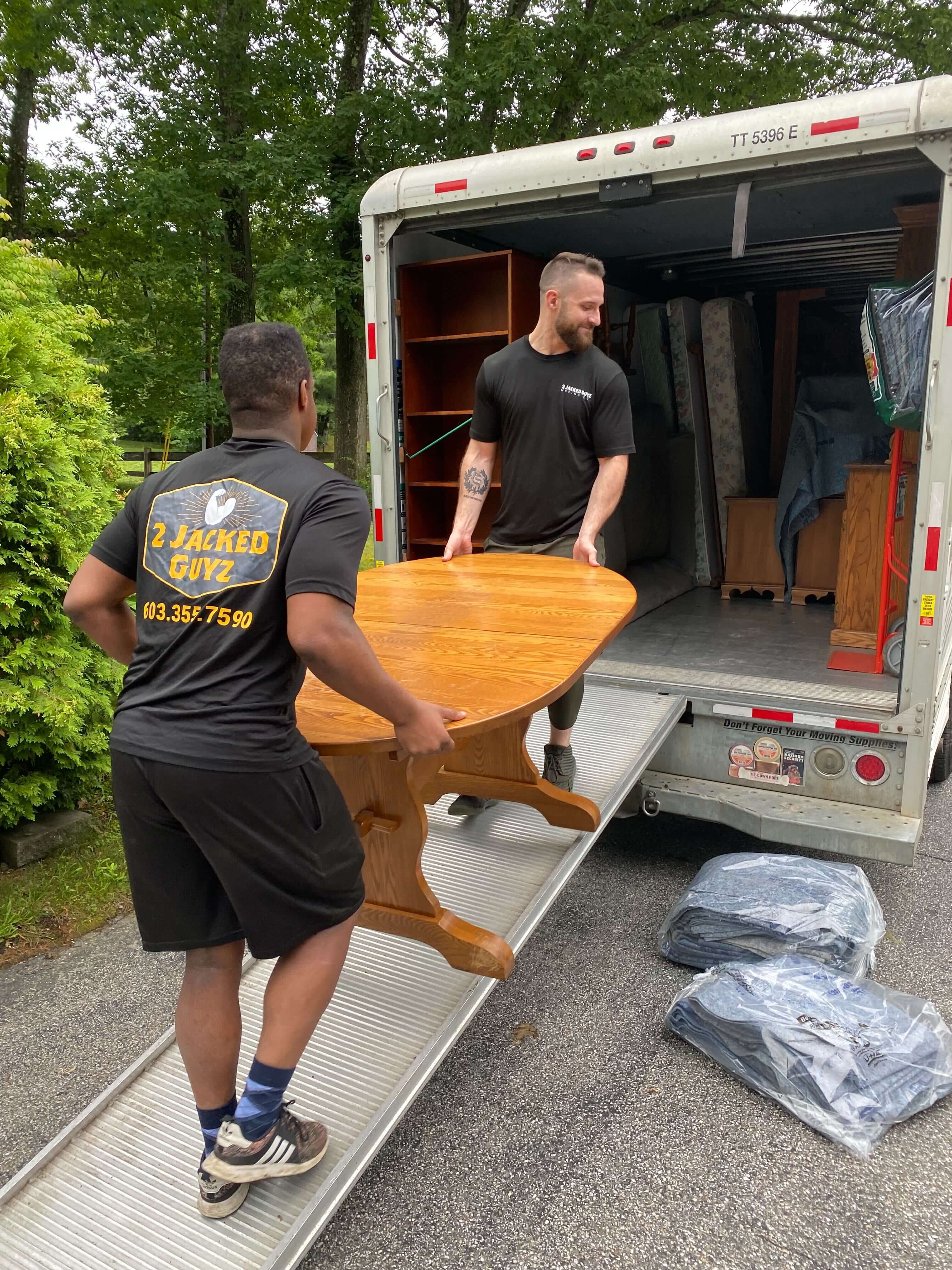
Loading a truck yourself is possible for a small, single-story move, but a trained crew loads faster, safer, and with less risk of damage on anything heavy or awkwardly shaped. If your home has stairs, large furniture, or you are moving long distance, professional loading is usually worth the cost difference.
A crew that loads trucks daily has already solved the puzzle of fitting a three-bedroom household into a 20 or 26 foot box without wasted space. They also carry the straps, furniture dollies, and blankets that a rental truck typically does not include. If you are weighing your options, our packing services can handle the loading portion even if you are packing your own boxes.
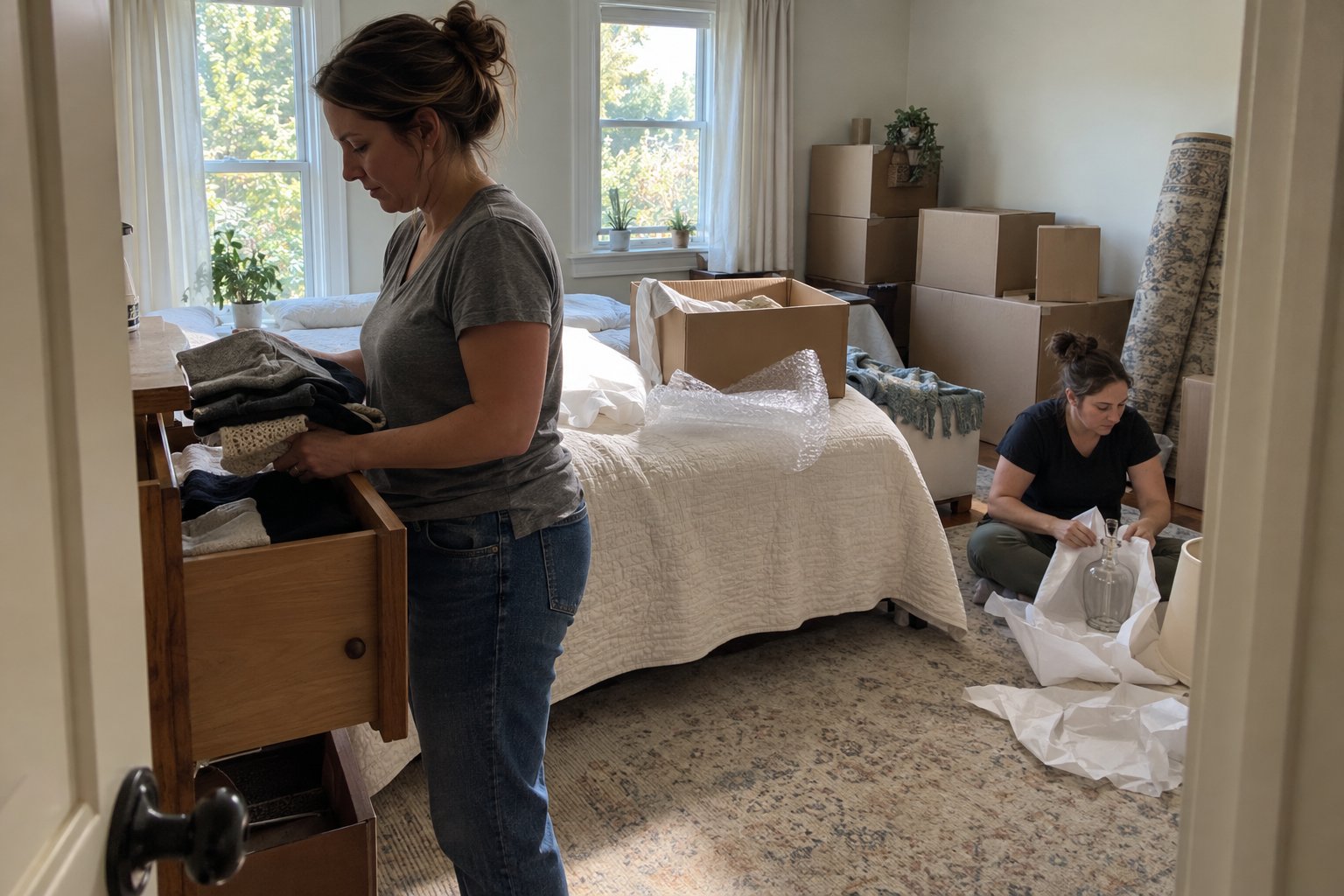
The most common loading mistake is loading box by box in whatever order they were packed, rather than following a weight-and-size plan. This leads to a truck that looks full at the halfway point but has no usable space left for what remains.
If your load includes something unusually heavy or delicate, like a piano or an antique cabinet, it deserves its own loading plan rather than getting worked in around everything else. Ready to skip the guesswork? Get a moving quote and let a crew that loads trucks for a living handle the heavy lifting.
Request a personalized quote and see how careful planning and reliable service make every move smoother. Our team prepares each step to handle challenges safely and efficiently.
Most three-bedroom homes need a 20 to 26 foot truck, depending on how much furniture and how many boxes you have. If you are unsure, it is safer to size up since an overpacked truck often means a wasted second trip.
Heavy boxes always go on the bottom. Stacking light boxes underneath heavy ones causes crushing and makes stacks unstable during transit.
Use ratchet straps or rope anchored to the truck's D-rings or rail system, and fill any remaining gaps with soft items like blankets or pillows so nothing has room to shift.
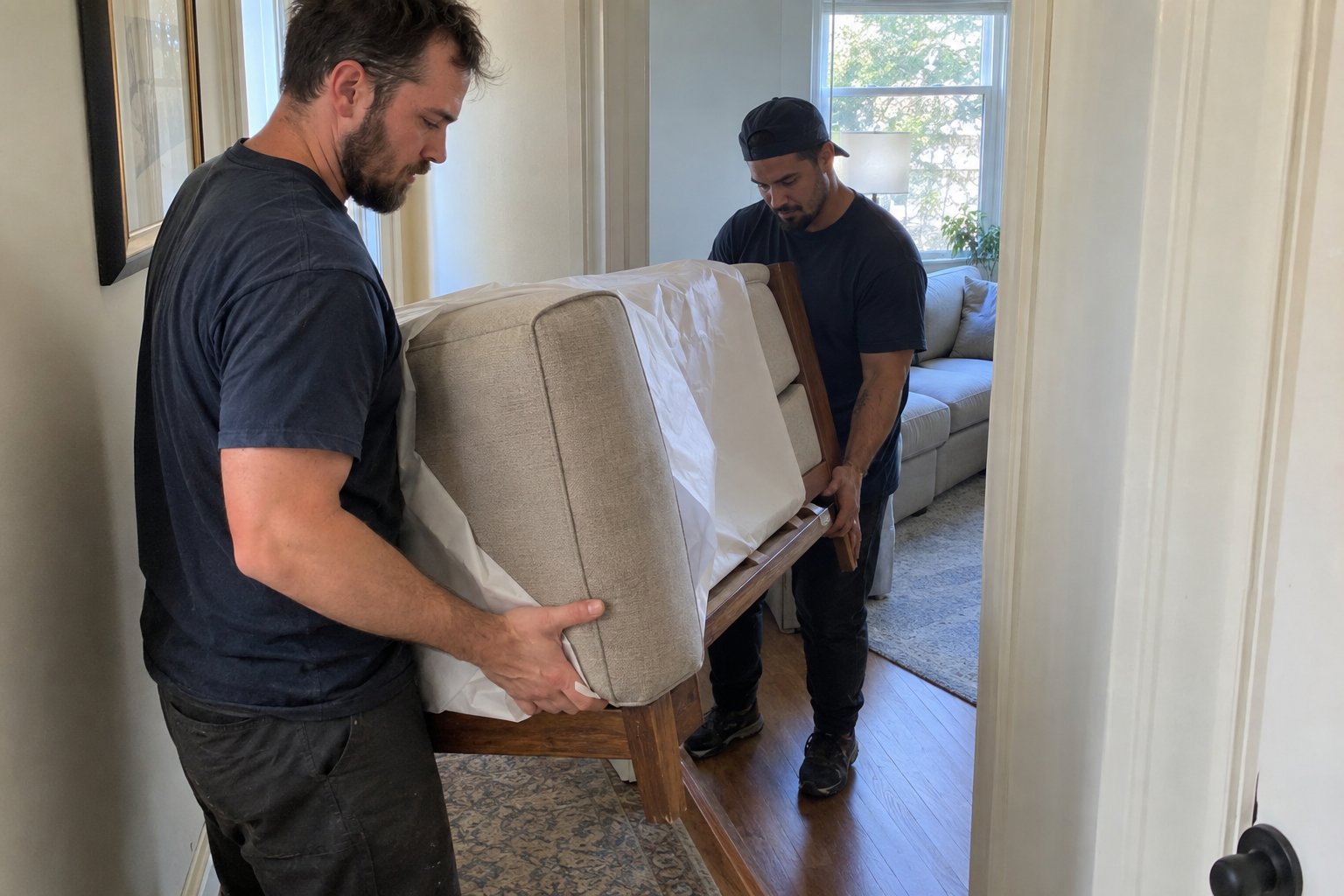
Loading a couch on its end, when the frame allows it, saves significant floor space compared to laying it flat. Just remove and box the cushions first so they do not get pinned or torn.
It is possible for small apartments with mostly boxes, but anything with a mattress, large furniture, or appliances is safer and faster with at least one other person, and heavy or awkward pieces are best left to a trained moving crew.
No long forms, no delays. Just a move that’s ready when you are. Secure your moving date today.