
Learn how to move a gun safe and transport firearms legally and safely, from disassembly and weight limits to state transport laws and secure storage.
Learning how to move a gun safe safely comes down to two problems most people underestimate: the safe itself can weigh anywhere from 300 to over 1,000 pounds, and the firearms inside are subject to transport rules that differ from state to state. Get either one wrong and you risk a crushed foot, a damaged floor, or a legal headache you did not see coming. This guide covers both the physical logistics of the safe and the separate, often overlooked step of transporting the firearms and ammunition correctly.
Most gun safes are not designed to be moved often. Manufacturers build them heavy on purpose, since weight is part of what makes them theft-resistant, but that same weight makes them one of the most dangerous items in any home to relocate without the right equipment and a plan.
A small personal safe can weigh 300 to 400 pounds, while a large family-sized gun safe with thick steel walls and a full fire-rated liner can top 1,000 to 1,500 pounds. That weight determines almost every decision that follows, from which dolly you use to whether you need a second or third set of hands.
Before you move anything, find the weight on the manufacturer's spec plate or manual. A safe rated under 600 pounds can sometimes be handled by two strong adults with a heavy-duty appliance dolly. Anything heavier needs a rated safe-moving dolly with a wider wheelbase and load capacity to match, plus a realistic look at whether the stairs, doorways, or flooring in either home can handle that concentrated load.
Residential floors are generally built to handle normal household weight spread across a room, not 1,000 pounds resting on a four-square-foot footprint. If the safe is going upstairs, on a second-story floor, or across an older wood subfloor, it is worth confirming the framing can take it, especially if the safe will sit in the same spot long term.
Moving a gun safe requires equipment rated well above what you would use for a refrigerator or dresser. At minimum, plan on a heavy-duty appliance dolly or dedicated safe dolly, a four-wheel piano board or safe skid for long straight runs, furniture straps rated for the safe's weight, and a ramp for any stairs or level changes.
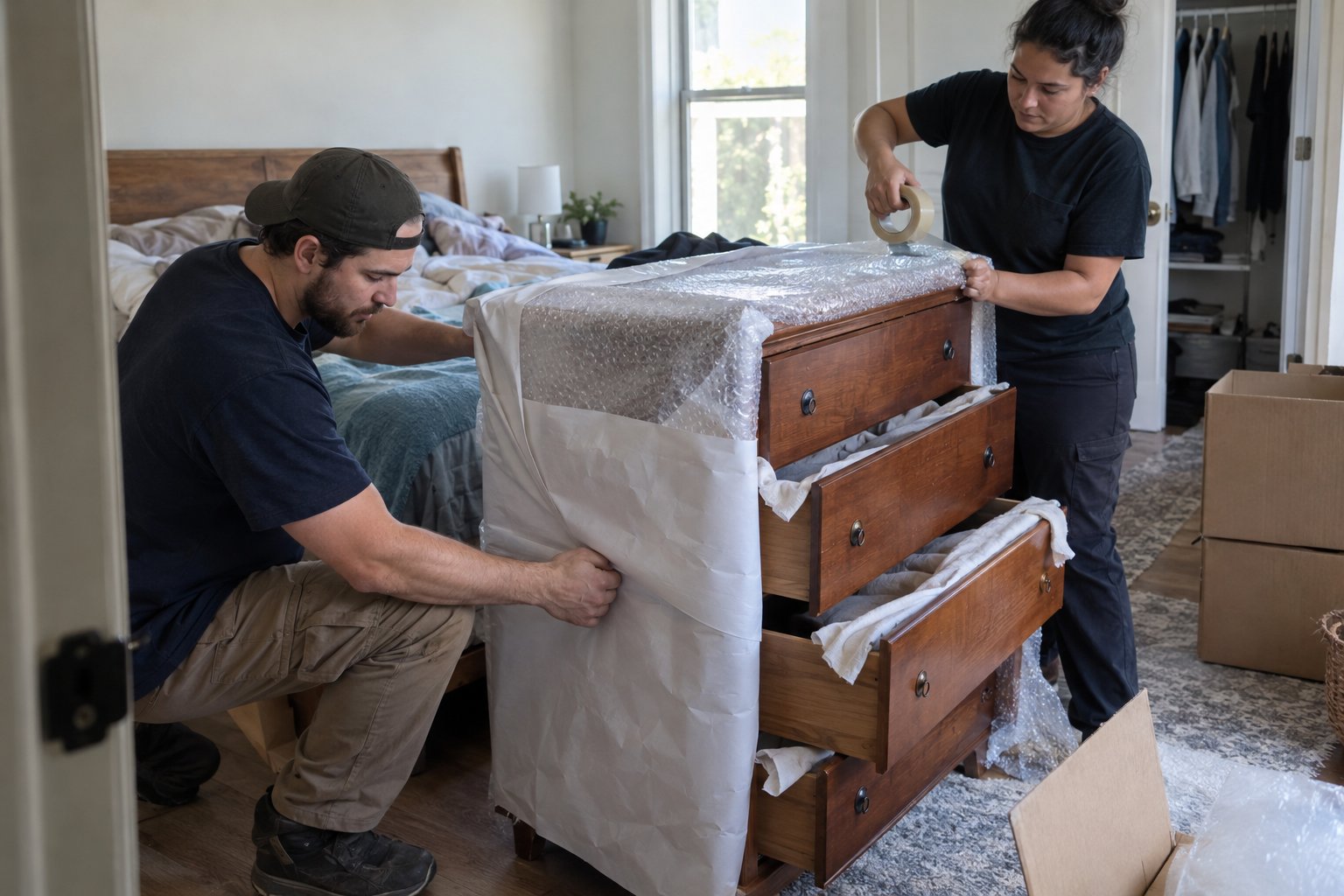
A stair-climbing dolly is worth renting if the safe has to go up or down a flight, since walking a safe down stairs by hand is one of the more common ways people get seriously hurt during a move. Corner protectors and a few pieces of plywood or hardboard laid down as a path will save your flooring from the safe's edges and the dolly's wheels. The same core equipment used to move a piano across a room, namely a rated dolly, straps, and a controlled path, applies almost directly to a heavy safe.
Never move a loaded gun safe. Removing the firearms, ammunition, and valuables first reduces the weight, but more importantly it separates the transport of the safe (a heavy object) from the transport of the firearms (a regulated one), which need to be handled under different rules.
Firearms should travel unloaded, cased, and inaccessible to the driver during the trip, and ammunition should generally be packed separately from the guns. Federal law under the Firearm Owners Protection Act allows interstate transport of legally owned firearms as long as they are legal at both the origin and destination, but state and local rules on top of that vary widely.
Some states require firearms to be locked in a container separate from the passenger compartment, others regulate magazine capacity or specific firearm types outright. If your move crosses state lines as part of a long distance move, check the destination state's laws before moving day rather than after the truck is loaded. A lockable hard case for each firearm, kept with you rather than packed in the general household shipment, is the simplest way to stay in control of chain of custody.
Many moving companies will move the empty safe as a heavy item but will not accept liability for transporting the firearms themselves, and that is a reasonable line for them to draw. Plan to transport the guns and ammunition yourself, in your own vehicle, separate from the truck carrying the safe and the rest of your belongings.
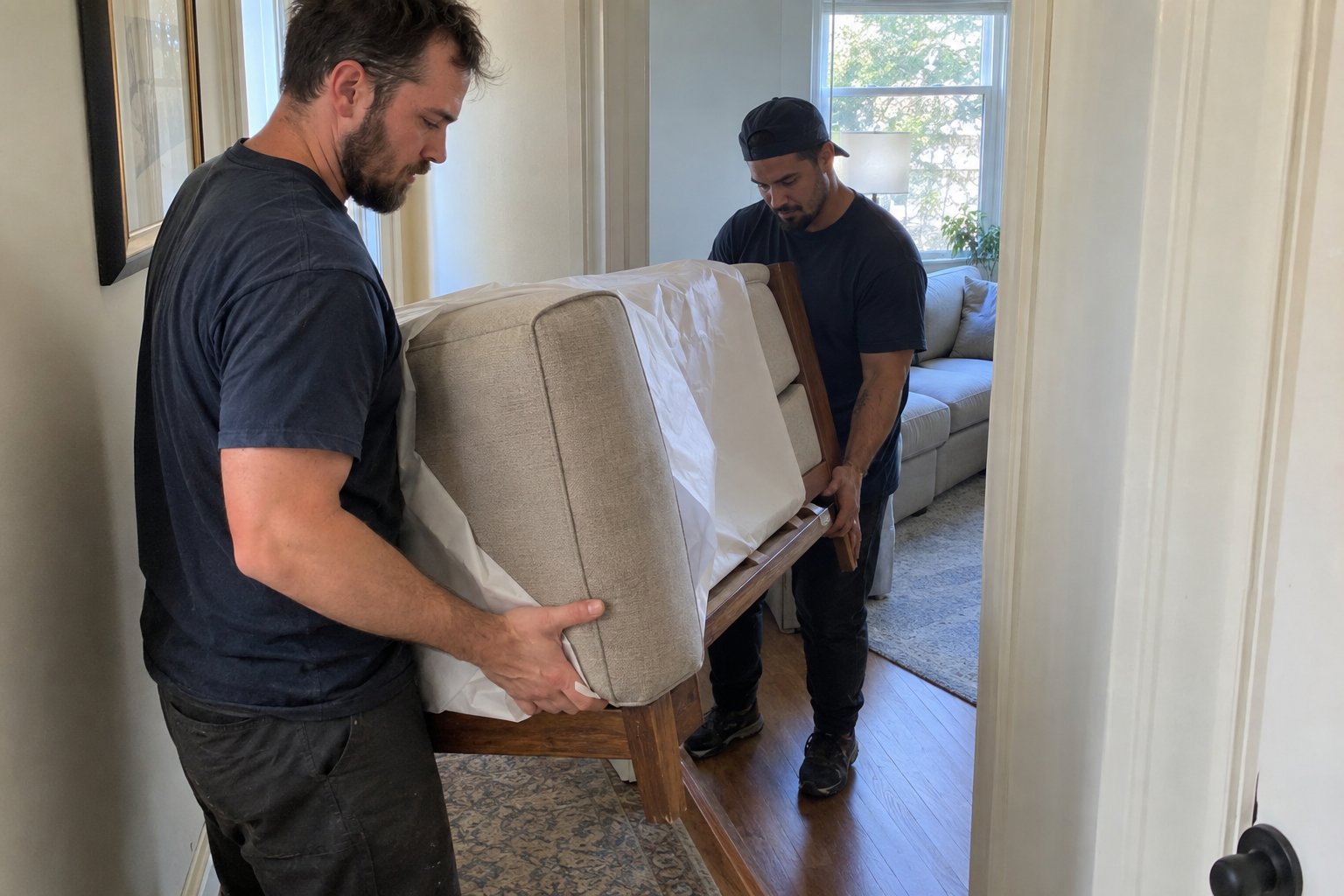
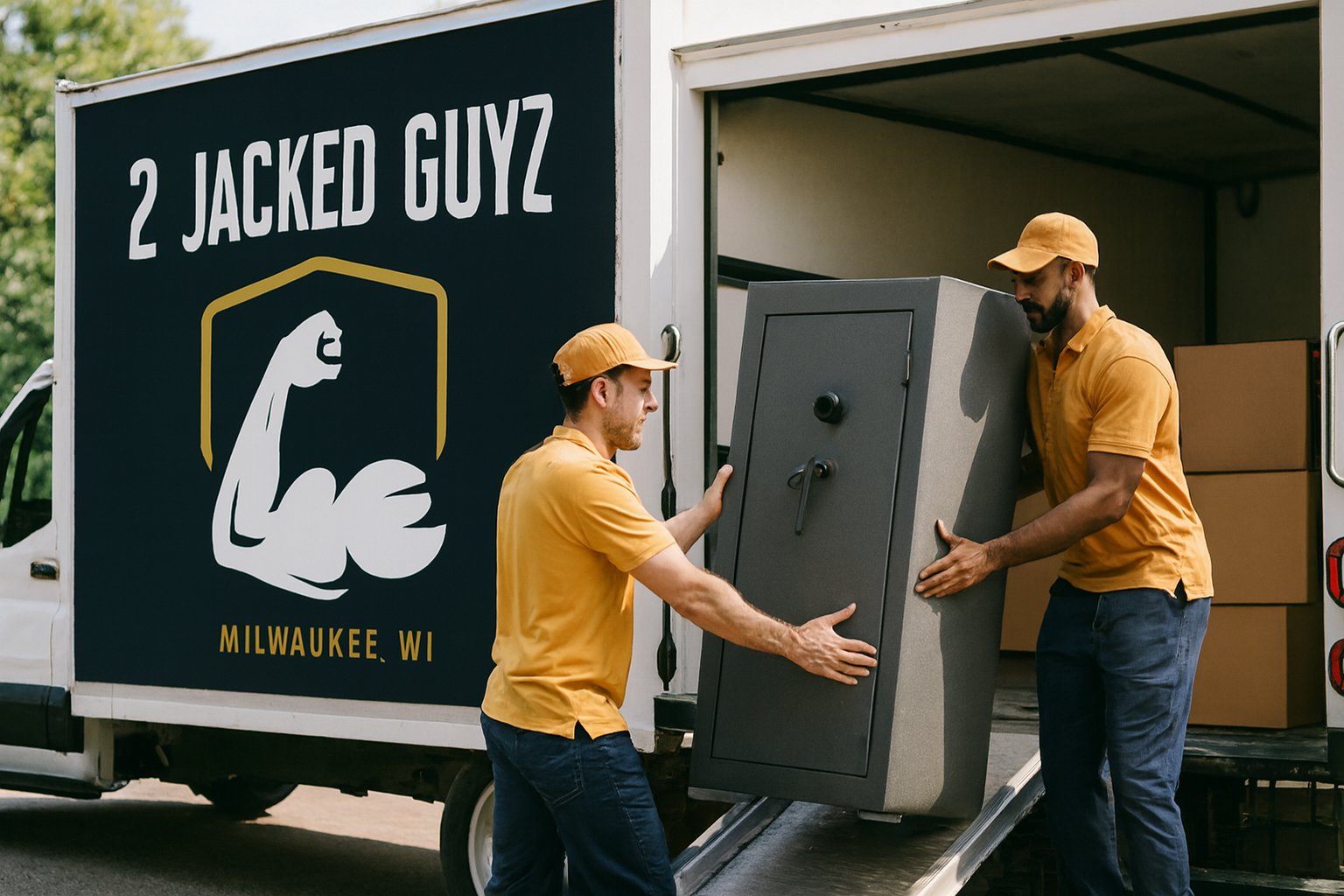
Moving the physical safe safely means tilting it onto the dolly at a controlled angle, strapping it securely, and moving it in a straight, cleared path with no rushing. Never try to walk a heavy safe on its own feet across a room; the concentrated weight on a small base makes it prone to tipping.
Measure every doorway, hallway turn, and staircase width against the safe's dimensions before moving day, not during it. Safes are frequently a tight fit through standard 32 or 36 inch doorways, and some models need a door removed from its hinges to clear the frame. If the numbers are close, it is worth confirming clearance rather than finding out mid-move that the safe is stuck in a hallway.
Once a safe crosses roughly 600 pounds, the margin for error on stairs or uneven ground drops fast, and a fall at that weight can cause serious injury or destroy flooring, drywall, and stair treads. A crew experienced with heavy residential items brings rated equipment and enough hands to control the load the whole way, which is usually worth the cost compared to the risk of doing it alone.
Choose the new location for the safe before moving day, not after it is already sitting in the entryway. Interior closets, secured basement corners, and spots away from exterior walls and windows are generally better for both security and fire protection than a spot chosen purely for convenience.
If you plan to bolt the safe to the floor, check what is underneath, whether that is a concrete slab or specific floor joists, before drilling. Anchoring a safe meaningfully improves its resistance to being tipped or dragged out during a break-in, so it is worth the extra step rather than leaving it freestanding. If the new location is in a finished basement, keep in mind the same access and clearance issues that apply when you pack and move a basement, since stairwells and support posts often dictate where a heavy safe can actually end up.
A gun safe is one of the heaviest single items most homeowners will ever move, and it deserves the same planning you would give a piano or a hot tub. If the weight, stairs, or doorway clearances make you nervous, bringing in a crew with the right dollies, straps, and experience with residential moving takes the physical risk off your plate so you can focus on getting the firearms themselves relocated correctly and legally. You can get a moving quote from our team before you commit to a plan.
Request a personalized quote and see how careful planning and reliable service make every move smoother. Our team prepares each step to handle challenges safely and efficiently.
It depends on the weight. Safes under roughly 300 to 400 pounds can sometimes be handled by two capable adults with a heavy-duty dolly and straps, but anything heavier, especially on stairs, is genuinely dangerous to move without a rated safe dolly and additional help.
Yes. Firearms and ammunition should always be removed from a safe before it is moved, then transported separately in locked, unloaded cases rather than left inside the safe during transit.
Most moving companies will move an empty safe as a heavy item but decline liability for the firearms themselves. Plan to transport guns and ammunition yourself, in your own vehicle, kept under your control.
A stair-climbing dolly rated for the safe's weight is the safest option, used with a second or third person to control the angle and speed. Walking a heavy safe down stairs by hand without equipment is one of the most common causes of injury during these moves.
Federal law generally allows transporting legally owned firearms across state lines if the firearm is legal at both the origin and destination, but individual states add their own storage and transport requirements. Check the destination state's specific rules before moving day.
No long forms, no delays. Just a move that’s ready when you are. Secure your moving date today.