
Learn how to pack and move a bonus room the right way — from multipurpose furniture and mixed storage to entertainment gear and awkward built-ins.
Figuring out how to pack and move a bonus room is one of those moving challenges that sneaks up on you — because the bonus room is, by definition, undefined. It is the room that became a second living room, or a media room, or a homework space, or a guest overflow area, or all four of those things at once depending on the day. By the time moving day arrives, you are standing in a room with a sectional sofa that may not fit through the doorway it came in, a wall-mounted television above a floating media console, a gaming setup with a tangle of cords behind it, a daybed shoved in the corner with a collection of throw blankets, and shelving units stuffed with board games, DVDs, sports equipment, and everything else that did not have an obvious home anywhere else in the house. The bonus room sits at the intersection of relaxed living and accumulated overflow, and that combination makes it uniquely tricky to plan, pack, and move without something getting damaged, lost, or left behind.
The good news is that packing and moving a bonus room — even a large, fully furnished, heavily used multipurpose one — is completely manageable when you approach it with the right materials, the right sequence, and a clear understanding of what each category of item actually needs. And if you would rather hand the heavy lifting to professionals who know how to handle everything from a sectional sofa to a wall-mounted entertainment system, the team at 2 Jacked Guyz professional movers is ready to take it from overwhelming to done.
Before you reach for a single box or start unhooking a single cable, walk through your bonus room slowly and take a real inventory of everything in it. Bonus rooms have a way of becoming the household's catch-all space — and that means the actual volume of what needs to be packed is almost always larger than it looks at first glance.
As you walk through, sort everything into three honest categories: move it to the new home, donate or sell it, and discard it responsibly. That oversized beanbag chair with the slow leak, the DVD collection you have not touched since streaming took over, the gaming chair with the broken armrest, the air mattress that came out for one guest visit three years ago — all of these deserve a hard look before you commit to packing and transporting them. Moving is the single best opportunity you will have to reset what lives in this room, and starting that reset before you pack means a lighter truck and a bonus room at the new home that starts fresh instead of importing the clutter of the old one.
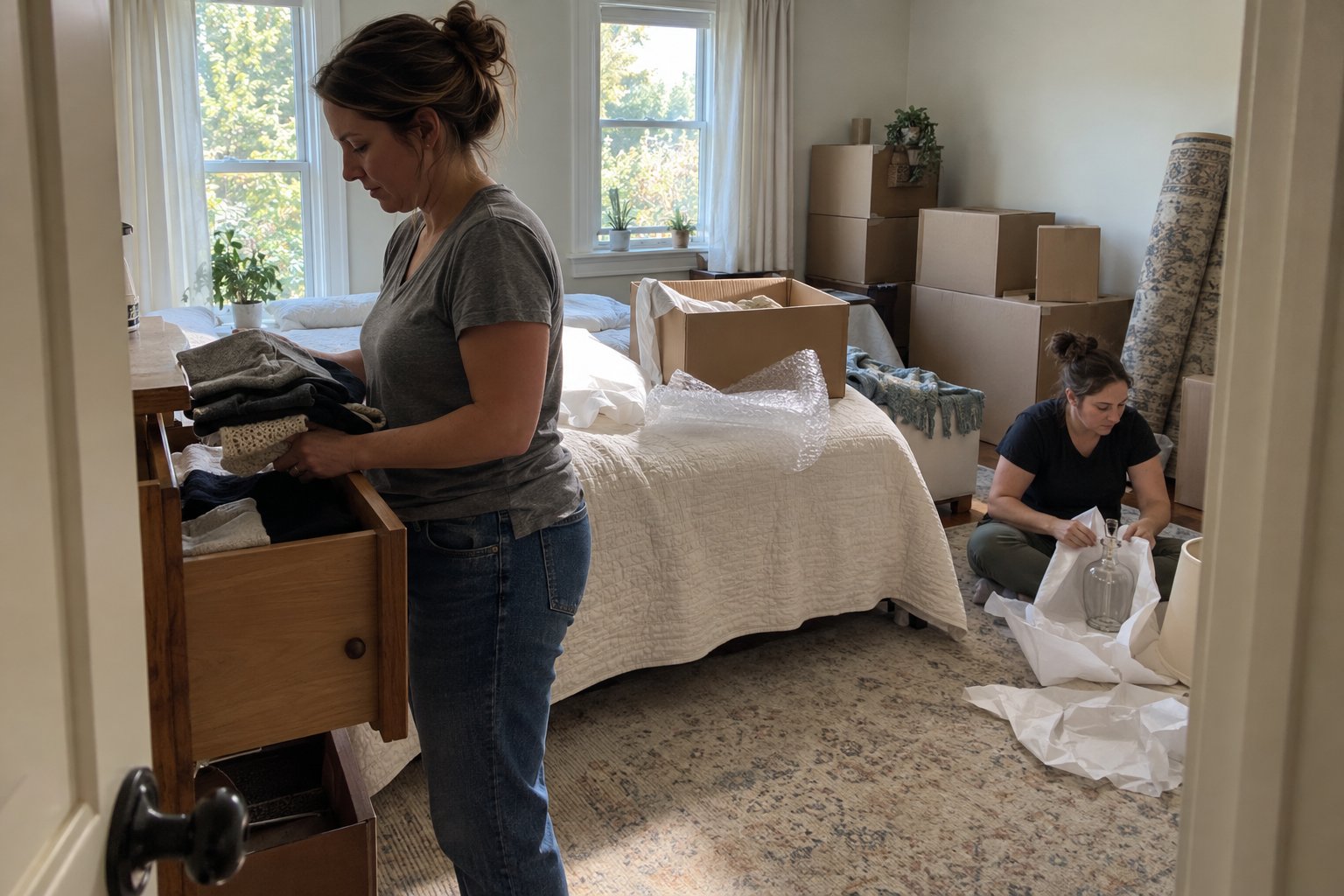
Once you know exactly what is making the move, group items by category: large furniture, electronics and cords, shelving and storage units, soft goods like pillows and throws, and small loose items like games, books, and accessories. Having those groups clear before you start packing makes the whole process faster and reduces the chance that something fragile ends up boxed with something heavy.
Bonus room furniture tends toward the large and heavy end of the spectrum — sectional sofas, sleeper sofas, large recliners, and oversized media consoles are all common — and none of those pieces love the moving process without careful planning.
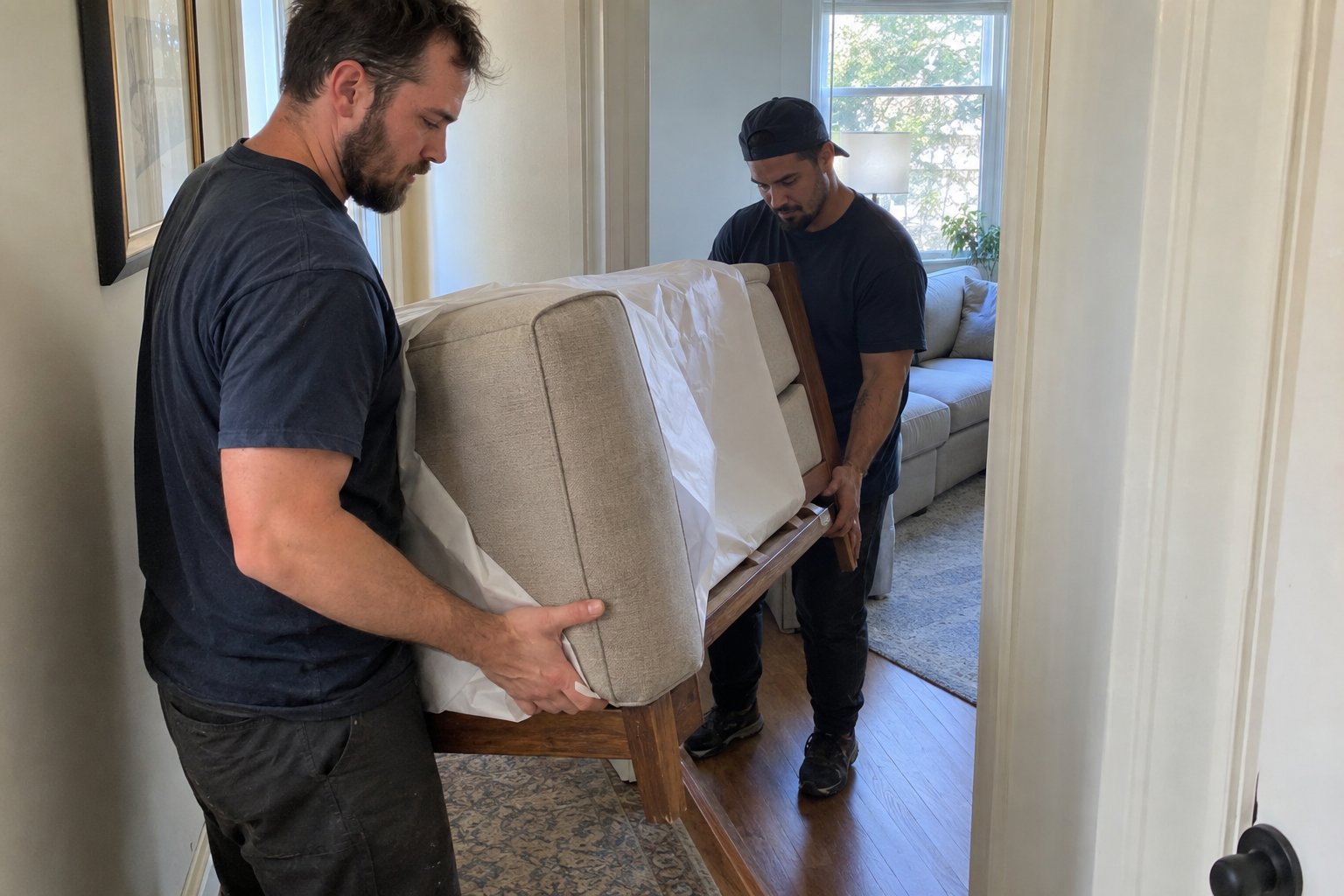
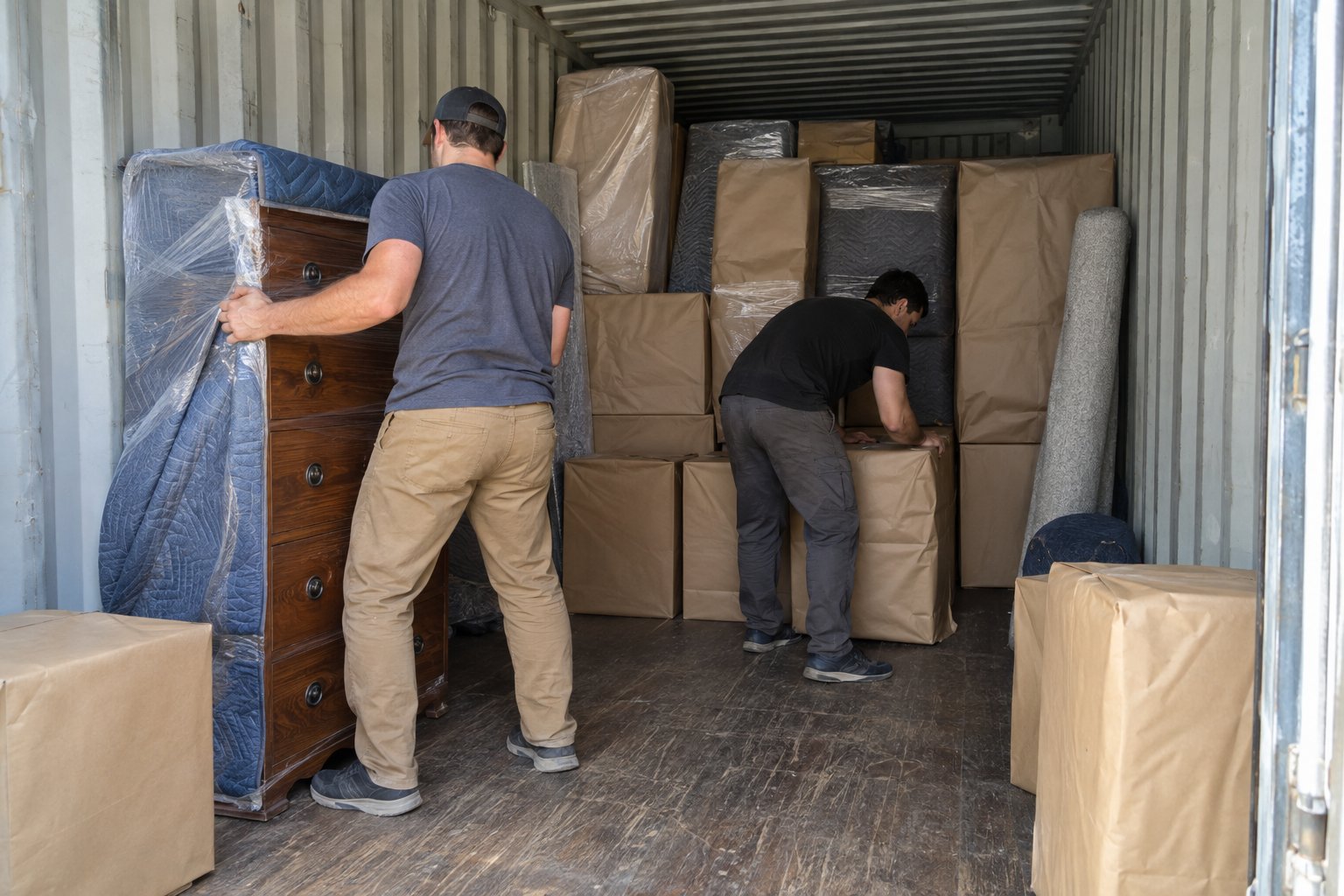
Start by disconnecting all the sections of a sectional and measuring each piece individually against your doorways, hallways, and stairwells at both the current home and the destination. What assembled itself neatly in the bonus room does not always disassemble easily, and a section that just barely fits through a doorway going in may need to be angled, tilted, or partially disassembled further to get it back out. Wrap each section in moving blankets and secure with stretch wrap before loading — fabric upholstery picks up dirt, moisture, and abrasion easily in a moving truck. Sleeper sofas carry the added weight of an internal mattress frame, so plan for extra movers and a furniture dolly when handling those pieces.
Many recliners can be separated into a base and a back by releasing a hidden locking mechanism on the underside. Check the manufacturer's documentation or look for a lever or button at the back attachment point before attempting to move the piece as a single unit — separating the back dramatically reduces both the weight and the footprint. Wrap both pieces in moving blankets and keep them upright during transport.
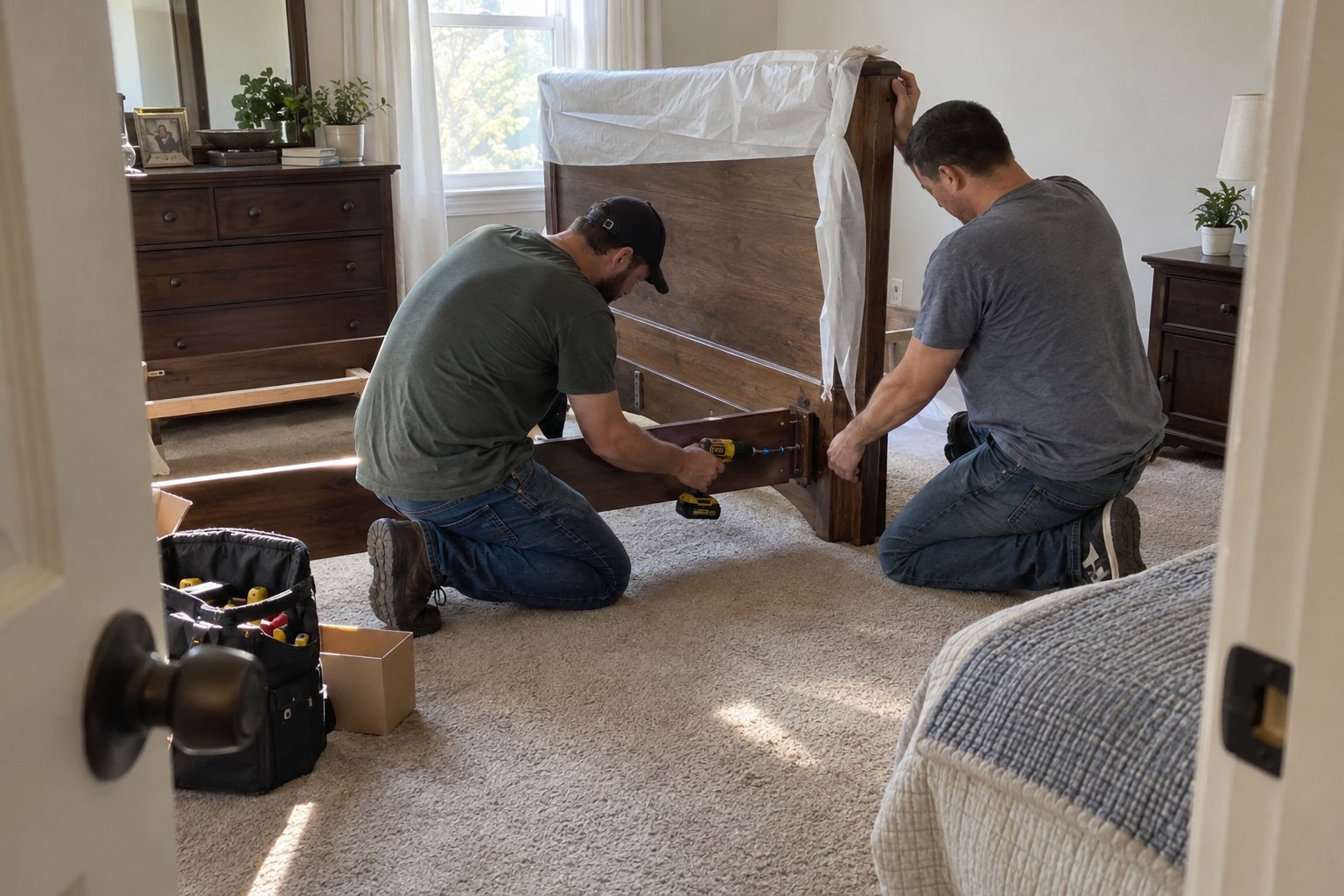
Freestanding media consoles should be emptied completely before moving — drawers and doors add weight and shift during transport, which stresses joinery. Remove all drawers and wrap them individually. Floating shelving units anchored to the wall require careful removal — locate the studs, document how the brackets are attached, and save all hardware in a labeled bag taped to the underside of a shelf. Patch the wall before you leave if your lease or sale agreement requires it.
The electronics ecosystem that builds up in a bonus room is often the most time-consuming part of the move — not because the items are especially heavy, but because they are interconnected in ways that are easy to forget and hard to reconstruct later. A little extra time spent here before moving day will save you hours of frustration at the new home.
A wall-mounted television is one of the items most likely to be damaged during a move if it is not handled correctly. The original box and foam inserts are by far the best packaging — hold onto them if you still have them. If you do not, a flat-screen TV box (available at moving supply stores or online) cut to size with added foam corner protectors is your next best option. Never wrap a flat-screen television in bubble wrap alone without rigid support on both faces — the screen can flex and crack under pressure even without a visible impact. Remove the mount bracket from the wall before moving day and bag the hardware separately.
Before you unplug anything, take photographs of the back of every console, receiver, and device so you have a reference for reconnecting at the new home. Label both ends of every cable with masking tape and a marker — "console HDMI left port," "subwoofer power" — before you remove them. Coil cables loosely rather than tight-wrapping them, which stresses the internal wiring. Pack consoles and receivers in their original boxes if available, or wrap in anti-static bubble wrap and box individually with cushioning on all six sides.
Loose cords that are not labeled and bundled before the move will cost you time and frustration at the other end. Invest twenty minutes in labeling, coiling, and bundling every cord before packing day arrives. Use reusable velcro ties rather than zip ties, which are easy to over-tighten and can damage cable sheathing. Pack all cords and accessories for a given device in the same clearly labeled box or bag.
The shelving units and storage areas of a bonus room tend to hold the most unpredictable mix of items in the whole house — board games with small loose pieces, hardcover books, sports gear, seasonal decorations, craft supplies that migrated from the craft room, and a dozen other categories that ended up here by default. Each of those categories has different packing needs.
Board game boxes are not structurally designed to be stacked or jostled — the internal pieces shift and the lids bow and crack under weight. Seal each game box with a rubber band or a strip of painter's tape before packing to keep lids on and pieces contained. Pack games flat, stacked neatly in boxes, with heavier games on the bottom and lighter ones on top. Label the box clearly and mark it as "fragile" even though the games themselves are not — the warning will encourage careful stacking in the truck.
Books should always be packed in smaller boxes — the weight adds up fast, and an overfilled large box becomes a back injury waiting to happen. Pack books flat or spine-down, never spine-out, to protect the bindings. Fill gaps with packing paper to prevent shifting. DVDs and video game cases can be packed in medium boxes but should be kept away from heavy items that could crack the cases.
Sports gear that lives in the bonus room — exercise bands, foam rollers, yoga mats, boxing gloves, helmets — varies widely in size and fragility. Roll yoga mats and secure with a strap. Helmets should be wrapped in packing paper and boxed individually or nested carefully. Foam rollers and resistance bands can be grouped in a large wardrobe box or a duffel bag. Anything sharp or with exposed hardware should be wrapped to avoid tearing into other items in the truck.
The bonus room is often loaded last or second-to-last on moving day because it sits away from the main living areas, and that timing works in your favor — the truck is partially loaded and you have a clearer sense of what space remains. That said, the large furniture pieces (sectional sections, media console, oversized chairs) should go on the truck early in the loading process so they can be positioned against the walls and secured, with smaller boxes filling in around them.
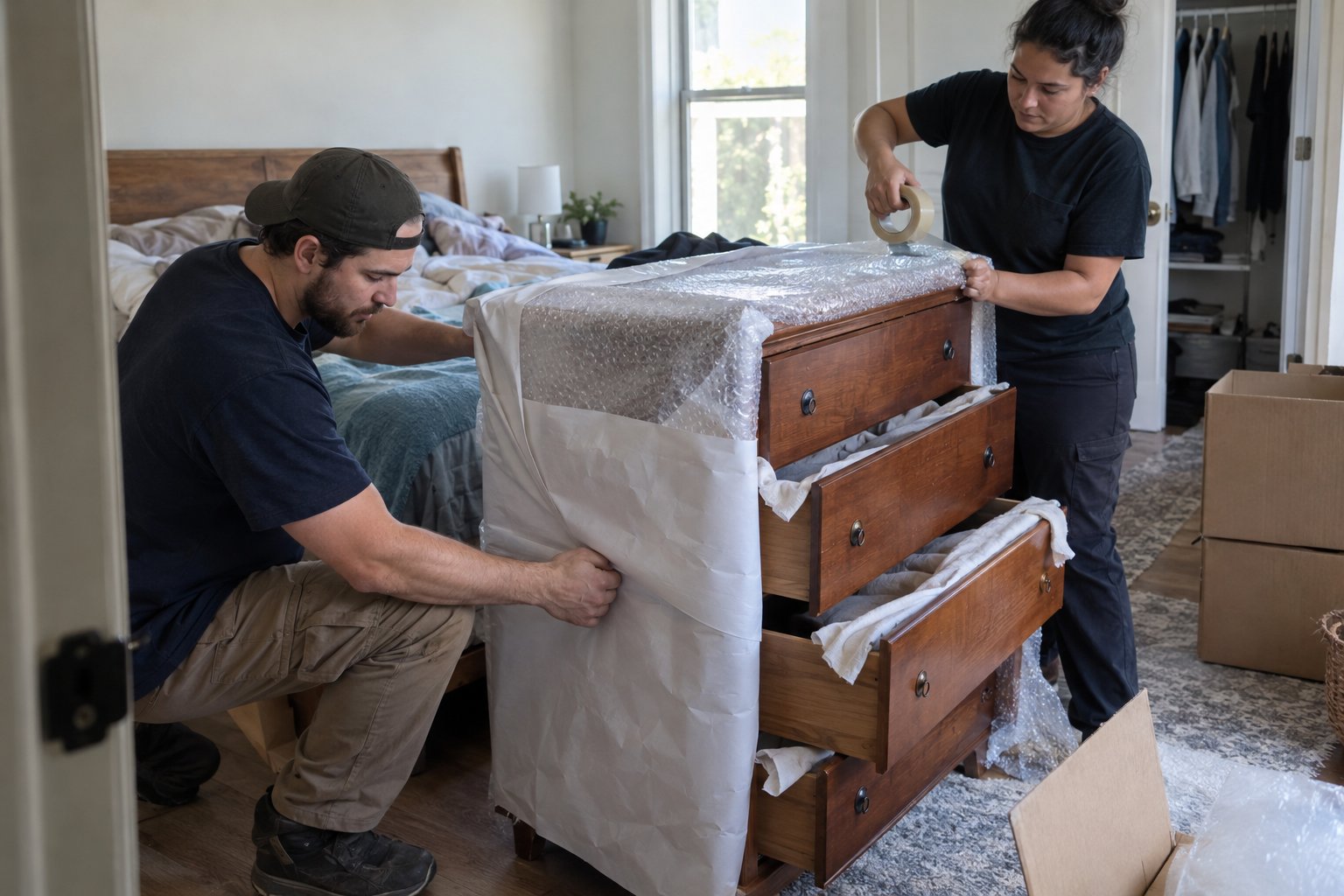
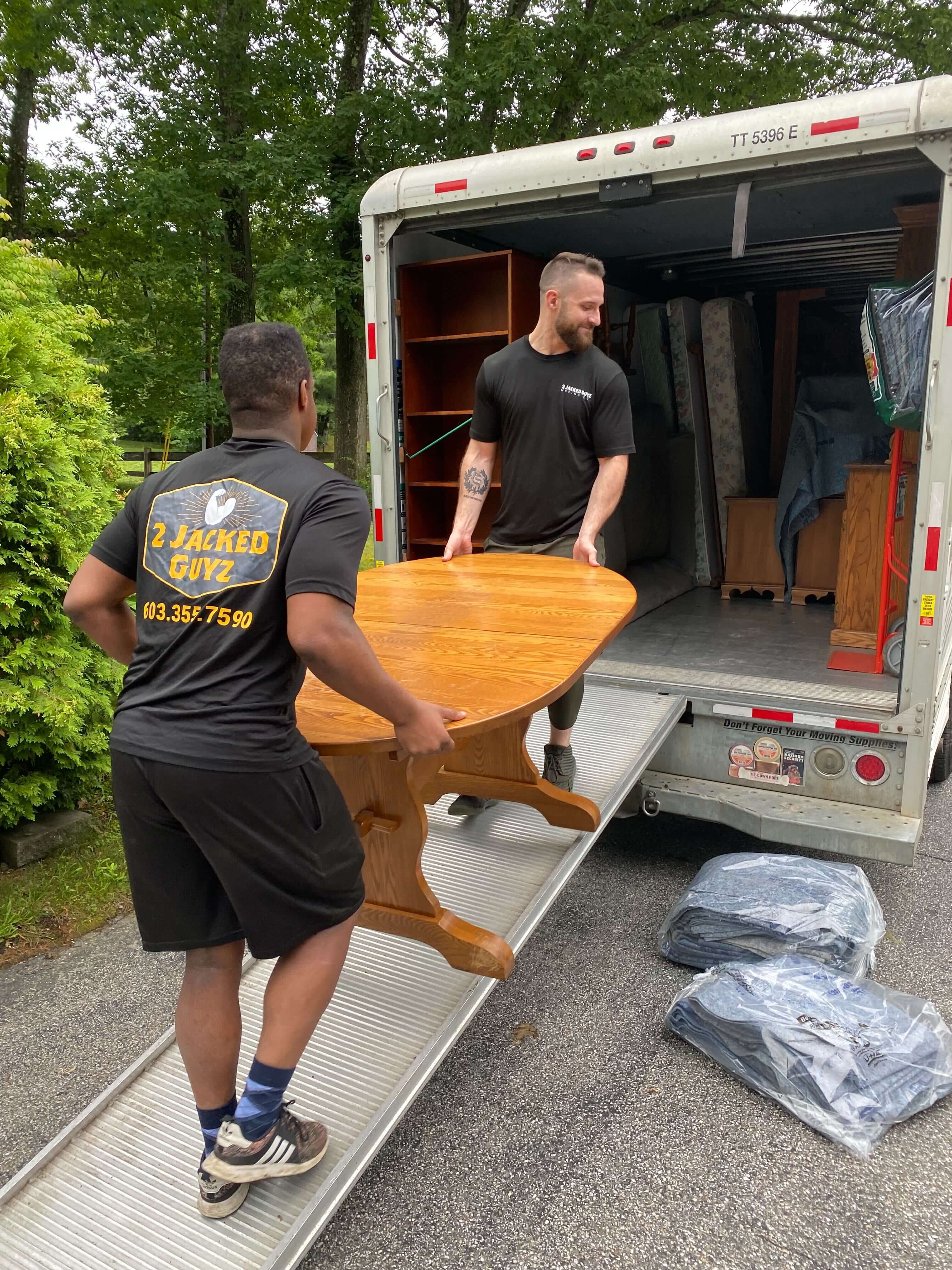
Wrap all furniture pieces in moving blankets before they leave the room. Use furniture dollies for heavy media consoles and base sections of sleeper sofas — attempting to drag or carry these pieces without equipment risks both injury and floor damage. Wrap door frames and stair railings with moving blankets in any high-traffic path before carrying furniture through — one unpadded corner on a sectional section can gouge a freshly painted wall in an instant.
Stack boxes in the truck from heaviest at the bottom to lightest at the top, and never stack heavy boxes on top of electronics. Use the space inside large furniture pieces — reclined sections, open media console shelves — to carry soft goods like throw blankets and pillows, which protects the furniture from shifting while making the most of available truck space.
Whether you are tackling this room yourself or working with a professional crew, a well-planned bonus room move is one of the most satisfying parts of the whole process — because when it comes together at the new home, the multipurpose space that took years to build at the old place can rebuild itself even better. The team at 2 Jacked Guyz professional movers has helped hundreds of families move every kind of bonus room setup, and they are ready to help yours too.
Request a personalized quote and see how careful planning and reliable service make every move smoother. Our team prepares each step to handle challenges safely and efficiently.
Start by separating all the individual sections and measuring each piece against your doorways and hallways at both homes before moving day. Wrap each section in moving blankets secured with stretch wrap — not tape directly on the fabric — before carrying it through the house. Protect door frames and stair railings with moving blankets along the entire path, and use a furniture dolly for any section that is too heavy to carry safely. Angle and tilt each section as needed to navigate tight turns, and never rush — taking an extra few minutes to maneuver carefully is far less costly than a wall repair.
The safest option is the original manufacturer's box with the original foam inserts, which are engineered for the exact dimensions of your screen. If you no longer have the original box, a flat-screen TV moving box (available at moving supply retailers) with added foam corner protectors is the next best choice. Never rely on bubble wrap alone without rigid backing on both faces of the screen — the panel can flex and crack under pressure even without a direct impact. Remove the wall mount before moving day, bag all hardware, and mark the TV box as fragile on all sides.
Before you unplug anything, photograph the back of every device and console so you have a visual reference for reconnecting at the new home. Then label both ends of every cable with masking tape and a marker — include what the cable connects and which port it uses. Coil cables loosely using reusable velcro ties (not zip ties, which can damage sheathing) and store all cords for a given device together in a labeled bag or small box. This twenty-minute step before packing day will save you hours of trial-and-error reconnecting at the other end.
It depends on how actively you use them. If you have not played a board game or watched a DVD in more than a year, the move is an excellent opportunity to donate or sell those items rather than transport them. Packing, loading, and unloading media collections takes real time and adds measurable weight to the truck. What you do decide to keep should be packed carefully — seal board game boxes with rubber bands or painter's tape to keep pieces contained, pack games flat with heavier titles on the bottom, and use small to medium boxes for books and DVD cases to keep individual boxes manageable.
Consider hiring professional movers if your bonus room contains a sleeper sofa or large sectional that must navigate stairs or tight hallways, a wall-mounted television that requires safe dismounting and transport, a full gaming or home theater system with complex electronics, or a significant volume of shelving, furniture, and mixed storage that would take multiple trips to move with a rental truck. Professional movers bring the equipment, padding, and experience to handle all of those scenarios safely and efficiently — and the cost of hiring help is almost always less than the cost of repairing a damaged television, a gouged wall, or an injured back.
No long forms, no delays. Just a move that’s ready when you are. Secure your moving date today.