
Learn how to move large furniture safely without scratching floors or walls. Get expert tips on tools, techniques, and when to call professional movers.
Figuring out how to move large furniture without damaging your home is one of the most stressful parts of any move or home renovation. Whether you are rearranging a living room or loading a moving truck, heavy sofas, dressers, bookshelves, and bed frames can leave deep gouges in hardwood floors, scrape paint off walls, and strain your back in an instant. With the right preparation and the proper set of tools, however, you can protect both your belongings and your property from unnecessary harm.
Before you push a single piece, take a moment to map out the full path from point A to point B. Measure every doorway, hallway, and stairwell along the route. Knowing your clearances in advance eliminates guesswork and prevents that dreaded moment where a couch gets stuck halfway through a doorframe. If you would rather leave it to the experts, the team at 2 Jacked Guyz professional movers is ready to handle the heavy lifting for you.
No amount of brute strength compensates for the wrong equipment. Assembling the correct tools before you begin is one of the most important steps when learning how to move large furniture without scratching floors or walls.
Investing in or renting these tools before moving day saves you from costly repair bills and avoids the physical injuries that come from improvising with broom handles and bedsheets.
Your floors and walls are vulnerable long before the first piece of furniture moves. Laying down floor protection in advance is a simple step that most DIY movers skip — and almost always regret.
Place thick sheets of rosin paper, Ram Board, or plywood panels along the entire travel path. These rigid surfaces distribute the weight of dolly wheels and prevent point pressure from cracking tiles or denting hardwoods. For area rugs, simply roll them up and move them out of the path entirely to avoid tripping hazards.
Carpet is more forgiving than hardwood, but heavy furniture legs can still leave permanent compression marks. Use hard-plastic furniture sliders designed specifically for carpet — these have a smooth bottom surface that lets pieces glide without dragging carpet fibers up with them.
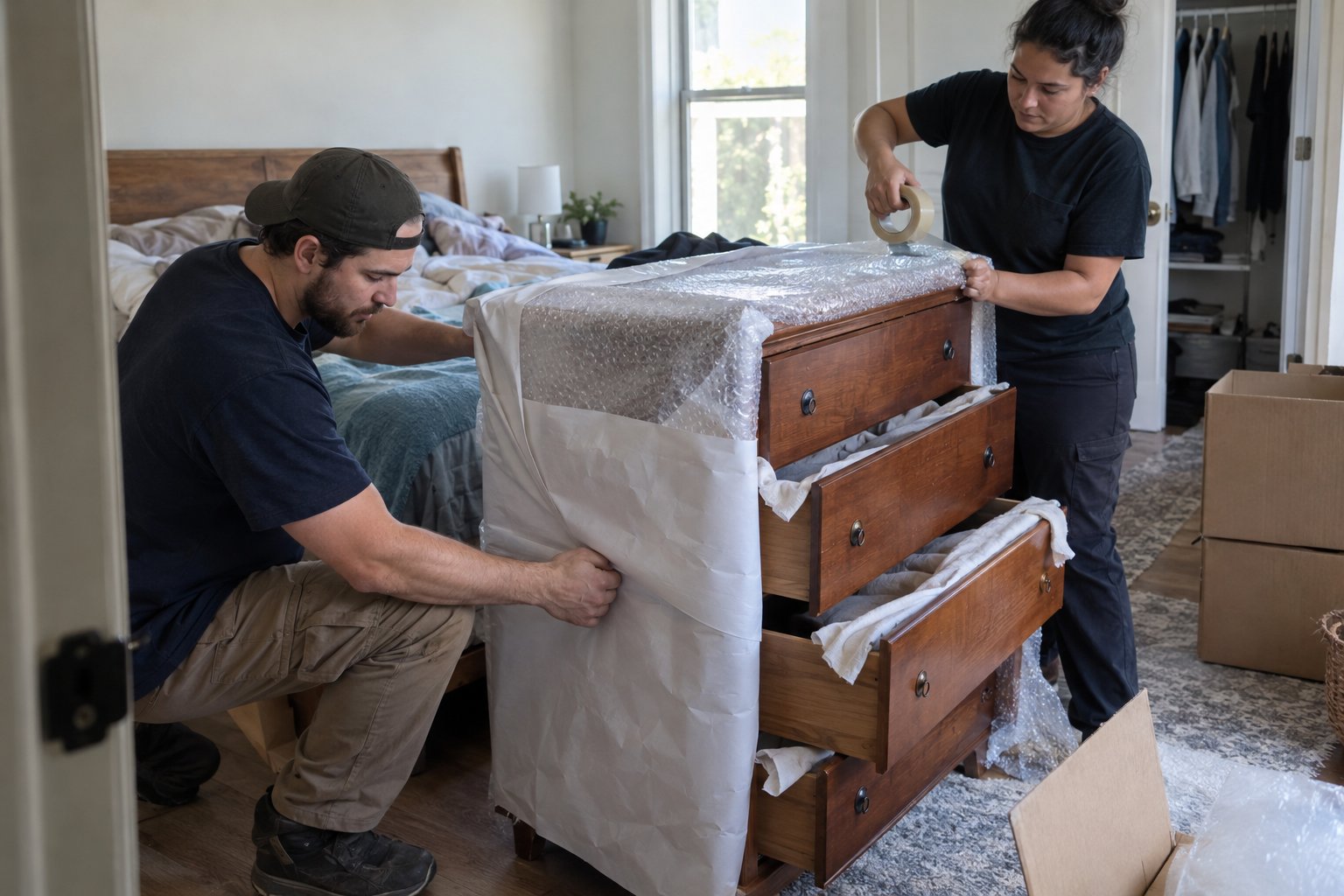
Attach corner guards or fold a moving blanket over any door frame you will be navigating through. A single sharp corner on a dresser can peel away an entire strip of paint or crack drywall in under a second. Pad the furniture corners with bubble wrap secured by stretch wrap for additional protection through tight passages.
Even with perfect equipment, poor lifting form can cause serious injury and accidental property damage. The way you physically handle large furniture matters as much as the tools you use.
Always keep your back straight and hinge at the hips and knees when lifting. Squatting down to the item level and driving up through your legs protects your lumbar spine from the compressive forces that cause disc injuries.
The farther a heavy object is from your center of gravity, the more leverage it exerts on your joints. Hold furniture tight against your torso while navigating turns and thresholds.
For extremely heavy pieces like solid wood wardrobes or marble-topped dressers, avoid lifting entirely when you can tip and slide instead. Tilt the piece at a slight angle onto a furniture slider and push it smoothly along the floor. This technique dramatically reduces the peak load on any individual mover.
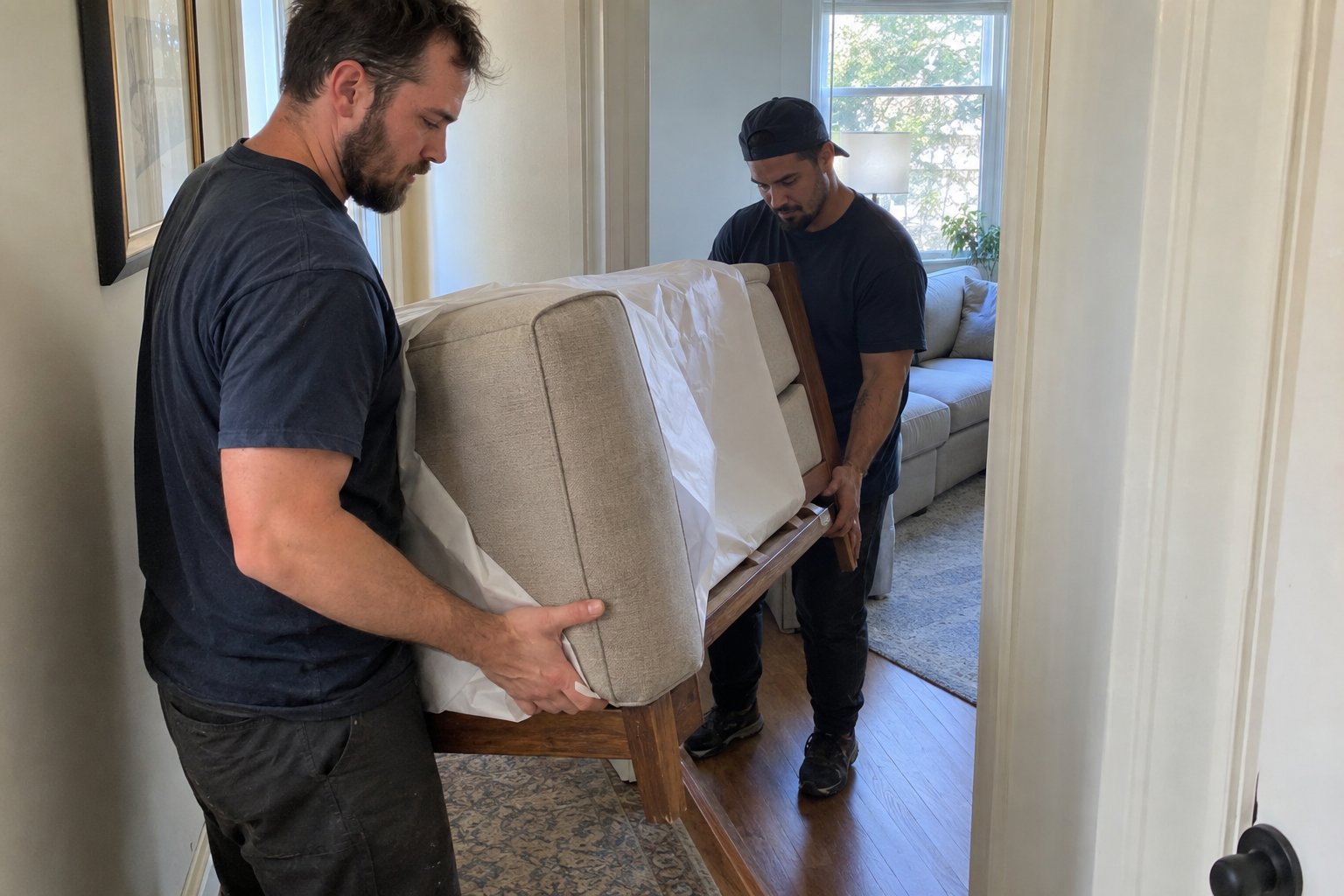
Never navigate a tight hallway or staircase without a dedicated spotter who is not carrying any load. Their sole job is to watch clearances, warn of obstacles, and call out directional adjustments. This single habit prevents the majority of wall and floor damage that occurs during DIY furniture moves.
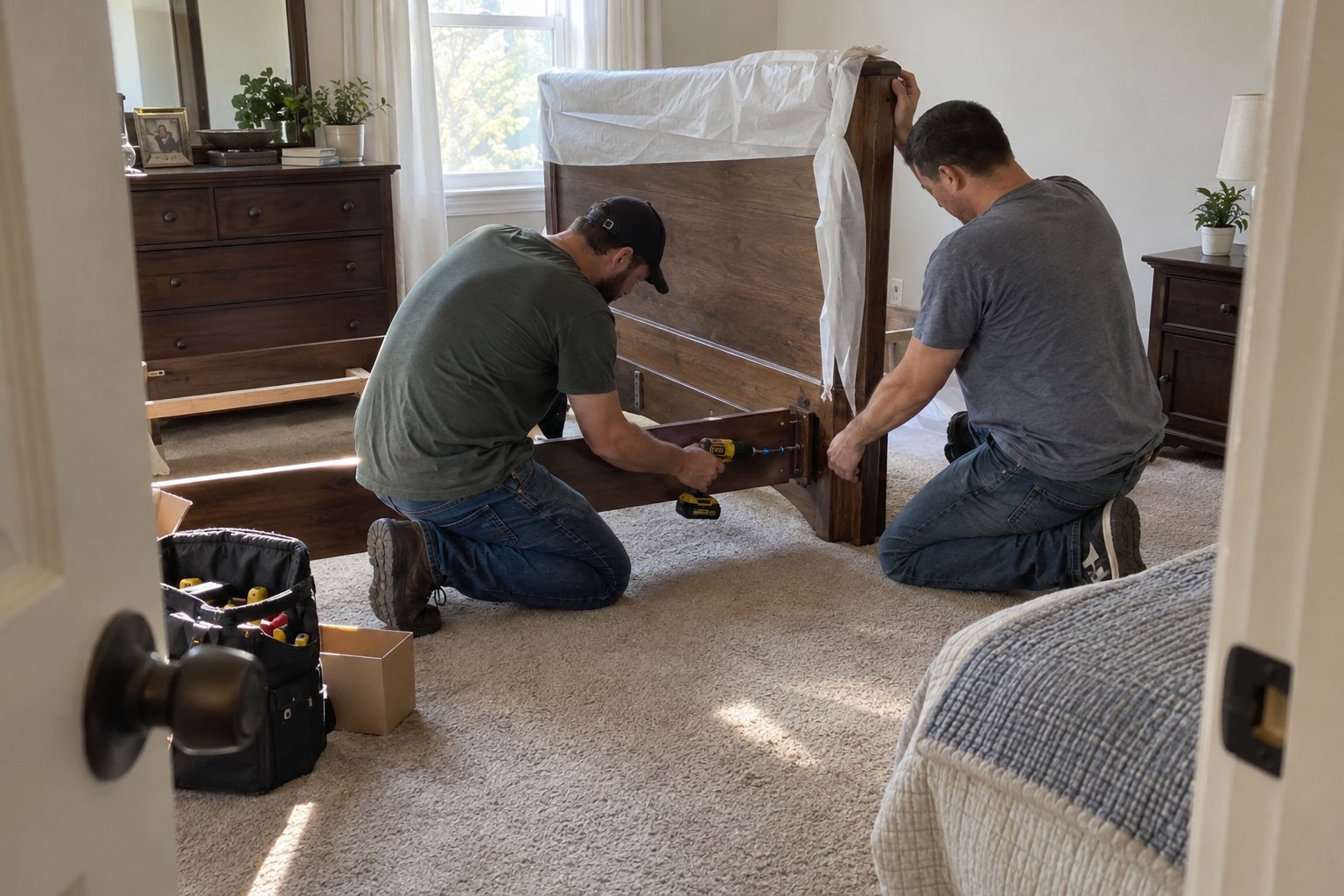
One of the most underused strategies for how to move large furniture is simply making it smaller before you move it. Many pieces that seem impossible to carry through a narrow doorway become manageable once partially disassembled.
Reassembly takes only a few minutes compared to the time and money spent repairing gouged floors or cracked walls. Whenever the geometry of a piece is causing problems, disassembly is almost always the fastest solution.
Stairs are the single greatest risk point in any large furniture move. The combination of gravity, limited footing, and awkward angles creates a scenario where even experienced movers must slow down and communicate carefully.
Always move furniture down the stairs with the heaviest person at the bottom and the lighter person at the top guiding and controlling speed. For upright items like bookshelves, tilt them slightly backward toward the upper mover to keep the center of gravity over the stairs rather than out in front. Use forearm moving straps whenever possible — they free your hands for grip and allow you to pull weight upward rather than simply holding it at arm's length.
If a piece is too large or too heavy to safely navigate a staircase, it is time to call in reinforcements. The professional moving team at 2 Jacked Guyz has the equipment and experience to handle staircase furniture moves that would be genuinely unsafe for an untrained crew.
There is no shame in recognizing when a job exceeds what a DIY crew can handle safely. Certain situations strongly call for professional help:
Hiring a professional moving company is often far less expensive than repairing damaged floors, walls, or furniture — and it is always less costly than an emergency room visit. If your move involves any of these scenarios, reach out before moving day, not after something goes wrong.
Request a personalized quote and see how careful planning and reliable service make every move smoother. Our team prepares each step to handle challenges safely and efficiently.
No long forms, no delays. Just a move that’s ready when you are. Secure your moving date today.