


Learn how to move a piano safely without damaging your property or your instrument. Master the best equipment, mechanics, and strategies for a smooth move.
Relocating an extraordinarily heavy and intricate musical instrument requires meticulous preparation, specialized moving equipment, and strategic physical leverage. Learning exactly how to move a piano safely is paramount before you attempt to shift hundreds of pounds of polished wood, cast iron, and delicate internal mechanics. Without a structured coordination plan from professional piano movers, you risk causing permanent structural frame warping, broken keys, or severe property damage.
Protect your back and secure your valuable musical instrument by calling (603) 757-5933 to book elite heavy item logistics today.
Understanding the distinct physical construction of your specific keyboard instrument allows you to navigate the path with total precision. Many homeowners underestimate the sheer weight of a traditional upright console, which can easily place over 2500 units of continuous downward pressure on thin hardwood floors or exterior concrete steps. Mastering the professional physics behind how to move a piano transforms an intimidating process into a highly predictable, safe task.
To successfully execute the intricate process of how to move a piano, you cannot rely on basic raw muscle power alone. You must assemble specialized professional tools, including heavy duty furniture straps, a specialized four-wheeled piano dolly with rubber wheels, and thick padded moving blankets. These items prevent the exterior finish from scratching against narrow doorframes.
Securing heavy duty ratchet straps ensures the instrument remains anchored to the dolly during incline transitions. Never substitute a standard lightweight utility dolly for a dedicated instrument carrier, as the immense weight can snap plastic frames. Having the correct infrastructure ready protects your ground crew and your flooring throughout the project.
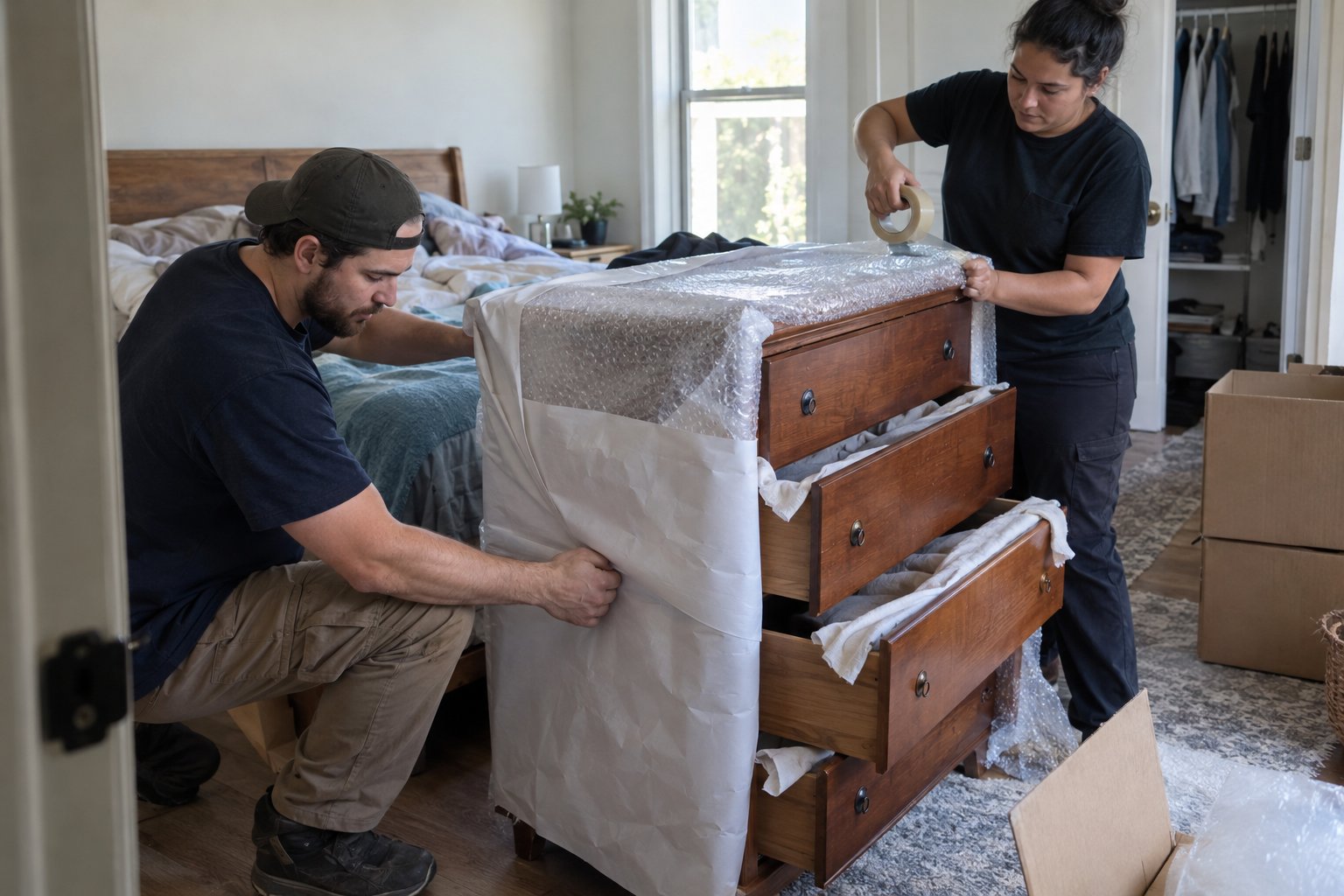
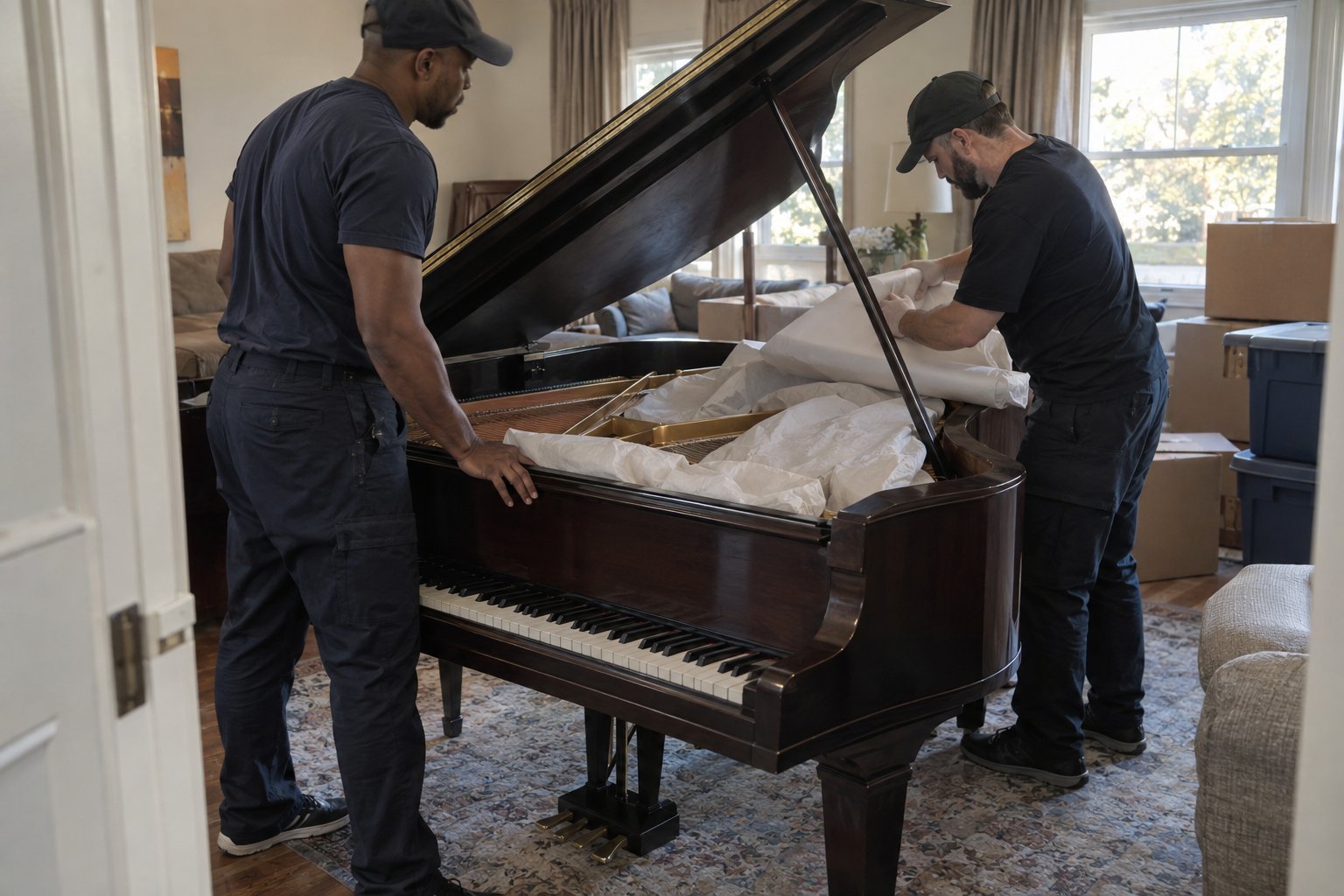
Before shifting the instrument an inch, you must lock the keyboard lid to prevent the keys from moving and cracking. If your model does not feature a built in lock, secure the lid gently using non-destructive stretch wrap or low-tack painter tape. Wrap the entire exterior cabinet tightly in multiple overlapping layers of thick furniture blankets.
Secure the protective blankets with packing tape, ensuring the sticky adhesive never touches the sensitive wood finish directly. This cushioning layer acts as a vital buffer against accidental bumps in tight spaces. Proper wrapping is a critical preparatory milestone when learning how to move a piano without lowering its aesthetic value.
Document the exact width, height, and corner angles of every single hallway, doorframe, and entry gate before lifting.
Unpin interior door hinges temporary to gain extra inches of valuable clearance room through tight exit pathways.
Position thick sheets of plywood or hardboard panels across delicate flooring surfaces to prevent deep wheel ruts.
Appoint a single lead spotter to shout out clearance warnings while the main lifters manage the weight load.
Moving a standard vertical console model requires careful consideration of its top-heavy design. The internal cast iron plate holding the tight musical strings is positioned near the back of the cabinet structure. This unequal distribution makes the unit highly prone to tipping backward if pushed incorrectly over thresholds.
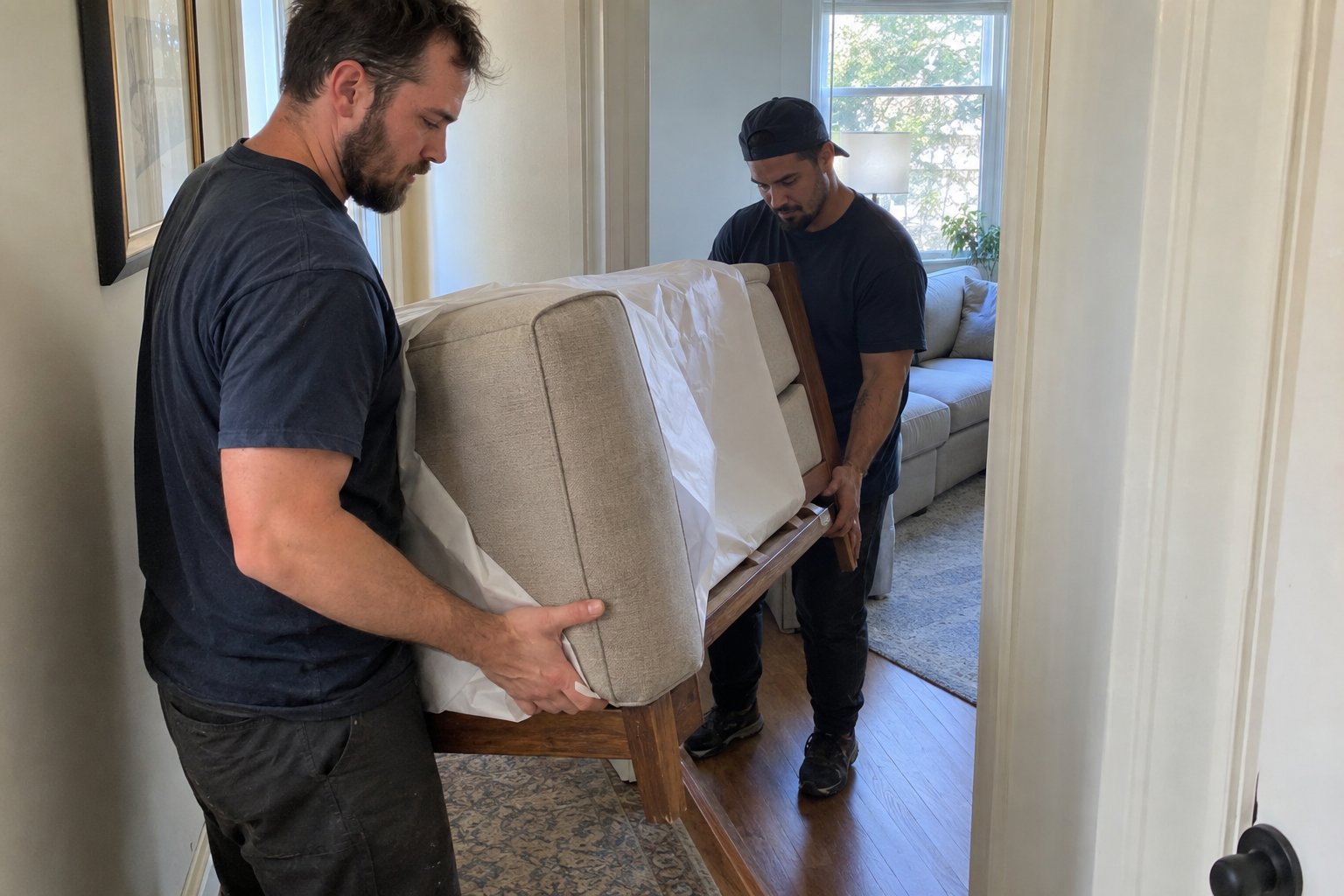
When pushing an upright down a hallway, always keep two helpers on the heavy backside and two on the front. Apply forward pressure low on the frame rather than high up on the delicate wooden upper casing. Keeping the center of gravity low and stable is the absolute cornerstone of vertical instrument safety.
Saddled with the task of descending a flight of concrete stairs introduces severe physical gravity challenges. If your relocation path presents a steep staircase, you must utilize heavy-duty logistics straps to distribute the weight evenly across your shoulders. Never attempt to roll an instrument down stairs using small wheels.
Position your strongest helpers at the bottom of the staircase to support the descending weight safely. Move slowly, taking one single step at a time, allowing the crew to reset their footing completely before advancing. Patience on stairwells prevents sudden drops that could ruin your home and your instrument permanently.
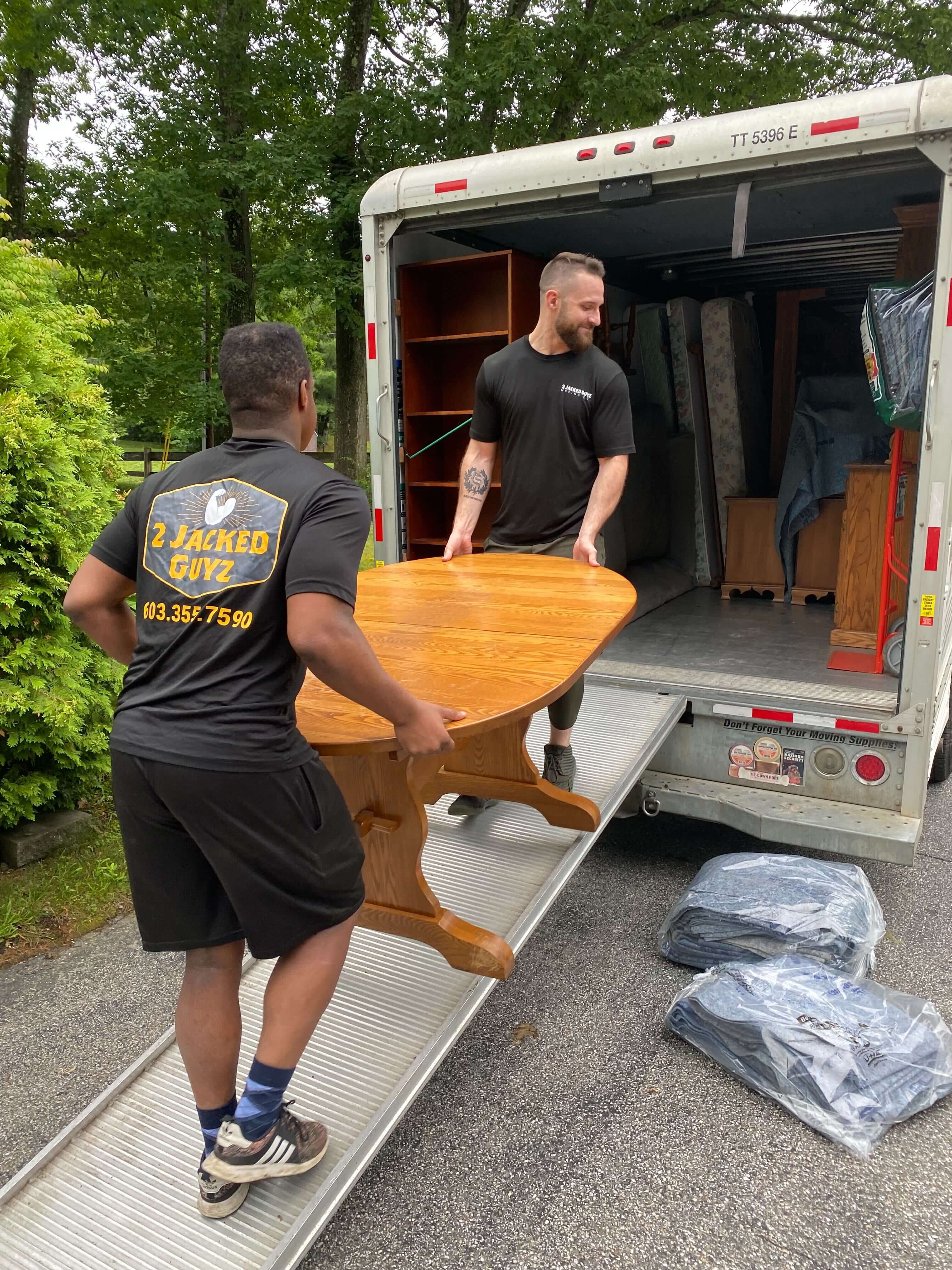
Once you navigate the instrument out of the house, align your moving dolly perfectly with the center of the truck ramp. Have your top helpers pull firmly from inside the truck bed while the ground team pushes from below. Keep the instrument perfectly upright during the entire incline ascent.
Position the unit flush against a solid interior wall of the cargo vehicle, preferably directly over the rear wheels for stability. Secure the frame tightly using multiple industrial tie-down straps anchored directly to the vehicle tracks. Preventing shifting on the highway is essential when figuring out how to move a piano.
When you arrive safely at your brand new residential property, reversing the relocation protocol requires the exact same vigilance. Utilizing professional residential moving services ensures you guide the dolly slowly down the hydraulic ramp, ensuring no single helper stands directly underneath the descending cargo path. Roll the instrument carefully across the floor toward its permanent destination wall.
Carefully unfasten the security straps and lower the base from the dolly down onto the floor together. Avoid placing the unit directly adjacent to large drafty windows, heating vents, or humid exterior doors. Extreme climate fluctuations can warp the interior sounding board and ruin the long-term acoustic properties.
Many homeowners assume that a smooth ride means their instrument will remain perfectly in tune upon arrival. However, the immense physical tension holding over 2500 steel strings reacts instantly to changes in ambient room humidity and atmospheric pressure. The bumpy vibrations of road travel will also alter the string alignment.
Allow your instrument to acclimate to its brand new room environment for at least two complete weeks before hiring a professional. This waiting window allows the wood components to stabilize fully under the new local humidity conditions. A professional tuning session completes your comprehensive relocation journey with total success.
Learning how to move a piano independently highlights the extreme physical demands and precise coordination required for heavy cargo. If your moving path includes multiple flights of winding stairs, steep yard inclines, or a premium grand model, DIY attempts are highly discouraged. The margin for error is incredibly small with such massive weight.
Seeking professional assistance ensures that specialized equipment, proper heavy-duty vehicles, and experienced teams handle your valuable treasure. Expert handlers carry specialized insurance that provides total peace of mind throughout the transit lifecycle. Prioritizing safety over ego protects your physical health and preserves your luxury instrument.
In summary, mastering how to move a piano demands proper equipment, strict strategic planning, and understanding basic mechanical leverage. By securing the keys, utilizing a heavy-duty dolly, and managing weight distribution, you safeguard your asset. Take your time during every phase of the physical transition to ensure total safety.
If the physical demands feel too overwhelming, or if you are coordinating a complex long-distance moving project, do not risk an injury. Professional movers possess the specialized skills needed to handle awkward, heavy recreational and musical items seamlessly. Protect your home investment and look forward to filling your new space with beautiful music soon.
2 Jacked Guyz brings unmatched physical strength and a proud heritage of community trust to every heavy relocation project. We specialize in comprehensive packing, local moving, and specialty instrument transport tailored to items presenting over 2500 pounds of logistical complexity. Our elite crew utilizes advanced tools to protect your property. Let us manage your transition today.
Contact: sales@2jackedguyz.com | (603) 757-5933
Request a personalized quote and see how careful planning and reliable service make every move smoother. Our team prepares each step to handle challenges safely and efficiently.
Attempting to shift an upright instrument without a dedicated four-wheeled piano dolly is highly discouraged because the small casters on the base are decorative. They can snap off instantly under heavy weight, gouging your hardwood floors and causing the top-heavy cabinet to tip over violently.
You should assemble a team of at least three to four strong adults to handle a vertical model safely. The unique distribution of cast iron components makes the back side incredibly heavy, requiring multiple spotters to maintain proper equilibrium when learning how to move a piano down halls.
No, a grand model must never be moved on its legs, as they are fragile and will snap under lateral pressure. Professionals carefully remove the legs and lyre, securing the main piano body vertically onto a specialized padded board. This method is the only safe approach to handling a grand.
You must wait at least two weeks before scheduling a professional tuning session at your new residence. The wood frame and internal sounding board need time to acclimate to the specific humidity and temperature of the new room. Tuning too early will result in the strings slipping out of alignment.
A cracked cast iron plate is a catastrophic failure because it sustains over 2500 pounds of continuous string tension simultaneously. If the plate fractures during a bumpy move or a drop, the instrument loses its ability to hold tune, and repairing the structural cast iron is often economically impossible.
No long forms, no delays. Just a move that’s ready when you are. Secure your moving date today.