
Learn how to pack and move a basement room by room — from storage shelves and workshop tools to bulky seasonal items. Step-by-step tips from 2 Jacked Guyz.
Figuring out how to pack and move a basement is the kind of project that stops people in their tracks the moment they open the door and actually look around. On paper it seems straightforward — it is just storage, right? In practice, you are looking at holiday decoration bins stacked to the ceiling, a workshop corner stuffed with power tools and lumber scraps, sports equipment from three different phases of life, a chest freezer that has not moved since the day it was installed, old furniture you meant to refinish, and boxes from the last move that were never actually unpacked. The basement holds everything that did not fit anywhere else, which means moving it requires more planning than almost any other room in the house.
The good news is that a basement move is completely manageable when you break it into zones and work through it methodically. And if you would rather hand the heavy lifting to professionals who have cleared out every variety of basement imaginable, the team at 2 Jacked Guyz professional movers is ready to take it from overwhelming to done.
The basement is the room in most homes where things accumulate by default rather than by design. Before you pull out a single box or roll of tape, do a thorough walk-through of the entire space with honest eyes. Ask yourself a simple question about every single item: does this deserve a spot in the new home, or has it simply been waiting for permission to go?
Sort everything into four categories: keep, donate or sell, recycle, and discard. Old furniture in usable condition can be sold quickly through local marketplaces or donated to thrift stores and charitable organizations. Sporting equipment your family has outgrown can often be passed along to schools, recreation centers, or community programs. Lumber scraps, scrap metal, and old electronics should be directed to appropriate recycling facilities rather than the trash.
Be especially honest about the boxes that have not been opened since the last move. If you have not needed something in two or more years, the odds are strong you do not need it at the new address either. Moving is the ideal moment to make that call — not after you have paid to transport it across town.
The goal is reduction. Every item you eliminate from the basement is one fewer thing to wrap, label, lift, load, and unload. The time you invest in decluttering almost always pays back in a faster, cheaper, less stressful move.
Basements rarely function as a single unified space. Most have at least two or three distinct zones — a general storage area, a workshop or utility corner, possibly a finished room used as a rec room or guest space, and a utility section housing the water heater, furnace, and sump pump. Treating each zone as its own packing project keeps things organized and prevents the kind of chaotic mixing that makes unpacking a nightmare.
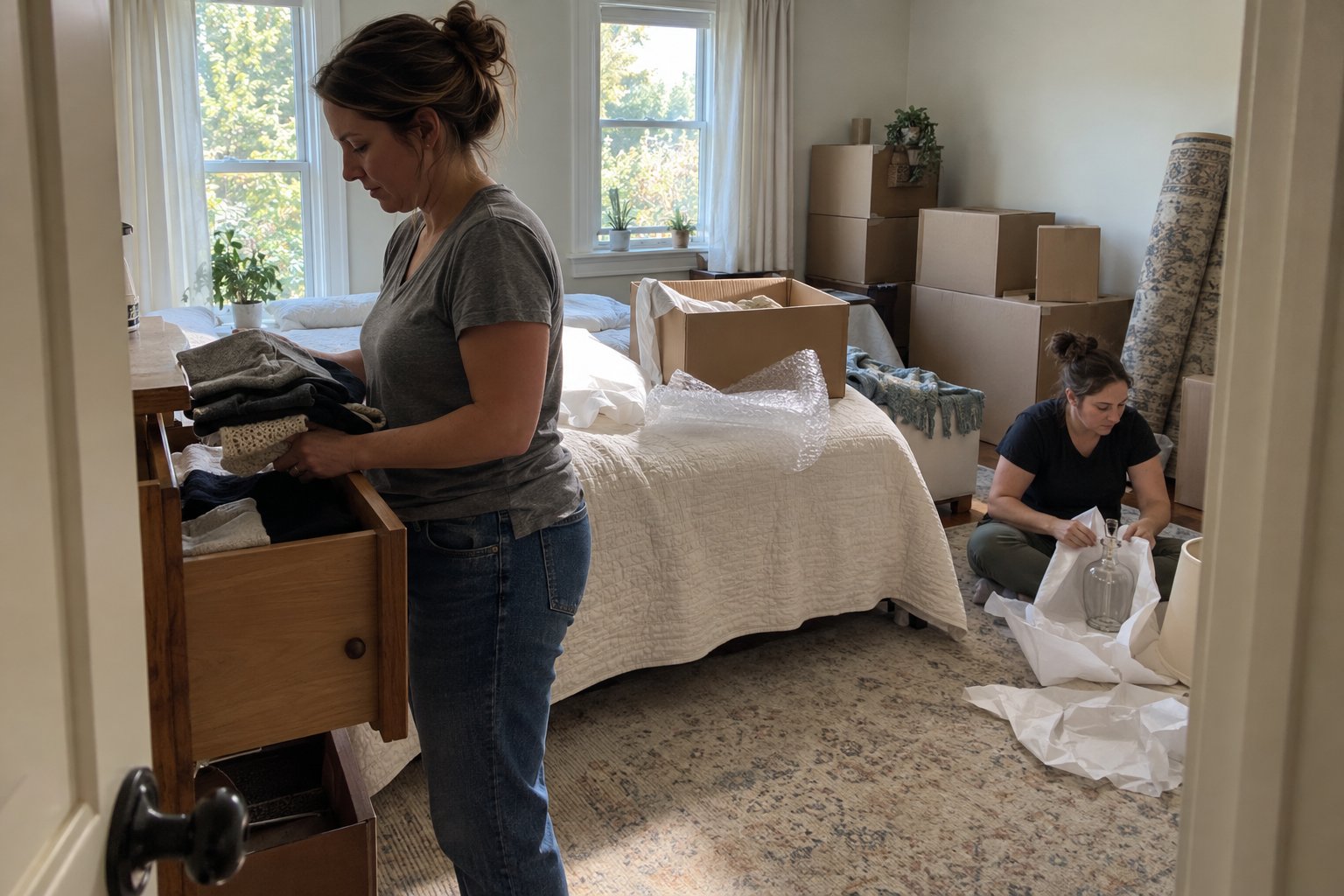
The general storage area is usually the largest section and contains the widest variety of items. Start by grouping like items together: holiday decorations with holiday decorations, camping gear with camping gear, sports equipment with sports equipment. Consolidate wherever possible. Half-filled bins from the last move should be emptied, their contents sorted, and the bin either filled properly or removed from the inventory entirely.
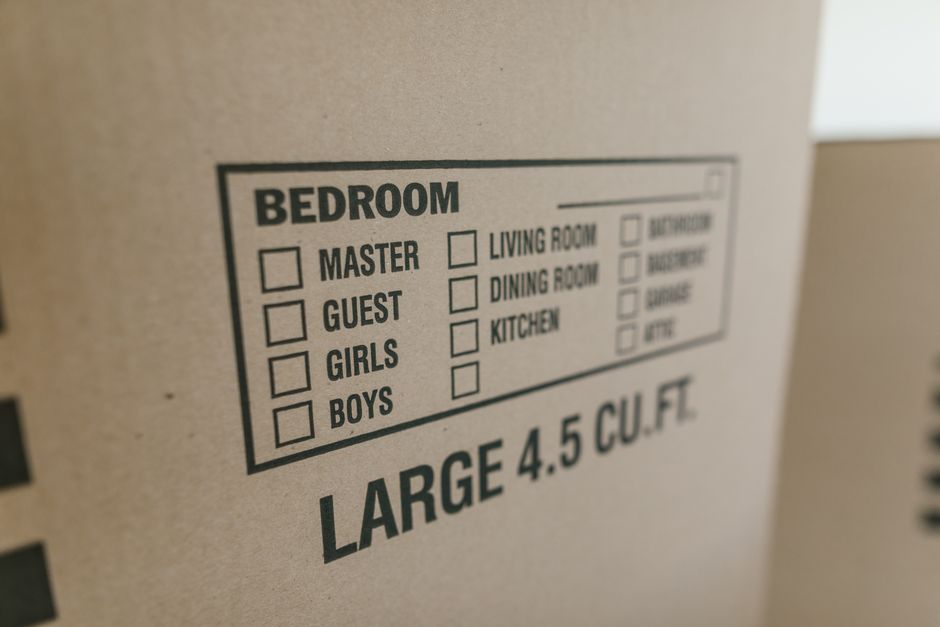
Use sturdy, uniform-size boxes for shelved items — they stack better in the truck and are easier to label. Mark every box clearly on the top and at least one side with its contents and destination room. For seasonal decorations, label boxes by season and type rather than just "holiday stuff," which tells the people unloading the truck nothing useful.
A basement workshop requires careful packing because the tools involved are heavy, sharp, or both. Start by draining any fluids from gas-powered equipment before it goes anywhere near a moving truck — fuel, oil, and hydraulic fluid are fire hazards and are typically not allowed on moving vehicles. Check with your moving company about their specific policies on any equipment with residual fuel.
Hand tools pack well in their original cases when available. If the cases are long gone, wrap individual tools in packing paper or soft cloth and pack them into small, heavy-duty boxes — never large boxes, which become dangerously heavy with tools inside. Power tools should be packed with their cords coiled and secured and any detachable parts kept together in a labeled bag taped to the exterior of the box.
Lumber, PVC pipe, and other long materials should be bundled together and secured with moving straps rather than boxed. These items typically travel best in a truck where they can be laid flat rather than stood on end.
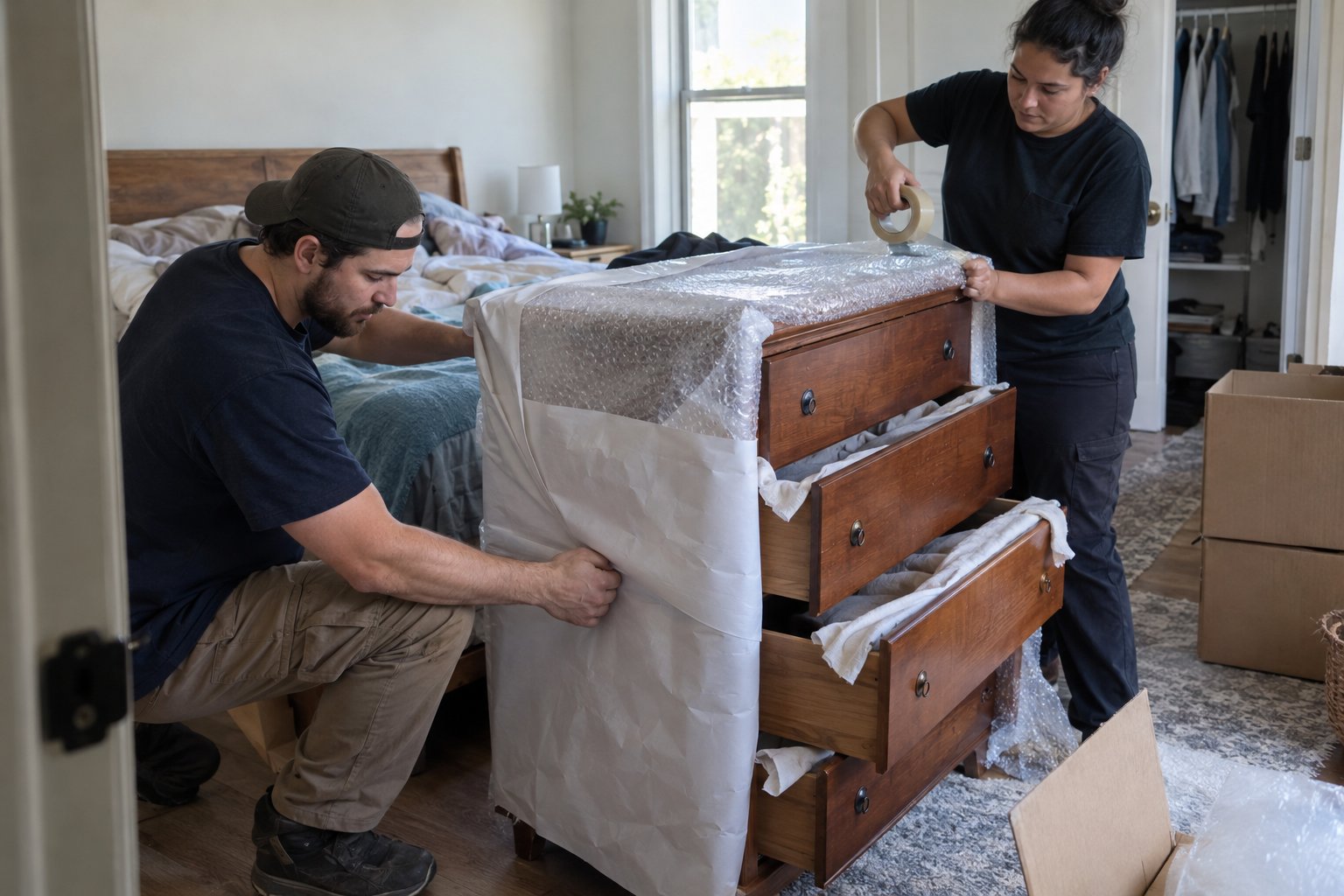
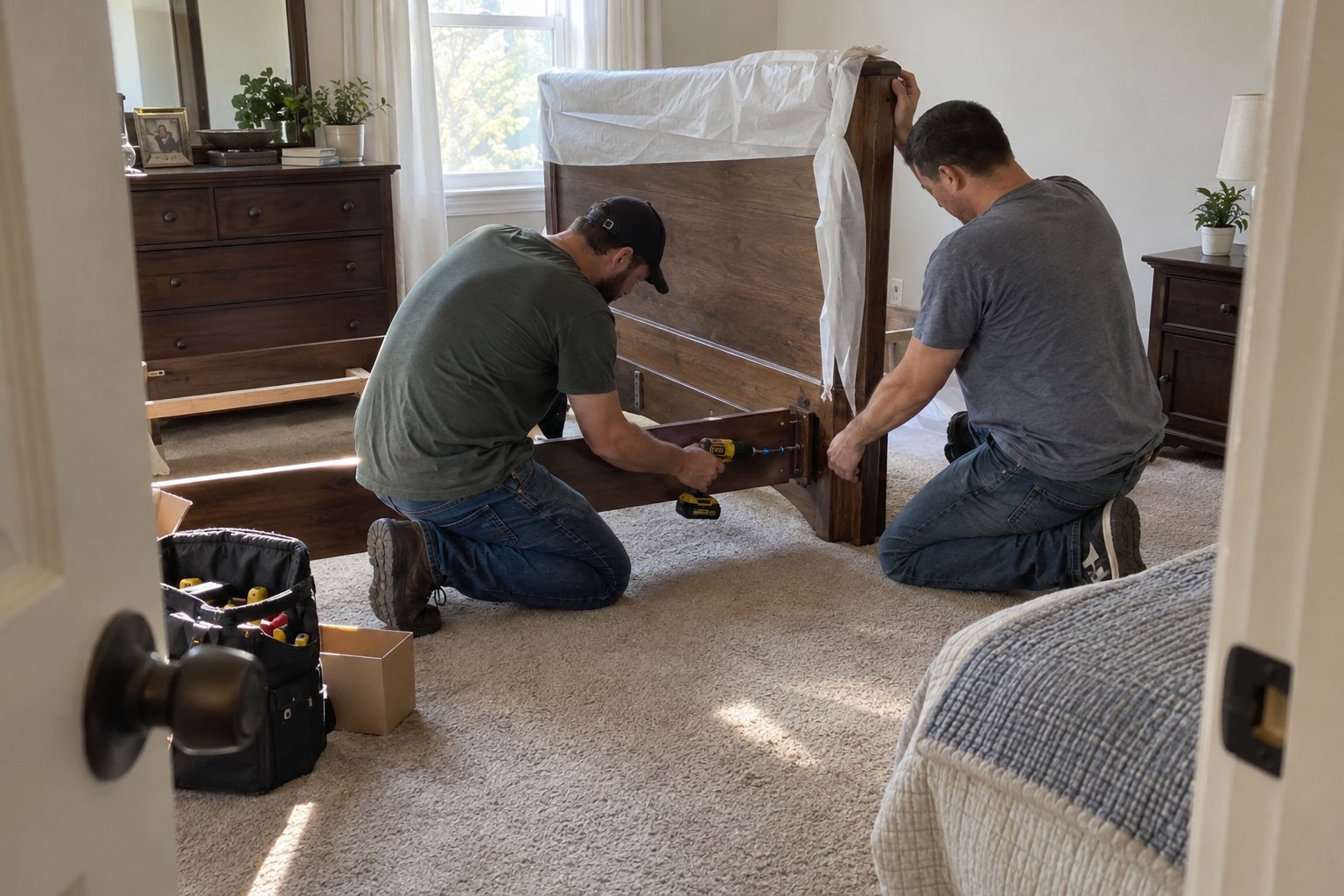
If your basement includes a finished space used as a rec room, media room, or guest room, treat it like the corresponding room in the rest of the house. Pack electronics the same way you would a living room, furniture the same way you would a bedroom. Break down any furniture that can be disassembled, wrap cushions in plastic sheeting or large garbage bags, and protect hard surfaces with moving blankets or furniture pads.
The basement tends to be where the largest, heaviest, and most awkward items in the house end up — and moving them safely requires a specific approach. Do not attempt to muscle oversized items out of a basement on your own, especially if the staircase is narrow, has a landing turn, or leads up to a door that barely clears the item in question.
A chest freezer should be emptied, defrosted, and completely dried out at least 24 hours before the move. Leave the lid open during that period to allow full ventilation. Once it is dry, tape the lid shut with moving tape and secure the power cord to the body of the unit so it does not drag or catch on the stairs. Chest freezers are top-heavy once tilted and should always be moved with at least two people using an appliance dolly.
Freestanding shelving units should be emptied completely before any attempt to move them. Remove shelves individually if possible — most wire shelving and many wooden systems are designed to come apart. Wrap shelving components together in bundles using stretch wrap or moving blankets and label each bundle so reassembly is straightforward at the new location.
Treadmills, weight benches, rowing machines, and cable systems are among the most labor-intensive items in any basement. Most treadmills can be folded and strapped, but the motor end is extremely heavy and awkward to carry. Disassemble weight benches where possible. Weight plates should be packed in small, manageable boxes — never large ones — and each box should stay under a weight you can comfortably carry without injury.
The utility section of a basement — wherever the furnace, water heater, sump pump, and electrical panel live — is not a packing zone so much as a disconnect-and-document zone. You are not moving those systems; they stay with the house. But you may have items stored near them that require special handling.
Paint cans, solvents, pesticides, and other hazardous household chemicals cannot typically travel on a moving truck. Check with your mover about their specific policies. Most municipalities hold periodic household hazardous waste collection events where these materials can be dropped off safely. Partially used paint in good condition can sometimes be donated to community reuse programs or local theater groups that regularly need paint supplies.
Propane tanks for grills or heaters must never travel inside a moving truck regardless of how full or empty they are. Arrange for these to be transported separately or exchanged at a hardware store before moving day.
If your basement has a sump pump and you are leaving the pump behind, make note of its age and condition in your seller disclosure documentation. If you own a battery backup unit that you are taking with you, disconnect and pack it carefully — these units are heavy and contain battery acid.
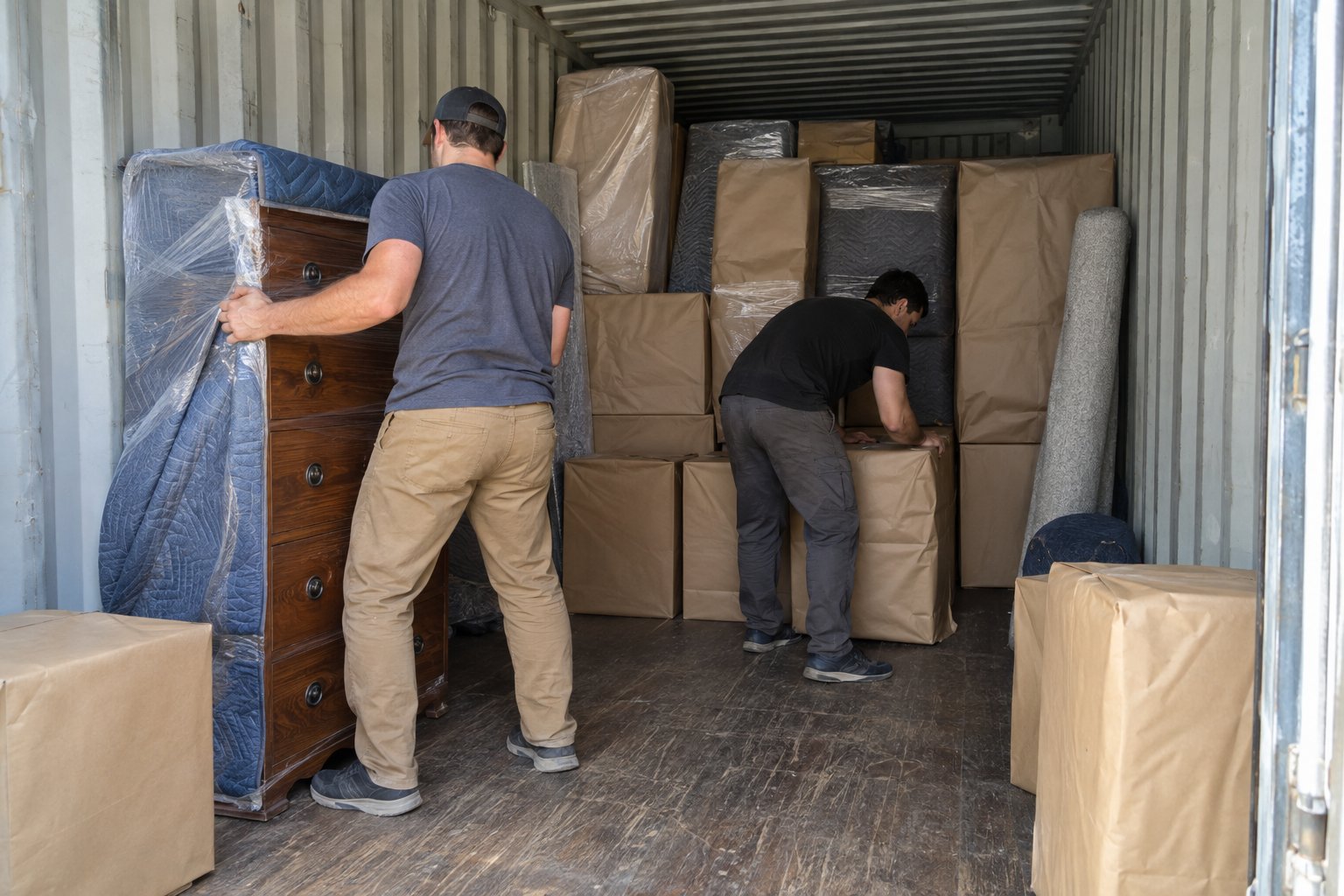
There is a genuine strategy question about when basement items go on the truck. The general rule is that the heaviest and most awkward items — the chest freezer, the weight bench, the shelving units — should load first so they sit at the front of the truck against the cab wall and stay stable during transit. Lighter boxes and furniture stack around and on top of them.
However, that logic means someone has to carry those heavy items up the basement stairs and across the house before anything else loads. Plan the path in advance. Measure doorways and stair clearances before moving day — not on it. Know whether the chest freezer can make the turn on your basement staircase landing before the truck is in the driveway and the clock is running.
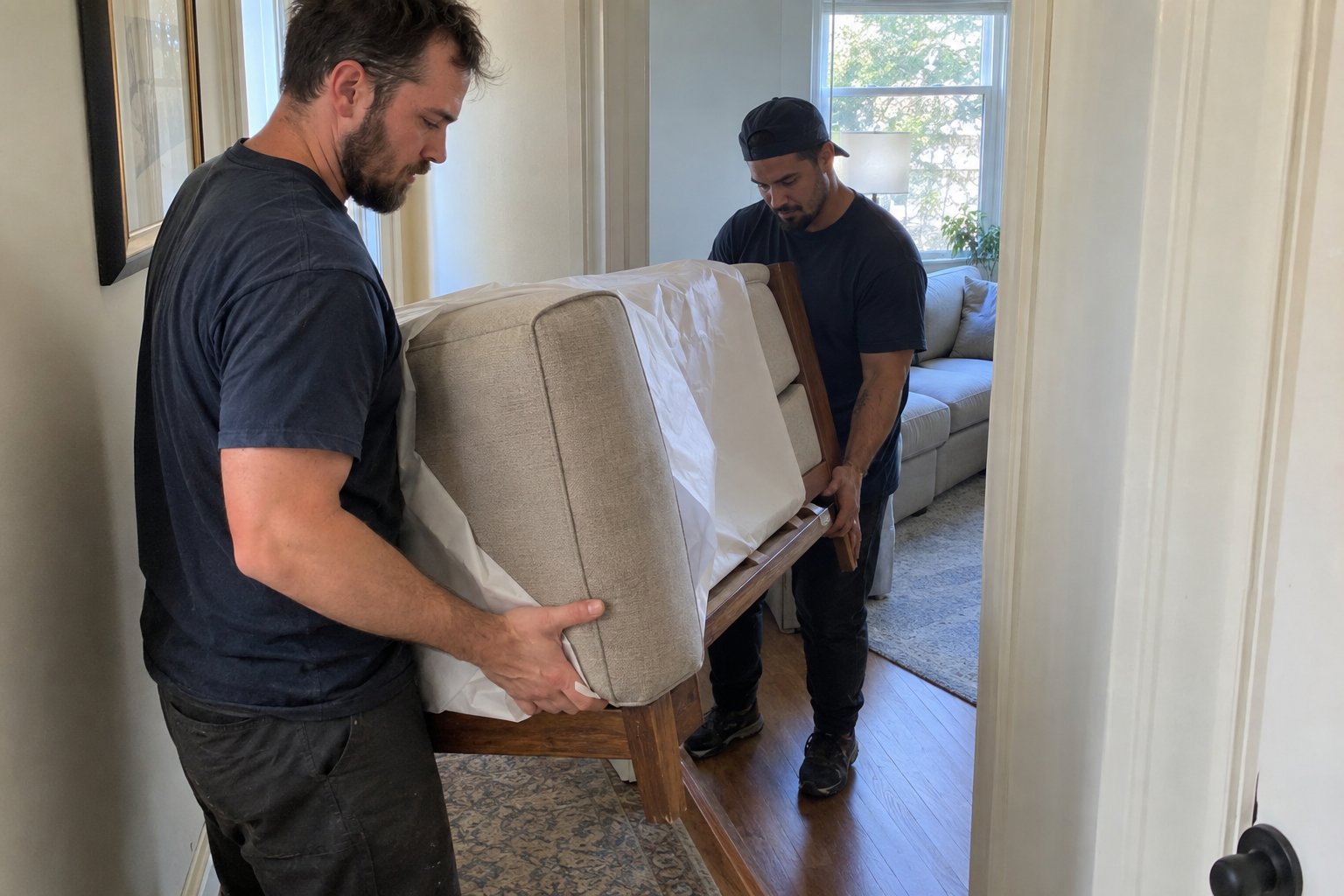
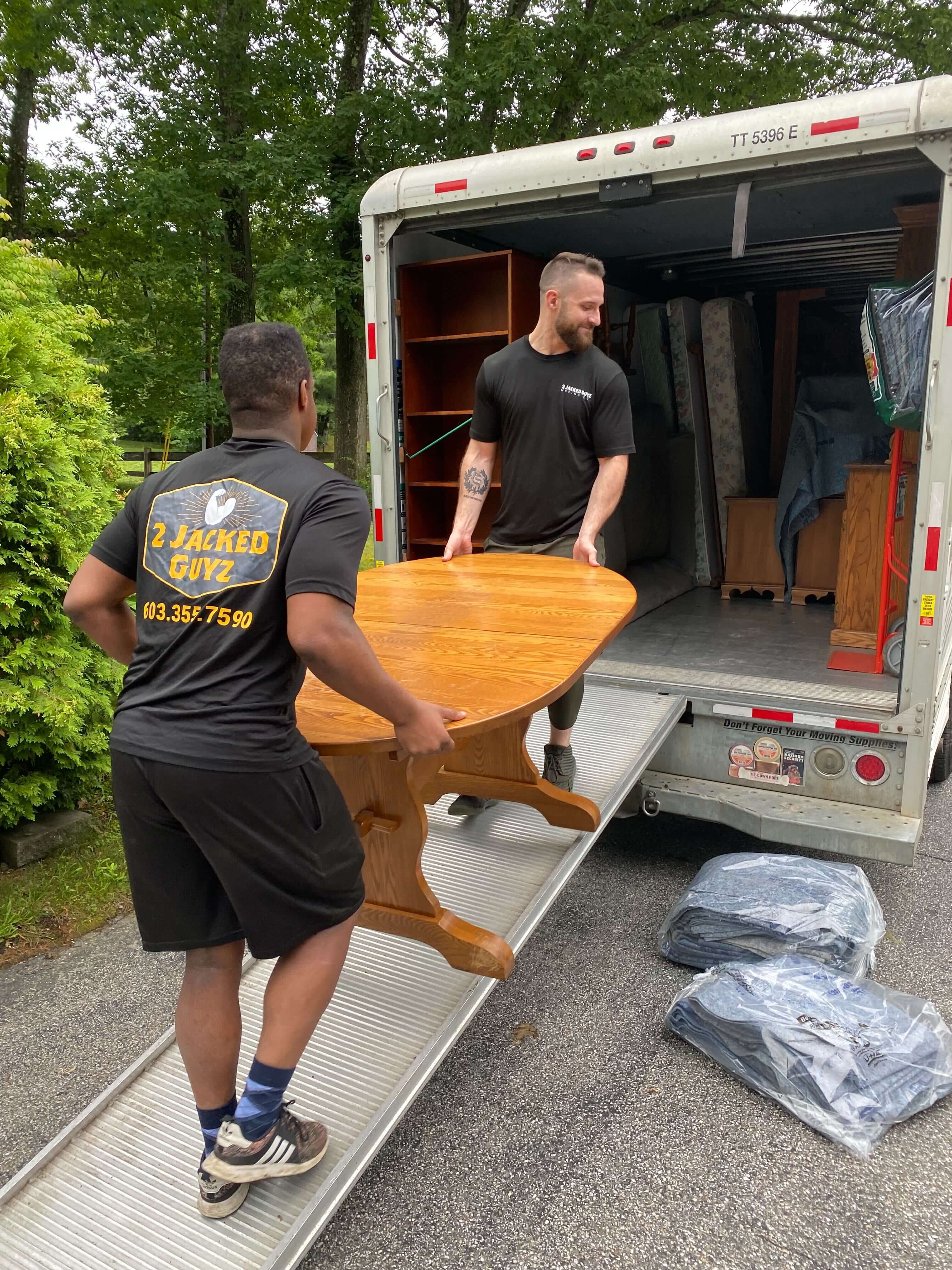
If your basement staircase is particularly narrow or has an awkward angle, a professional moving crew with the right equipment makes a significant difference. An appliance dolly, proper moving straps, and people who have navigated dozens of difficult basement exits will always outperform an improvised team doing it for the first time. The team at 2 Jacked Guyz professional movers has handled the full range of basement configurations and knows how to get even the most awkward items out safely and without damage to the walls, floors, or staircase.
Once everything has been loaded, do not close the basement door until you have done a proper final walkthrough. Check every corner, every shelf, every storage nook, and every space under the stairs. Open any closets or built-in cabinets. Look behind the furnace and water heater for items that may have been stored back there out of sight. Check the floor for loose tools, fasteners, or small items that fell behind shelving units.
Note the condition of the space before you leave. If there is any existing damage to walls, floors, or utility systems, photograph it with your phone as documentation. This is particularly important if you are a renter or if the sale of your home includes any inspection contingencies tied to the condition of the basement at closing.
A thorough walkthrough takes ten minutes and has saved countless movers from an awkward call two days later asking whether anyone picked up the box of tools left behind the water heater.
Request a personalized quote and see how careful planning and reliable service make every move smoother. Our team prepares each step to handle challenges safely and efficiently.
Give yourself at least two to three weeks for a typical basement. The decluttering phase alone — sorting decades of accumulated items into keep, donate, recycle, and discard — often takes a full weekend. Once decluttered, the actual packing goes faster, but bulky items like shelving units, exercise equipment, and chest freezers need separate planning time for disconnection, defrosting, and logistics. Starting early prevents the last-minute rush that leads to poorly labeled boxes and items being loaded that should have been discarded.
Not everything. Hazardous materials including paint cans, solvents, pesticides, propane tanks, and certain chemicals are typically prohibited on moving trucks due to fire and safety regulations. Drain any fuel from gas-powered equipment before loading. Check with your moving company ahead of time about their specific prohibited items policy, and plan to drop off or dispose of restricted materials before moving day through your local household hazardous waste program.
Empty and defrost the freezer at least 24 hours before the move and leave the lid open to dry completely. On moving day, tape the lid shut, secure the power cord to the body, and use a heavy-duty appliance dolly with moving straps. Always use at least two people — chest freezers are top-heavy when tilted. Measure your staircase and any doorway clearances in advance to confirm the path is manageable before the truck arrives.
Yes, whenever possible. Freestanding shelving units should be emptied completely and disassembled into individual components before the crew arrives. Shelves that arrive pre-disassembled and bundled take far less time to load and protect the unit from damage during transit. Label each bundle clearly so reassembly at the new location is straightforward. If a shelving unit is wall-mounted, have it uninstalled and any wall anchor holes addressed before moving day.
The key rule with heavy items is small boxes only. Tools, weight plates, and dense hardware should always go into small, sturdy boxes — ideally under 30 to 35 pounds per box. Large boxes filled with heavy items are dangerous to carry and prone to catastrophic failure at the bottom. Wrap sharp or jagged tools individually in packing paper or cloth, and keep any loose parts like drill bits or attachments in labeled zip-lock bags taped to the outside of the corresponding tool box.
No long forms, no delays. Just a move that’s ready when you are. Secure your moving date today.