

Grand piano vs upright piano moving isn't the same job. See how the equipment, disassembly, and risks differ so you know what to expect before moving day.
A grand piano and an upright piano are moved with completely different equipment, angles, and risks, even though they weigh roughly the same. A grand's legs come off and its body gets wrapped and rolled on a piano board in a horizontal position, while an upright stays vertical the entire time and rides on a specialized dolly. Mixing up the two approaches is how people crack a piano's finish, snap a leg bolt, or throw out their back on a staircase.
If you already know the basics of how to move a piano in general, this is the layer underneath that: the specific differences between the two most common types homeowners actually own, and why a mover treats them like two different jobs rather than one.
A grand piano moves horizontally on a padded board with its legs and lyre removed, while an upright piano moves vertically on a dolly with its lid and fallboard secured. The grand's shape, size, and fragile legs demand disassembly; the upright's compact vertical frame does not.
Grand pianos range from petite (around 5 feet) to concert size (9 feet), and their harp-shaped body has almost no flat, stable surface to grip once the legs are off. Uprights are boxier and narrower, closer in shape to a large dresser, which is part of why people assume the same crew and same gear will work for both. In practice, the tools, the number of people needed, and even the truck loading order are different. This is also true of other oversized items, where the same "just carry it" instinct causes damage; the same care that applies to moving large furniture without scratching floors or walls applies here, just with more specialized gear.
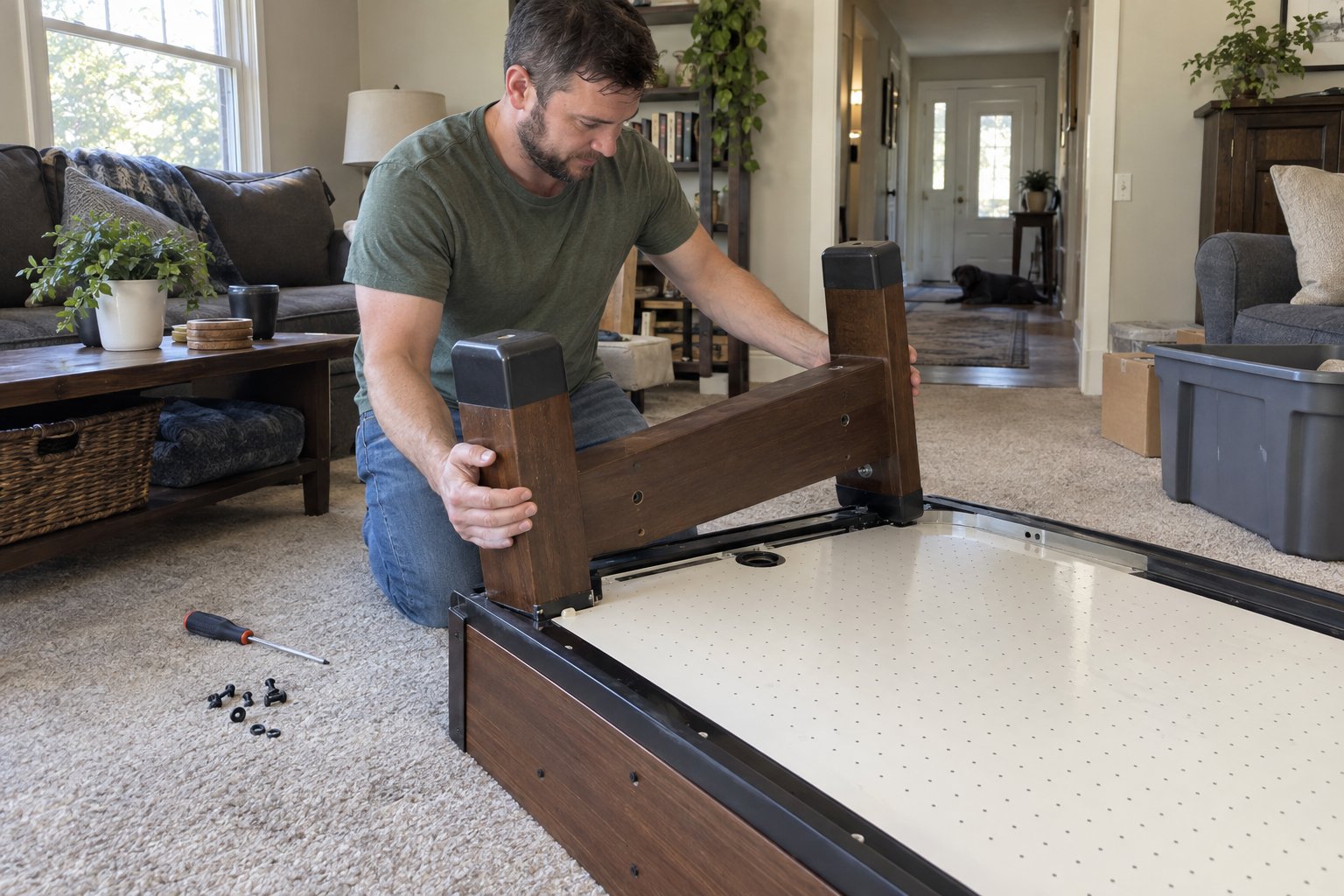
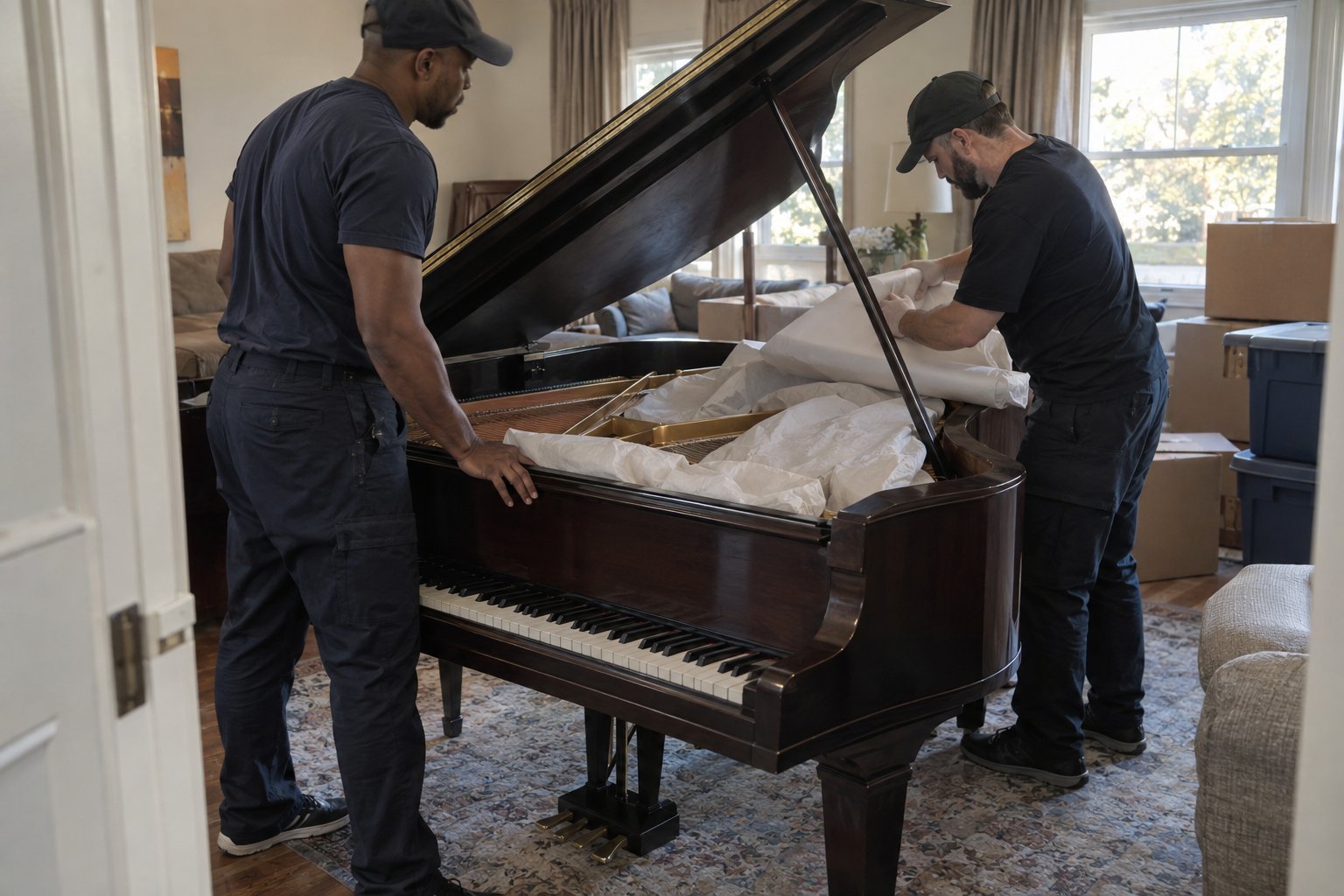
Moving a grand piano starts with removing the legs, the pedal lyre, and sometimes the music desk, then rolling the body onto a padded piano board while it's tipped onto its side. The board becomes the piano's temporary "spine" for the rest of the move.
The lid gets taped shut or removed depending on the model, and the keyboard lid is padded separately since it flexes and can crack under pressure. Once the body is secured to the board with heavy straps, it gets stood upright onto a piano skid or dolly for rolling. This is also the point where most damage happens if the crew rushes: the legs carry the entire weight of the instrument when reattached, and a stripped bolt or misaligned leg plate can cause the piano to tip later. It's a job that benefits from a crew who has done it before, which is a big part of why professional piano moving exists as its own specialty rather than an add-on to a general move.
Moving an upright piano means keeping it vertical, securing the fallboard and lid, and rolling it on a piano dolly built to handle concentrated weight on small wheels. Unlike a grand, there's usually no disassembly beyond locking the keyboard cover.
The bigger challenge with an upright is staircases and doorway turns. Because the piano stays tall and narrow instead of being laid flat, it has to be tilted and walked through tight spaces using furniture straps and sometimes a stair-climbing dolly. Two to four people is typical depending on the model's weight (a full-size upright can run 400 to 800 pounds), and the crew needs to communicate constantly since the piano's center of gravity shifts every time it tilts. Padding the corners and back panel matters here too, since uprights often scrape door frames on tight turns that a grand, moved flat on a board, never encounters.
Grands are generally harder because of the disassembly, the odd shape, and the need for a flat piano board and multiple strong hands to tip and secure the body. Uprights are harder in tight, multi-level homes because of their vertical profile on stairs, but they require less specialized disassembly.
Neither is "easy," and both carry real risk to the instrument and to whoever is lifting. If your home has narrow stairwells, sharp turns, or more than one flight, factor that in separately from the piano's size. A small upright in a house with a spiral staircase can end up being a tougher move than a mid-size grand on a single level.
You shouldn't attempt a DIY piano move if you don't have a piano board, a piano dolly rated for the weight, and at least three able-bodied people who can lift and hold steady under load. Rented furniture dollies and moving straps from a hardware store are not a substitute for piano-specific equipment.
Watch for these red flags before you try it on your own: any staircase with a turn, a doorway narrower than the piano's width plus a few inches of clearance, uneven ground between the truck and the house, or a piano that hasn't been tuned or inspected in years (which can mean loose internal hardware you won't see until it shifts mid-move). If two or more of these apply, it's worth talking to a crew that handles pianos regularly instead of risking the instrument, your home, or your back. This applies whether the piano is heading across town or as part of a larger residential move with a full truckload of other furniture.
Ask whether they have piano-specific equipment (a board for a grand, a dolly for an upright), how many movers they'll send, and whether they carry insurance that specifically covers musical instruments. A mover who treats a piano like "just another big box" is not the right crew for it.
It's also fair to ask how they'd handle your specific layout: stairs, doorway widths, and where the truck will park. A crew that asks you these questions back, rather than quoting blind, is usually the one that has actually done this before. If you're ready to compare, get a moving quote and mention the piano type up front so the estimate reflects the right equipment and crew size.
Request a personalized quote and see how careful planning and reliable service make every move smoother. Our team prepares each step to handle challenges safely and efficiently.
Yes. Grand pianos are moved lying on their side, strapped to a padded piano board, rather than upright or flat on their back. This protects the legs (which are removed beforehand) and keeps the harp and soundboard from flexing under uneven pressure.
Two people can sometimes manage a smaller upright on a flat, single-level path with a proper piano dolly, but most full-size uprights need three or four people, especially if stairs or tight turns are involved.
Grand pianos generally cost more to move than uprights because of the disassembly, the piano board setup, and the extra time and crew needed to handle the odd shape safely. Exact pricing depends on distance, stairs, and piano size.
Most manufacturers and tuners don't void warranties over a move itself, but rough handling that knocks the piano out of tune or damages internal hardware often means an extra tuning or repair cost afterward, which is one reason many owners prefer professional movers.
It depends on the type. Uprights are safest moved in one piece, upright and secured. Grand pianos are safer partially disassembled (legs and lyre removed) because their shape and weight distribution make them nearly impossible to grip and carry intact.
No long forms, no delays. Just a move that’s ready when you are. Secure your moving date today.