
Learn how to move a washer and dryer without water damage, dented floors, or a strained back. Prep steps, tools, and loading tips from experienced movers.
Moving a washer and dryer safely means shutting off the water supply, draining every hose completely, and securing the drum before either machine leaves its spot. Skip any of those steps and you risk a flooded floor, a cracked hose fitting, or a top-heavy washer that shifts and topples during transport. These two appliances get overlooked next to a refrigerator or a piano, but they cause just as many moving day disasters, usually because the water lines involved make the mess worse than a scratch or a dent.
Unlike most furniture, a washer and dryer both have components that can leak, spin loose, or rattle apart mid-move. The washer is the more dangerous of the pair because it holds standing water in the hoses and pump even after a cycle finishes, and its drum can swing hard enough to punch through the cabinet if it is not locked down. The dryer is lighter but bulkier, and its vent duct connection is the part most people forget to detach before they start pulling it away from the wall.
Start by turning off the water supply valves behind the washer, then run one short cycle or a few seconds of a rinse setting to clear residual pressure before disconnecting the hoses. Unplug the dryer and, if it runs on gas, shut off the gas valve and let a professional disconnect the line if you are not confident doing it yourself.
Once the water is off, unscrew both the hot and cold hoses from the wall valves, holding a towel underneath to catch drips. Detach the drain hose last, since it usually still holds a small amount of water even after a spin cycle. Coil all three hoses and place them in a labeled bag taped to the top of the washer so they do not get lost in transit. For the dryer, disconnect the vent duct from the wall or exterior port, then unplug the power cord (or shut off the gas line) before rolling the unit away from the wall.
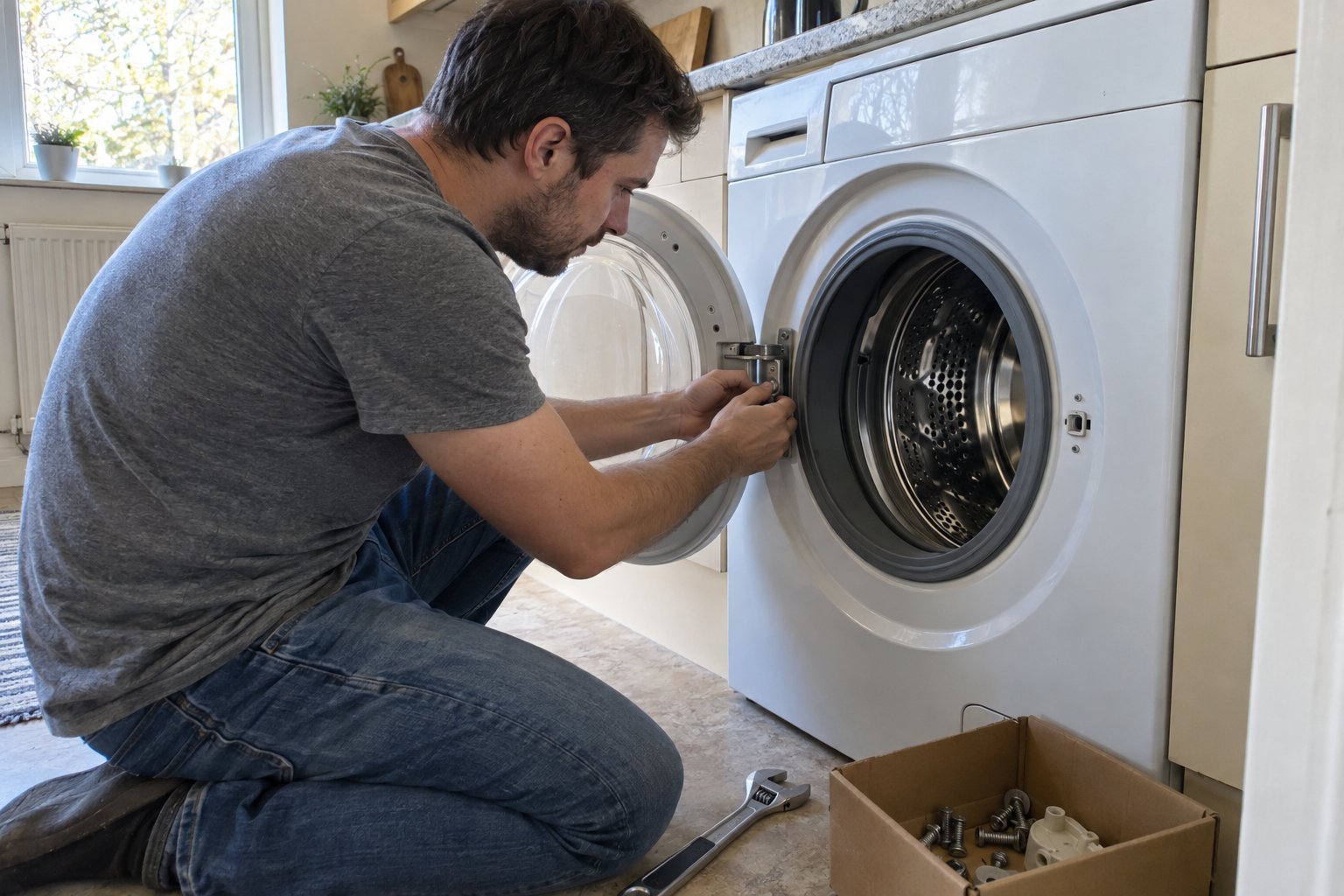
A washing machine drum needs to be immobilized before it travels, or it will bang against the cabinet walls hard enough to damage the suspension system. Many washers ship with plastic or bolt-style transit locks that were removed during original installation, and reusing them (or a comparable substitute) keeps the drum centered during the drive.
If you no longer have the factory shipping bolts, check the manufacturer's website for a replacement kit, since running the machine afterward without removing them can burn out the motor. If a kit is not available in time, some movers stabilize the drum by wedging thick towels evenly around the interior and taping the lid or door shut, though factory locks are always the safer option for a long haul. If your move already involves other delicate, heavy pieces, the same bracing logic applies to things like a refrigerator's interior shelving and doors, which also need to be secured before rolling anywhere.
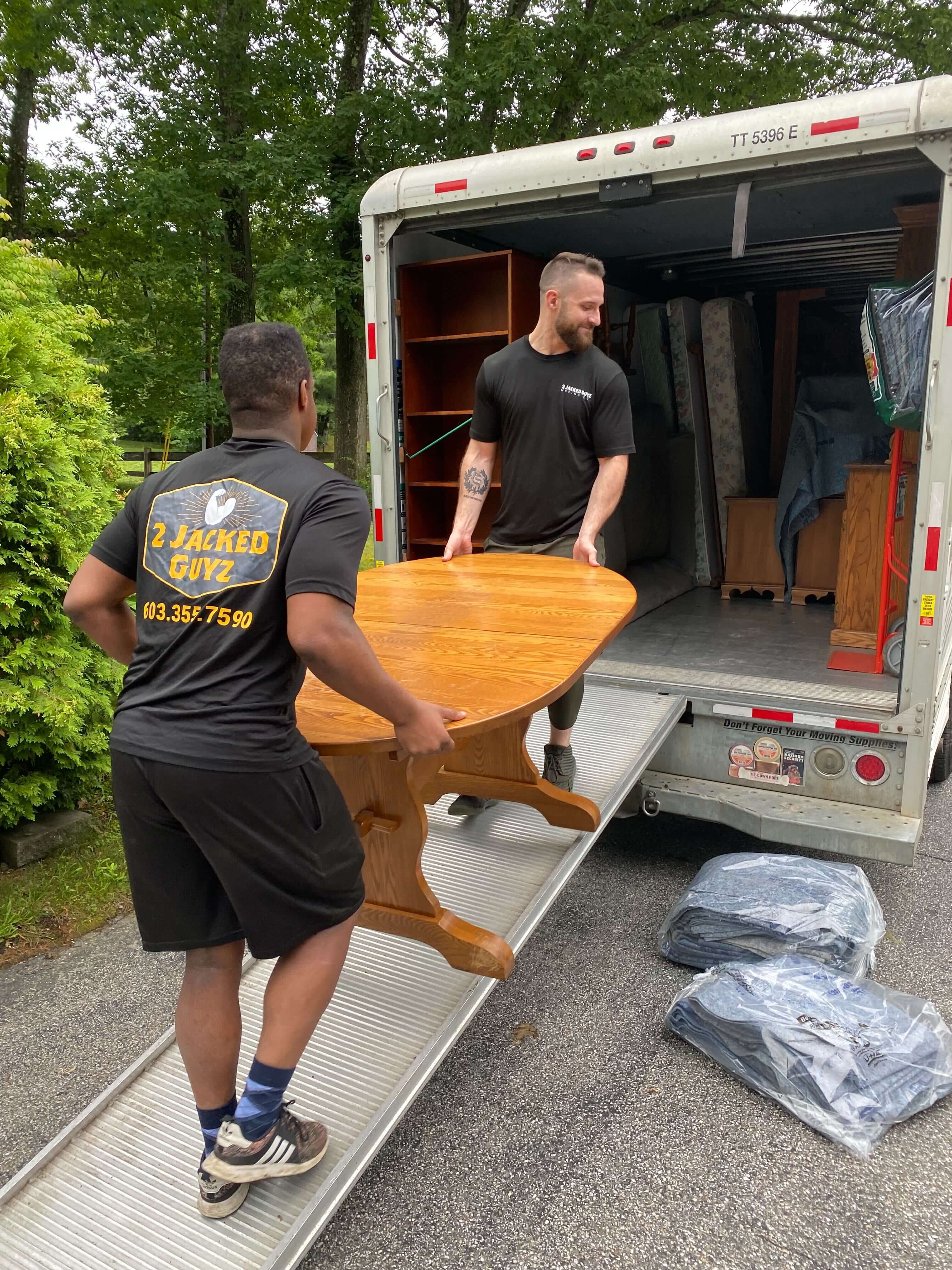
You need an appliance dolly rated for at least 300 pounds, moving straps or a ratchet strap, furniture blankets, and a set of adjustable wrenches for the hose fittings. A four-wheel hand truck with a strap system gives you far more control than trying to walk either appliance by hand, especially down stairs or through narrow hallways.
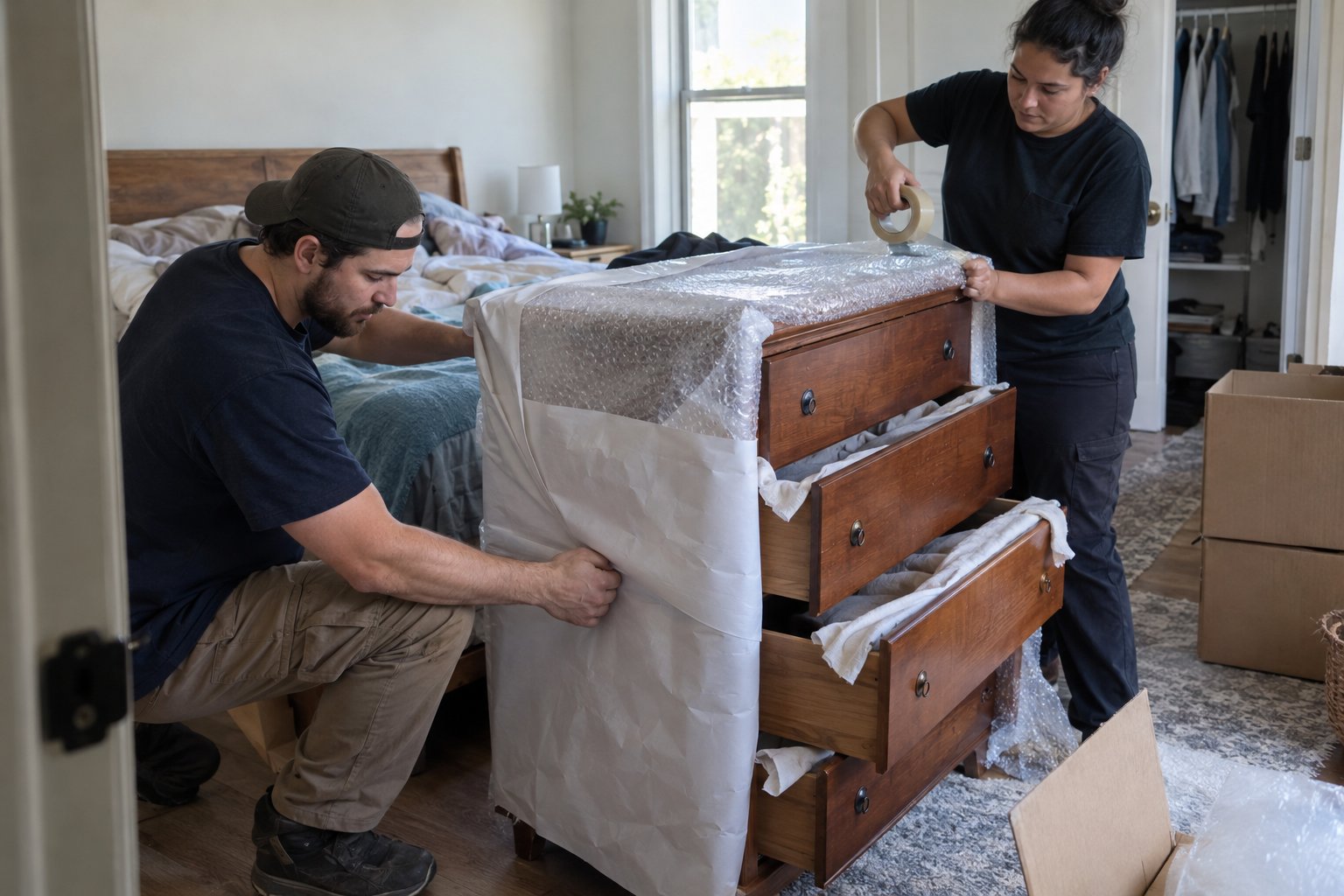
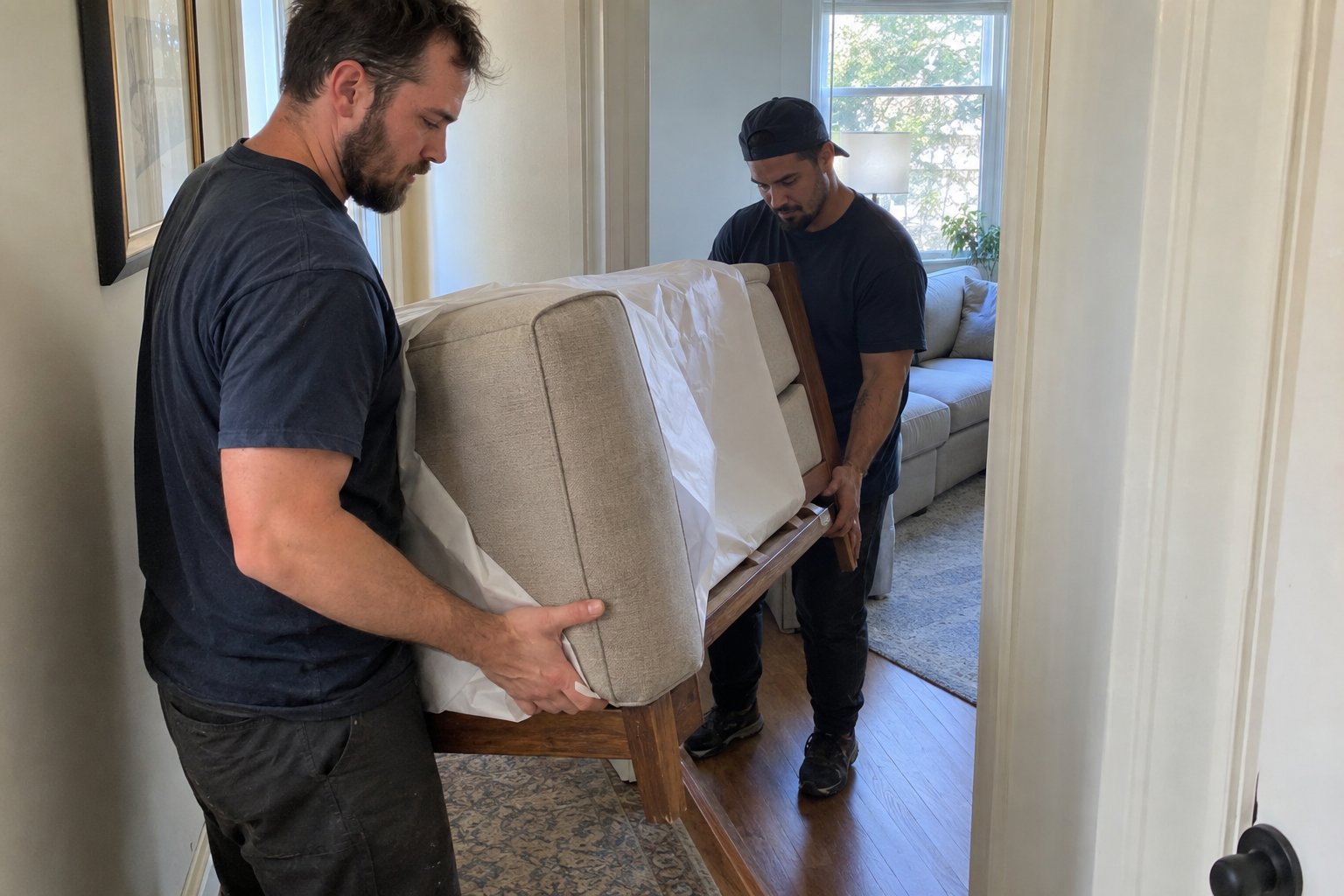
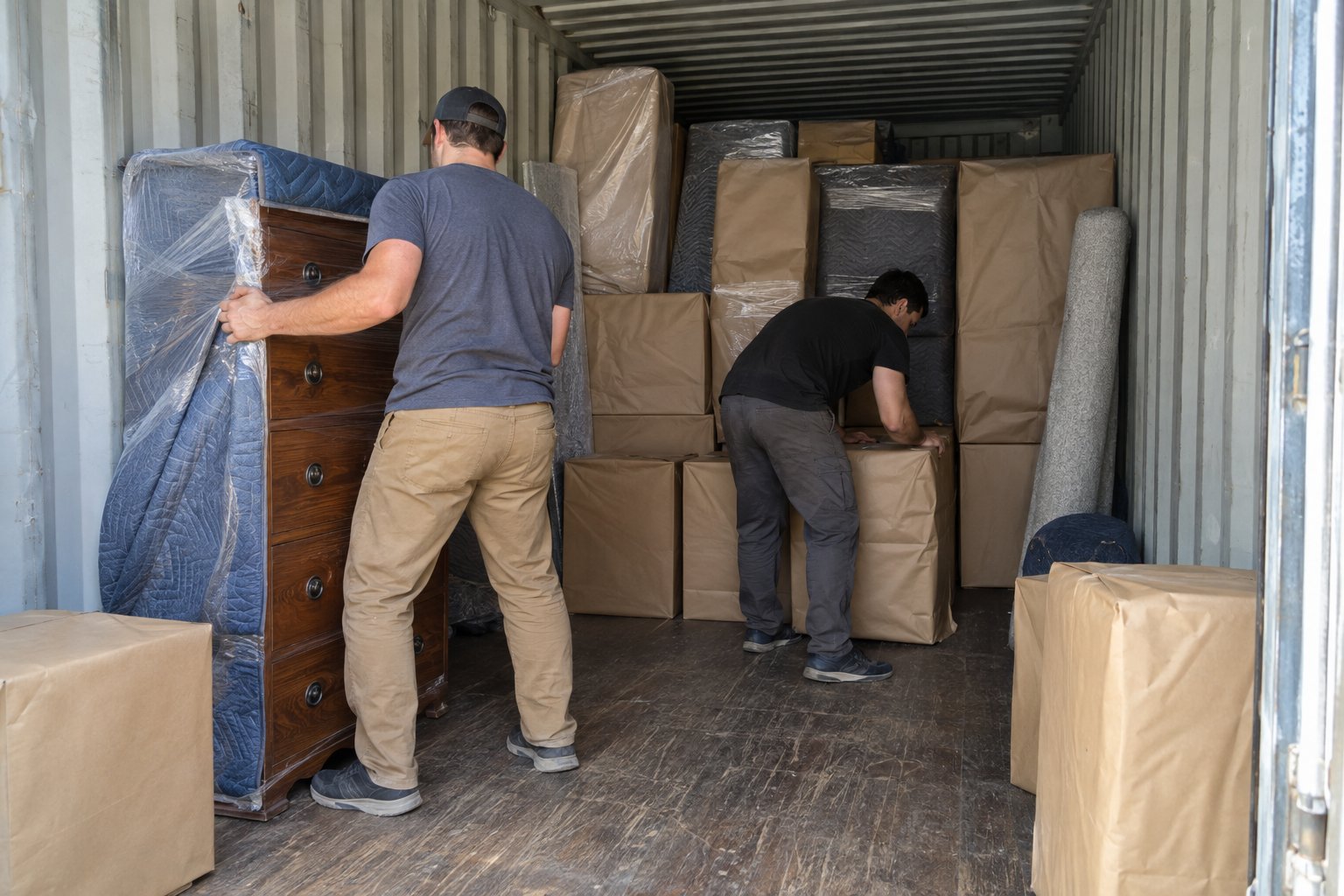
Wrap both units in moving blankets and secure them with tape or plastic wrap so the padding does not slip during loading. Slide the dolly's lip under the appliance's base, tilt it back slowly, and keep a second person spotting the opposite corner. Front-load washers are especially top-heavy once the drum is unlocked, so never tilt one back without a spotter holding it steady from the front. A crew that regularly handles professional packing services will typically bring this exact setup already loaded in the truck, which saves you a scramble to rent or buy equipment last minute.
Washers and dryers belong low and against the truck's front wall, since that is the most stable part of the load and the least likely to shift during braking. Set them upright, never on their sides or backs, because tilting either appliance can let residual water reach internal electronics or bend the drum's mounting springs.
Once positioned, strap each appliance to the truck's wall anchor points using a ratchet strap across the front third of the unit, not the top, so the strap cannot slide off during transport. Leave a few inches of clearance around both machines if possible, and avoid stacking anything heavy on top of the dryer even though its flat top makes that tempting. Getting this load order right matters even more on a longer haul; if your appliances are traveling with the rest of the household on a long distance move, ask your crew how they sequence heavy items against lighter furniture so nothing shifts over hours on the highway.
Reconnecting a washer and dryer at your new place means reversing the disconnection steps carefully and checking for leaks before you run a full load. Reattach the hot and cold hoses hand-tight plus a quarter turn with pliers, avoid over-tightening plastic fittings, and run a short test cycle while watching the connections for drips.
For the dryer, reconnect the vent duct fully so exhaust does not leak into the room, and confirm the gas line connection is tight if applicable before restoring service. Give both machines a level check with a bubble level and adjust the feet as needed, since an unlevel washer will walk across the floor and shake loudly during spin cycles.
Hiring professional movers for a washer and dryer makes sense when you are dealing with stairs, a gas dryer connection, or a schedule too tight to handle the disconnection and reconnection carefully. A crew experienced in residential moving already carries the straps, dollies, and blankets these appliances need, and they know how to route a top-heavy washer through a doorway without gouging your walls.
If your move also involves other bulky items, it often makes sense to have one crew handle every heavy appliance in the house rather than splitting the job between a rental truck and a plumber. When you are ready to book that help, you can get a moving quote and ask specifically about appliance handling experience.
Request a personalized quote and see how careful planning and reliable service make every move smoother. Our team prepares each step to handle challenges safely and efficiently.
Yes. Run a short rinse or spin cycle to clear standing water from the pump and hoses, then disconnect the hoses over a towel since a small amount of residual water almost always remains even after draining.
No, both should stay upright during transport. Laying a washer on its side can let leftover water reach the electronic controls or bend the drum's suspension springs, and a dryer's drum and belt can shift out of alignment if it is tipped over.
There is no strict time limit, but it is best to reconnect within a day or two and avoid leaving hoses disconnected and open where residual moisture could encourage mold in the fittings.
Many moving companies will disconnect and reconnect basic electric hookups, but gas dryer lines often require a licensed technician or plumber depending on local regulations, so it is worth asking your moving company what is included.
A loud banging sound after a move usually means the drum was not secured with shipping bolts or padding, allowing it to swing and strike the cabinet in transit, which can damage the suspension and require a repair before the machine runs safely again.
No long forms, no delays. Just a move that’s ready when you are. Secure your moving date today.