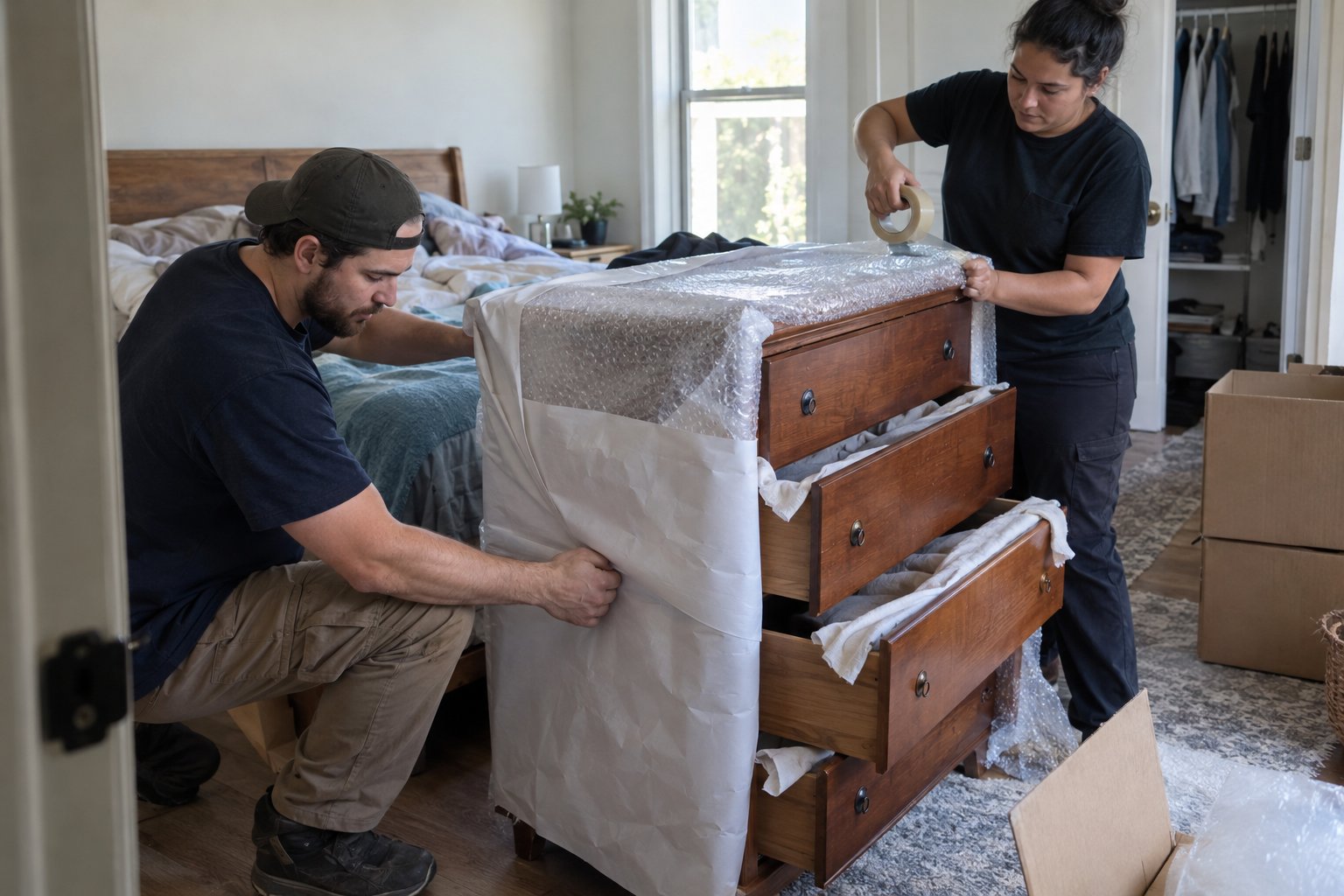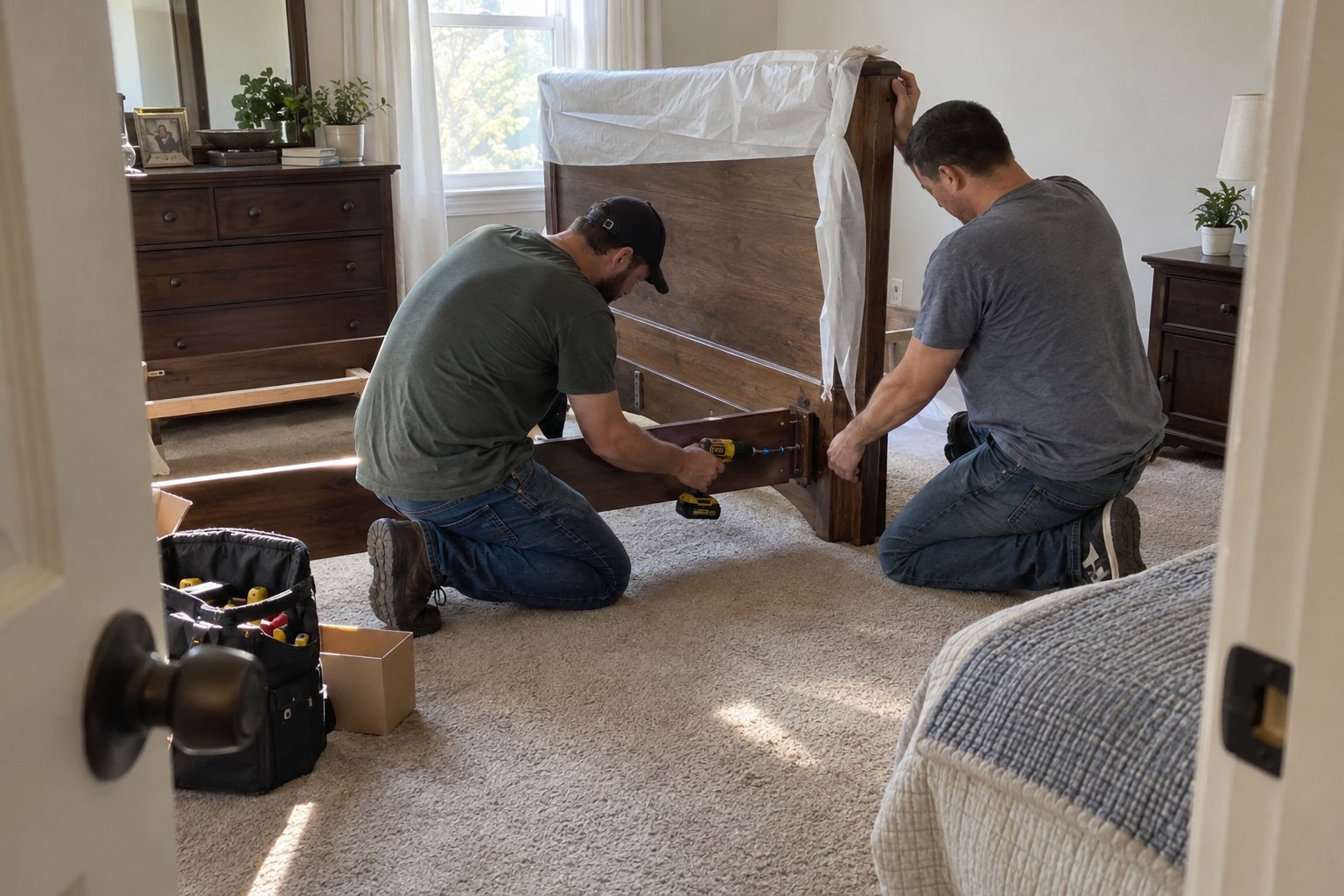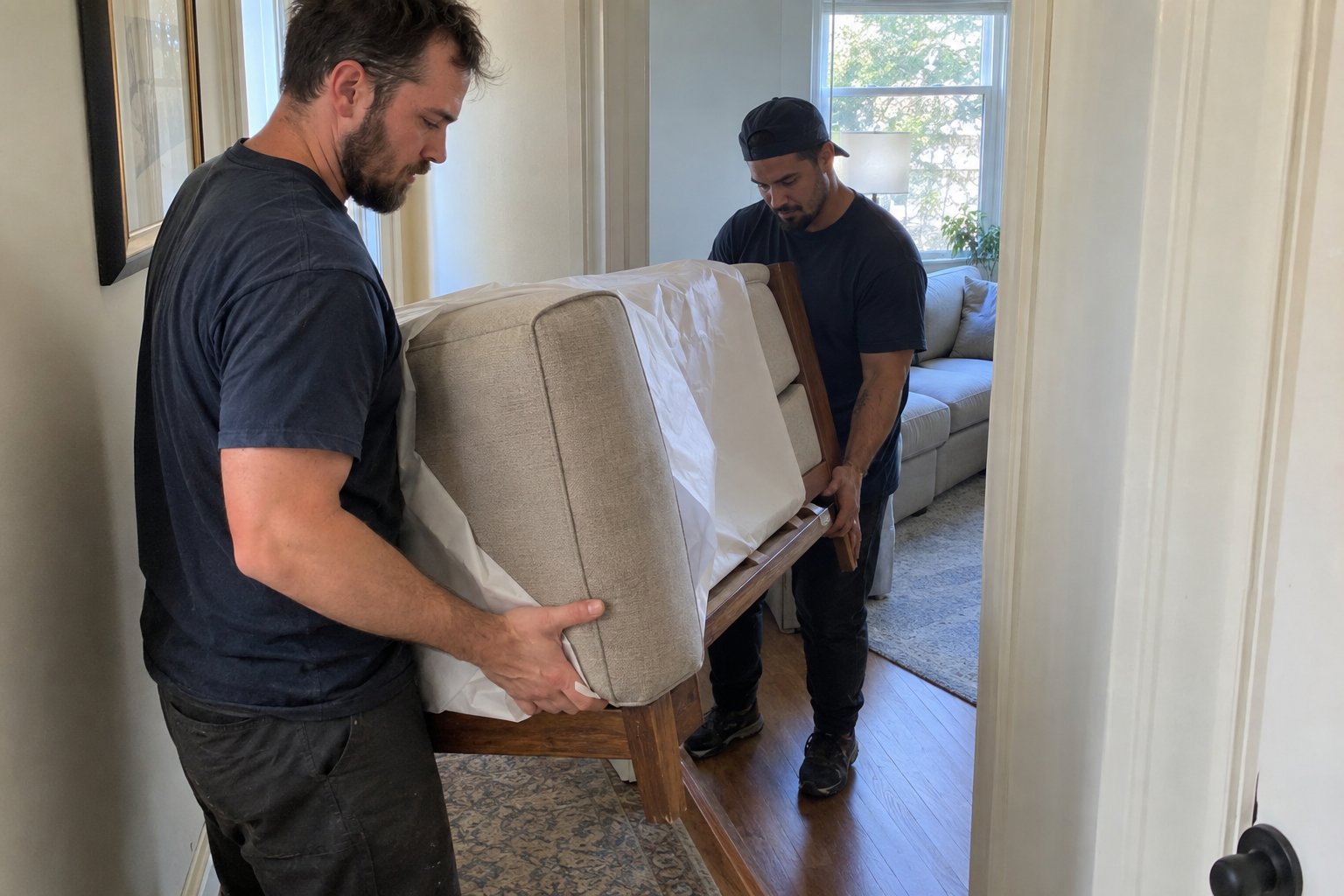


Learn how to move a mattress without tears, stains, or a hospital visit. Bagging, folding rules by type, truck loading, and when to call in professional movers.
Moving a mattress safely comes down to three things: bagging it against moisture and tears, choosing a carry method that matches its size and material, and never bending a memory foam or hybrid mattress the way you would a old-school innerspring. Get those three right and the mattress arrives clean and undamaged. Get them wrong and you either wreck the mattress or wreck your back trying to muscle it around a stairwell corner.
Mattresses are awkward for a reason: they're bulky, floppy, heavy for their size, and impossible to get a real grip on. Unlike a dresser or a couch, there are no handles, no rigid frame, and no good place to put your hands. Here's how to handle one from bedroom to moving truck without tearing the fabric, soaking it in rain, or throwing out your lower back in the process.
Yes. A mattress should always go into a plastic mattress bag or cover before it leaves the bedroom, even for a short move across town. Bagging protects against rain, dirt, dust, and the scrapes that happen when a mattress brushes against door frames, stair railings, or truck walls.
Mattress bags are sold in sizes matched to twin, full, queen, king, and California king dimensions, and most home improvement and moving supply stores carry them. Slide the mattress in, then tape the open end closed with packing tape rather than leaving it loose. If you don't have a purpose-made bag, heavy contractor-grade plastic sheeting taped around the mattress works as a stand-in, though it tears more easily on rough edges.
Skip the bag and you're gambling on weather and cleanliness. A mattress that sits uncovered in a truck for even a short haul can pick up dust, grease from other furniture, or a surprise rain shower at the loading dock. Once a mattress is stained, most people end up buying a new one rather than living with it.
Whether you can fold a mattress depends entirely on what's inside it. Traditional innerspring mattresses should never be folded or bent, since the internal coil system can snap, shift, or permanently deform under that kind of pressure. Memory foam and some hybrid mattresses can tolerate a gentle, temporary fold for maneuvering through a tight doorway, but only briefly and never with heavy pressure on the fold line.
If you're dealing with an innerspring or a thick hybrid, plan on moving it flat or on its side, full size, through every doorway and stairwell. Measure your tightest turn before moving day. Standard doorways run about 30 to 36 inches wide, and a queen or king mattress on its side usually clears that with a few inches to spare, but odd stairwell landings or narrow hallway turns can be tighter than they look.
For a foam mattress that genuinely won't fit any other way, a soft, temporary bend near the middle (not a hard crease) for a few minutes is generally tolerated. Don't strap it in a bent position, don't stack anything on top of it while bent, and let it lie flat again as soon as you're through the tight spot.
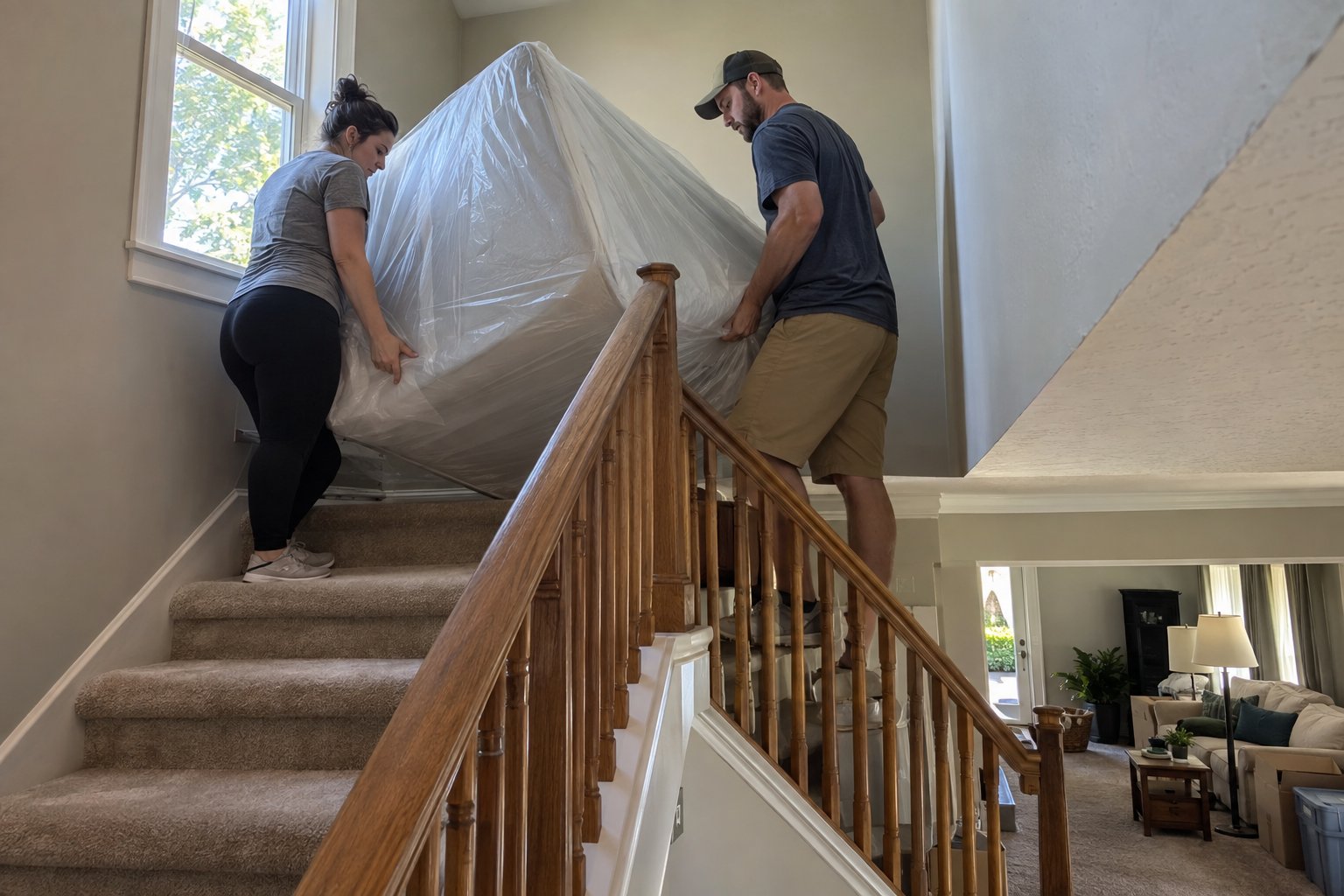
Carrying a mattress down stairs safely takes two people, a mattress on its side (never flat, which blocks your view of the steps), and constant verbal communication about footing. The person on the bottom controls the pace and calls out steps; the person on top steadies the mattress and watches for the top of doorframes.
Before you start, clear the stairwell completely. Remove rugs, close any doors that swing into the stairwell, and check that the path is dry. Grip the mattress by its sides using the built-in handles if it has them, or by cupping the edges firmly if it doesn't. Keep the mattress angled slightly rather than perfectly vertical, since a vertical mattress catches air like a sail and becomes harder to control on turns or in a breeze near an open door.
If the stairwell has a tight 90-degree turn at a landing, stop there, reset your grip, and pivot the mattress in small increments rather than trying to muscle it around in one motion. Rushing a turn is where most stairwell injuries and drywall dings happen.
Queen, king, and California king mattresses paired with a steep or narrow staircase sometimes need more than two people, especially if the mattress is a heavier memory foam or hybrid model. If you're struggling to keep control on the first attempt, stop and reassess rather than pushing through on the second or third try. This is one of the more common ways people hurt their backs during a move.
A mattress belongs flat or upright against a flat wall of the truck, never wedged into a gap between furniture where it can bend or take on point pressure. Load it either dead last so it sits on top of everything else, or first against the truck's front wall, standing upright and strapped so it can't slide or fall during transit.
If you stand it upright, use moving straps or rope to secure it to the truck's wall anchors so it can't tip onto other belongings when the truck brakes or turns. Never lay heavy or sharp-edged items on top of a mattress, even a bagged one, since concentrated weight can crush foam permanently or bend coils out of shape.
For long distance moves, a mattress spends far more time in the truck than it does being carried, so the loading position matters more than the carry itself. A mattress laid flat under other cargo for a multi-day haul can develop permanent indentations. If your move is crossing state lines, ask whoever is handling your long distance moving logistics how they plan to position mattresses in the truck, not just how they'll wrap them.
Hiring movers makes the most sense when you have a queen or larger mattress, a difficult stairwell or narrow hallway, or simply don't have a second reliable set of hands on moving day. The mattress itself isn't complicated to move in a vacuum, but combined with awkward geometry, it's one of the more common sources of moving day injuries and property damage.
A crew that handles heavy household items daily already knows how to angle a mattress through a tricky stairwell turn, how much bend a given mattress type can take, and how to strap it securely in a truck bed for a multi-hour drive. If your move also includes other bulky, hard-to-carry pieces like a couch, dresser, or bed frame, it's often more efficient to have professionals handle the whole residential move rather than mattress-only help.
If your mattress is part of a bedroom that's otherwise staying mostly untouched, you may also want to look at how the rest of that room gets packed. Our guide to packing a master bedroom covers the furniture and bedding side of the job so the mattress isn't the only thing you're planning around.
Whatever you decide, get a sense of the cost before moving day arrives so there are no surprises. You can get a moving quote from 2 Jacked Guyz to see what professional help with your mattress and the rest of your move would actually run.
Request a personalized quote and see how careful planning and reliable service make every move smoother. Our team prepares each step to handle challenges safely and efficiently.
You can for a very short trip in dry weather, but the mattress needs to be bagged, strapped down securely, and kept away from anything sharp in the bed. Wind can lift an unsecured mattress at highway speeds, so this only works for slow, local trips.
Even for foam mattresses that tolerate a gentle bend, keep it to a few minutes for maneuvering through a tight spot. Leaving any mattress folded or bent for hours, such as during a long loading process, risks permanent creasing or internal damage.
Box springs are more rigid and generally easier to carry, but they still need to be bagged and moved on their side through doorways. They're less prone to bending damage but can be dinged or torn on corners just as easily as a mattress.
A properly taped mattress bag will handle brief exposure to rain during the walk from door to truck, but it isn't meant for prolonged wet weather. If rain is heavy or the mattress will sit outside for a while, cover the bagged mattress with a tarp as extra protection.
A temporary odor or slightly different feel after being folded, compressed, or stored upright for a few days is usually normal and fades once the mattress lies flat and airs out. If a smell or indentation persists after a week or two, the mattress may have sustained damage during the move.
No long forms, no delays. Just a move that’s ready when you are. Secure your moving date today.