


Learn how to pack and move a master bedroom the right way — from disassembling bed frames to protecting nightstands, dressers, and personal belongings for moving day.
Figuring out how to pack and move a master bedroom is one of those moving challenges that almost everyone assumes will be straightforward — until moving day arrives and you are standing in a room that contains a king-size bed frame with a padded headboard bolted to a metal rail system you have not looked at since installation day, a dresser so heavy it took three people to bring it upstairs when you moved in, two nightstands with lamps and charging stations wired into the wall, a full-length mirror leaning against the wall that is taller than any doorway you will need to get it through, an armoire holding folded linens and seasonal clothing, and approximately four years of accumulated personal belongings tucked into every drawer and surface. The master bedroom sits at the intersection of large, heavy furniture, highly personal belongings, and the one room in the house where you most need to feel settled quickly after arrival — and that combination makes it one of the most important rooms in the entire house to approach with a clear plan.
The good news is that packing and moving a master bedroom — even a large one with a platform bed, custom dressers, wall-mounted lighting, and years of accumulated personal items — is completely manageable when you approach it with the right materials, the right sequence, and a clear understanding of what each category of item actually needs. And if you would rather hand the heavy lifting to professionals who know how to handle everything from a pillow-top king mattress to a freestanding antique armoire, the team at 2 Jacked Guyz professional movers is ready to take it from overwhelming to done.
Before you reach for a single box or start stripping the bed, walk through your master bedroom slowly and take a genuine, honest inventory of everything that lives there. Master bedrooms have a remarkable ability to absorb belongings quietly over the years — items tucked into the back of nightstand drawers, accessories crammed onto dresser tops, shoes pushed under the bed, and clothing hanging in corners that never quite made it into the main closet. The actual volume of what could technically make the move is almost always larger than what should.
As you walk through, sort everything into three clear categories: move it to the new home, donate or pass it along, and dispose of responsibly. That means taking a realistic look at bedding sets you no longer use, clothing that has been sitting in drawers unworn for seasons, worn-out pillows, and furniture pieces that may not work in the new floor plan. Moving is one of the most effective forcing functions you will ever have for making decisions about what belongs in your bedroom — and arriving at your new space with only what you actively want means the new room feels intentional from day one.
Once you know what is moving, group everything into logical working categories: bedding and linens, clothing and personal items, nightstand contents and small accessories, lamps and lighting, mirrors and wall décor, dressers and storage furniture, and the bed frame and mattress. Defining those groups before a single item is packed keeps the entire process organized and ensures that fragile items and personal belongings never end up in the same box as heavy hardware and furniture legs.
Bedding and linens are among the most forgiving items to pack — they do not break, they compress well, and they can double as protective padding for more fragile belongings. But they can also become unwieldy if not handled with a system, and arriving at a new home with damp, wrinkled, or disorganized bedding on night one is a miserable experience you want to avoid entirely.
King-size comforters, duvet inserts, and heavy blankets take up an enormous amount of volume in a moving truck when packed at full loft. Vacuum-seal storage bags compress them down to a fraction of their normal size and protect them from moisture and dust during transit. Label each bag with the bed size and contents so you can find exactly what you need on night one without unrolling everything.
Set aside one complete bedding set — fitted sheet, flat sheet, pillowcases, and a lightweight blanket — in a clearly labeled bag or bin that goes in your personal car or at the very front of the truck. After a long moving day, the single most important comfort item in your new home is a made bed, and having that kit immediately accessible means you are not digging through sealed boxes at midnight looking for sheets.
Pillows do not need specialty packing materials, but they do need to be kept clean and dry during the move. Large, clean garbage bags work well for standard bed pillows. Wardrobe boxes with hanging rods removed can also hold a surprising number of pillows at the top while garments hang below.
Dressers and nightstands are often the heaviest individual pieces in a master bedroom, and they require a thoughtful approach that balances protecting the furniture itself with making smart use of the space inside the drawers.
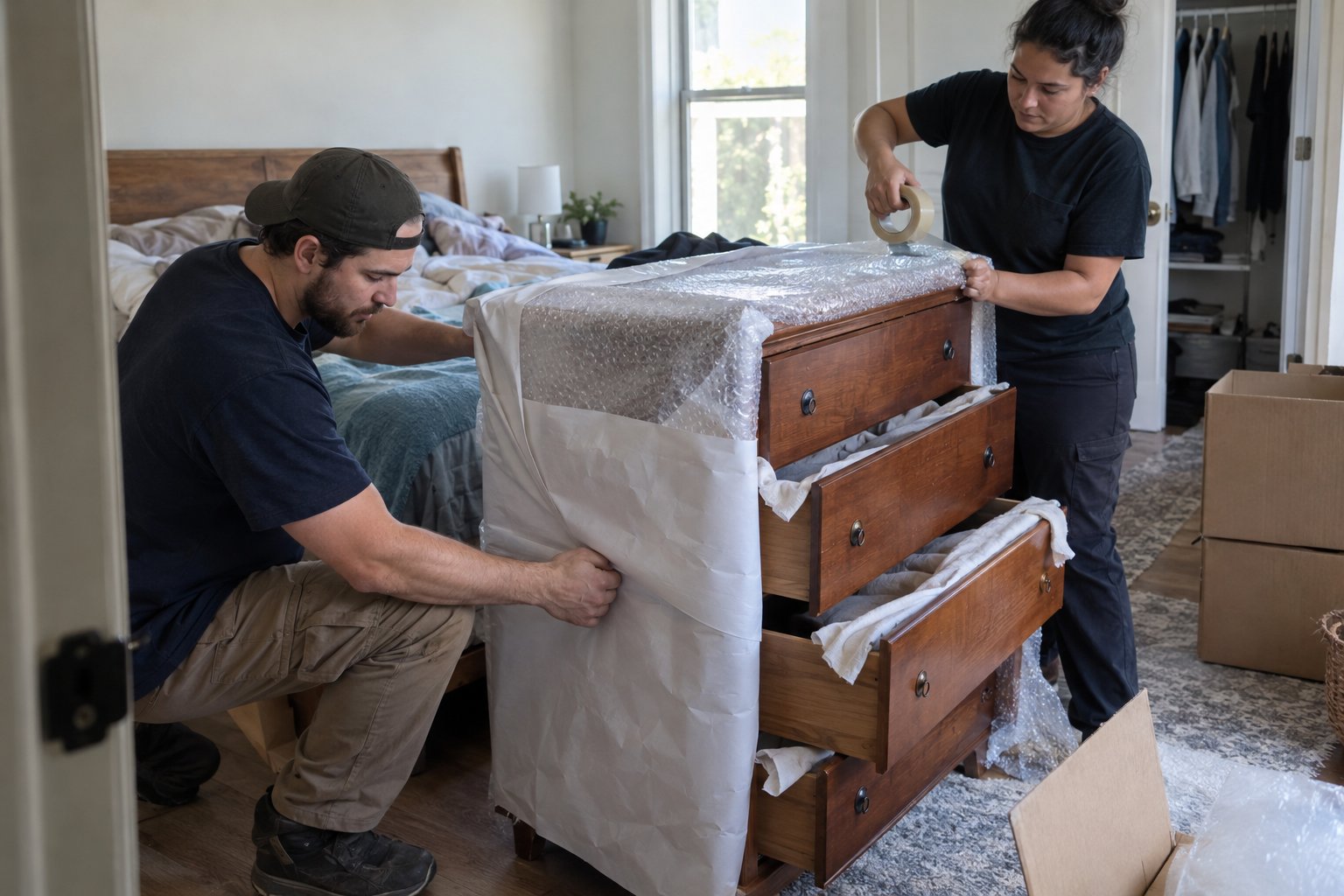
One of the most efficient strategies for moving a dresser is to leave soft, lightweight clothing — t-shirts, pajamas, socks, underwear — inside the drawers during the move. Remove the drawers from the dresser frame, wrap each drawer in plastic wrap or stretch wrap to keep the contents from shifting, and transport the drawers and the empty dresser frame separately. This saves packing time and box space without adding meaningful weight to the move.
Jewelry, heavy accessories, books, or anything hard and weighty should always be removed from drawers before the move. Heavy items in drawers add stress to the drawer slides and can damage the furniture frame during transit — particularly on a long-distance move with road vibration. Pack anything heavy separately in small, well-labeled boxes.
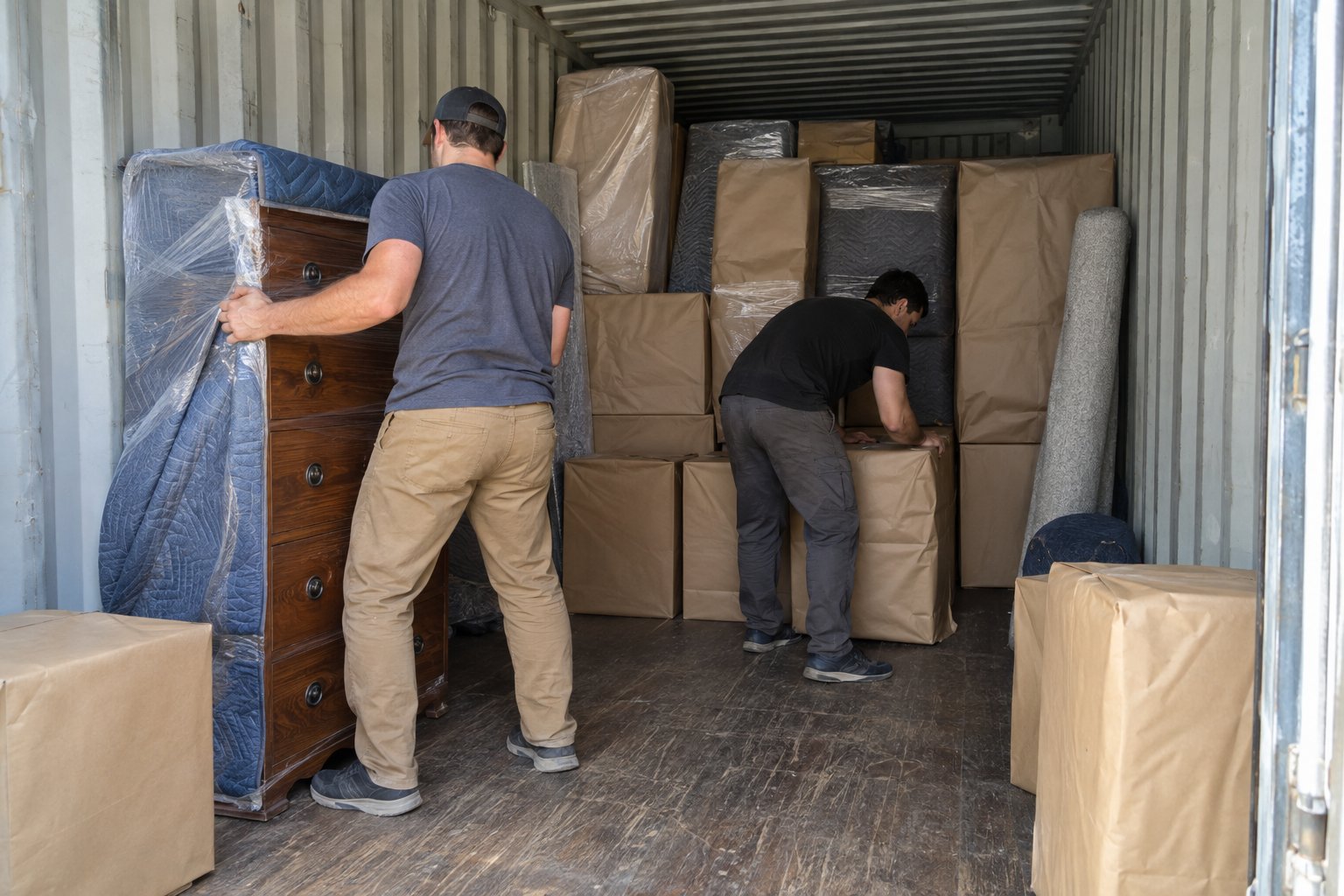
Dresser corners, nightstand legs, and any decorative hardware on bedroom furniture are the most vulnerable points during a move. Use furniture moving blankets to wrap each piece completely, and secure the blanket with stretch wrap or packing tape applied only to the blanket — never directly to finished wood surfaces. Pay particular attention to mirror-topped dressers, which require both the mirror and the dresser base to be wrapped and transported separately whenever possible.
The bed frame and mattress are typically the largest and most logistically challenging items in the master bedroom, and they set the pace for the entire room move. Getting this right means the difference between a smooth loading process and a frustrating bottleneck at the bedroom door.
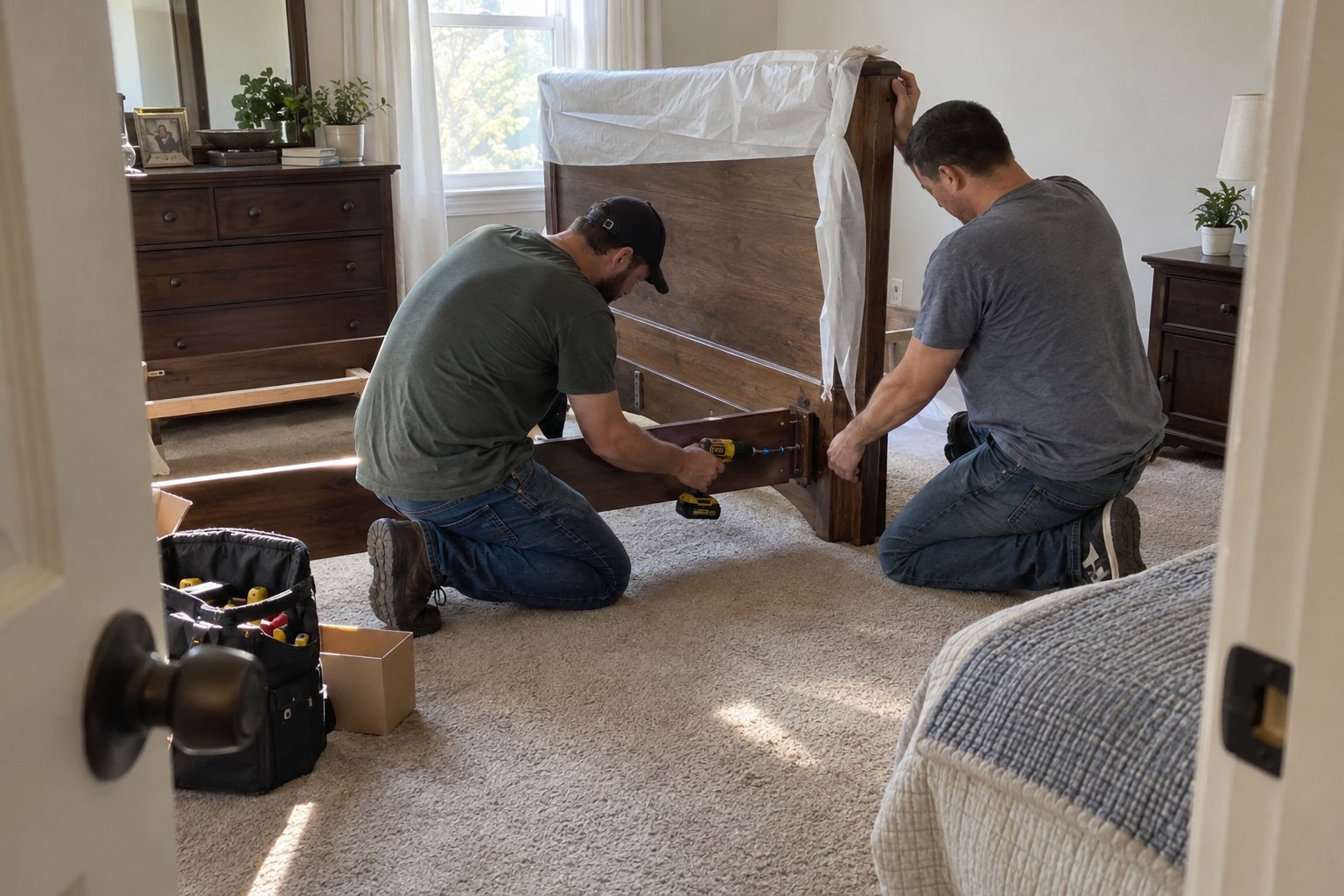
Almost every bed frame — whether it is a simple metal rail system, a wooden platform frame, or an upholstered storage bed — disassembles into components that are far easier to move than the assembled piece. Begin by removing any attached headboard and footboard, then take apart the side rails and support slats. Keep all hardware — bolts, screws, washers, and any proprietary connectors — in a clearly labeled zip-lock bag taped securely to one of the larger frame components. If you no longer have the assembly instructions, photograph the disassembly process step by step so reassembly at the new home is straightforward.
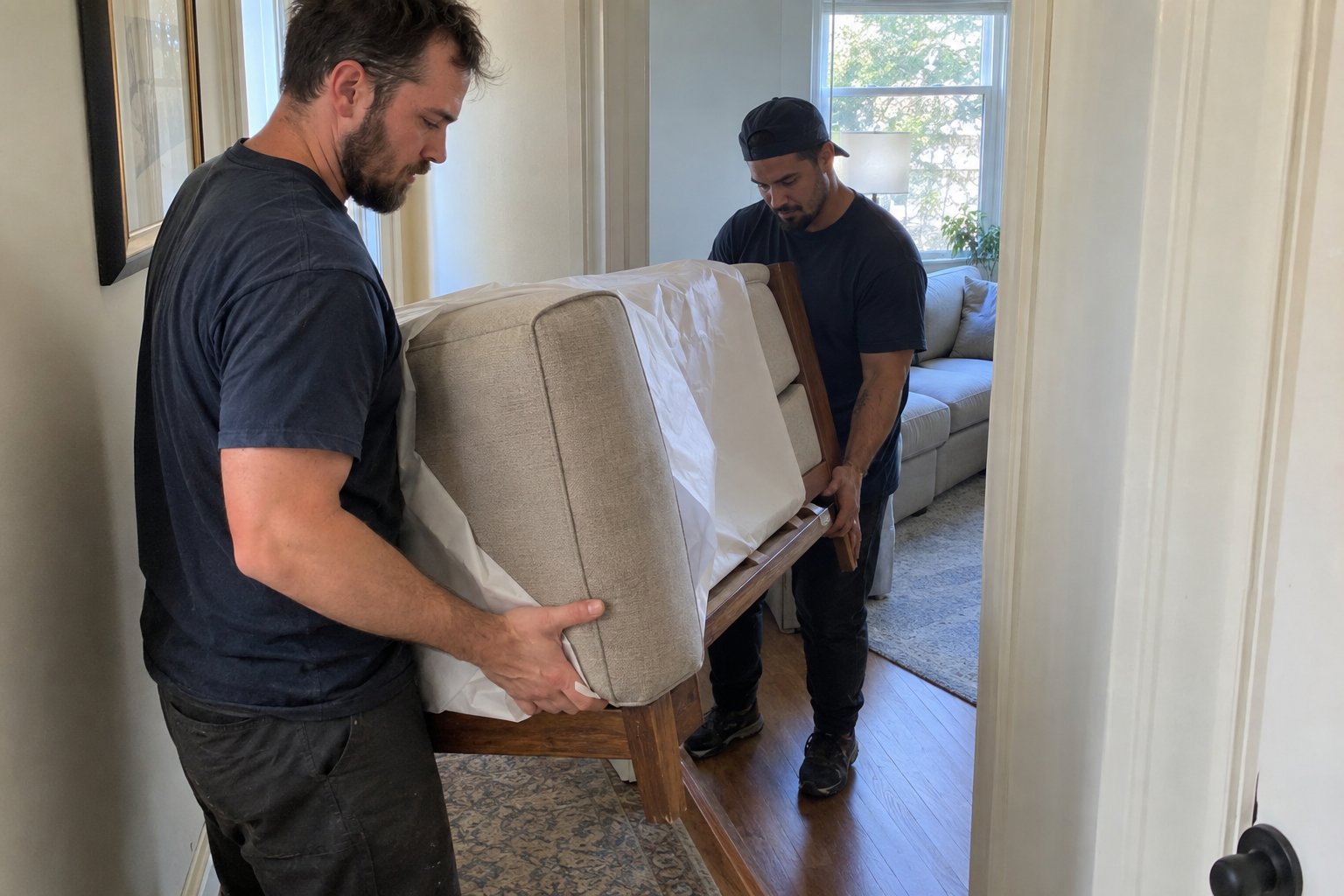
A mattress bag is not an optional upgrade — it is essential protection for what is likely one of the more expensive single items in your bedroom. Mattress bags are inexpensive, available in all standard sizes, and protect the mattress from dust, moisture, and scuffing during the move. Seal the bag completely, and use the bag as a handle point when maneuvering the mattress through doorways and down stairs. A king-size mattress is also one of the most physically demanding items to move safely — two people on a flat mattress through a narrow hallway is not a comfortable situation, and professional movers handle this kind of challenge every day.
Upholstered headboards — particularly fabric or leather styles — are vulnerable to scuffs, tears, and compression marks during transit. Wrap them in moving blankets and add a layer of stretch wrap over the blanket to keep the covering in place. Avoid leaning heavy items against an upholstered headboard in the truck. For platform bed frames with built-in storage drawers, empty the storage drawers completely before moving and treat the frame as furniture rather than as a storage container during transit.
Mirrors, table lamps, and framed wall art from the master bedroom are among the most fragile items in any home — and the bedroom typically contains more of them per square foot than almost any other room. A systematic approach to each category prevents breakage and keeps the packing process from stalling.
Full-length mirrors and dresser mirrors deserve dedicated mirror boxes — flat, adjustable cardboard boxes designed specifically for glass panels. Line the box with packing paper or foam sheeting before placing the mirror inside, and fill any remaining space with additional packing paper to eliminate movement. Mark every mirror box as fragile and indicate which side faces up. Never transport a mirror flat — always move mirrors on their long edge, standing vertically, to distribute stress properly across the glass.
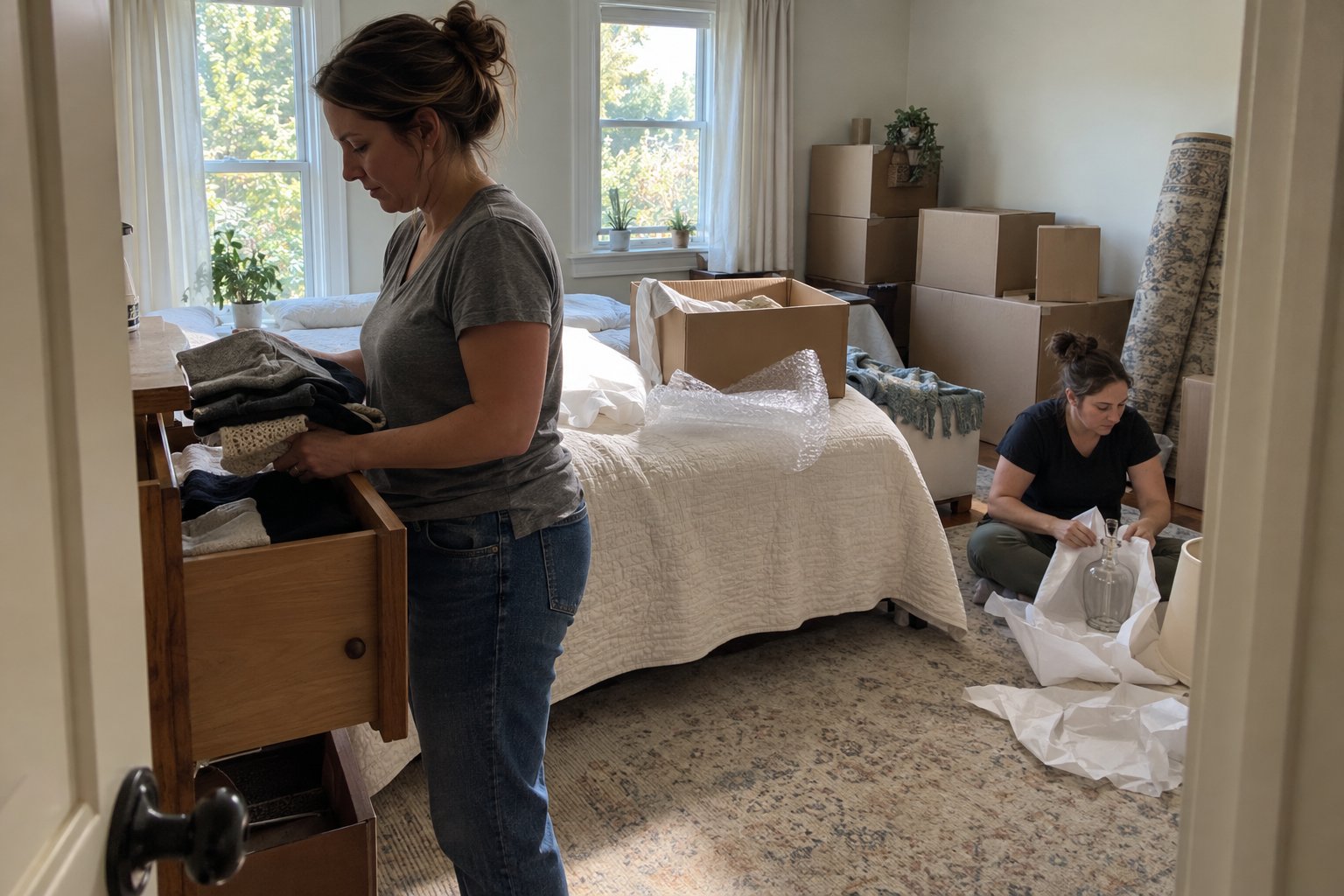
Lamp bases and lamp shades should always be packed separately. Lamp bases — whether ceramic, glass, or metal — should be wrapped in packing paper and nested in a box with paper padding on all sides. Lamp shades are among the most fragile items to pack because they crush easily and cannot share a box with anything that puts pressure on the shade fabric. Pack each shade individually in a box slightly larger than the shade, with crumpled paper filling the interior to maintain the shade's shape during transit.
When you are ready to hand off the heavy lifting, the professional team at 2 Jacked Guyz brings the experience and equipment to handle every piece of your master bedroom — from mattresses and platform frames to mirrored dressers and fragile lamps — safely and efficiently from your current home to your new one.
One of the most underrated decisions in planning a master bedroom move is deciding whether to pack and load the master bedroom first or last — and being intentional about it rather than letting it happen by default. Both approaches have real merit depending on your household and timeline.
Packing the master bedroom last keeps it functional as your home base for as long as possible during the packing process, which reduces the disruption to sleep and daily routine in the lead-up to moving day. Loading it first onto the truck, however, means it goes to the back of the truck and comes off last at the new home — giving you time to set it up while the rest of the house is being unloaded. Alternatively, loading it last means it comes off first, allowing you to set up the bedroom immediately while the rest of the move continues around you.
Whatever sequence you choose, make it deliberate. Communicate the plan clearly to everyone helping with the move, mark master bedroom boxes clearly with both the room name and priority level, and keep the first-night kit — bedding, phone chargers, toiletries, and anything you need for night one — in a designated bag that never goes into the truck at all.
Request a personalized quote and see how careful planning and reliable service make every move smoother. Our team prepares each step to handle challenges safely and efficiently.
Most people do well to begin packing the master bedroom two to three weeks before moving day. Start with seasonal clothing, extra bedding, and items you do not use daily, and leave the essentials — everyday clothes, current bedding, and nightstand items — until the day before or the morning of the move. This approach keeps the room functional throughout the packing process while still making meaningful progress well ahead of moving day.
You can leave lightweight, soft clothing — t-shirts, pajamas, socks, and underwear — inside dresser drawers as long as you remove the drawers from the dresser frame and wrap each drawer individually in plastic wrap or stretch wrap to keep the contents secure. Never leave heavy items like jewelry, books, or accessories in drawers during a move, as added weight can damage drawer slides and the furniture frame during transit.
The best way to protect a mattress during a move is to use a properly sized mattress bag — an inexpensive, heavy-duty plastic cover available in twin, full, queen, and king sizes. Slide the mattress into the bag, seal it completely, and keep the mattress standing vertically on its long edge in the moving truck rather than laying it flat under heavy items. A mattress bag protects against moisture, dust, and surface scuffs during transit.
Start by removing all drawers from the dresser frame to reduce its overall weight before attempting to move it. Pack or wrap the contents of each drawer, then move the frame and the individual drawers separately. Use furniture moving straps and a furniture dolly for the empty dresser frame, and protect all surfaces with moving blankets secured with stretch wrap. Never try to carry a fully loaded dresser — the combined weight and shifting contents make it both difficult to control and a risk for furniture damage.
For most households, hiring professional movers for the master bedroom is well worth the investment — particularly when the room contains a king or queen-size mattress, a heavy dresser, a platform or storage bed frame, or mirrored furniture. Professional movers have the equipment, padding materials, and technique to move large, heavy, and fragile bedroom items safely through tight doorways and down stairs without damage to the furniture or the home. The master bedroom is also the room most people want set up and usable as quickly as possible after the move, making a smooth, efficient move-in especially valuable.
No long forms, no delays. Just a move that’s ready when you are. Secure your moving date today.