

Learn how to move a grandfather clock without damaging the pendulum, weights, or delicate movement. A step-by-step guide from experienced movers.
Moving a grandfather clock safely comes down to one rule: disassemble the internal moving parts before you touch the case. The weights, pendulum, and chime mechanism are not built to survive a bumpy ride while still hanging inside the cabinet, and even a short trip across town can knock the movement out of time or bend a chime rod. Once those parts are removed and packed separately, the case itself is just a tall, awkward piece of furniture, which is a much easier problem to solve.
Grandfather clocks combine two challenges most furniture does not have: genuine mechanical fragility and significant height and top-heaviness. Treat it as a two-part job, the mechanism and the cabinet, and you will avoid the most common causes of damage.
Grandfather clocks get damaged in transit almost exclusively because the weights and pendulum were left inside the case during transport. The swinging motion and shifting weights bang against the cabinet walls, chip the finish from the inside, bend suspension springs, and throw the movement out of adjustment. Some of these repairs run into real money at a clock specialist, and a bent pendulum rod or damaged escapement is not something you fix with a screwdriver at home.
The second most common cause is tipping. A grandfather clock is tall, narrow, and top-heavy, which makes it unstable on a hand truck or in a truck that was not loaded with that shape in mind. Combine an unsecured movement with a case that is not properly braced, and you have the two failure points that account for nearly every damaged clock we have seen move.
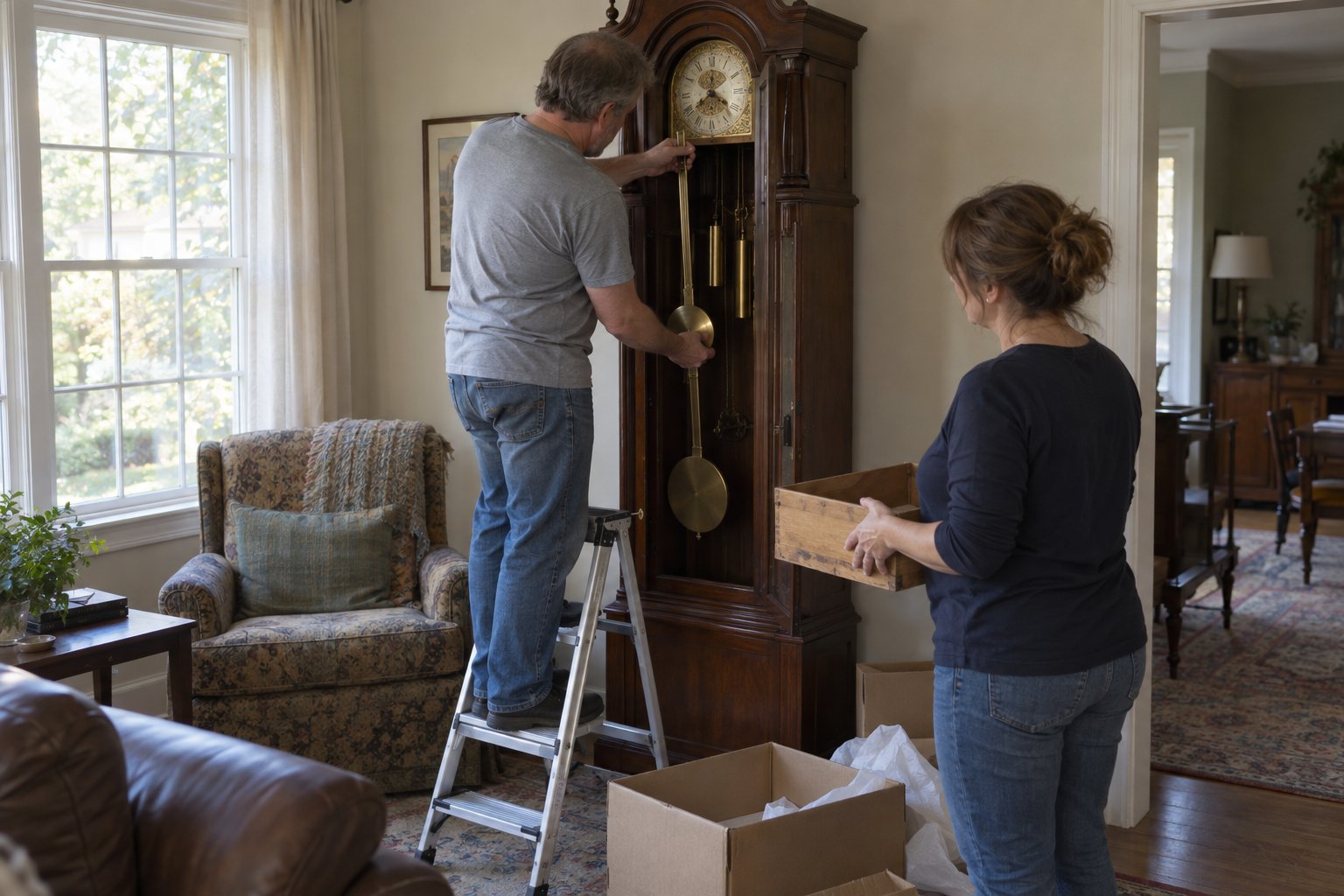
Open the case, stop the pendulum, and remove the weights and pendulum by hand before you do anything else to the clock. This should always be the first step, done before the case is tilted, wrapped, or lifted even a few inches.
Keep all of these pieces together in a single, clearly labeled box that travels with you rather than in the moving truck, if that is practical. Small, irreplaceable parts are the easiest things to lose in a move.
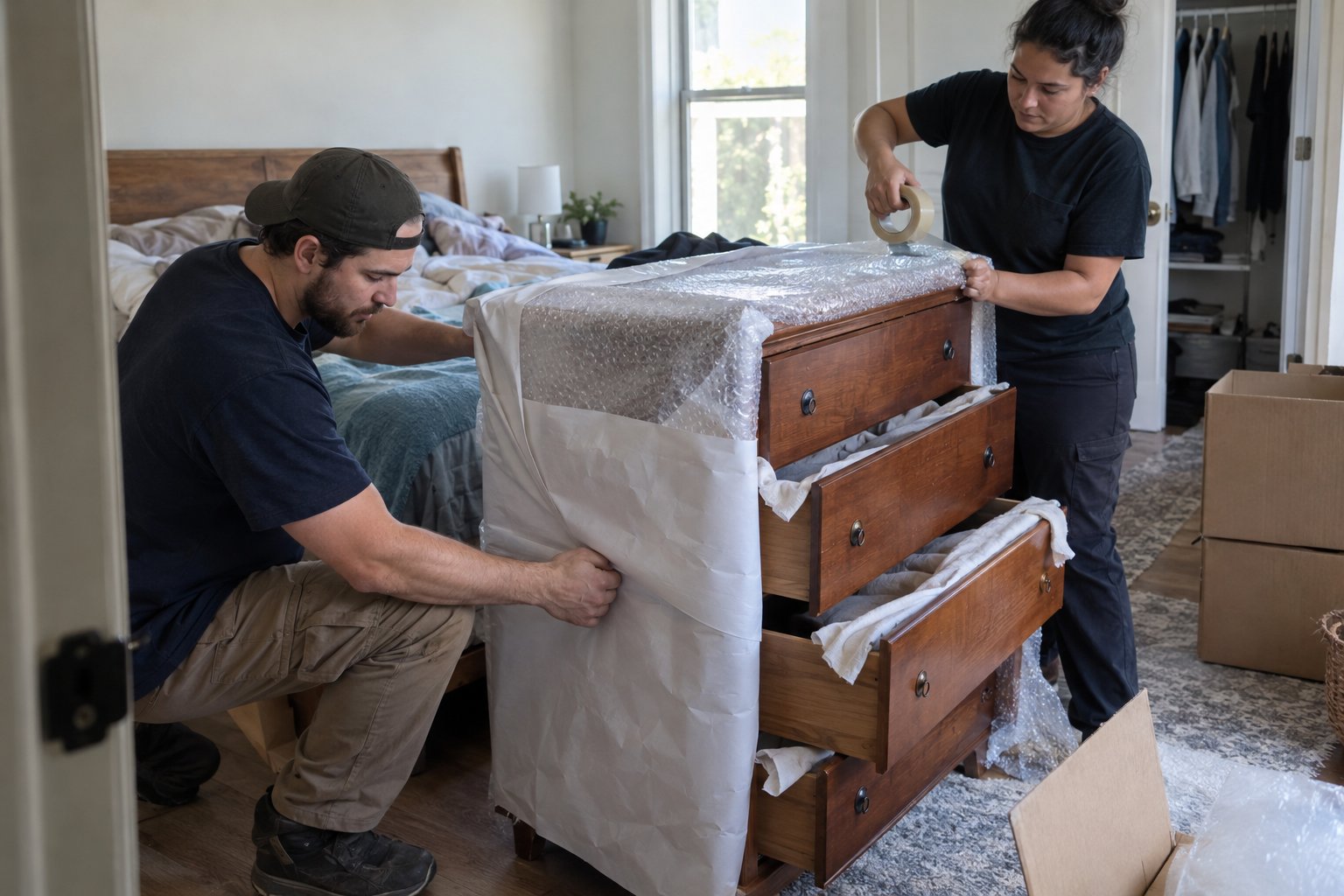
Once the internal parts are out, the case needs to be padded, braced against internal movement, and wrapped like any tall furniture piece, with extra attention to the glass door and finish. Grandfather clock cases are often solid wood with a hand-finished surface, so protect it accordingly.
These same wrapping and bracing principles apply broadly to any tall, finished wood furniture, so if you are also relocating other statement pieces, our guide on moving antiques and family heirlooms covers finish protection in more depth.
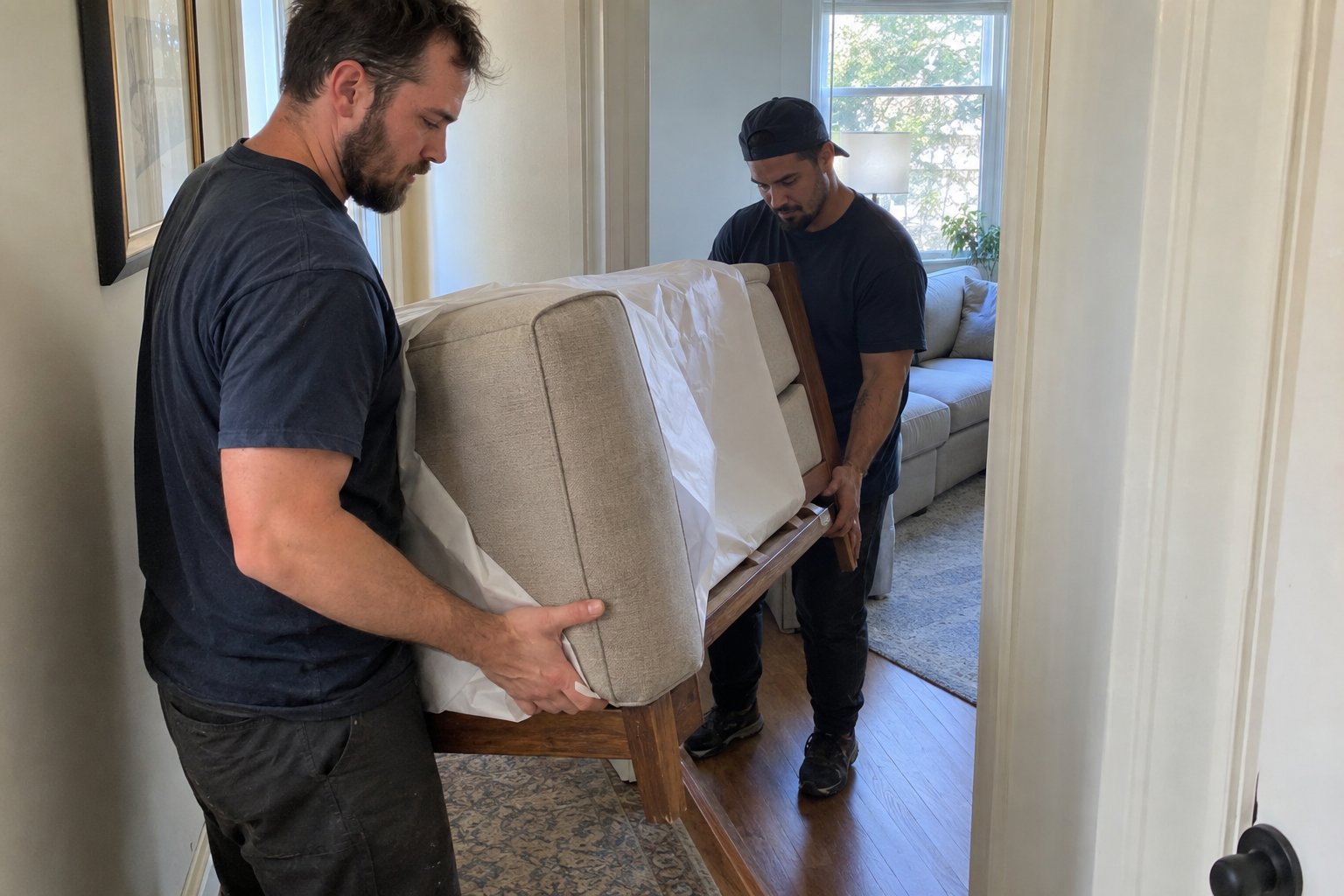
A grandfather clock should be moved upright whenever possible, secured with straps so it cannot tip, rather than laid flat. Keeping it vertical avoids putting stress on the case joints and reduces the chance of the top-heavy cabinet shifting awkwardly during loading.
If the clock genuinely will not fit upright, for example in a smaller vehicle or through a low doorway, it can be laid down as a last resort, but only on its back (never the side with the door), with heavy padding under the full length of the case and someone stabilizing it during any turns or stops. This is one of the few situations where professional movers with the right equipment, dollies rated for the weight, and a truck with enough clearance to keep it standing make the process meaningfully safer than doing it solo.
Measure the clock's height, width, and depth against every doorway, staircase turn, and hallway corner along the route before you lift it. Grandfather clocks commonly stand 6 to 7 feet tall, and that extra height is what catches people off guard on stairs and through angled doorways that handled a sofa just fine.
If your move also involves a long-distance haul, vibration and duration both increase the risk to the movement and finish, which is worth planning for through our long distance moving service if the trip is more than a few hours.
Let the clock sit in its final position for at least 24 hours before reinstalling the weights and pendulum, so the case can settle and you can confirm the floor is level. Moving it again once it is reassembled and running is much harder on the movement than moving it while empty.
Use a level against the case sides, shim the base if needed, then rehang the weights in their labeled positions, reattach the pendulum, and give it a gentle push to restart. If the clock does not keep time correctly after a day or two, small adjustments to the leveling usually resolve it. If it stops entirely or the chime sounds off, that points to a mechanical issue that predates or was caused by the move, and it is worth having a clock repair specialist take a look rather than adjusting the movement yourself.
Hire professional movers for a grandfather clock when the case is a genuine antique, when stairs or tight doorways are involved, or when you simply do not want the liability of handling an irreplaceable family piece alone. The cost of professional handling is almost always smaller than the cost of repairing a damaged movement or refinishing a cracked case.
Our team handles specialty and heavy items as part of standard residential moving jobs, with the dollies, straps, and packing materials suited to tall, delicate cabinetry. If your move includes other oversized or fragile pieces alongside the clock, it is worth asking about a full walkthrough so everything gets the right equipment and handling plan from the start.
Ready to get your move scheduled? Get a moving quote and let us know about the clock and any other specialty items so we can plan accordingly.
Request a personalized quote and see how careful planning and reliable service make every move smoother. Our team prepares each step to handle challenges safely and efficiently.
Yes. The pendulum and weights should always be removed before the clock is tilted, wrapped, or lifted. Leaving them in place is the leading cause of transit damage, since the swinging motion knocks parts loose and can bend the suspension spring or chime rods.
Individual weights typically run 8 to 15 pounds each, and most triple-weight clocks have three separate weights that are not interchangeable. Label each one before removal so it returns to the correct position.
No. If it cannot be moved upright, lay it on its back only, never on the side with the glass door, and pad the full length of the case. Upright and strapped is always the safer option when it fits.
Give it at least 24 hours in its final position before rehanging the weights and pendulum. This lets the case settle and gives you time to confirm the floor underneath is level.
Usually the case is not perfectly level in its new spot. Check the level on both sides of the case and shim the base as needed before assuming there is a mechanical problem.
No long forms, no delays. Just a move that’s ready when you are. Secure your moving date today.