

Learn how to pack and move a reading nook or sitting room — bookshelves, accent chairs, lamps, and delicate décor — without damage or chaos on moving day.
Figuring out how to pack and move a reading nook or sitting room is one of those moving challenges that almost always gets pushed to the bottom of the planning list — until moving day arrives and you are standing in a room that is somehow more complicated than it looked. There is the floor-to-ceiling bookshelf loaded with hundreds of volumes arranged exactly the way you like them, an accent chair that weighs far more than any accent chair has any right to, a floor lamp with a shade that does not pack into anything neatly, a side table with a glass top, a collection of framed prints and art objects arranged on every available surface, and a window seat with a built-in storage bench stuffed with blankets, throw pillows, and books that did not make it onto the main shelf. The reading nook or sitting room sits at the intersection of personal taste, fragile objects, and surprisingly heavy furniture — and that combination makes it one of the most underestimated spaces in the entire house to plan, pack, and transport safely.
The good news is that packing and moving a reading nook or sitting room — even one with a large built-in bookcase, an heirloom reading chair, and years of carefully curated décor — is completely manageable when you approach it with the right materials, the right sequence, and a clear understanding of what each category of item actually needs. And if you would rather hand the heavy lifting to professionals who know how to handle everything from a wall-anchored bookshelf to a delicate ceramic table lamp, the team at 2 Jacked Guyz professional movers is ready to take it from overwhelming to done.
Before you reach for a single box or start wrapping anything in packing paper, walk through your reading nook or sitting room slowly and take a genuine inventory of everything that lives there. These rooms have a remarkable way of accumulating objects over time — a collection that grows book by book, candle by candle, and decorative object by decorative object until the room feels full in a way that only becomes obvious when you have to account for every single item.
As you walk through, sort everything into three honest categories: move it to the new home, donate or pass it along, and discard it responsibly. That means taking a hard look at books you have owned for years and genuinely will not read again, decorative objects that felt meaningful once but no longer do, and throw pillows that have seen better days. Moving is one of the best opportunities you will have to reset a beloved room, and only bringing what you truly love means the new reading space starts with intention rather than accumulated clutter.
Once you know what is moving, group everything into logical categories: books, accent furniture, lamps and lighting, framed art and wall décor, decorative objects and ceramics, textiles and soft furnishings, and any built-in components that need to be evaluated for disassembly. Defining those groups before you start packing keeps the process organized and dramatically reduces the chance that something fragile gets broken, a lamp shade gets crushed, or a beloved first edition gets damaged in a box that was packed too loosely.
Books are deceptively heavy. A single shelf of hardcover novels can easily weigh thirty to forty pounds, and the most common mistake people make when packing a reading room is reaching for large boxes and filling them to the brim. Large boxes packed with books become so heavy they are nearly impossible to lift safely — and more importantly, the bottom of the box is likely to give out under the weight before it ever reaches the truck.
Small moving boxes — the kind typically used for canned goods or pantry items — are the correct tool for books. Fill each box no more than two-thirds full, keep the total weight under roughly thirty pounds per box, and supplement the remaining space with crumpled packing paper or soft items like hand towels to prevent shifting. Pack hardcovers and large trade paperbacks flat, spines down, stacked in layers. Pack smaller paperbacks either flat or spine-out. Avoid packing books spine-up, which can stress and warp the binding over the course of a move.
If your reading room includes rare books, first editions, signed copies, or any volumes with significant monetary or sentimental value, those deserve individual attention. Wrap each one in acid-free tissue paper or clean packing paper, pack them in a separate box with generous padding on all sides, and label that box clearly as fragile and high value. Keep this box with you in the vehicle when possible rather than loading it into the moving truck with general cargo.
The furniture in a reading nook or sitting room tends to be smaller in scale than living room furniture, but that does not mean it is easy to move. Accent chairs, chaise lounges, wingback chairs, and window seats often have irregular shapes, delicate upholstery, carved wooden details, and legs that are easy to snap or crack under careless handling.
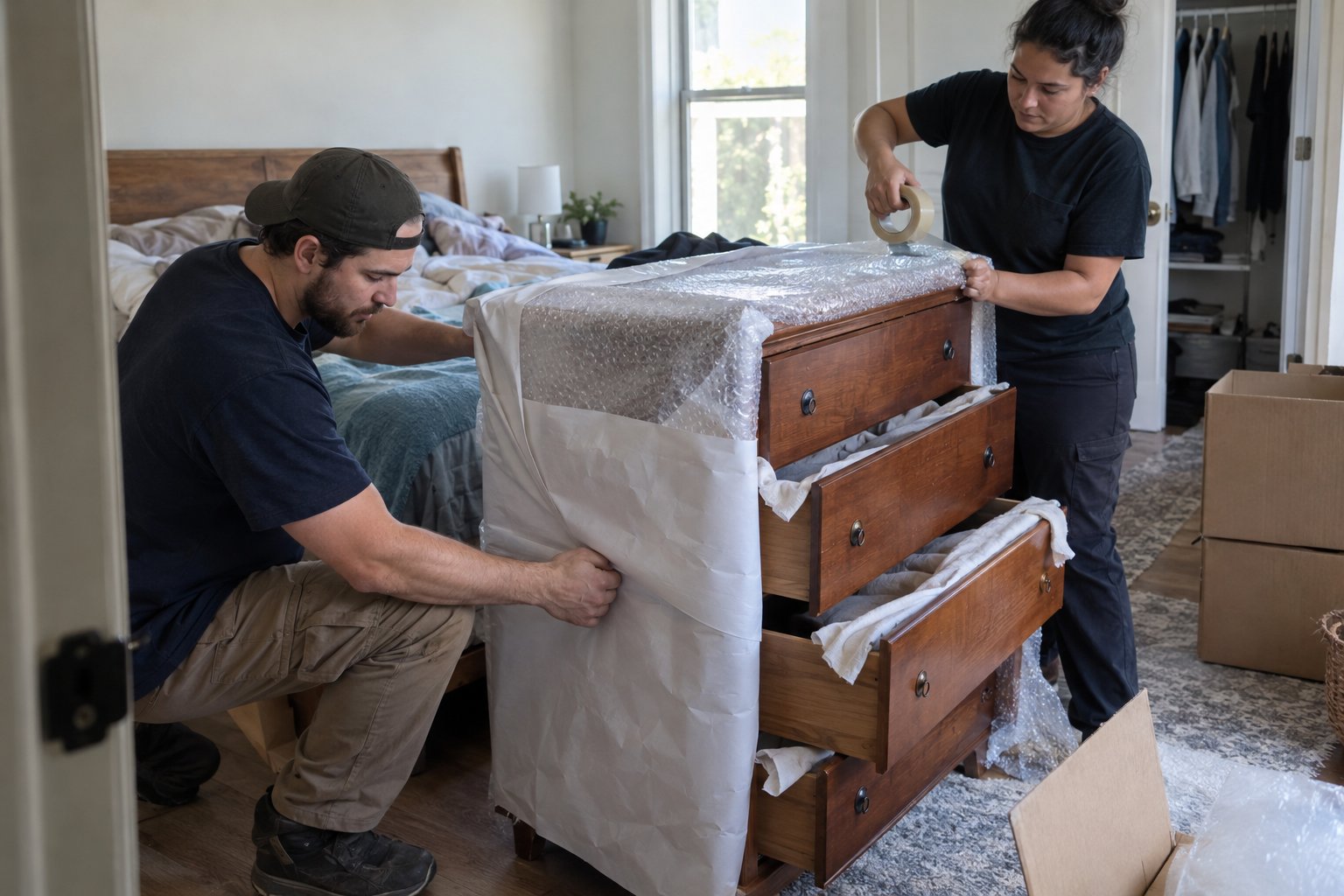
Before a single piece of upholstered furniture moves, it needs to be protected. Use moving blankets, furniture pads, or stretch wrap to cover fabric surfaces completely. This protects upholstery from scuffs, snags, and dirt during the move. For chairs with wooden arms or carved details, wrap the exposed wood separately with moving blankets secured with packing tape — making sure the tape never touches the wood or fabric directly, only the protective layer.
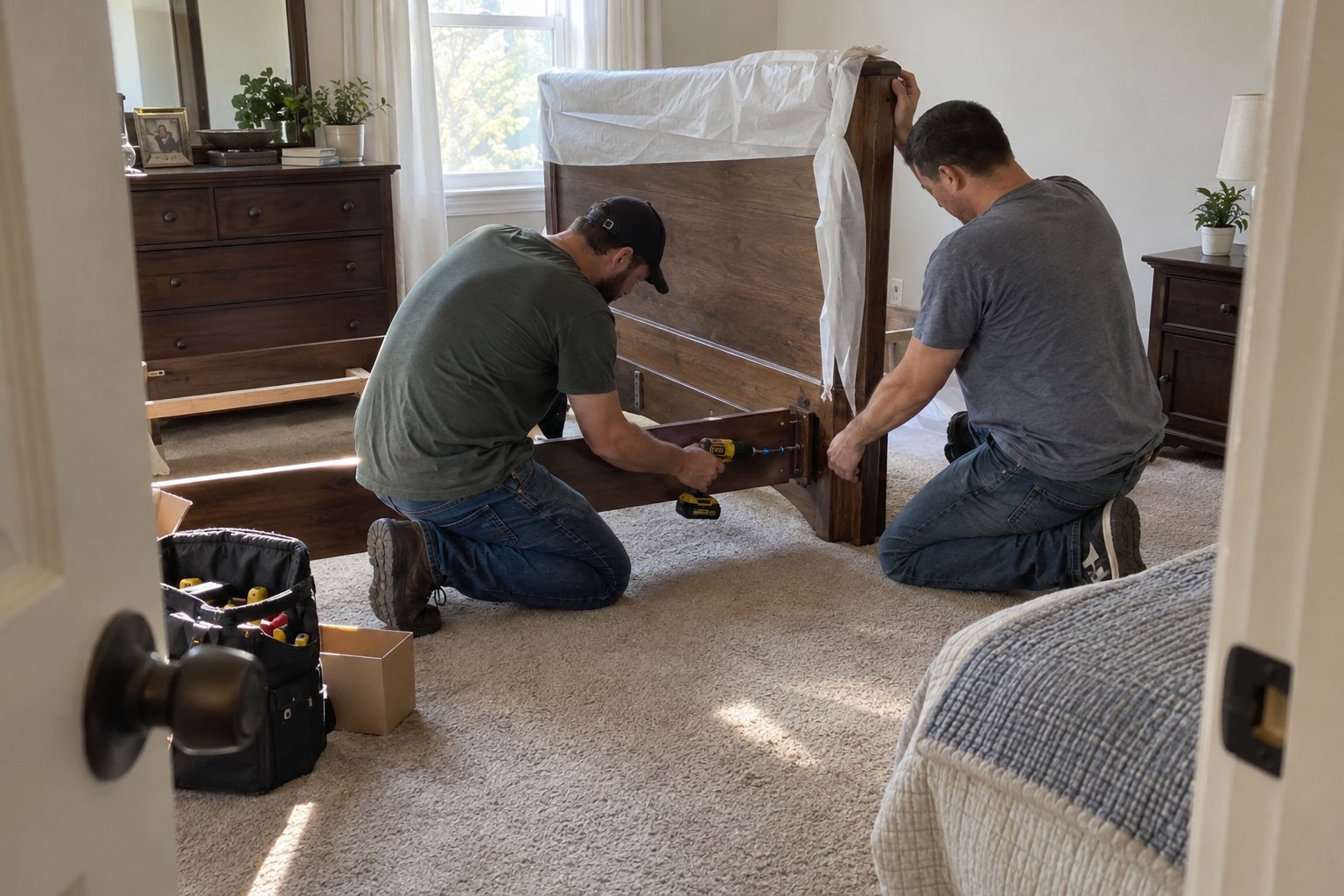
Many accent chairs and sitting room pieces are not designed to disassemble — they are built as a single unit, and attempting to remove legs or arms on a chair not designed for it can cause real damage. Before you try to disassemble anything, check for visible hardware underneath the furniture. If legs are bolted on with a visible nut and bolt, they can likely come off safely. If the connection looks glued or doweled, leave it intact and plan the move around the chair's full dimensions. For built-in window seats with storage beneath, remove the cushion, empty the storage compartment completely, and evaluate whether the seat lid can be removed to reduce bulk during transport.
Floor lamps and table lamps are some of the most awkward items in any sitting room to pack well. The base and the shade almost always need to be packed separately, and the shade — which is typically fabric stretched over a wire frame — is essentially impossible to recover once it has been crushed or creased.
Ceramic, glass, and resin lamp bases should be wrapped individually in several layers of packing paper, then packed upright in a box with crumpled paper padding on all sides. If the lamp came with its original box and internal packaging, use it — manufacturer packaging is designed specifically for that piece. For tall floor lamp poles that break into sections, disassemble them, wrap each section in packing paper or bubble wrap, and bundle the sections together with stretch wrap so they travel as a single unit.
Never wrap a fabric lamp shade in packing paper or bubble wrap — both can permanently crease the fabric or leave impressions in the shade surface. The correct approach is to place the shade in an appropriately sized box with crumpled packing paper underneath and around the sides to cushion it without touching the shade surface directly. If you have multiple shades, nest smaller ones carefully inside larger ones with a layer of tissue paper between them, and make sure nothing is stacked on top of the shade box.
Reading nooks and sitting rooms tend to accumulate more framed art per square foot than almost any other room in the house — prints, photographs, small oil paintings, botanical illustrations, and mirrors arranged in clusters or galleries on every wall. Each one needs to be handled carefully and packed in a way that protects both the frame and the glazing or mirror surface.
For framed pieces with glass, apply a large X of painter's tape across the glass surface before wrapping anything. This does not strengthen the glass, but it holds the pieces together and reduces the risk of shards spreading if the glass does break during transit. Wrap each framed piece in several layers of packing paper, then in a layer of bubble wrap, and pack pieces either in purpose-made picture boxes or between layers of foam padding in a flat box. Stand framed pieces vertically — never flat — during transport, and mark the box clearly on all sides as fragile.
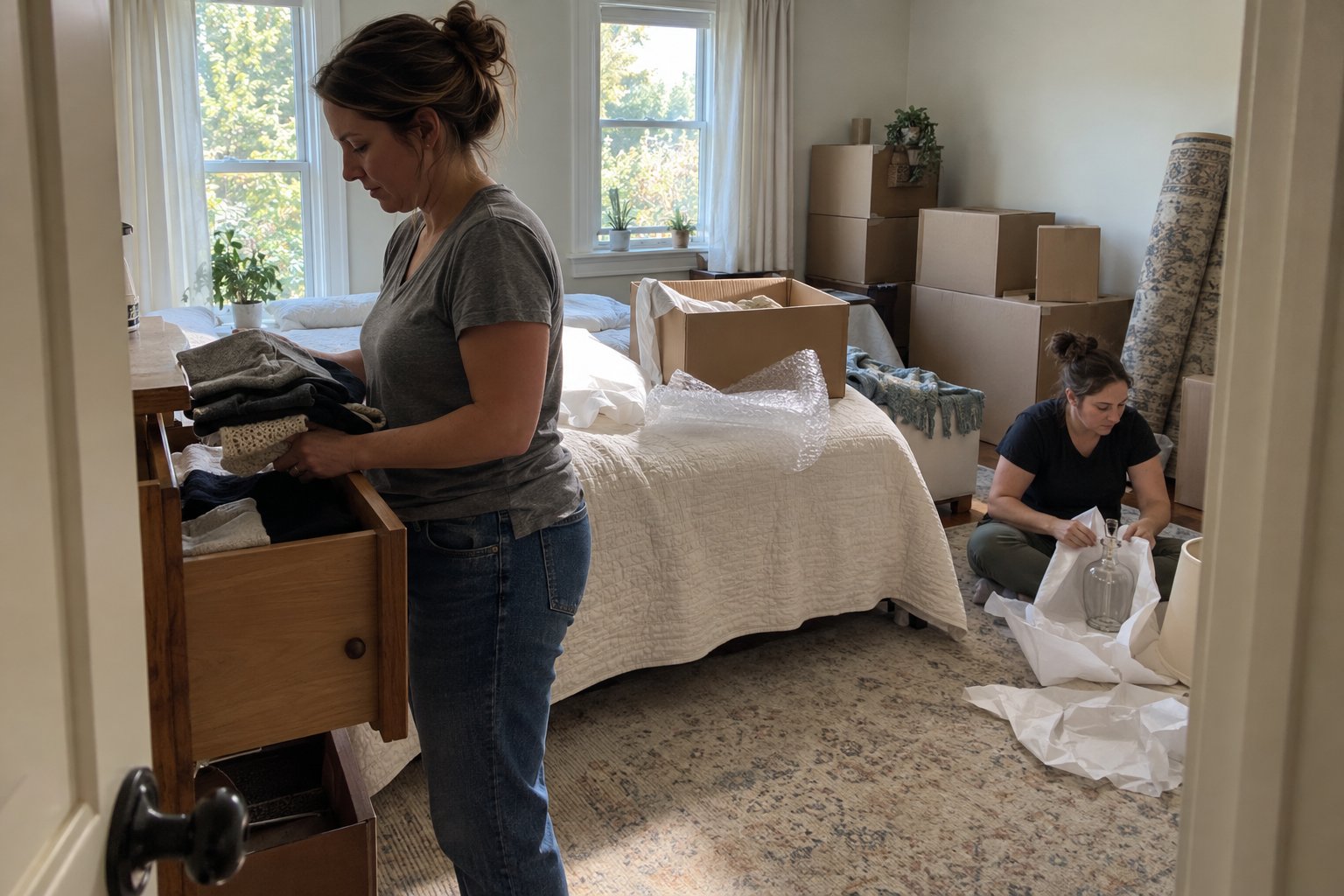
Decorative objects — ceramics, figurines, small sculptures, bookends, and anything with protruding details — should each be wrapped individually and packed in boxes with generous cushioning on every side. Heavier objects go on the bottom; lighter, more delicate items on top. Fill every gap in the box with crumpled packing paper so nothing can shift during transit. A box that sounds hollow when you shake it is a box that will deliver broken pieces.
A reading nook or sitting room might be one of the smaller spaces in your home, but it often contains some of the highest-value and most irreplaceable items — signed books, heirloom furniture, original artwork, and decorative pieces collected over many years. If any part of this move feels beyond your capacity, or if you simply want the peace of mind that comes from knowing every item is handled by someone who does this every day, 2 Jacked Guyz professional movers brings the experience, the materials, and the care your reading room deserves. From the heaviest bookshelf to the most delicate ceramic lamp base, the right team makes all the difference between a move that goes smoothly and one that ends with something you cannot replace.
Request a personalized quote and see how careful planning and reliable service make every move smoother. Our team prepares each step to handle challenges safely and efficiently.
The key is using small moving boxes and keeping each box under roughly thirty pounds. Fill boxes no more than two-thirds full, pack books flat or spine-down in layers, and fill any remaining space with crumpled packing paper to prevent shifting. Never use large boxes for books — they become dangerously heavy before they are even half full, and the box bottom is likely to fail under the weight.
In most cases, no. Books add significant weight to a bookshelf and can shift during the move, throwing the balance of the unit off and increasing the risk of damage to both the books and the shelving. Remove all books, wrap or box them separately, and move the empty bookcase on its own. If the bookcase is a built-in anchored to the wall, have a professional assess it before attempting to remove it.
Never wrap a fabric lamp shade in packing paper or bubble wrap — both can permanently crease the fabric or leave impressions. Instead, place the shade in an appropriately sized box with crumpled packing paper underneath and around the sides for cushioning, making sure nothing presses against the shade surface directly. Do not stack anything on top of the shade box, and label it clearly as fragile.
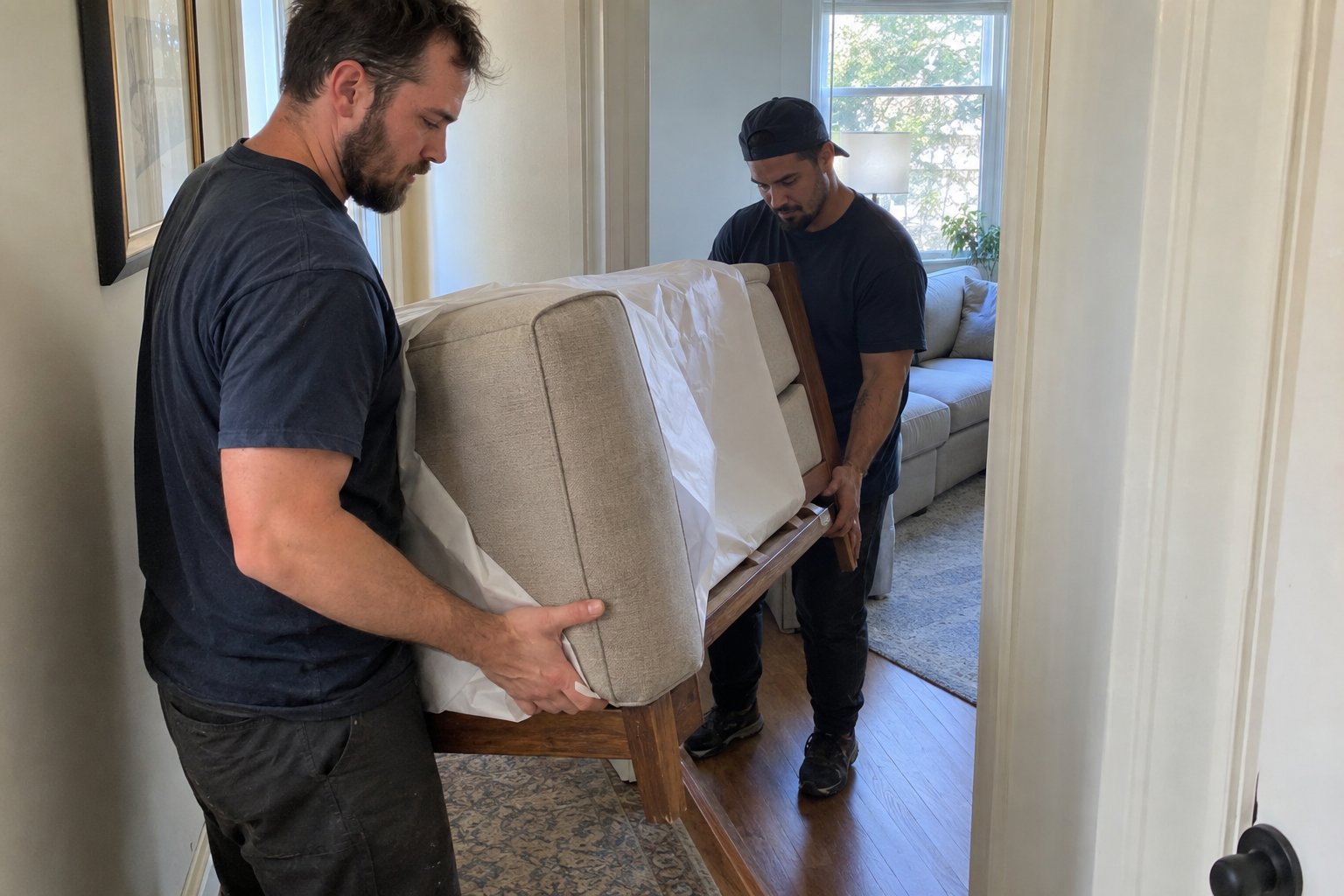
Cover the upholstery completely with moving blankets or furniture pads secured with stretch wrap, making sure the tape only touches the protective layer — never the fabric or wood directly. Protect any exposed wooden arms or carved details with additional wrapping. Move the chair as a single unit, carrying it at an angle if needed to navigate doorways, and always have a second person spotting from the other side.
For many people, yes — especially when the room contains rare books, heirloom furniture, original artwork, or other irreplaceable items. Professional movers bring the right packing materials, the experience to handle fragile and awkward items safely, and the equipment to move heavy bookshelves without damaging floors or walls. The cost of a professional move is almost always lower than the cost of replacing or repairing something damaged in a DIY move gone wrong.
No long forms, no delays. Just a move that’s ready when you are. Secure your moving date today.