
Learn how to pack and move a mudroom or entryway the right way — shoes, coat racks, benches, hooks, and all the everyday essentials that pile up at the door.
Figuring out how to pack and move a mudroom or entryway is one of those tasks that almost always gets pushed to the last minute. It is the first room you walk into every day and the last one you think about when it comes to moving. On the surface it seems simple — a few hooks on the wall, a bench by the door, some shoes on a rack — but anyone who has spent a few minutes actually cataloguing what lives in an entryway knows there is far more to it than that. You are looking at bulky outerwear for every member of the household, boot trays caked with dried mud and salt, a bench that may be built in or bolted to the wall, umbrella stands, backpacks, sports gear staged for tomorrow's practice, a jumbled key bowl, mail you meant to deal with, and a coat rack that has been quietly accumulating layers since the last season changed. Getting all of it packed efficiently and moved without chaos requires a real plan.
The good news is that a mudroom or entryway move is completely manageable when you break it into categories and work through it with the right sequence and the right packing materials. And if you would rather hand the heavy lifting to professionals who have moved every type of home from top to bottom, the team at 2 Jacked Guyz professional movers is ready to take it from overwhelming to done.
The mudroom and entryway are some of the most important spaces to declutter before a move — not because they hold the most valuable things, but because they hold the most forgotten things. Items that get set down at the door have a way of becoming permanent fixtures. A pair of shoes worn twice and never again. A jacket from three winters ago that still fits but has not been touched. A reusable grocery bag that has lived on the same hook for eight months. Sunscreen, expired coupons, and broken umbrellas that have been sitting in the stand since the last rainstorm.
Before you grab a single box, walk through the entire space with honest eyes. Sort everything into three clear categories: keep, donate or sell, and discard. Outerwear in good condition that no longer fits can be donated to shelters, Goodwill, or community coat drives. Footwear that is gently used can often be sold online or donated. Anything broken, worn beyond usefulness, or simply not coming with you should leave the house now — not later. Every item you eliminate before moving day is time and truck space saved.
Pay special attention to seasonal items. If you are moving in the summer, winter boots and heavy parkas should already be reviewed before they get packed. Take this opportunity to assess whether those items deserve prime real estate in your new home's entryway or whether they belong in long-term storage.
Shoes are deceptively tricky to pack well. They are heavy, oddly shaped, and if packed carelessly they will arrive scuffed, crushed, or misshapen. The right approach depends on how much care you want to give each pair — and how many pairs you are actually moving.
For everyday shoes, sneakers, and casual footwear, the most efficient method is to pair shoes together, stuff the toes lightly with tissue paper or clean socks to help them hold their shape, and pack them sole-to-sole in small or medium boxes. Do not overload a single box — shoes are heavy and a full box of footwear can be awkward to carry. Label each box with the general contents so you are not hunting through six identical boxes trying to find your everyday sneakers on day one at the new place.
Tall boots require a bit more attention. Stuff them firmly with tissue paper, rolled newspaper, or a soft scarf to keep the shaft upright and prevent creasing. If you have the original boot boxes, use them — they are sized perfectly and stack well. For rain boots, wipe them down thoroughly before packing. Salt and dried mud that sits on rubber during a move can degrade the material over time. Pack boots upright when possible, or on their sides in a box with a flat base so they do not tip and crush other items.
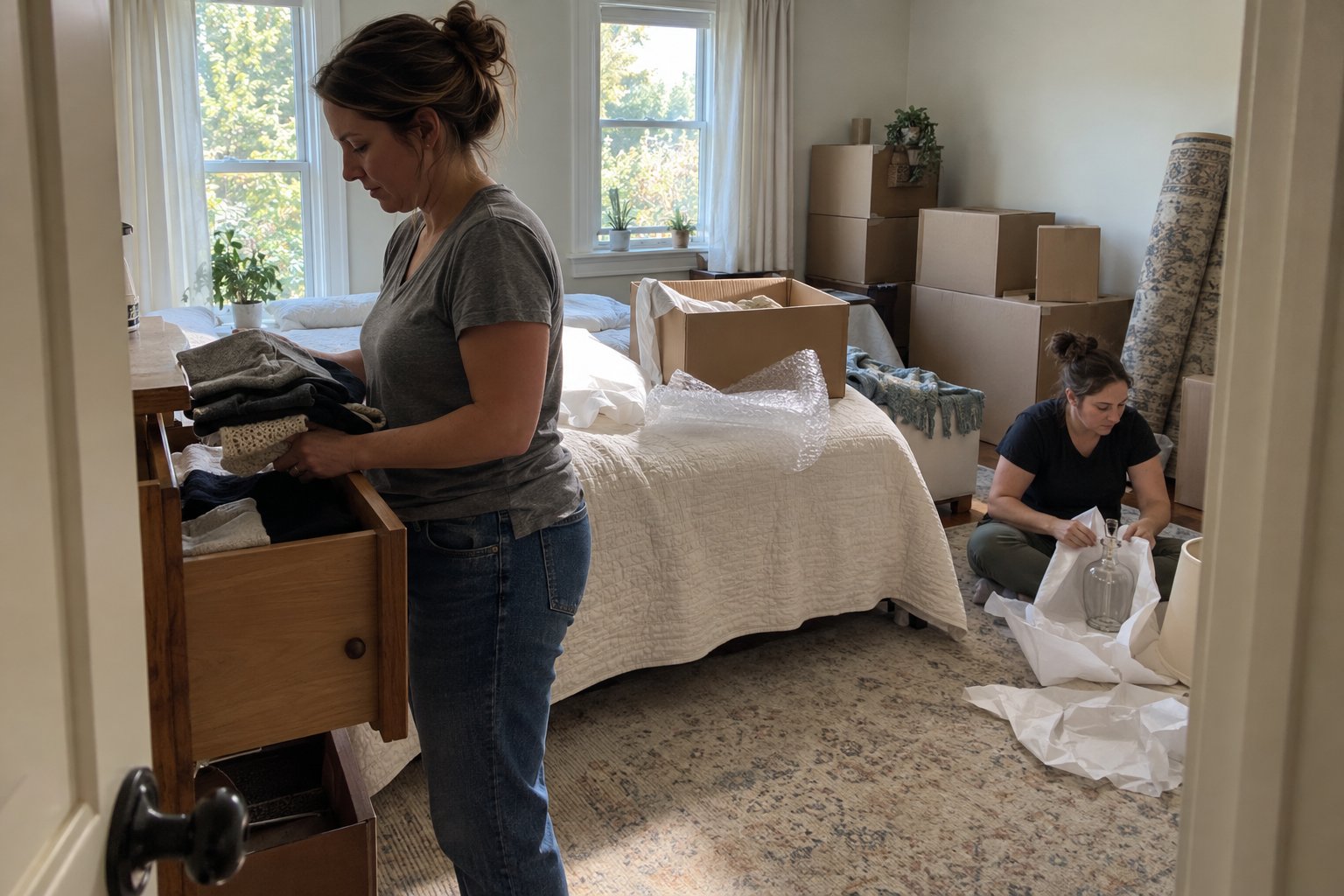
For dress shoes and heels, wrap each shoe individually in tissue paper or plain newsprint before boxing. Heels are particularly vulnerable — a sharp heel can punch through a box wall and damage another pair if not wrapped properly. If you have original boxes for dress shoes, those are worth keeping specifically for a move. If not, wrap and nest them carefully in a medium box with a layer of crumpled paper at the bottom for cushioning.
Outerwear is bulky but generally forgiving during a move. The primary goal is keeping it clean, preventing compression that leaves permanent creases, and making sure everything arrives smelling the way it should — which means no packing outerwear in the same box as muddy boots or cleaning supplies.
For most coats and jackets, wardrobe boxes are the ideal solution. These tall boxes come with a hanging rod built in, allowing you to transfer coats directly from your coat rack or closet rod into the box without folding them at all. Garments arrive on their hangers, crease-free and ready to hang immediately. If wardrobe boxes are not in your budget or are not available, fold outerwear loosely and pack it in large boxes with lighter items layered on top — never heavy items that will compress and permanently reshape the shoulders of a structured coat.
Down jackets and puffer coats can be compressed into a smaller footprint using a vacuum storage bag, but be aware that some down can shift unevenly if compressed too aggressively or left compressed for extended periods. If your move is quick — a day or two — compression bags work fine. If items will be in storage for longer, let them breathe in a loosely packed box instead.
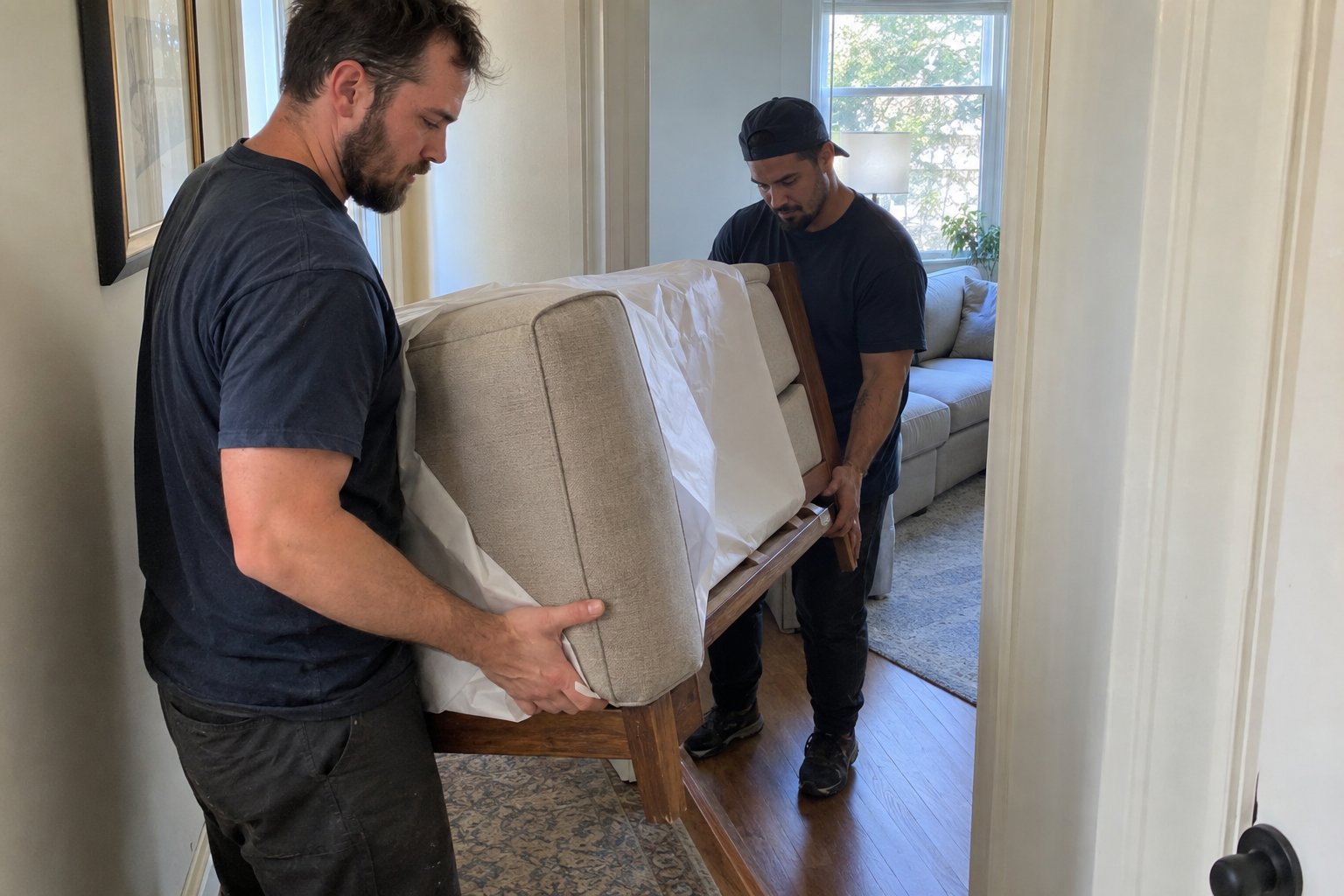
The furniture in a mudroom or entryway tends to be functional and often heavier than it looks. A solid wood bench, a freestanding coat rack, a built-in cubby unit, or a hall tree with a mirror can all present real challenges if you have not thought through how to handle them before moving day.
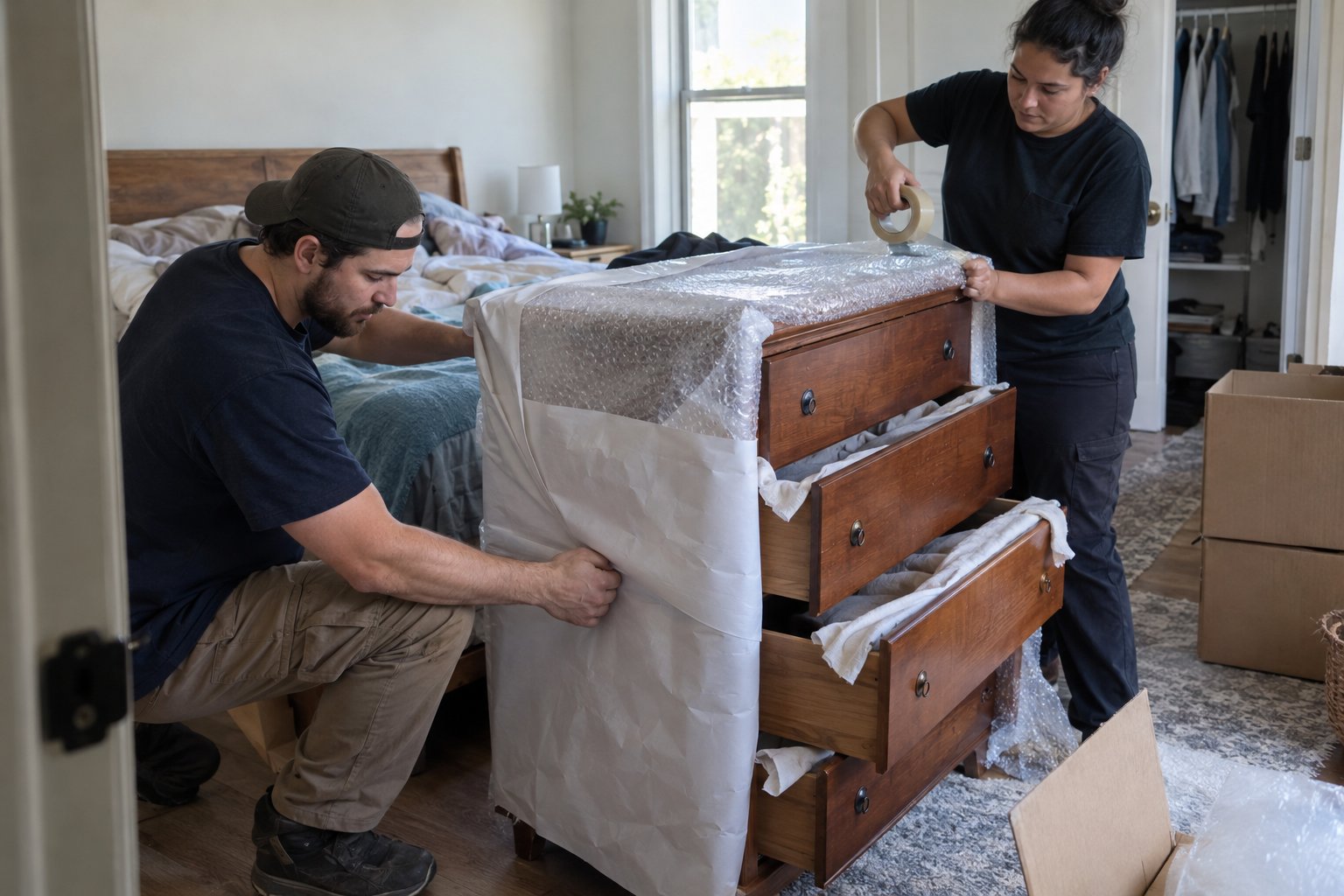
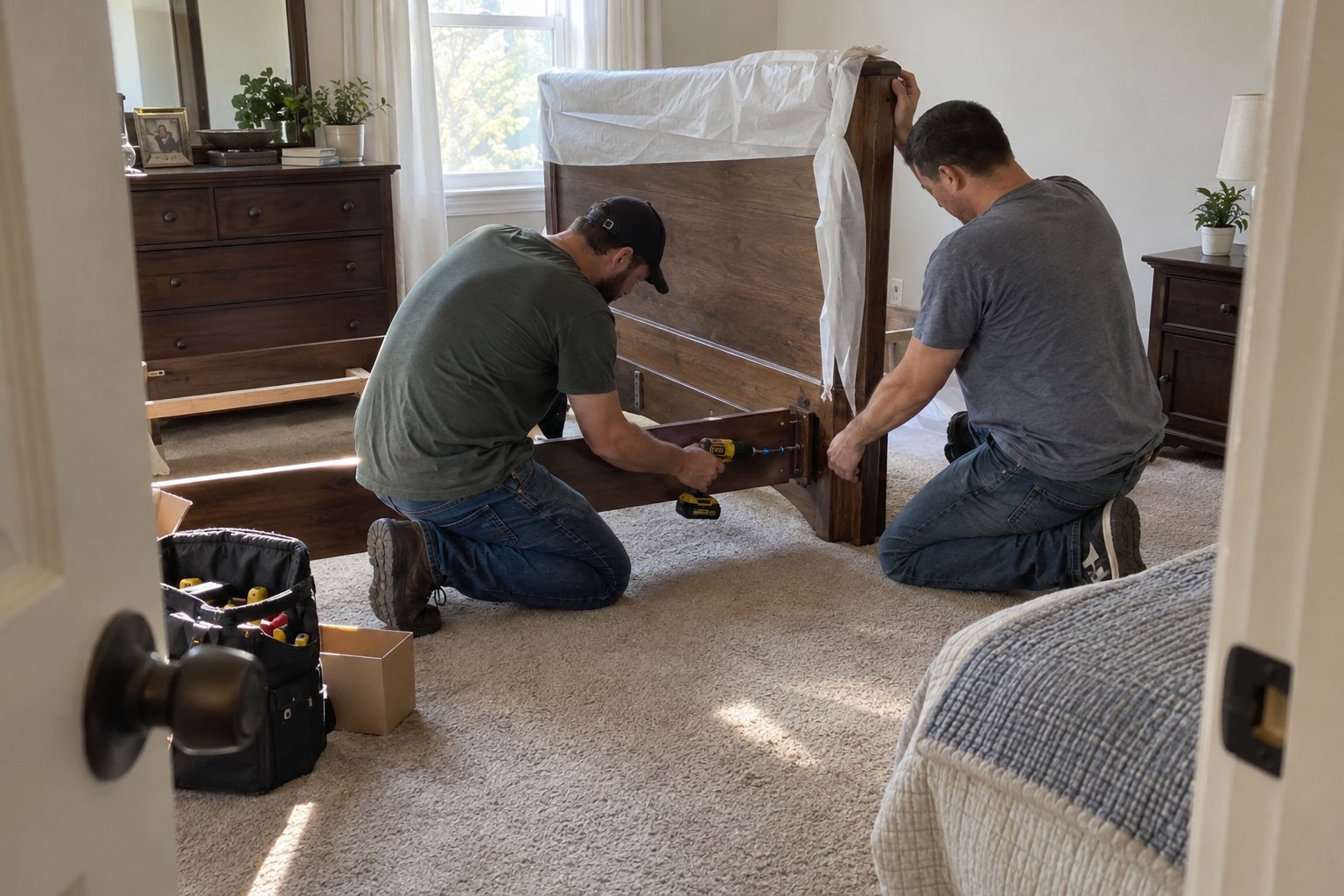
Freestanding benches are usually straightforward — they move as a single piece. If your bench has storage underneath, empty it completely before lifting. Even a partially loaded bench can shift unexpectedly and cause a back injury or damage the piece itself. If the bench has cushions or upholstered seats, remove them separately and wrap them in moving blankets or plastic wrap to protect the fabric from dirt and tearing. For benches with removable legs, unscrew the legs, bundle them together with tape and a label, and wrap the bench surface in a moving blanket.
Freestanding coat racks are often top-heavy and awkward to transport. Remove all hardware — hooks, pegs, hanging rods — where possible, and bag the hardware in clearly labeled zip-lock bags taped to the piece itself. Wrap the rack in moving blankets and secure with stretch wrap or banding straps for transport. Hall trees that include mirrors need the most attention: mirrors should be wrapped in mirror packs or cardboard and moved separately, standing upright in the truck rather than laid flat.
If your entryway has built-in cubbies or a bench that is wall-mounted, those typically stay with the home unless you and the seller have agreed otherwise. What you do need to handle are the wall-mounted hooks, key racks, mail sorters, and accessories you installed yourself. Remove them carefully, fill any wall holes, bag the hardware, and label everything clearly for reinstallation at the new home. Take a photo of the arrangement before you remove anything — it will save you time when you want to recreate a similar setup at the new place.
The entryway is ground zero for everyday household clutter — the kind of small, miscellaneous items that do not belong to any single category but somehow all end up in the same bowl near the door. Keys for cars you no longer own, expired loyalty cards, loose change, old receipts, takeout menus, sunglasses you forgot you had, and a handful of batteries whose charge is anyone's guess.
Do not simply dump this stuff into a box and deal with it later. Moving day has a way of turning "I will sort that at the new place" into a junk drawer that lives untouched for three years. Take thirty minutes before packing day to go through the catch-all items in your entryway and sort them decisively. Keep what is genuinely useful, discard what is not, and put what remains into a clearly labeled small box or zip-lock bag that travels with your essentials rather than getting buried in the truck.
If you have important documents — insurance cards, spare keys, emergency contacts — that tend to live near the door, pack those in a personal bag or a clearly labeled "open first" box that stays with you during the move rather than being loaded on the truck.
Umbrellas, boot trays, and seasonal accessories are easy to overlook precisely because they seem so minor. But boot trays caked in dried mud and salt need to be cleaned before packing, or they will contaminate everything around them. Wipe down boot trays thoroughly, let them dry completely, and wrap them in a layer of paper or plastic wrap before placing them in a box.
Umbrellas pack best when fully closed and banded. If you have multiple umbrellas, bundle them together, wrap the bundle in a moving blanket or stretch wrap, and transport them standing upright in a corner of the truck where they will not fall and get crushed. Compact fold-up umbrellas can go in any box with other small accessories.
Seasonal accessories — hats, gloves, scarves, and earmuffs — can be packed loosely in medium boxes. Nest gloves and hats inside each other to save space, and keep matching sets together so you are not hunting for a pair of gloves in a new house as the temperature drops. A quick inventory of what you have before packing will also reveal whether some of these items have run their course and are better donated before the move.
On moving day, the entryway presents a specific challenge: it is the first space people walk through coming in and out of the house, which means it gets disrupted early and often. Boxes and furniture from other rooms will be staged near the front door, coats and bags from movers and family members end up on hooks or the floor, and the entryway quickly becomes a high-traffic zone rather than a staged, organized space.
The best approach is to pack the entryway completely the evening before moving day — not on moving day itself. Clear everything out, have boxes stacked and labeled, and move entryway furniture to a staging area near the front door the night before. This keeps the space clear for actual move traffic and ensures nothing gets accidentally left behind in the shuffle.
Load entryway furniture and boxes last if they are going on the truck — or first if you are doing a staged move where the entryway needs to be functional immediately at the new place. Either way, keep the "open first" box clearly marked and within reach so you can set up basic hooks, a key spot, and a shoe area the moment you walk into your new home. The entryway sets the tone for the whole move-in experience — getting it functional fast makes everything feel more settled from day one.
Whether you are handling a full household move or just need muscle and expertise for the heavy furniture, the team at 2 Jacked Guyz professional movers brings the professionalism and care to get every room moved right — including the one everyone walks past without thinking twice.
Request a personalized quote and see how careful planning and reliable service make every move smoother. Our team prepares each step to handle challenges safely and efficiently.
Stuff each shoe with tissue paper or a clean sock to help it hold its shape, then pair shoes sole-to-sole before placing them in boxes. Wrap dress shoes and heels individually in tissue paper or newsprint. Use small to medium boxes to keep weight manageable, and label each box clearly so you can find everyday footwear quickly on arrival.
Remove any detachable hooks, pegs, or hardware and store them in a labeled zip-lock bag taped to the piece. Wrap the coat rack in moving blankets and secure with stretch wrap. If the hall tree has a mirror, wrap the mirror separately in a mirror pack or cardboard and transport it standing upright — never flat — to avoid cracking.
Yes, wardrobe boxes are the ideal option for outerwear. They have a built-in hanging rod that lets you transfer coats directly from hooks or a closet rod without folding, preventing creases and keeping garments clean. If wardrobe boxes are not available, fold coats loosely in large boxes and avoid stacking heavy items on top that could permanently reshape the shoulders.
Built-in furniture typically stays with the home unless otherwise agreed upon. For wall-mounted hooks and accessories you installed yourself, remove them carefully, fill the wall holes, and bag the hardware in labeled zip-lock bags. Take a photo of the layout before removing anything so you can recreate a similar setup at your new home.
Pack the entryway completely the evening before moving day rather than on the day itself. The entryway is a high-traffic zone during a move, and clearing it out the night before keeps the path to the front door open and prevents items from being mixed up or accidentally left behind. Keep a clearly labeled open-first box with immediate essentials like keys and hooks so the new entryway is functional right away.
No long forms, no delays. Just a move that’s ready when you are. Secure your moving date today.