
Learn how to pack and move a master bedroom closet the right way — clothes, shoes, accessories, and built-in shelving systems handled step by step.
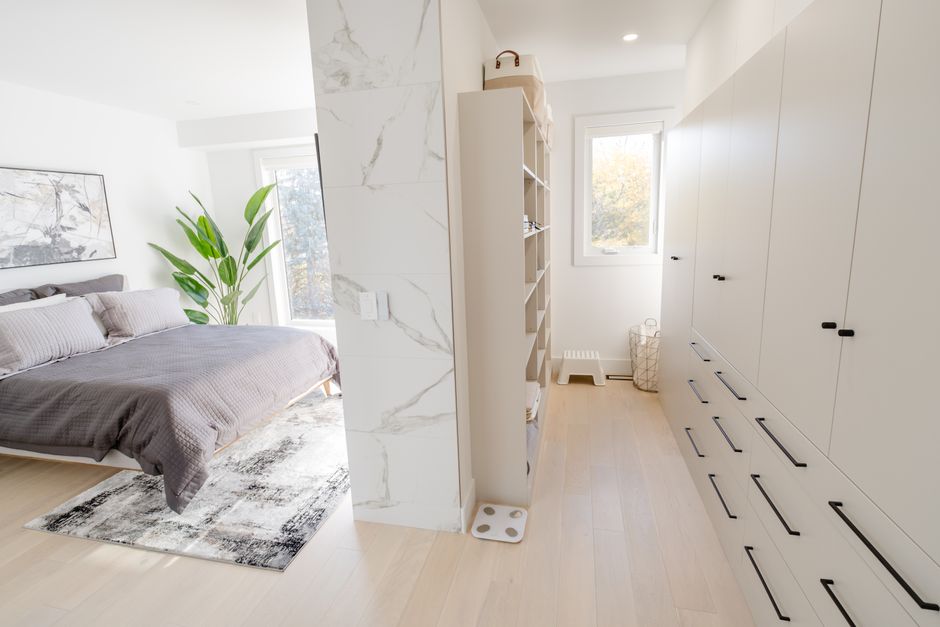
Figuring out how to pack and move a master bedroom closet is one of those moving challenges that almost everyone assumes will be easy — until moving day arrives and you are standing inside a walk-in closet facing floor-to-ceiling built-in shelving stacked with folded sweaters, a double hanging rod holding more than a hundred garments still on their hangers, a shoe collection spread across a tiered organizer that may or may not be bolted to the wall, a drawer tower stuffed with belts, scarves, and jewelry, and a collection of purses, hats, and seasonal items crammed onto every upper shelf. The master bedroom closet sits at the intersection of high volume, deeply personal belongings, and furniture that often feels permanent — and that combination makes it one of the most underestimated rooms to plan, pack, and move properly.
The good news is that packing and moving a master bedroom closet — even a large, fully built-out walk-in with custom shelving, an island dresser, and years of accumulated wardrobe — is completely manageable when you approach it with the right materials, the right sequence, and a clear understanding of what each category of item actually needs. And if you would rather hand the heavy lifting to professionals who know how to handle everything from a freestanding armoire to a floor-anchored built-in shelving system, the team at 2 Jacked Guyz professional movers is ready to take it from overwhelming to done.
Before you reach for a single box or start pulling clothes off the rod, walk through your master closet slowly and take a genuine, honest inventory of everything that lives there. Closets have a remarkable ability to absorb and hide belongings that no longer serve any real purpose — and the actual volume of what could make the move is almost always larger than what actually should.
As you walk through, sort everything into three clear categories: move it to the new home, donate or pass it along, and discard it responsibly. That blazer you have not worn in six years, the shoes purchased for a single occasion, the stack of dry-cleaning bags still wrapped around garments you forgot you owned — all of these deserve a hard, honest look before you commit to packing and hauling them. Moving is one of the best opportunities you will have to reset your wardrobe, and starting fresh means only what you genuinely wear and love makes the trip.
Once you have a clear picture of what is moving, group everything into logical categories: hanging garments, folded clothing, shoes and boots, accessories and jewelry, bags and purses, seasonal or rarely used items, and any built-in components that need to be evaluated for disassembly. Having those groups defined before you start packing keeps the entire process organized and dramatically reduces the chance that something gets crushed, tangled, lost, or left behind.
Hanging garments are the centerpiece of most master bedroom closets, and they are also the category most people handle incorrectly — usually by yanking everything off the rod, stuffing it into a trash bag, and hoping for the best. That approach works for a college dorm, but not for suits, dresses, coats, and anything else you actually care about.
Wardrobe boxes are tall, reinforced cardboard boxes that come with a metal hanging bar across the top. They allow clothes to travel on their hangers, upright, without touching the floor or being folded. For blazers, dress shirts, dresses, suits, and coats — anything that wrinkles easily or loses its shape when compressed — wardrobe boxes are not optional; they are the correct tool for the job. Plan on one wardrobe box per roughly twenty to twenty-five hanging garments, depending on the thickness of each item.
A simple trick that saves enormous time: before you take a section of hanging clothes off the rod, gather the hangers together, slip a rubber band or twist tie around the hooks to keep them grouped, then slide the whole bundle into a large garbage bag from the bottom up — leaving the hooks exposed at the top. This keeps garments grouped, dust-free, and easy to re-hang at the new home. It works well for casual everyday clothes that do not require a full wardrobe box.
When you pack hanging clothes into wardrobe boxes, resist the temptation to grab whatever is closest on the rod. Instead, pack by category — all dress shirts together, all blazers together, all dresses together. This makes unpacking and re-hanging at the new home dramatically faster, and it ensures that heavier items like coats are not sharing a bar with lightweight silk blouses that will get crushed.
Folded clothing, shoes, and accessories each have their own packing logic, and treating them all the same way is one of the fastest routes to a chaotic, frustrating unpack.
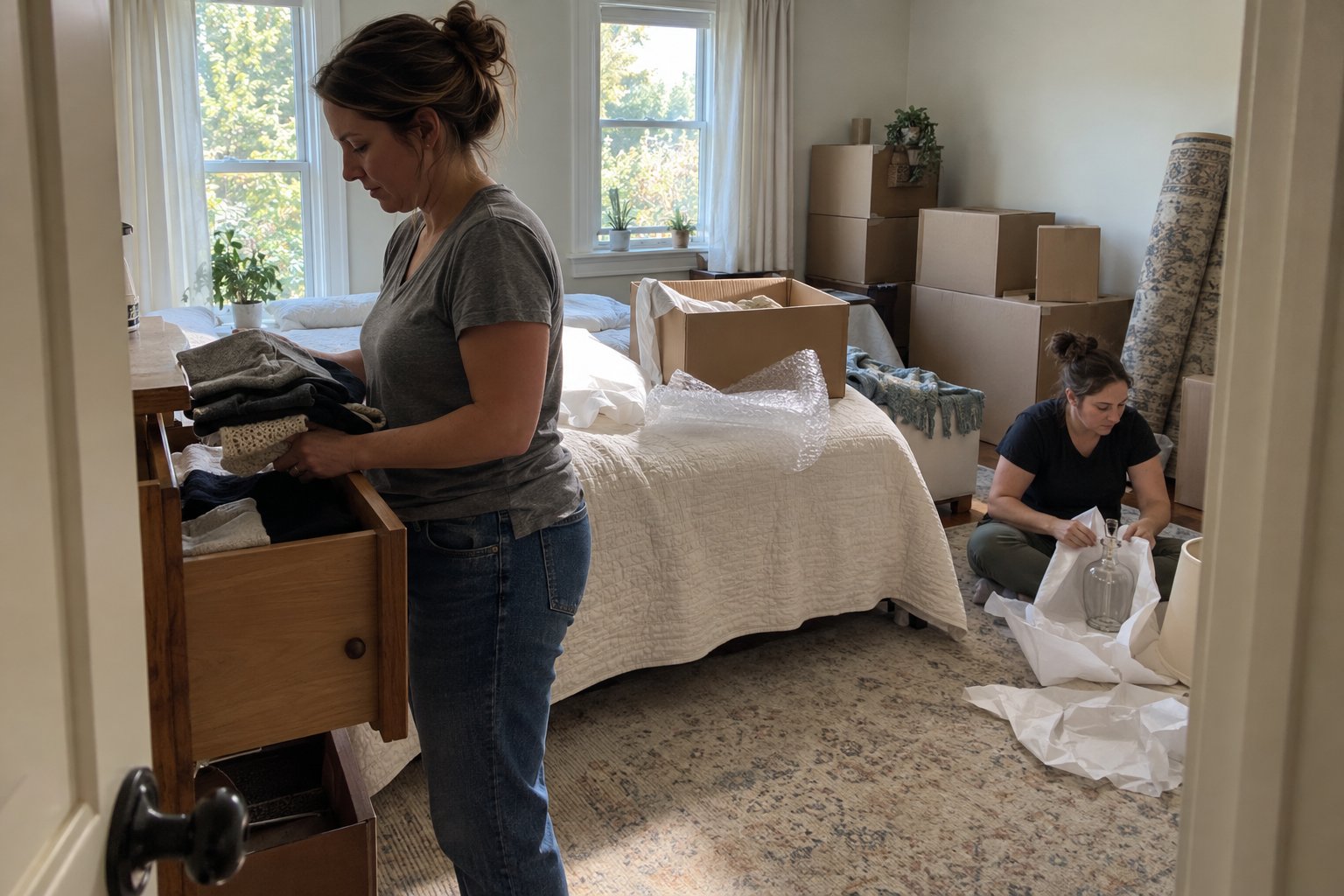
Folded clothing — sweaters, jeans, t-shirts, workout gear, pajamas — should go into medium-sized boxes. Large boxes are tempting because you can fit more in, but a large box full of clothing becomes surprisingly heavy and awkward to carry safely. Keep boxes at a manageable weight, layer folded items flat to avoid excessive wrinkling, and label every box clearly with the category of clothing inside rather than just writing "clothes" on the side.
If you have drawer organizers or packing cubes that you use in daily life, use them here too. They keep folded items grouped, compressed, and easy to transfer directly into drawers at the new home without unpacking and re-folding everything.
Shoes are harder to pack well than most people expect, and they tend to cause damage when packed carelessly — scuffs, crushed toe boxes, heel damage, and dirty soles leaving marks on other items. The best approach is to wrap each shoe individually in packing paper or clean newsprint, stuff the toe box lightly with paper to maintain the shape, and pack pairs together. Original shoe boxes are ideal if you kept them; they stack cleanly, protect shape, and label easily. If you no longer have the original boxes, dedicated shoe boxes from a moving supply store work well, or you can pack pairs wrapped tightly in a medium box with padding between layers.
Belts, scarves, hats, and sunglasses can generally be packed into small boxes or zip-lock bags grouped by type, with soft items like scarves wrapped around more delicate accessories to provide cushioning. Jewelry is the one category that deserves its own dedicated approach. Fine jewelry — rings, necklaces, bracelets, earrings — should be packed in a personal bag or small case that travels with you directly rather than going onto the moving truck. Tangles, loss, and damage are far more likely when jewelry is packed in a large box with other items, and the value of fine jewelry makes it worth keeping close during the move.
Structured bags and purses should be stuffed lightly with clean packing paper or bubble wrap to help them hold their shape during transport, then individually wrapped and packed upright in a box rather than stacked flat under heavy items. Seasonal items — winter coats, ski gear, holiday-themed clothing — can generally go into large wardrobe boxes or large bags since they are less likely to wrinkle and are used infrequently enough that minor compression during the move is acceptable.
The built-in shelving, hanging rod systems, drawer towers, and island dressers that make a walk-in closet functional are often the most logistically complicated part of a master closet move — because they sit in a gray zone between furniture and fixed home feature, and the right plan depends entirely on whether you own the components or they came with the house.
If your closet system was custom-installed and came with the house, it almost certainly stays. If you purchased and installed a modular closet system — a ClosetMaid, IKEA PAX, California Closets modular line, or similar — it may be entirely worth disassembling and bringing with you, since the same system can often be reconfigured to fit a new space. Before you decide, photograph the full system from multiple angles, locate any original installation hardware, and note whether the units are free-standing, wall-mounted, or floor-anchored.
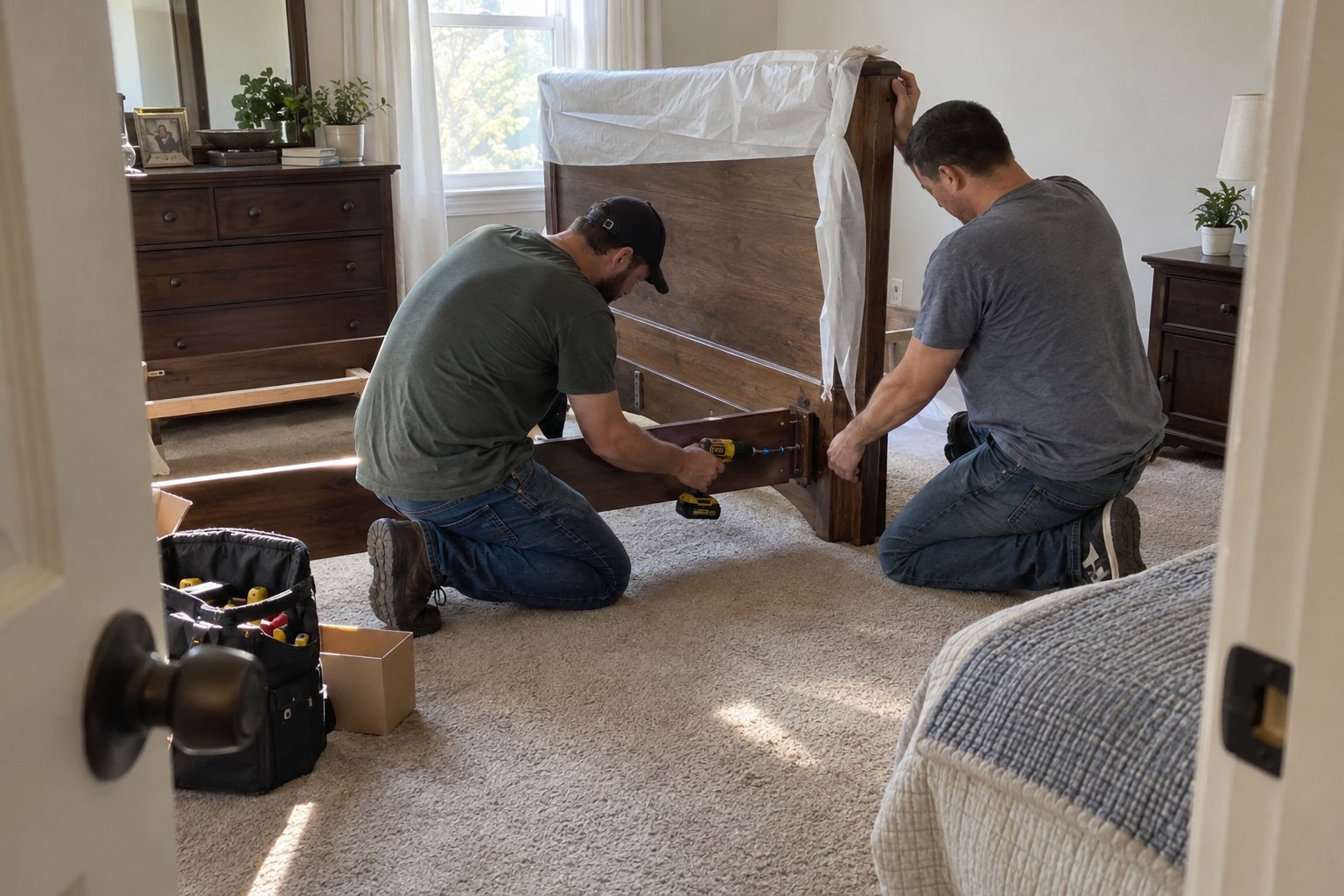
For any built-in or modular component that is coming with you, approach disassembly the same way you would any complex piece of furniture: photograph everything before a single fastener is removed, work in reverse assembly order, and collect every screw, bracket, cam lock, and shelf pin into labeled zip-lock bags taped directly to the largest component of the unit they came from. Do not mix hardware from different units into a single bag — it will create a puzzle at the new home that no one wants to solve.
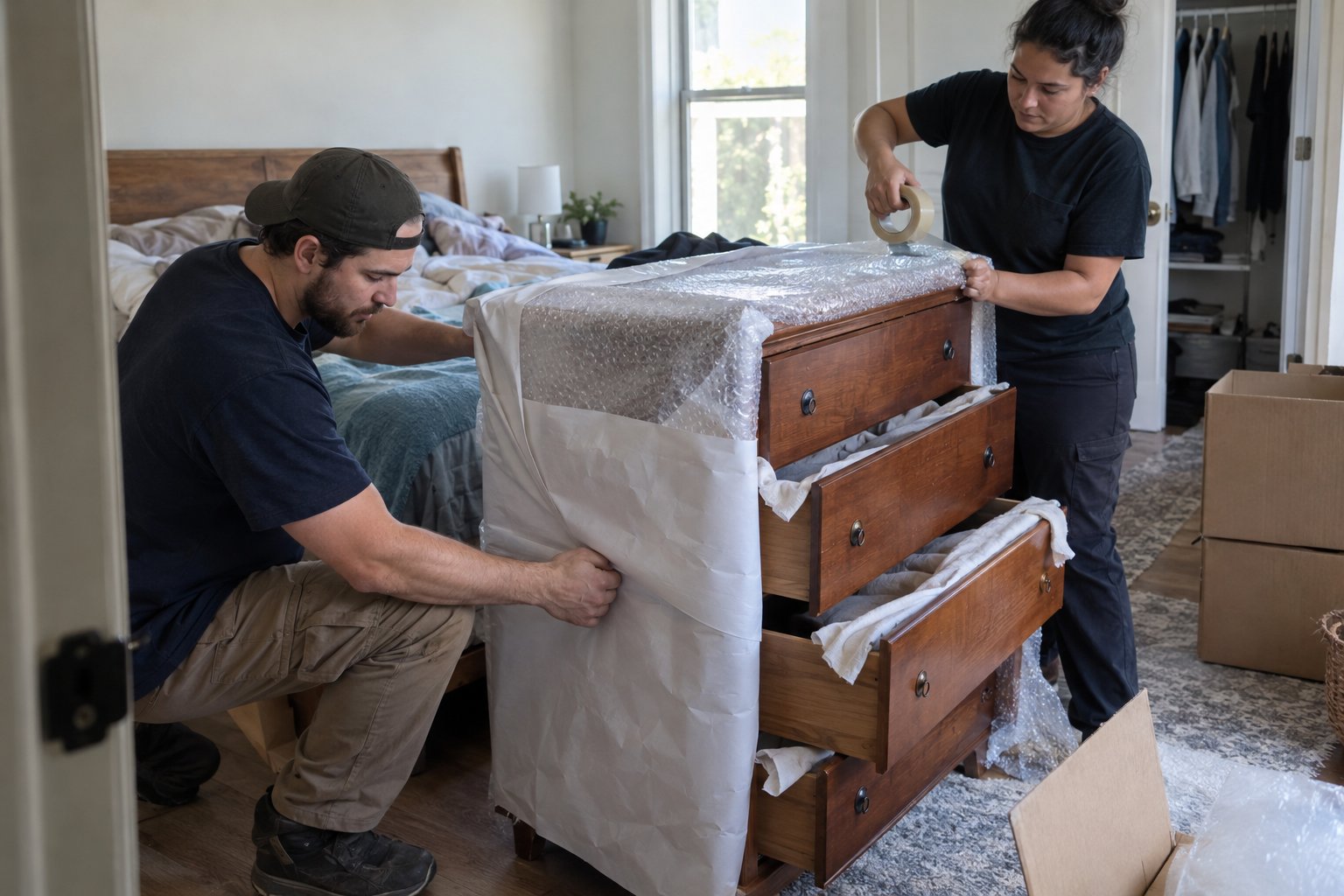
If your walk-in closet includes a freestanding island dresser or a standalone drawer unit, empty all drawers completely before the move. Drawers add enormous weight and can shift during transport, damaging drawer slides and the frame of the unit. If the dresser top has a mirror or glass surface, remove it and wrap it separately in moving blankets or heavy-duty bubble wrap. Pad all corners of the dresser itself before it goes on the truck, and consider using furniture sliders or a dolly to move it safely without floor damage.
On moving day, the master bedroom closet should generally be one of the last areas of the house to be cleared — not the first. This keeps your clothing accessible for getting ready in the morning, reduces the window during which packed boxes sit on the floor waiting to be loaded, and ensures that wardrobe boxes are not sitting in a hot truck any longer than necessary.
Keep a small personal bag or tote with you that contains the essentials you will need for the first twenty-four to forty-eight hours at the new home: a change of clothes, your most-used shoes, toiletries, and any jewelry or accessories you wear daily. This way, even if unpacking takes longer than expected, you are not digging through wardrobe boxes on the first night in search of what you need for the next morning.
At the new home, start the unpack in the master closet early. Having your wardrobe organized and accessible makes the entire rest of the move feel less chaotic — and it turns the new space into something that feels like home faster than almost anything else you could do on day one.
Whether you are moving across town or across the state, a well-organized master closet pack is one of the highest-impact things you can do to make your move go smoothly from start to finish. And when the volume of clothing, shelving, and accessories feels genuinely overwhelming, the 2 Jacked Guyz moving team is here to help you get every last hanger, shelf, and shoe box from where it is to where it needs to be — safely, efficiently, and without the stress.
Request a personalized quote and see how careful planning and reliable service make every move smoother. Our team prepares each step to handle challenges safely and efficiently.
Wardrobe boxes are strongly recommended for hanging garments you care about — suits, dresses, blazers, coats, and anything that wrinkles or loses shape when folded. They allow clothes to travel upright on their hangers without compression or creasing. Regular boxes work fine for casual folded clothing, but for the items in your master closet that you actually want to arrive in wearable condition, wardrobe boxes are worth the investment.
It depends on the dresser and the weight of the clothing. Lightweight items like t-shirts or undergarments are generally fine left in drawers for a short local move if the dresser is a solid, well-built piece. However, heavier items like jeans, sweaters, or folded dress clothes should be removed — the added weight stresses drawer slides and the frame, and drawers can shift and cause damage during transport. When in doubt, empty the drawers and pack the contents separately.
Fine jewelry should travel with you personally rather than going onto the moving truck. Pack rings, necklaces, earrings, and bracelets in a dedicated jewelry case or small zip-close pouch, keeping pieces separated to prevent tangling. High-value or irreplaceable pieces — heirloom jewelry, engagement rings, watches — should be kept in your personal bag throughout the move and not packed with household goods.
If your closet system is a modular or freestanding type — such as IKEA PAX, ClosetMaid, or similar — it can often be disassembled, transported, and reconfigured in a new space. Fully custom systems that were built into the home's framing are generally not practical to remove and may be considered a fixture of the home. Before attempting any disassembly, photograph the full system, locate original hardware, and confirm ownership is not in question with your real estate agent or attorney.
For a large, fully stocked master closet, starting two to three weeks before your move date is reasonable. Begin with out-of-season clothing, rarely worn items, extra shoes, and bags you do not use regularly. Leave everyday clothing, daily-wear shoes, and accessories until the last few days before the move so you are not disrupting your daily routine. Having wardrobe boxes and packing supplies on hand before you start makes the process significantly faster.
No long forms, no delays. Just a move that’s ready when you are. Secure your moving date today.