

Learn how to pack and move a living room the right way — from sectional sofas and flat-screen TVs to fragile artwork and décor. A practical, room-by-room guide.
Figuring out how to pack and move a living room is one of the most logistically demanding parts of any household move. The living room looks open and airy when it is fully furnished, but the moment you start thinking about actually getting everything out the door, the scale of the task becomes clear. You are dealing with a sectional sofa that barely fit through the door when it was delivered, a flat-screen TV that came in a box you threw away two years ago, a media console full of tangled cables, framed artwork, decorative objects, throw pillows, area rugs, and a collection of items that somehow accumulated without you noticing. Getting it all out safely — without scratching your floors, gouging your walls, or shattering anything — takes a real plan.
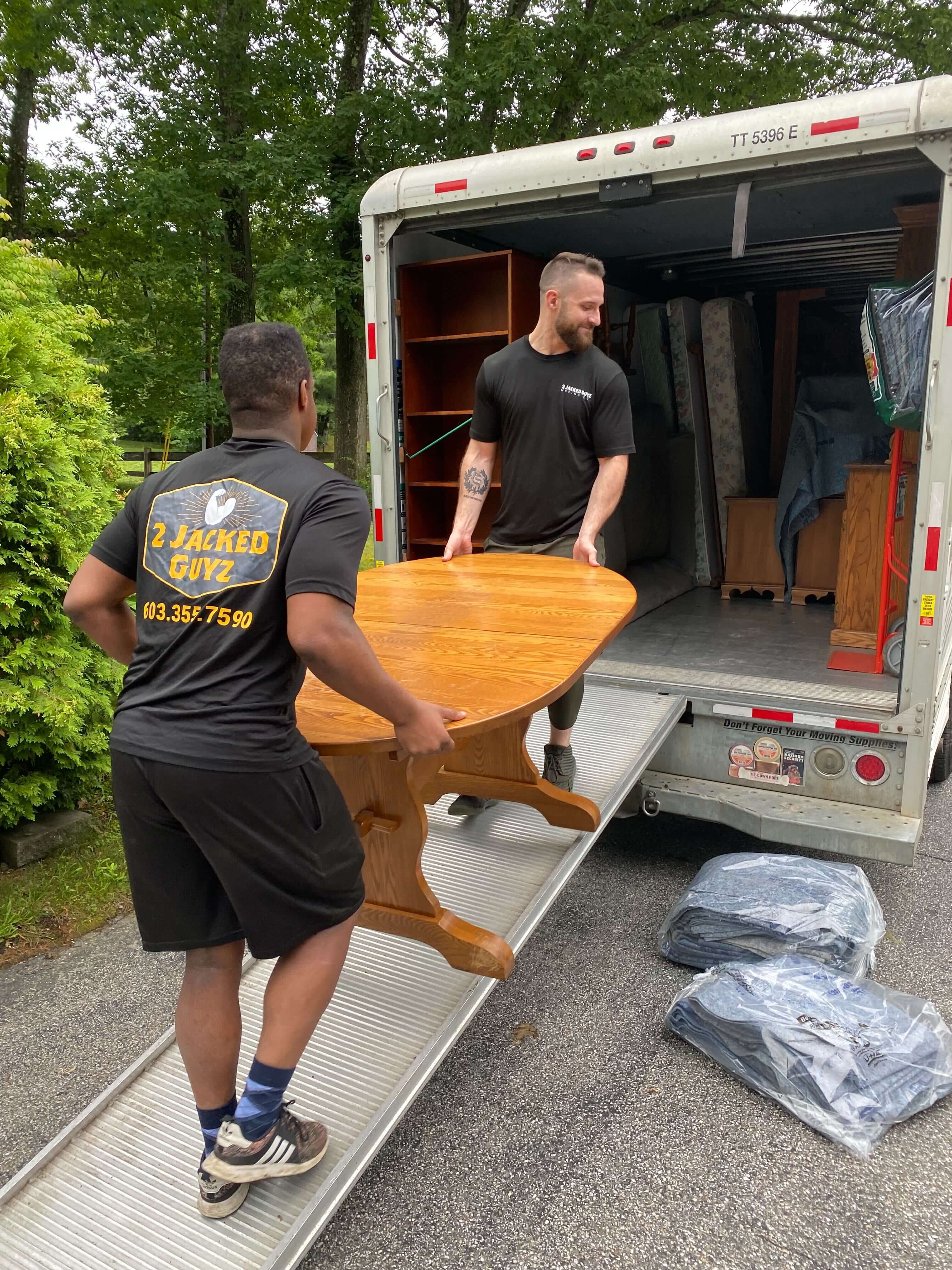
The good news is that with the right sequence and the right materials, a living room move is entirely manageable. And if you would rather let experienced hands take over, the team at 2 Jacked Guyz professional movers is ready to handle the whole job from first box to final piece of furniture.
Before a single box is taped shut, do an honest pass through your living room with fresh eyes. The living room is one of the easiest rooms in a home to accumulate things you have stopped noticing — decorative pieces you no longer love, books and magazines that have been sitting on the coffee table for years, throw blankets you never use, remote controls for devices you no longer own, and random items that drifted in from other rooms and never left.
Sort everything into three categories: keep, donate, and discard. Ask yourself whether each item genuinely earns its place in your new home, or whether you are just moving it out of habit. Furniture is worth evaluating too — if a side table is worn, or a bookshelf is damaged, moving day is a natural moment to let it go rather than pay to transport something you will replace anyway.
The less you move, the faster the packing goes, the fewer boxes you need, and the easier the setup will be on the other end. Even eliminating a few bags of décor and clutter is worth the time it takes.
Showing up to pack a living room without the right materials is the fastest way to end up with broken things and a very long day. Stock up on all of the following before you begin:
Having slightly more supplies than you think you need is always preferable to running out mid-pack. A quick second trip to the hardware store costs more time than it ever saves in materials.
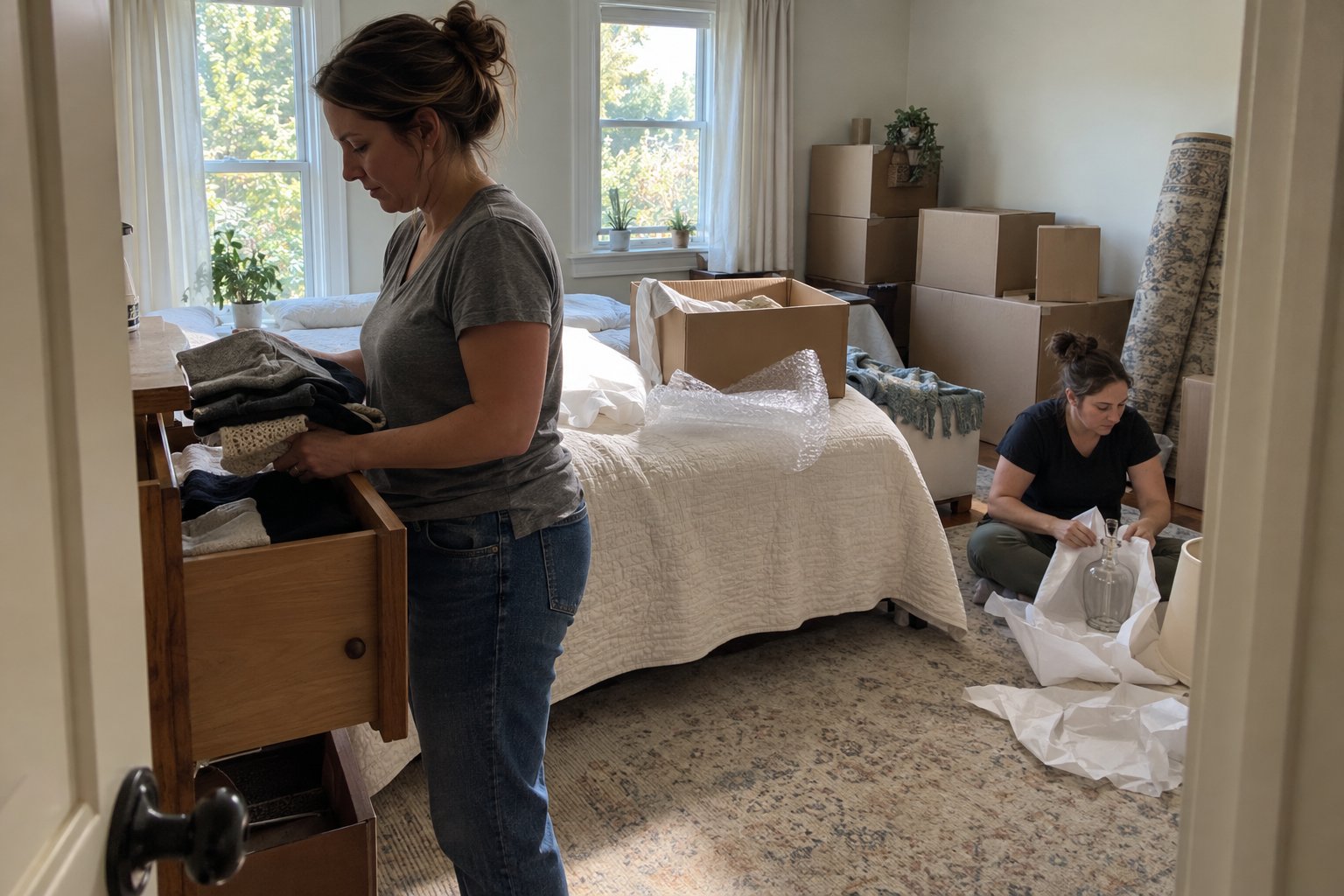
The decorative layer of a living room — the framed prints, the ceramic vases, the glass candleholders, the sculptures and figurines — is the most time-consuming part to pack because nearly all of it requires individual attention.
Wrap each frame individually in packing paper, paying extra attention to the corners, which are the most vulnerable point on any frame. For larger framed prints or canvases, use corner protectors (available at most moving supply retailers) and then wrap the whole piece in a moving blanket. Mirrors should be treated like glass — which they are — and packed standing upright in mirror boxes or picture boxes, never flat. Write FRAGILE and THIS SIDE UP on every side of the box.
Wrap each piece individually in packing paper. Taller, slimmer items like vases benefit from a layer of crumpled paper inside the opening to absorb shock. Pack them snugly in small or medium boxes with crumpled paper filling any gaps so nothing can shift. Never stack heavy items on top of fragile ones, and never leave empty space in a box that contains breakables — empty space allows movement, and movement causes damage.
Remove lampshades and pack them separately in large boxes, placing them upright and never stacking anything inside or on top of them. Lamp bases can be wrapped in packing paper and boxed. Do not pack lamps horizontally — they are almost always more stable and better protected when packed upright.
The living room is typically the hub of a home's electronics — the TV, the sound system, the gaming console, the streaming devices, and the cables that connect all of them. Electronics deserve careful handling and careful packing.
If you kept the original box, use it — it was designed specifically to protect that screen. If you did not keep the box (which is most people), a TV box from a moving supply store is the next best option. These come in a range of sizes and include foam corner inserts. Wrap the screen itself in a soft moving blanket or bubble wrap first, then place it in the box. Flat-screen TVs should always travel standing upright — never face-down or face-up flat — because the weight of the screen resting on its own surface can cause internal damage.
Gaming consoles, streaming devices, sound bars, and receivers should be wrapped in bubble wrap and packed in appropriately sized boxes with padding on all sides. Remove any discs from the console before packing. If your original packaging is not available, use crumpled packing paper to fill every gap inside the box.
This is where most people lose an enormous amount of unpacking time. Before disconnecting any cable, take a photo of the back of each device so you have a reference image when you set everything up again. Bundle each cable with a cable tie and label it with a small piece of tape indicating which device it belongs to. Store all cables together in a labeled zip-lock bag or small box — not scattered across random boxes throughout the truck.
Large living room furniture — sectional sofas, media consoles, armchairs, coffee tables, bookshelves, and entertainment centers — requires planning before a single piece is moved.
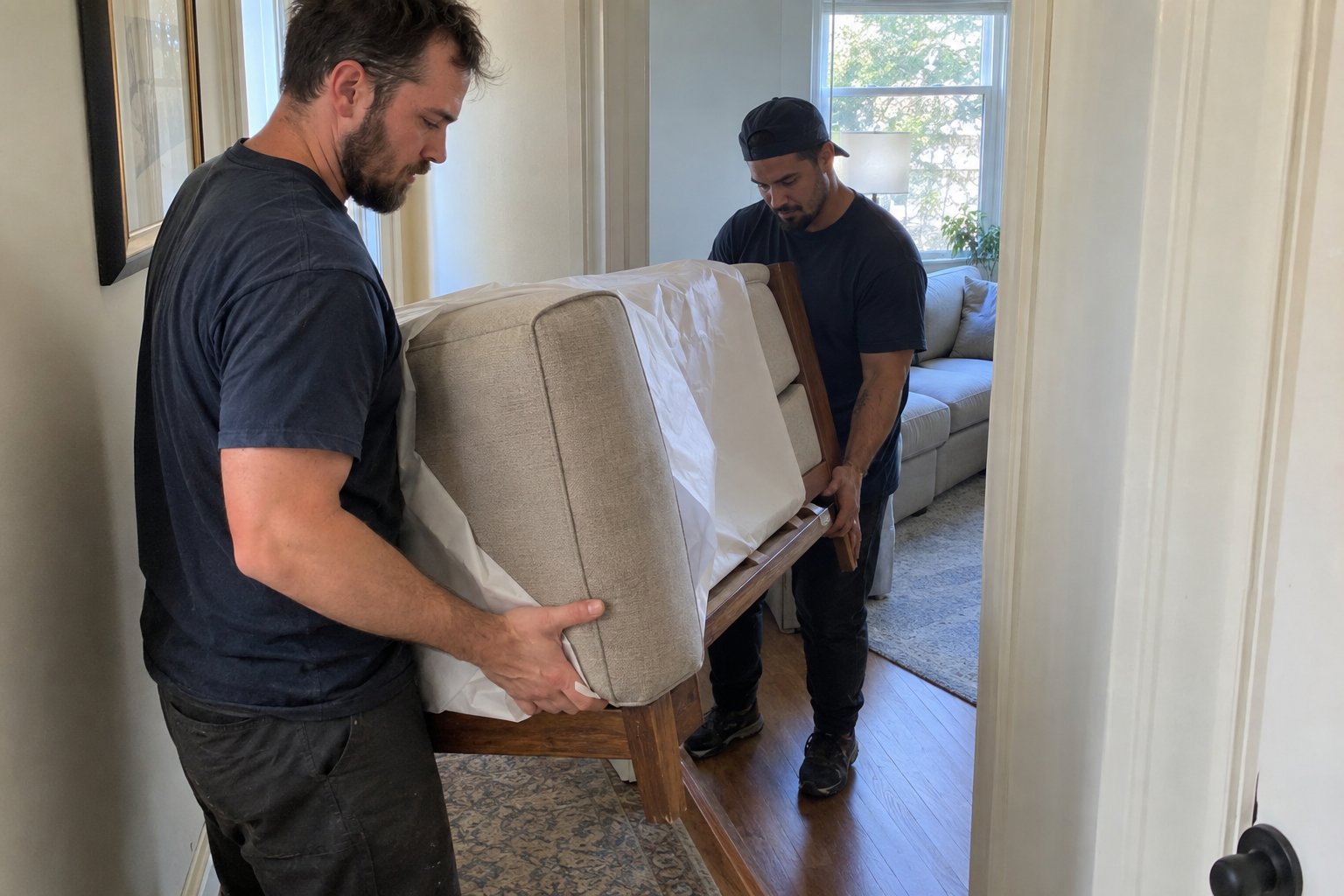
Measure the width and height of every doorway, hallway, and stairwell between the living room and the moving truck. Then measure the furniture. A sectional sofa that separated into two pieces when it was delivered still needs to fit through the front door as individual sections. Knowing your clearances in advance prevents the all-too-common scenario of a sofa jammed at a 90-degree angle in a hallway with no clear way forward.
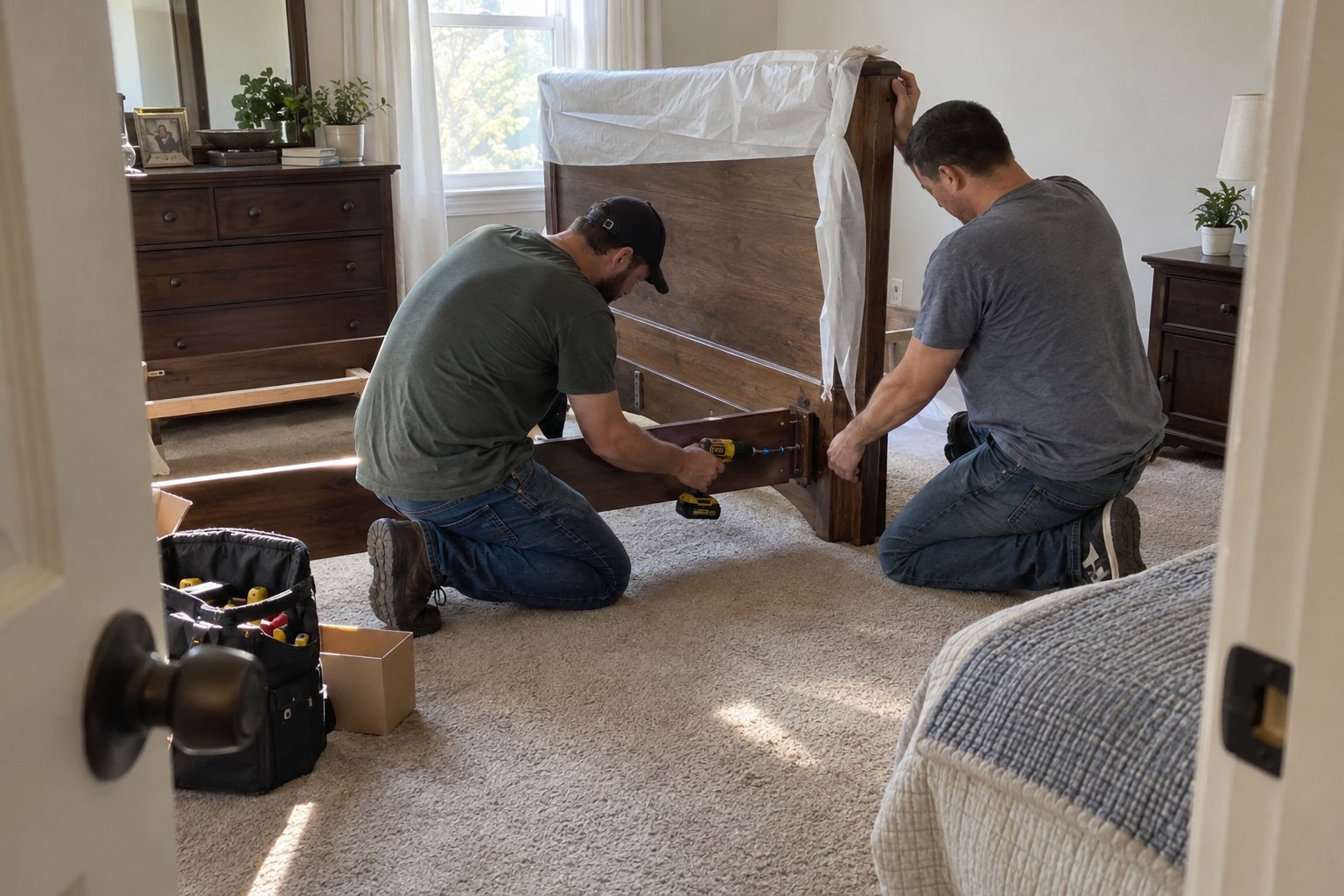
Remove legs from sofas and chairs wherever possible — even a few inches of clearance gained by removing legs can make the difference between an easy move and an impossible one. Take shelves out of bookcases and entertainment centers, remove drawers from media consoles, and take glass tops off tables. Pack glass tops the same way you would pack a framed mirror — wrapped, upright, and labeled.
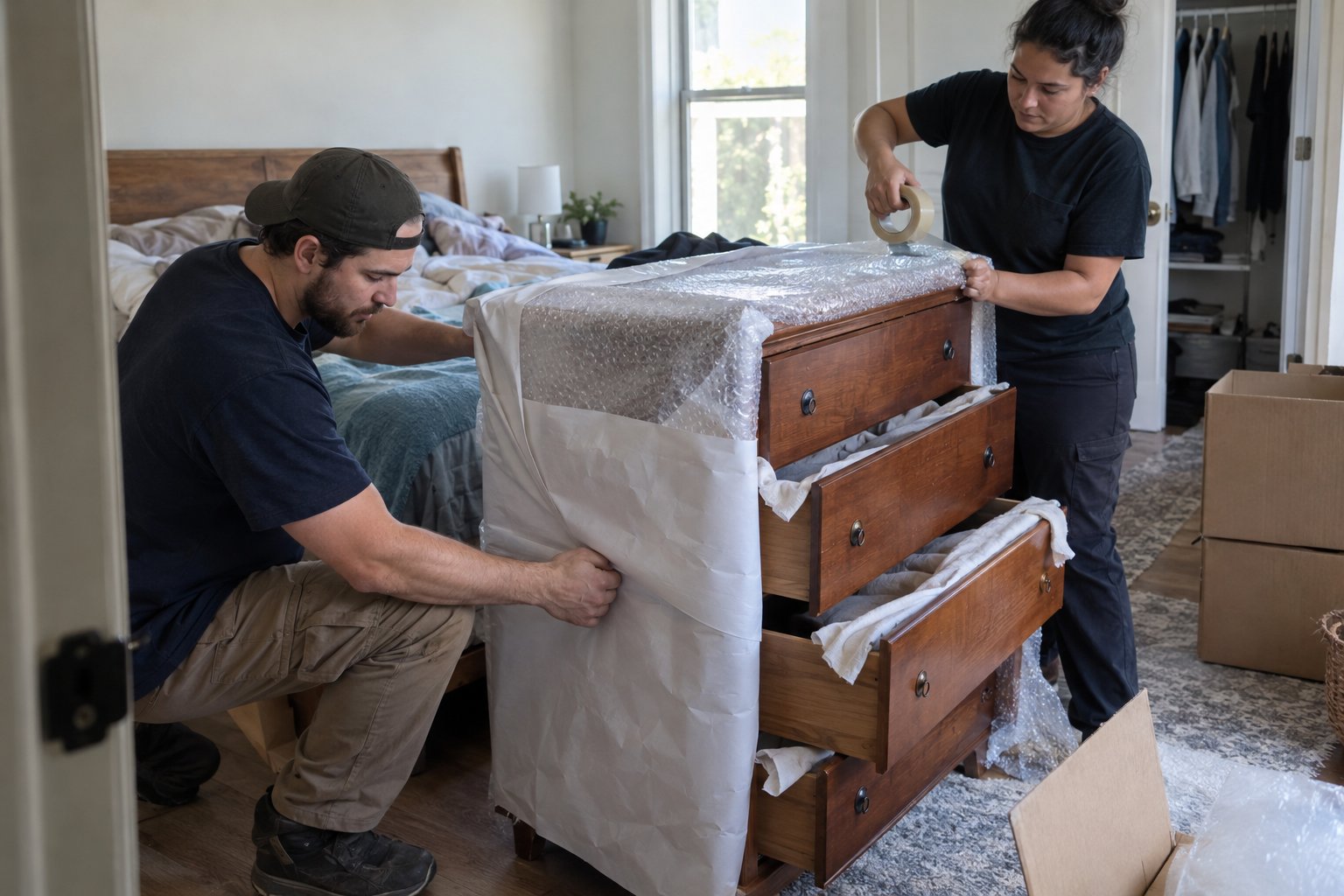
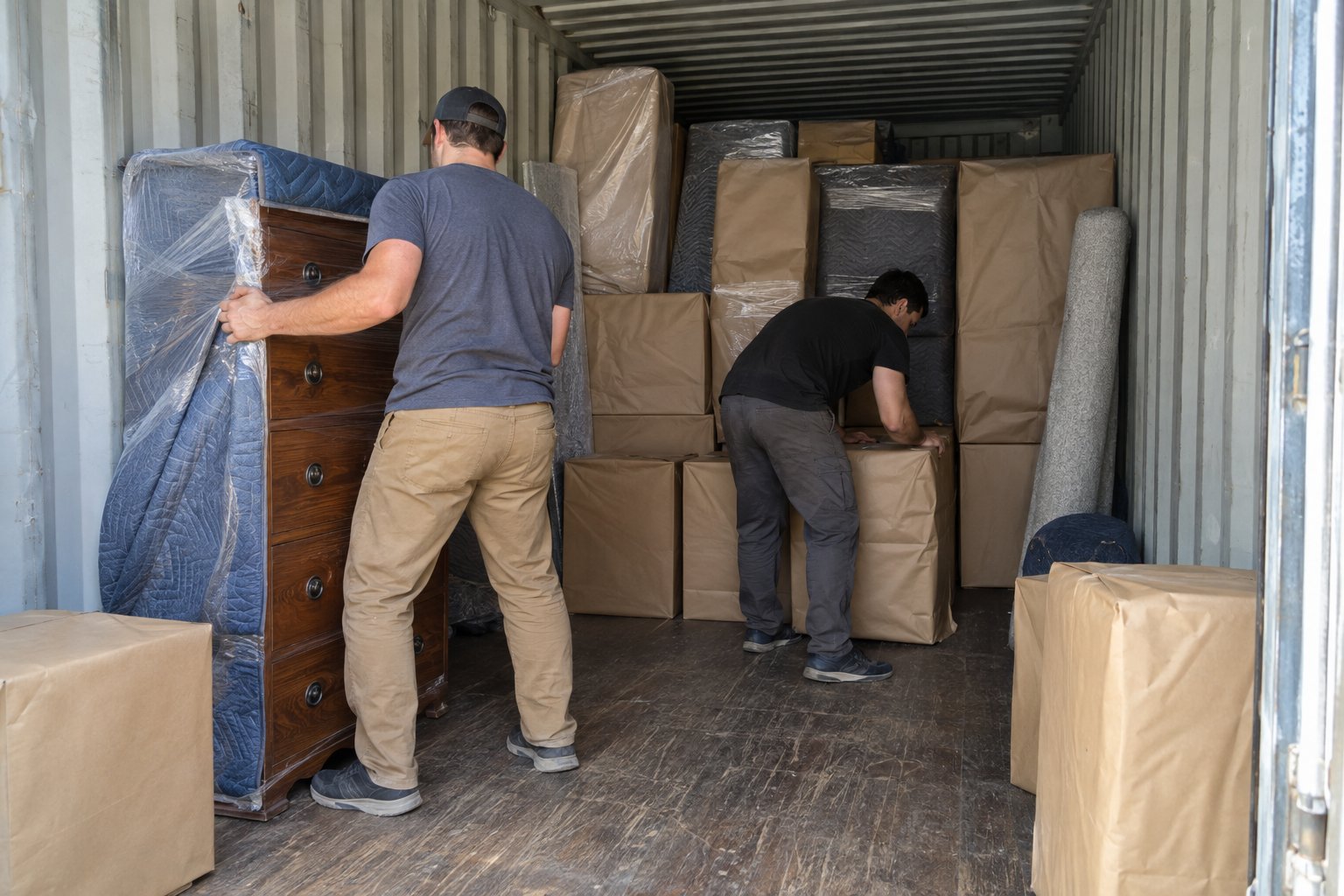
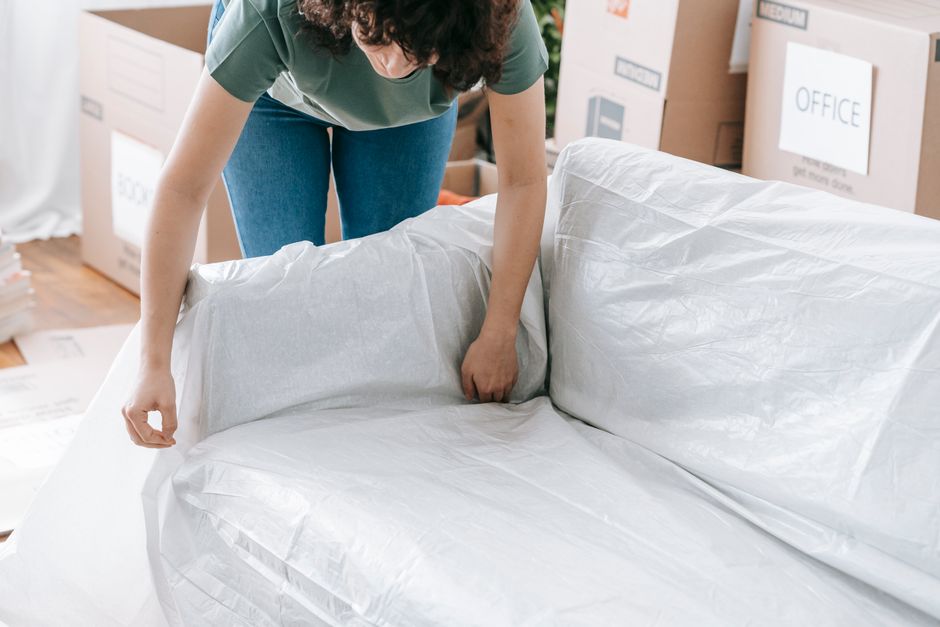
Wrap every piece of furniture in moving blankets before it leaves the room. Use stretch wrap to hold the blankets in place. Place furniture sliders under legs before attempting to move anything heavy across hardwood or tile floors. Always lift furniture with your legs, not your back, and use a furniture dolly for anything that is genuinely too heavy to carry safely. If you have any hesitation about the weight or the path, get a quote from 2 Jacked Guyz and let professionals handle it — the cost of one repaired floor or wall typically exceeds the cost of hiring movers.
Your living room is likely one of the first spaces you will want functional in your new home. Set aside a clearly labeled essentials box — or bag — containing the TV remote, power strips, a few HDMI cables, the Wi-Fi router, and any items you will want immediately on the first evening. This box should be the last thing loaded onto the truck and the first thing carried into the new home. Nothing is more frustrating than spending an hour digging through boxes just to find the one cable you need to get the TV working.
Moving a living room well is entirely about preparation. Declutter before you pack, gather your supplies before you start, protect every fragile item individually, and plan the furniture path before you move a single piece. Follow that sequence and your living room — full of sofas, screens, and sentimental objects — will arrive in exactly the same condition it left.
Request a personalized quote and see how careful planning and reliable service make every move smoother. Our team prepares each step to handle challenges safely and efficiently.
Most people underestimate how long a living room takes to pack. For a typical living room with electronics, artwork, and a full set of furniture, plan on starting at least one week before moving day. Begin with items you use least — decorative objects, books, artwork, and extra throw pillows — and work toward the items you use daily. Leaving electronics and lamps for the final day or two is usually practical, but do not leave everything to the last 24 hours.
If you no longer have the original packaging, purchase a flat-screen TV box from a moving supply store — these come in multiple sizes and include foam corner inserts that provide real protection. Wrap the screen in a soft moving blanket or bubble wrap first, then place it in the box. Always transport a flat-screen TV standing upright on its edge, never lying flat face-up or face-down. Laying it flat allows the screen's own weight to stress the panel, which can cause internal damage.
Before you disconnect anything, photograph the back of each device so you have a visual reference when you reconnect everything. Bundle each cable individually with a cable tie, label it with a small piece of masking tape indicating which device it belongs to, and store all cables together in a labeled zip-lock bag or small box. Keeping every cable from a single entertainment setup together — rather than scattered across multiple boxes — saves significant time and frustration during unpacking.
It depends on the sofa and the doorway. Most sectionals are designed to separate into two or more pieces precisely because full-size sofas are too large to navigate standard doorways and hallways intact. Measure each section and compare it to your doorway clearances before moving day. In many cases, removing the sofa legs gains a few additional inches of clearance and makes the difference between a manageable move and a stuck piece of furniture. If you are genuinely uncertain, a professional moving team with experience in furniture navigation is worth the investment.
Boxes are generally preferable because they stack cleanly, protect against moisture, and are much easier to label and organize in a moving truck. Large wardrobe boxes or oversized packing boxes work well for soft items like throw pillows, cushion covers, and blankets. Garbage bags can work in a pinch for very soft, non-fragile items like throw blankets, but they tend to get punctured, are difficult to stack, and often end up at the bottom of a pile where the contents get compressed. If you use bags, mark them clearly — unlabeled black bags are notoriously easy to mistake for trash.
No long forms, no delays. Just a move that’s ready when you are. Secure your moving date today.