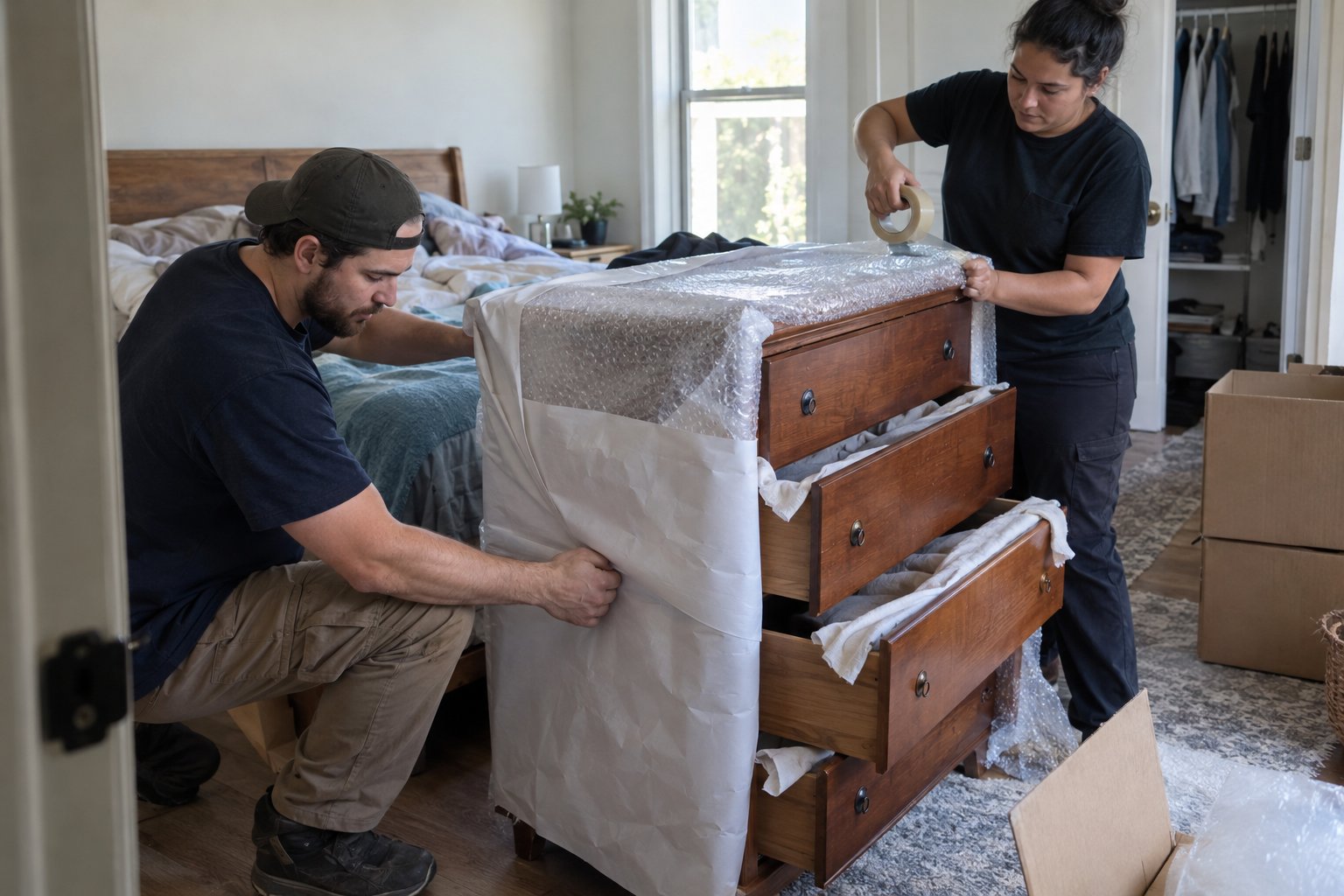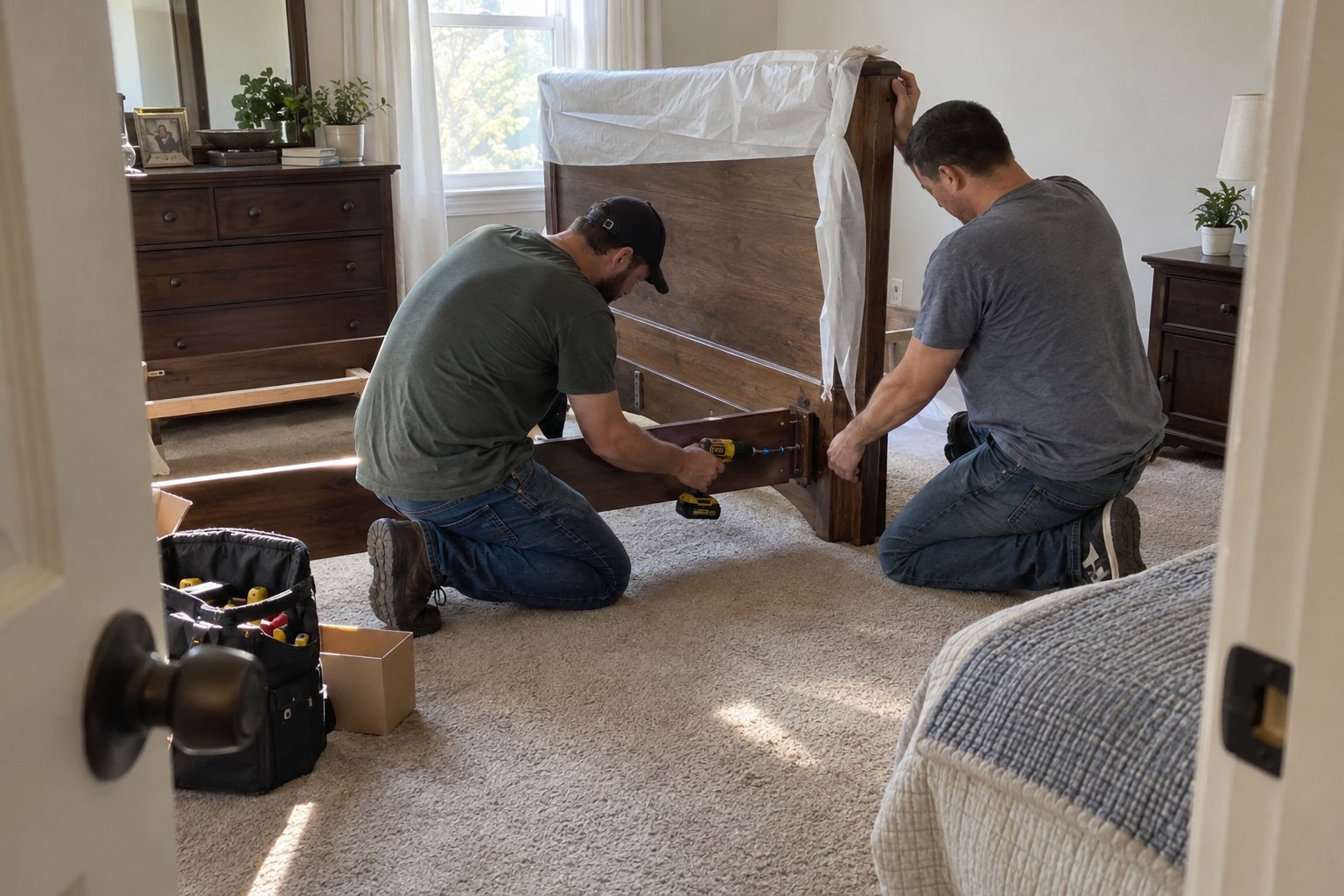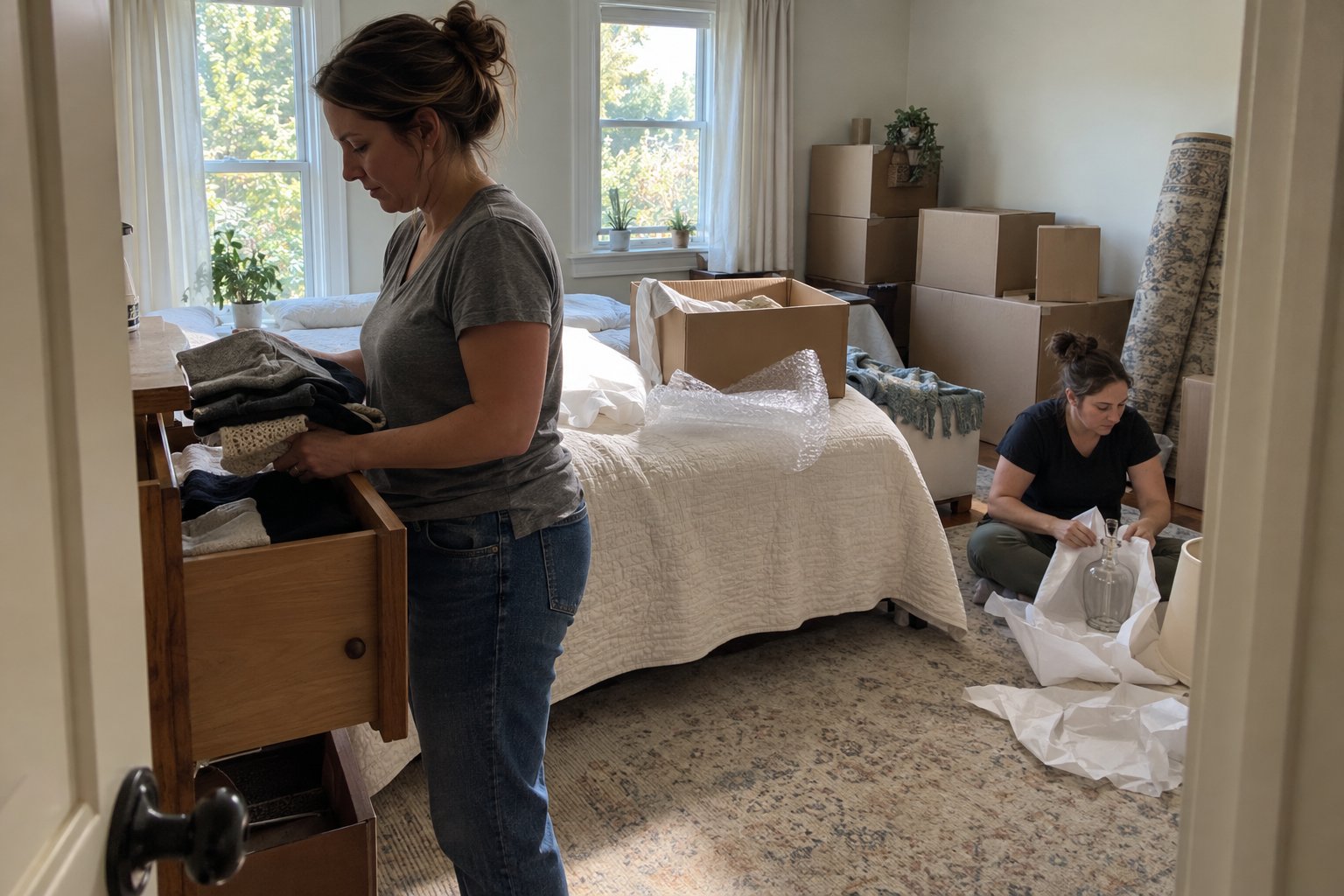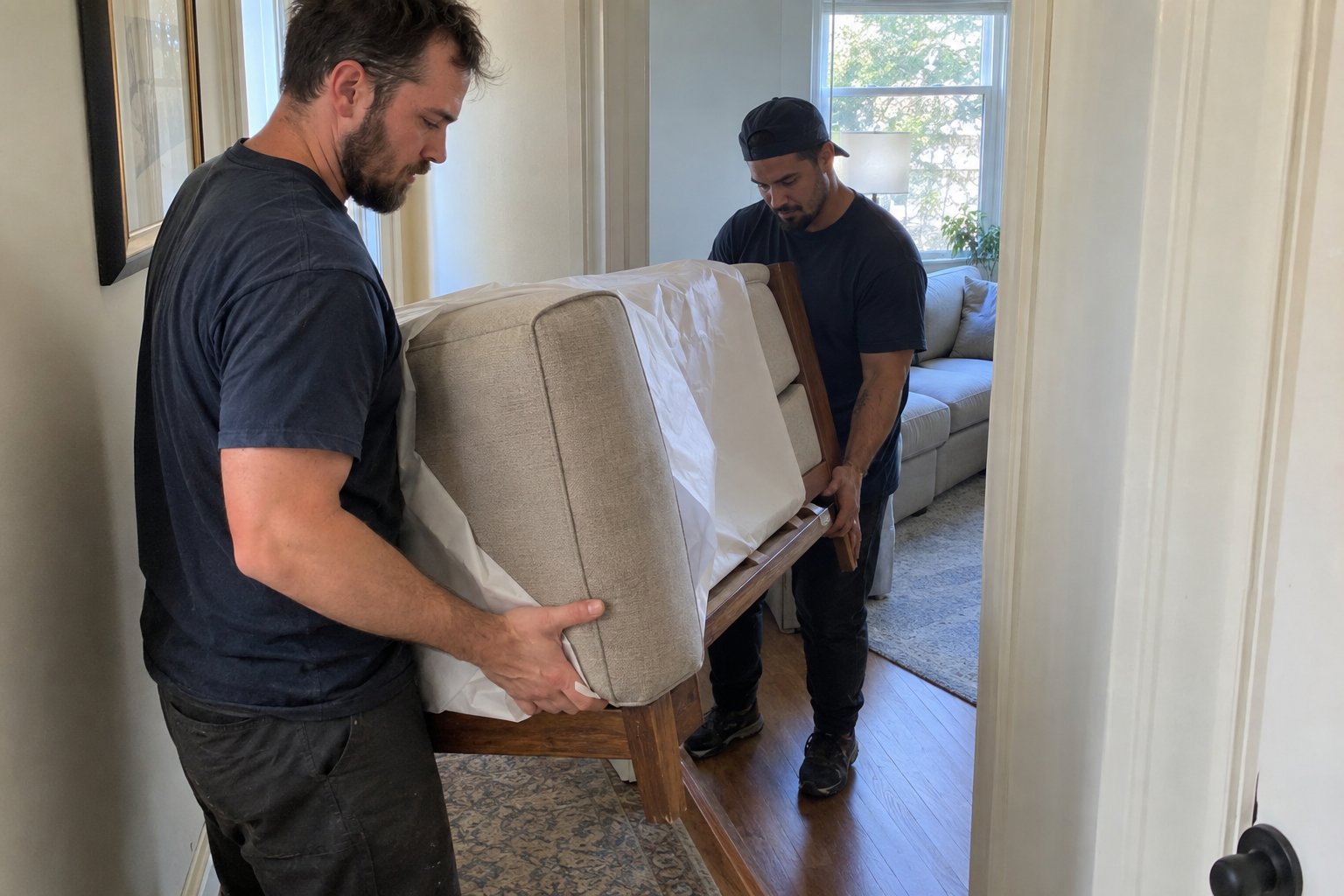


Learn how to pack and move a home office closet the right way — files, supplies, shelving, and organized storage — with tips from 2 Jacked Guyz professional movers.
Figuring out how to pack and move a home office closet is one of those moving challenges that almost every remote worker, freelancer, and small business owner completely underestimates — until moving day arrives and you are standing in front of a closet that turns out to contain four drawers of unsorted paperwork, two shelves of binders holding tax records going back further than you would like to admit, a tangle of backup hard drives and charging cables stuffed into a wire basket, a printer with a full ink cartridge and a paper tray still loaded, a label maker, three different sizes of sticky notes in various stages of depletion, and an entire upper shelf stacked with project files and reference materials that represent years of working life. The home office closet sits at the intersection of sensitive documents, fragile electronics, and deeply personal organizational systems — and that combination makes it one of the most overlooked yet genuinely demanding spaces to dismantle, pack, and transport safely.
The good news is that packing and moving a home office closet — even a heavily loaded one with built-in shelving, a filing system, and a decade of accumulated supplies — is completely manageable when you approach it with the right materials, the right sequence, and a clear understanding of what each category of item actually needs. And if you would rather hand the physical heavy lifting to professionals who know how to handle everything from a freestanding lateral file cabinet to a wall-anchored shelving unit, the team at 2 Jacked Guyz professional movers is ready to take it from overwhelming to done.
Before you reach for a single box or start pulling documents off shelves, walk through your home office closet slowly and take a genuine, honest inventory of everything that lives there. Home office closets have a remarkable ability to absorb supplies, paperwork, and equipment that no longer serves any active purpose — and the actual volume of what could technically make the move is almost always much larger than what actually should.
As you walk through, sort everything into three clear categories: move it to the new home, shred or dispose of it responsibly, and donate or pass it along. That means taking a realistic look at paper files you have not opened in years, printer models for which you no longer have compatible computers, and reference binders that have long since been superseded by digital records. Moving is one of the most effective forcing functions you will ever have to audit a filing system — and arriving at your new home office with only what you actively need means the new closet begins with clarity rather than accumulated backlog.
Once you know what is moving, group everything into logical working categories: paper files and documents, binders and reference materials, electronics and cables, office supplies and consumables, shelving and storage hardware, and any furniture pieces like a filing cabinet or rolling cart. Defining those groups before a single item is packed keeps the entire process organized and ensures that sensitive documents never end up in a box with loose pens and paper clips.
Paper files and documents are typically the most sensitive contents of any home office closet — and they are also among the easiest to damage, misplace, or accidentally expose during a move if they are not handled thoughtfully. The approach you take here matters both for the physical integrity of the documents and for your ability to find exactly what you need quickly once you are in the new space.
Paper is deceptively heavy. A standard banker's box filled with letter-size documents can weigh close to forty pounds, and a large moving box filled with binders and hanging files can become genuinely difficult to lift safely. Use small, double-walled boxes specifically sized for files — the kind with built-in rails for hanging folders if you have them — and resist the urge to overfill. A box that is too heavy to carry comfortably is a box that is likely to be dropped.
If your files are organized in a hanging folder system inside a cabinet or a portable filing box, the best approach is to transfer those folders directly into a portable file box with a lid and a handle, preserving the order of every tab and divider. Label the outside of the box clearly with the category of files it contains — tax records, client contracts, insurance documents, operating manuals — so you can locate what you need immediately without opening everything at once. Do not mix filing categories between boxes, even if one box is not completely full.
Documents containing personal or financial information — Social Security records, passports, financial statements, property deeds, legal agreements — should never travel in the moving truck if you can avoid it. Pack these in a secure, lockable document case or fireproof folder and carry them with you personally during the move. If they must travel with the rest of your belongings, seal the container clearly and keep it in a designated location in the truck where it will not shift or be buried under other boxes.
The electronics that accumulate in a home office closet over the years represent some of the most valuable and most fragile contents in the space — and they are also some of the most commonly damaged during a move when they are packed without adequate protection or loaded carelessly into boxes with heavy items stacked on top of them.
If you have held onto the original boxes for any of your tech — backup drives, a portable monitor, a label printer, a scanner — now is the moment to use them. Original packaging is specifically designed to absorb the stresses of transit and hold the device securely without shifting. If you no longer have original boxes, wrap each device in two to three layers of bubble wrap, secure with packing tape, and nest it in a box with at least two inches of cushioning material on all sides. Never pack electronics loosely in a box with other items, and never allow heavy objects to rest on top of them.
Cables are almost always the most disorganizing element of any tech-heavy move. Before you disconnect anything, take a photo of the back of any equipment that has multiple cable connections — your router, your network switch, your desk lamp with USB ports — so you have a visual reference when you set everything back up. Bundle each cable individually using a velcro strap or a twist tie, label both ends with masking tape and a permanent marker, and store related cables together in clearly labeled zip-lock bags or small cable organizer pouches. Pack all cable bundles together in a single, clearly labeled box so there is never a moment at the new home where you are digging through every box looking for a specific charger.
Printer ink cartridges can leak during transit when a printer is jostled or tilted at an angle. Remove all ink or toner cartridges before packing any printer, seal the cartridges in a zip-lock bag, and pack them separately in a box where they will remain upright. Tape the paper tray closed, wrap the printer in two to three layers of bubble wrap, and pack it snugly in a box with cushioning material on all sides. Do not stack anything heavy on top of a printer box during transit.
The structural elements of a home office closet — the shelving systems, wire racks, rolling carts, and lateral or vertical filing cabinets — tend to be the items that people leave until last and then scramble to deal with on moving day. Addressing them methodically and in the right order makes the entire process significantly faster and less stressful.
Lateral and vertical filing cabinets are almost always too heavy to move safely when they are full. Empty every drawer completely before attempting to move the cabinet, pack the contents in banker's boxes or portable file boxes as described above, and tape each drawer closed so it cannot slide open during loading. Two-drawer filing cabinets can sometimes be moved by one experienced person, but three- and four-drawer lateral cabinets should always be handled by two people — and often benefit from a furniture dolly. If the cabinet has a lock, use it, and keep the key in a safe, known location.
Wire shelving systems, cube organizers, and modular storage units should be fully disassembled before moving day. Photograph the assembled configuration from multiple angles before you start — you will thank yourself when it is time to reassemble at the new home. Bag all hardware (bolts, clips, shelf pins, anchors) in labeled zip-lock bags and tape them directly to the largest component piece of the unit so nothing gets separated in transit. Wrap shelving panels or side panels in moving blankets or stretch wrap to prevent scratching.
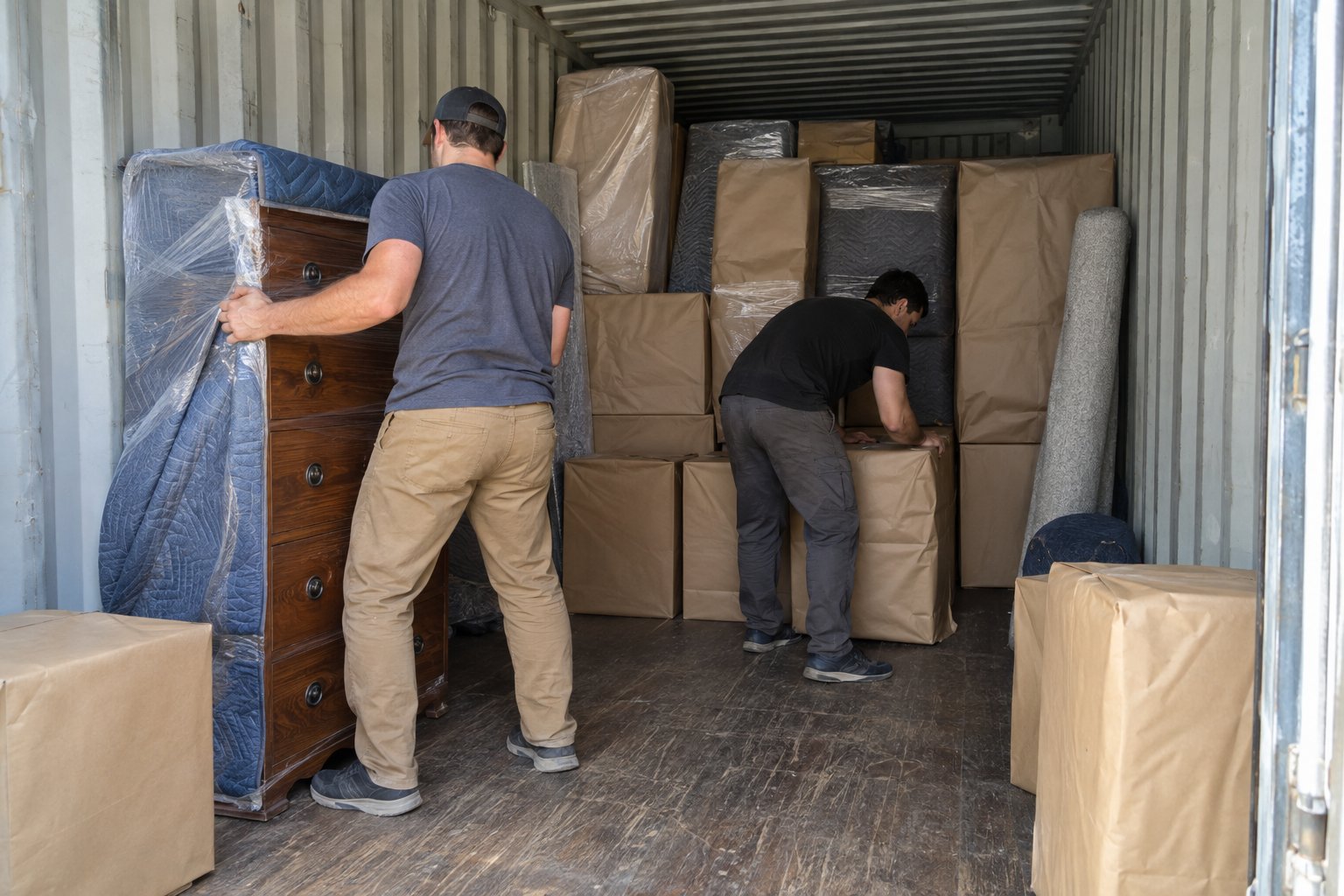
Any wood or laminate storage furniture in the closet — a freestanding bookcase, a lateral credenza, a rolling cart with a wood top — should be wrapped in moving blankets before loading. Finished surfaces scratch easily when they make contact with other furniture during transit, and even a minor surface scratch on a piece that anchors your new office closet is a frustrating outcome from a move that was otherwise handled well. Blanket-wrap every piece, secure the blankets with stretch wrap or furniture bands, and position finished pieces so they are not bearing the weight of heavy boxes in the truck.
Getting everything into the truck is only half the challenge. The other half — and the part that most significantly affects how quickly you get back to being productive — is setting up the new office closet in a way that is at least as functional as what you had before, and ideally better.
Before you start unpacking, spend fifteen minutes sketching out where everything will go in the new closet. Identify where the shelving will be reinstalled, where the filing cabinet will live, and where each category of supplies will be stored. Unpack in a deliberate sequence: install or position the shelving and furniture first, then transfer the files and binders back into the filing system, then unpack electronics and reconnect everything using your labeled cables and the photos you took before disconnecting. Supplies come last, once everything else has a permanent home.
If you find yourself in a new home office closet that is a different size or layout than the one you left, treat that as an opportunity to rethink the organization entirely rather than simply replicating what you had. The move has already forced you to touch and evaluate everything — use that momentum to build a system that serves the way you actually work now, rather than the way you worked when the old system was first set up.
Whether you are moving a modest home office setup or a fully loaded professional workspace, the team at 2 Jacked Guyz has the experience, equipment, and care to handle every item in your office closet — from the lateral file cabinet to the fragile backup drives — safely and efficiently.
Request a personalized quote and see how careful planning and reliable service make every move smoother. Our team prepares each step to handle challenges safely and efficiently.
It is strongly recommended to empty filing cabinets before moving them. Full filing cabinets — especially lateral models — can become dangerously heavy and difficult to maneuver safely through doorways and down stairs. Remove all files and pack them in banker's boxes or portable file boxes, then tape each drawer shut before the cabinet is loaded onto the truck.
Documents containing personal, financial, or legal information should ideally travel with you rather than in the moving truck. Pack them in a lockable document case or fireproof folder and keep them in your personal vehicle during the move. If they must go with the rest of your belongings, seal the container clearly and position it where it will not be buried or damaged during transit.
Before disconnecting anything, photograph the back of any device with multiple cable connections so you have a visual reference for reassembly. Bundle each cable individually with a velcro strap or twist tie, label both ends with masking tape and a marker, and store related cables together in labeled zip-lock bags or cable organizer pouches. Pack all cables in a single, clearly labeled box.
Yes. Ink and toner cartridges can leak during transit when a printer is jostled or tilted. Remove all cartridges before packing, seal them in a zip-lock bag, and pack them separately in a box where they can remain upright. Tape the paper tray closed, wrap the printer in bubble wrap, and pack it in a snug box with cushioning on all sides.
The best approach is to transfer hanging folders directly from your filing cabinet into a portable file box with a lid, preserving the order of every tab and divider. Label the outside of each box clearly with the category of files it contains. Avoid mixing filing categories between boxes, and make reinstalling the filing system your first unpacking priority before anything else in the office closet is set up.
No long forms, no delays. Just a move that’s ready when you are. Secure your moving date today.