
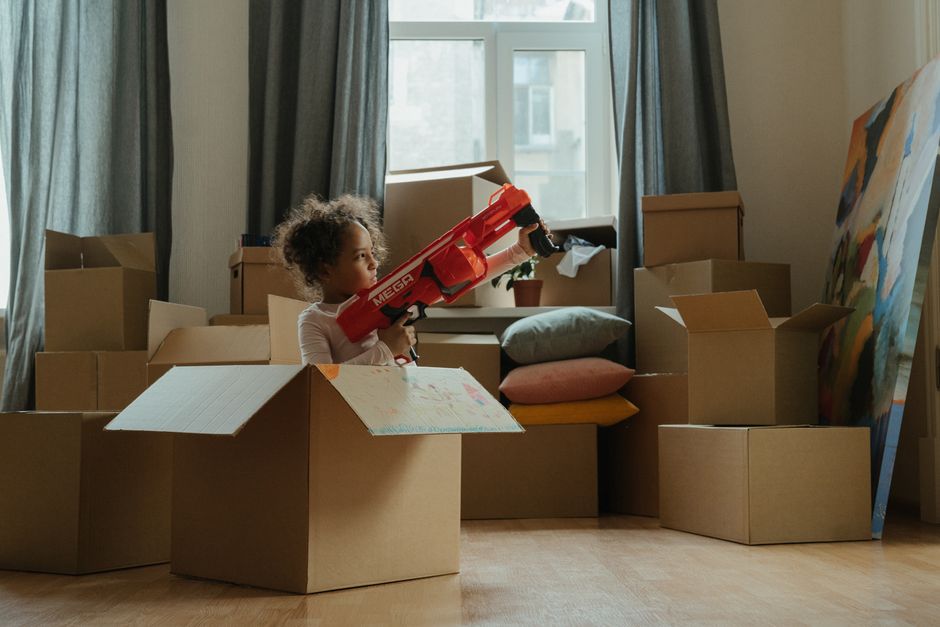
Learn how to pack and move a kids' room the right way — toys, clothes, furniture, and fragile keepsakes — with tips from 2 Jacked Guyz professional movers.
Figuring out how to pack and move a kids' room is one of those tasks that looks simple on the surface and turns out to be anything but. You are dealing with a space that is part bedroom, part toy warehouse, part art studio, and part sentimental archive. There are stuffed animals crammed into corners, building sets with hundreds of tiny pieces, artwork taped to walls, dresser drawers overflowing with clothes they may have already grown out of, and a bed frame that only made sense to assemble inside the room. Knowing where to start — and how to keep the whole process from turning into an emotional meltdown for everyone involved — makes an enormous difference.
The good news is that a kids' room move is completely manageable with the right approach and the right order of operations. And if you would rather hand the heavy lifting to people who have moved every variety of chaotic bedroom imaginable, the team at 2 Jacked Guyz professional movers is ready to take it from overwhelming to done.
Before you tape a single box or wrap a single toy, do a genuine pass through the entire room. Kids' rooms are notorious for accumulating things that no longer serve any real purpose — broken crayons, toys with missing parts, outgrown clothes still hanging in the closet, books from several years ago, and duplicates of things that somehow multiplied without anyone noticing.
Sort everything into three categories: keep, donate, and discard. Where age-appropriate, involve your kids in the process. Giving children some agency over what goes and what stays tends to make the transition feel less like something being done to them and more like something they are part of. Be honest but flexible — this is not the moment for a ruthless purge that leaves them feeling like they lost something important. The goal is to lighten the load, not to create anxiety about the move.
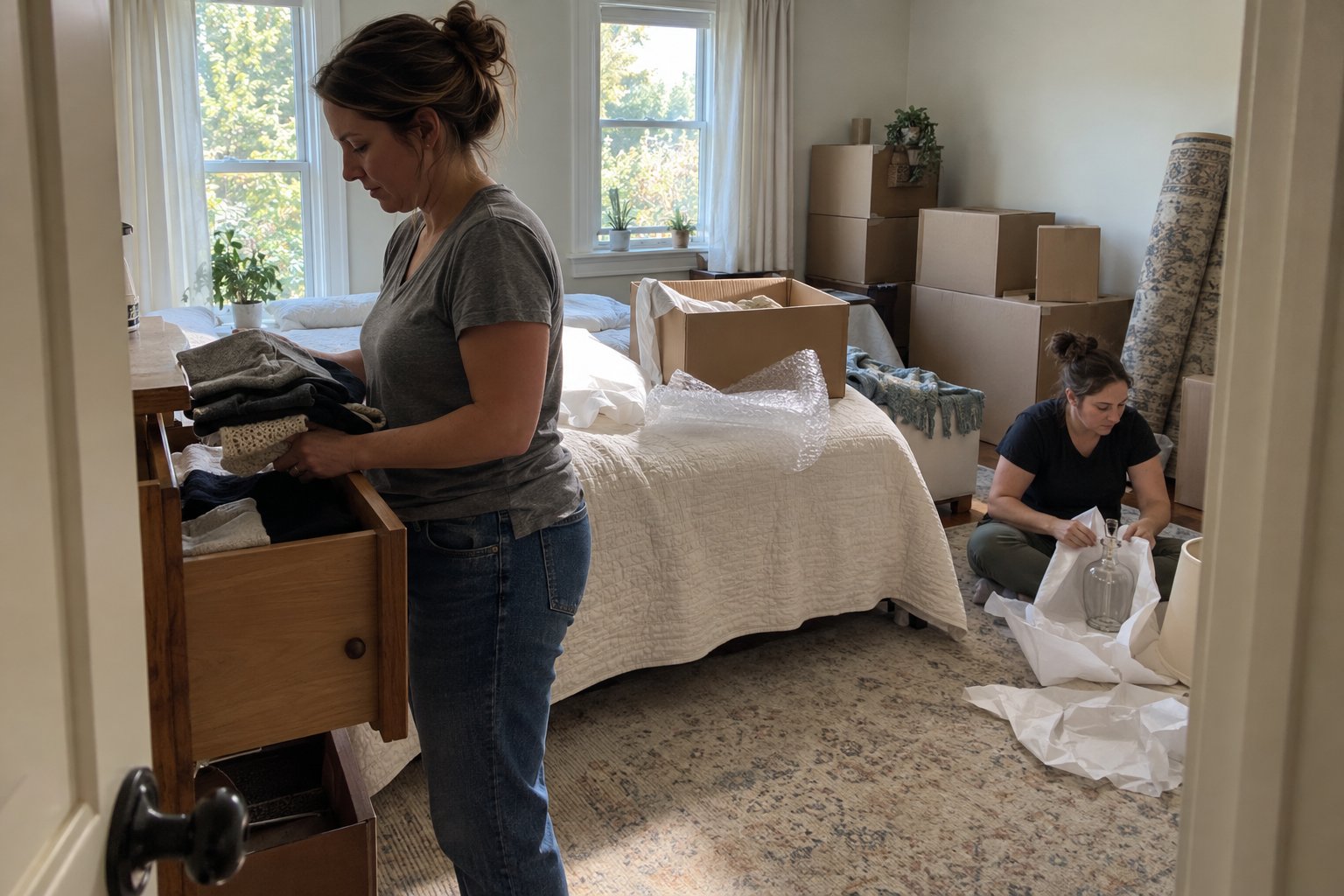
Clothes are a natural starting point. Pull out anything they have clearly outgrown and set it aside for donation. Gently used children's clothing is almost always accepted by local shelters, churches, and secondhand shops. Toys in good working condition — especially ones your child has genuinely aged out of — can go to donation centers or be passed along to younger family members. Broken toys with no sentimental value should simply be discarded.
The fewer items you are moving out of a kids' room, the faster the packing goes and the easier the unpacking will be at the other end. A decluttered room also makes it far simpler to set up the new space in a way that actually works for your child.
Running out of packing materials in the middle of a kids' room is a special kind of frustrating. Stock up before you begin so that the work can flow without interruption. Here is what you will need:
Toys are the defining packing challenge of any kids' room. They come in every possible shape and size, many of them have small parts, and your child will almost certainly ask where a specific one is roughly four minutes after you have sealed the last box. A little organization here pays off enormously.
LEGOs, magnetic tiles, train set components, marble runs, and similar toys all present the same core problem: if they are not contained, they will end up everywhere. The most effective approach is to sort them by set or type, place each group in a labeled resealable bag, and pack those bags together in a single box labeled clearly with the contents. Do not mix building sets together in a single bag — your child will thank you on the unpacking end.
Stuffed animals and plush toys are bulky but not fragile. They pack well in large boxes or large plastic bins. An easy shortcut is to use a clean garbage bag for stuffed animals — it keeps them contained, they compress reasonably well, and the bag can be labeled easily. Just make sure the bag is not overstuffed to the point of being difficult to seal or carry.
Board games with multiple small pieces should be secured before packing. If the boxes are in good condition, tape them closed and pack them flat so pieces do not shift during transit. For games with loose or light lids, place the contents in a resealable bag first, then return the bag to the box before taping it shut. Puzzles should be treated the same way — seal the pieces in a bag before closing the box.
Crayons, markers, colored pencils, paint supplies, and craft materials can all be grouped by type in resealable bags and packed together in a box. Cap every marker and crayon set tightly. Remove batteries from electronic art toys before packing. Any liquid art supplies — glue, paint, glitter glue — should be placed in a sealed plastic bag inside the box to contain any leakage during transit.
Ride-on toys, scooters, bikes, and similar items typically do not fit in standard boxes. Clean them off before loading so they do not transfer dirt to other items in the truck. Remove any detachable accessories and pack them separately in a labeled bag. Deflate any inflatable toys or balls to reduce volume.
Children's clothing packs much the same way as adult clothing, with a few practical shortcuts worth knowing.
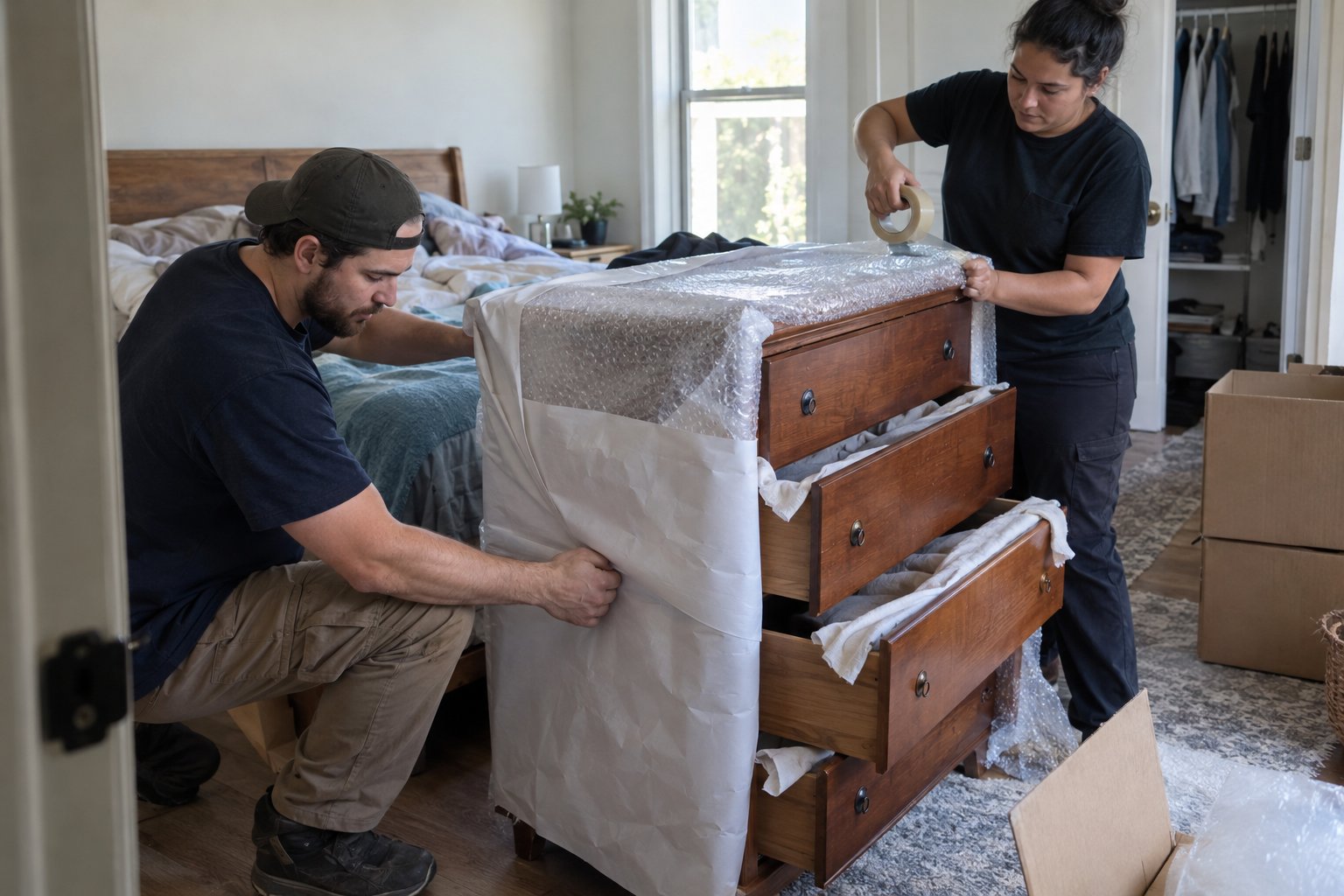
Dresser drawers can often be moved with the clothes still inside them if the dresser is lightweight enough to handle safely with a full load. For heavier dressers, remove the drawers entirely, pack the clothes in boxes or bags, and move the empty dresser frame separately. This is safer for the movers, better for the dresser joints, and reduces the risk of drawers sliding open during transport.
Hanging clothes can stay on their hangers if you use wardrobe boxes — these are tall boxes designed specifically to hold clothes on a hanging rod, which keeps garments wrinkle-free and makes unpacking extremely fast. For closets with a mix of hanging clothes and folded items on shelves, wardrobe boxes handle the hanging items while standard boxes take care of everything else.
Bedding — comforters, blankets, pillows, and mattress protectors — packs well in large boxes or large vacuum storage bags. Compression bags are especially useful here because they dramatically reduce the volume of bulky bedding. Label everything clearly so that your child's bed can be made up quickly in the new home, which goes a long way toward helping younger children feel settled on the first night.
Cribs, toddler beds, bunk beds, loft beds, and youth bedroom furniture all present their own disassembly challenges. A few principles apply across all of them.
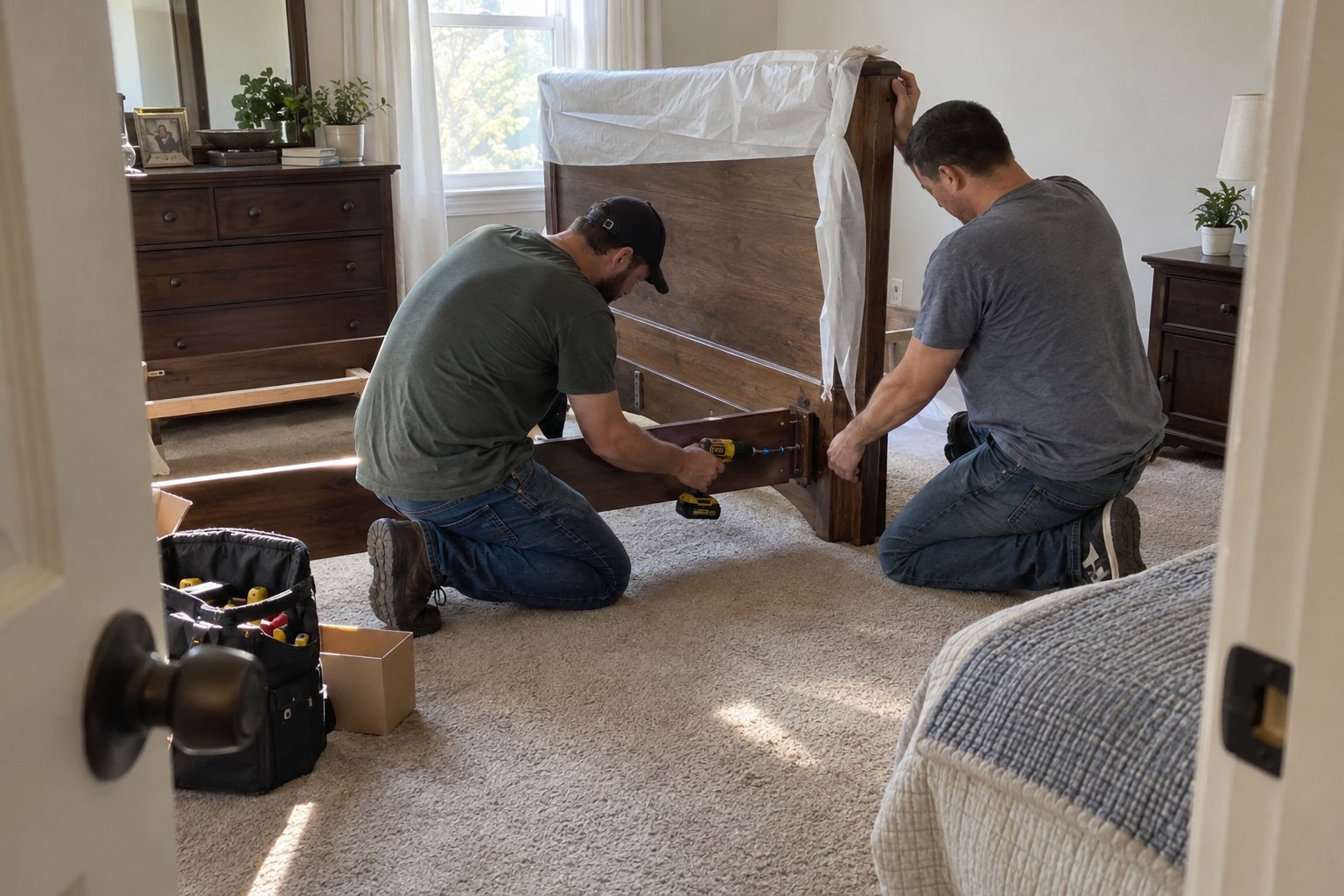
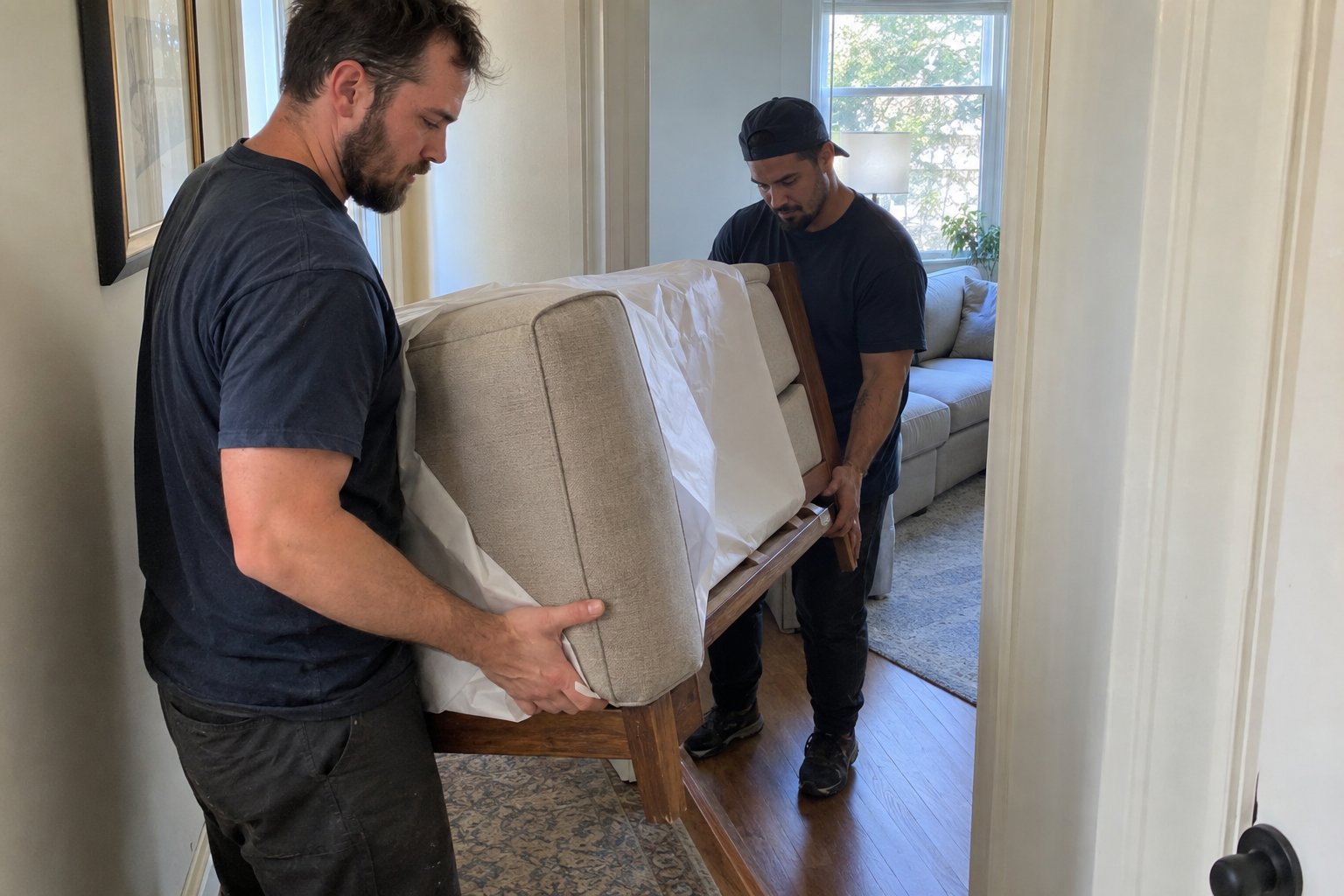
Most bed frames, bunk beds, and loft beds should be disassembled before moving. Attempting to move an assembled bunk bed through a standard doorway is a common moving day mistake that tends to result in scratched walls, damaged furniture, and a great deal of frustration. Consult the original assembly instructions if you have them — or look up the manufacturer's disassembly process online — and keep all hardware in a labeled resealable bag taped directly to the frame so nothing gets lost.
Remove all drawers from dressers before moving. For shelving units and bookcases, remove any items stored on shelves and evaluate whether the unit needs to be disassembled for safe transport. Tall, narrow bookcases are especially prone to tipping during a move and are often safer moved when broken down. Use furniture pads or moving blankets to protect all finished surfaces from scratches.
Cribs should always be fully disassembled before moving. Keep all hardware together in a clearly labeled bag and photograph the assembled crib before taking it apart — the photo will help enormously when reassembling it at the new home. The same approach applies to toddler beds and convertible cribs.
Kids' rooms tend to hold a surprising number of things that are irreplaceable even if they are not particularly valuable in a traditional sense — a piece of artwork from preschool, a handmade gift from a grandparent, a framed photo from a first birthday. These items deserve the same careful packing attention as anything fragile in the house.
Framed artwork and photos should be wrapped in packing paper, then in bubble wrap, and packed in a picture box or flat box. Do not stack heavy items on top of framed pieces. Ceramic or clay keepsakes, trophy figurines, and similar decorative items should each be individually wrapped in packing paper with bubble wrap used as an outer layer for anything particularly fragile. Label these boxes clearly as fragile and make sure anyone helping with the move knows to treat them accordingly.
For drawings, paintings, or paper artwork that is not framed, a flat box or a large art portfolio case is the right solution. Never roll or fold artwork if it can be avoided. If you are transporting a significant amount of children's artwork, consider digitally photographing it before the move as a backup — moving is one of the most common times irreplaceable paper items get damaged or lost.
Even a well-organized move can be stressful for children, especially younger ones who may not fully understand why everything familiar is being taken apart and put in boxes. A few small steps can make a real difference.
Pack a special "first night" bag for each child — include their favorite stuffed animal or toy, a set of pajamas, their toothbrush, a familiar blanket, and anything else that will help them feel settled quickly. Keep this bag with you rather than loading it in the truck so it is immediately accessible when you arrive.
If possible, set up your child's room as a priority in the new home. Getting their bed made and their familiar items in place gives them a sense of safety and normalcy that makes the first few nights far smoother for everyone.
And if the physical work of moving everything yourself feels like too much to take on, the team at 2 Jacked Guyz — get a free moving quote is ready to handle the heavy work so you can focus on keeping the move positive for your kids.
Request a personalized quote and see how careful planning and reliable service make every move smoother. Our team prepares each step to handle challenges safely and efficiently.
Ideally, start packing non-essential items — extra toys, out-of-season clothing, books, and keepsakes — two to three weeks before moving day. Leave everyday essentials and comfort items until the day before or the morning of the move so your child's routine is disrupted as little as possible.
Sort building sets by type or by specific set, place each group in a labeled resealable zip bag, and pack the bags together in a clearly labeled box. Avoid mixing multiple sets together in one bag — keeping them separated makes unpacking and rebuilding much easier for your child.
Yes — always disassemble bunk beds and loft beds before attempting to move them. Assembled frames rarely fit through standard doorways and can cause wall damage or furniture damage in the attempt. Keep all hardware in a labeled bag taped to the frame, and photograph the assembled unit before taking it apart to use as a reassembly reference.
Pack a dedicated 'first night' bag for each child containing their favorite toy or stuffed animal, pajamas, a familiar blanket, and toiletries. Keep this bag with you in the car rather than in the moving truck. Prioritize setting up your child's room in the new home so they have a familiar, settled space as quickly as possible after arriving.
Yes. Professional movers are experienced handling all types of household items, including fragile keepsakes, bulky toy storage, and specialty furniture like bunk beds and cribs. The team at 2 Jacked Guyz can manage packing, disassembly, transport, and reassembly so moving day is as smooth as possible for your whole family.
No long forms, no delays. Just a move that’s ready when you are. Secure your moving date today.