

Learn how to pack and move a formal living room the right way — sofas, fragile décor, mirrors, and statement furniture handled safely from start to finish.
Figuring out how to pack and move a formal living room is one of those moving challenges that catches people off guard — because the formal living room is the room that looks the most put-together and somehow still takes the longest to dismantle properly. By the time moving day arrives, you are standing in a space that contains an oversized sofa that has not moved since the day it was delivered, a pair of wingback chairs that weigh considerably more than they appear, a glass-top coffee table with legs that unscrew in a way that is not immediately obvious, a large ornate mirror anchored to the wall above the fireplace, a credenza packed with china and decorative objects, and a collection of framed art arranged in a gallery wall that took an entire afternoon to hang and will take nearly as long to remove safely. The formal living room sits at the intersection of statement furniture, fragile décor, and carefully arranged intentionality — and that combination makes it one of the most demanding rooms in the entire house to plan, pack, and transport without something getting scratched, cracked, or lost.
The good news is that packing and moving a formal living room — even one with a large sectional, heirloom pieces, and years of thoughtfully curated décor — is completely manageable when you approach it with the right materials, the right sequence, and a clear understanding of what each category of item actually needs. And if you would rather hand the heavy lifting to professionals who know how to handle everything from a glass-top console to a wall-mounted oversized mirror, the team at 2 Jacked Guyz professional movers is ready to take it from overwhelming to done.
Before you pull out a single roll of bubble wrap or reach for a moving box, walk through your formal living room slowly and take a genuine, honest inventory of everything that lives there. Formal living rooms have a way of accumulating objects over years — a vase received as a gift, a decorative object picked up on a trip, a framed print purchased on impulse — and the total volume of what needs to be packed is almost always larger and more complex than it looks during an ordinary afternoon in the space.
As you walk through, sort everything into three clear categories: move it to the new home, donate or pass it along, and discard it responsibly. That means taking an honest look at decorative objects you no longer love, throw pillows that have worn down, and accent pieces that served a purpose in this house but may not have a natural place in the next. Moving is one of the most effective opportunities you will ever have to reset a formal space intentionally — and arriving with only what you genuinely want means the new formal living room begins with purpose rather than accumulated habit.
Once you know what is moving, group everything into logical working categories: large upholstered seating, case goods and wood furniture, glass surfaces and tabletops, mirrors and framed art, decorative objects and ceramics, lamps and lighting, and textiles. Defining those groups before a single item is wrapped keeps the entire process organized and ensures that nothing fragile ends up in the wrong box.
The sofas, loveseats, and upholstered chairs in a formal living room are usually the pieces that define the room — and they are almost always the most physically demanding items to move. Formal sofas in particular tend to be heavy, wide, and difficult to navigate through doorways, down hallways, and around corners without the right equipment and technique.
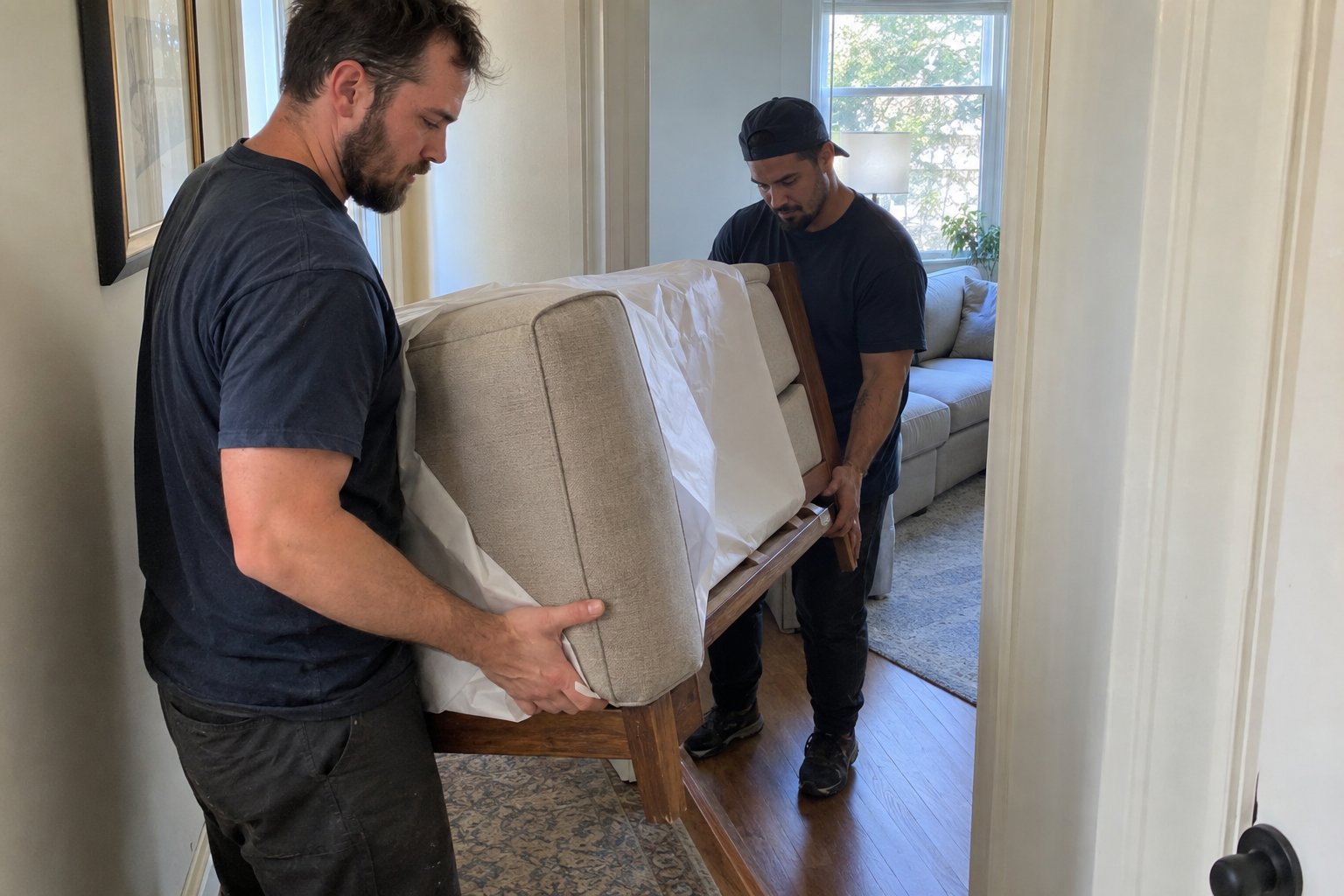
Before anything else, measure every doorway, hallway, and staircase the sofa or sectional will need to pass through on the way out of your current home — and on the way into your new one. A formal sofa that barely fit through the front door on delivery day may need to be tilted, turned on its side, or in some cases partially disassembled to clear a tight doorframe. Knowing this in advance allows you to plan the exact path and gather any tools you will need, rather than discovering the problem when the piece is already halfway out of the room.
Wrap upholstered pieces in moving blankets or furniture pads rather than plastic wrap alone. Plastic wrap holds moisture against fabric and can cause mildew, particularly on longer moves. Use furniture sliders or a hand truck to move heavy sofas across hardwood or tile without dragging them, which can scratch both the floor and the furniture legs. If a sofa has removable cushions, take them off, wrap them individually in clean plastic or garbage bags to keep them clean, and load them separately.
Formal wingback chairs and accent chairs are often heavier than they look due to dense upholstery and solid wood frames. Wrap the legs and any exposed wood in bubble wrap secured with packing tape — not tape applied directly to the wood finish — and cover the upholstered body in a furniture pad. If the chair has decorative nail head trim, take extra care not to snag the trim on blankets or door edges during transport.
Glass surfaces, large mirrors, and fragile decorative statement pieces are the items most likely to be damaged during a formal living room move — and they are also the items most likely to cause injury if they break during handling. Treating every glass surface and every mirror as genuinely fragile, regardless of how sturdy it feels in your hands, is the single most important mindset shift you can make before you start packing this category.
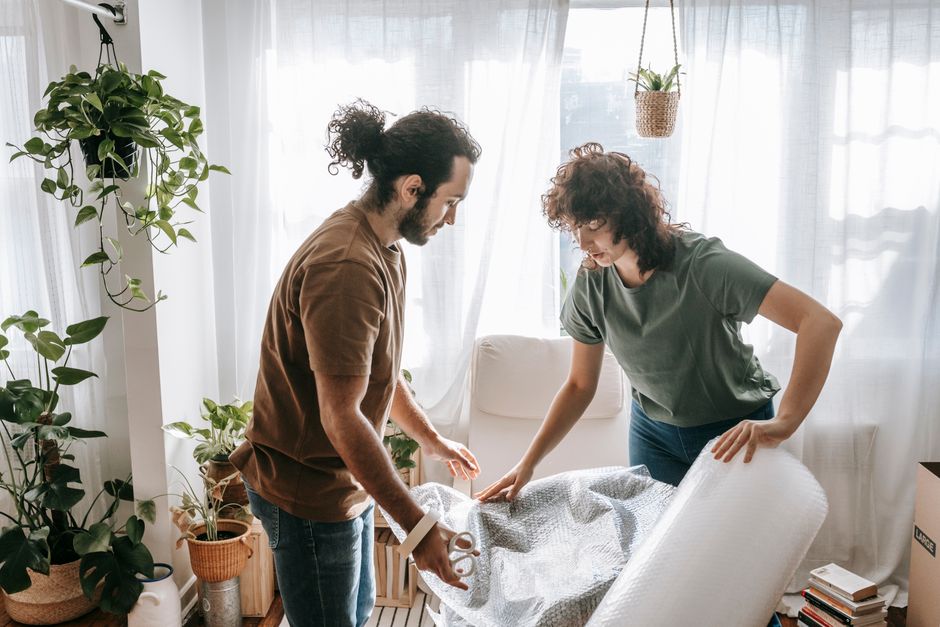
If your glass coffee table or console table has a removable glass top, remove it before moving the base. Wrap the glass panel in several layers of packing paper, then add a layer of bubble wrap, and tape the bundle securely without allowing tape to contact the glass surface directly. Stand glass panels upright on their edge for transport rather than laying them flat — glass is significantly stronger when standing vertically and far more likely to crack or shatter when laid flat under even modest pressure. Label every glass panel clearly as fragile and note which piece it belongs to.
Large framed mirrors — especially the kind mounted above a fireplace or console in a formal living room — require careful removal before they are wrapped or moved. Use a stud finder to locate the wall anchors, remove the mirror with at least two people stabilizing it at all times, and lay it flat on a padded surface while you prepare the wrapping. Use mirror boxes or picture boxes sized as close to the mirror's dimensions as possible, add corner protectors, and fill any remaining space with crumpled packing paper so the mirror cannot shift inside the box during transport. Stand the packed mirror upright in the truck, braced on both sides so it cannot tip.
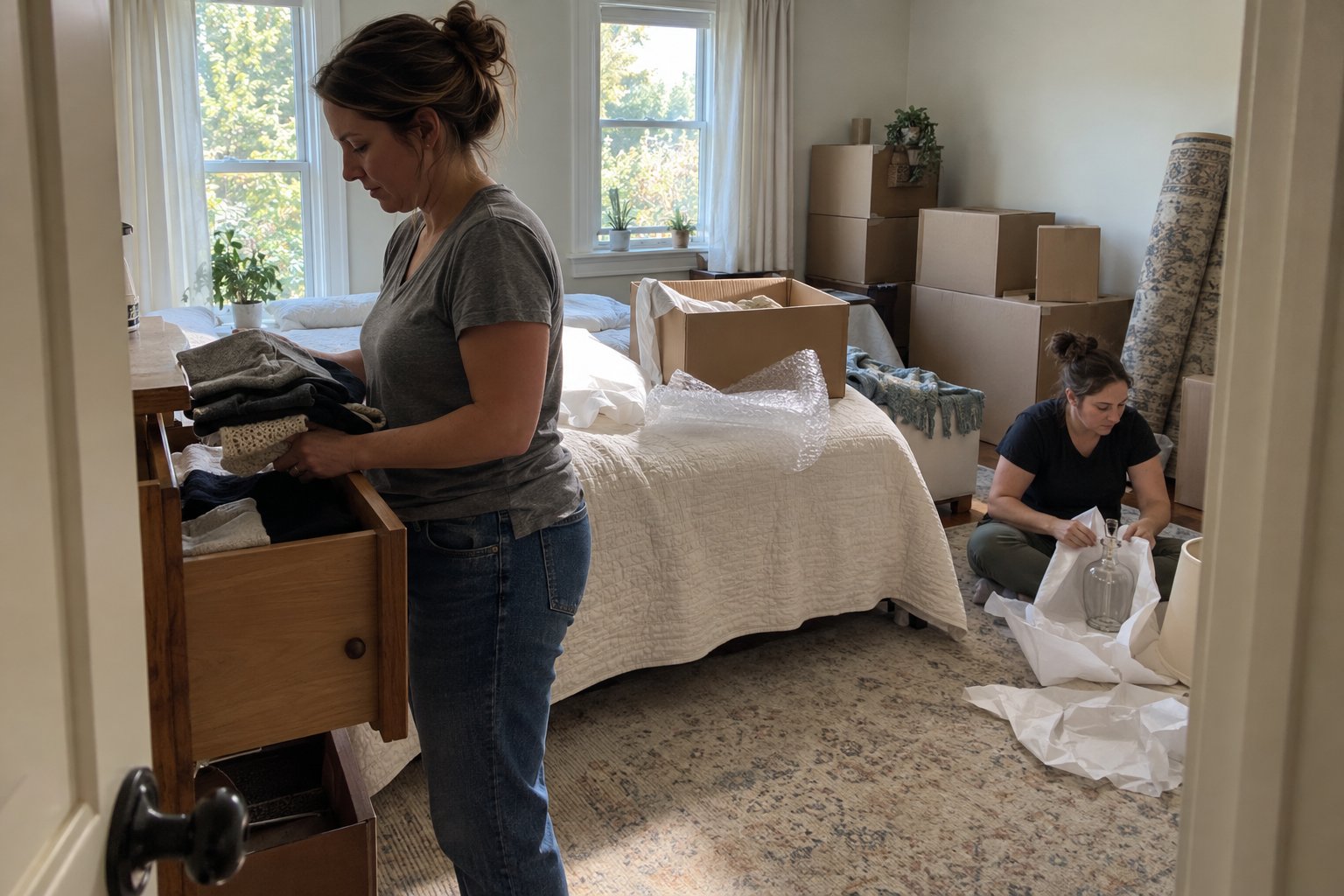
Formal living rooms tend to contain a higher concentration of genuinely fragile decorative objects than almost any other room in the house — ceramic vases, glass sculptures, porcelain figurines, lacquered decorative boxes, and candleholders in materials that chip and crack easily. Wrap every individual object in at least two sheets of packing paper, starting at a corner and rolling inward, then tuck the wrapped piece into a box lined with crumpled paper on the bottom. Never stack heavy items on top of wrapped fragile pieces. Label every box containing fragile objects on all four sides and on the top.
Case goods — credenzas, console tables, display cabinets, sideboards, and entertainment units — are often substantial pieces in a formal living room and require careful preparation before they can be moved safely.
Remove everything from every drawer, cabinet door, and interior shelf before the piece is moved. Leaving contents inside a credenza or sideboard during a move adds unpredictable weight, shifts the center of gravity, and risks damage to both the contents and the furniture. Pack the contents of each drawer into labeled boxes so you know exactly what came from where.
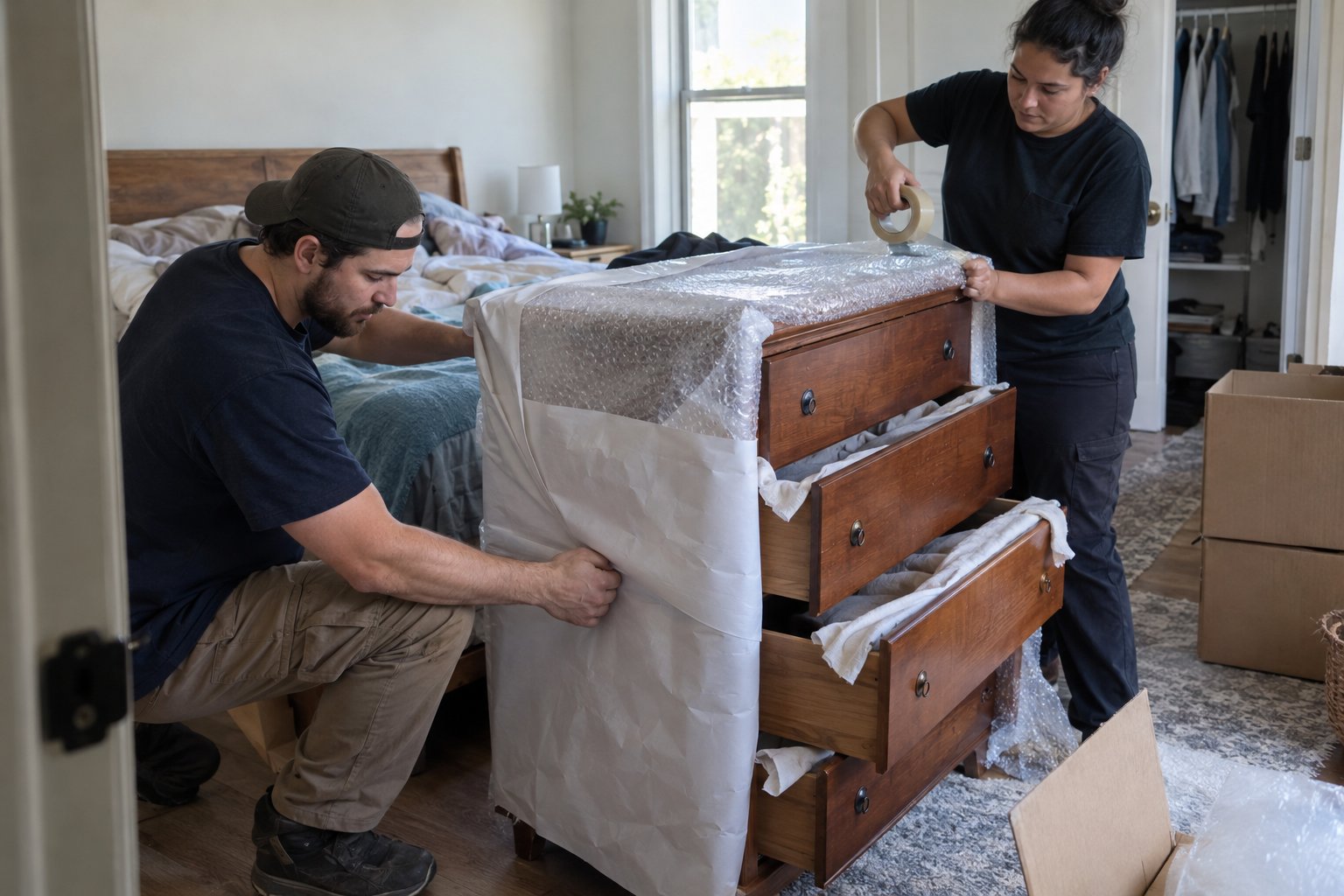
Wrap legs, corners, and decorative wood elements in bubble wrap and secure with packing tape — making sure the tape never contacts the wood surface or finish directly, which can peel lacquer or stain when removed. Use moving blankets to wrap the entire piece before it is loaded onto a hand truck or dolly. Pay particular attention to ornate carved details, which are more vulnerable to impact damage than flat wood surfaces.
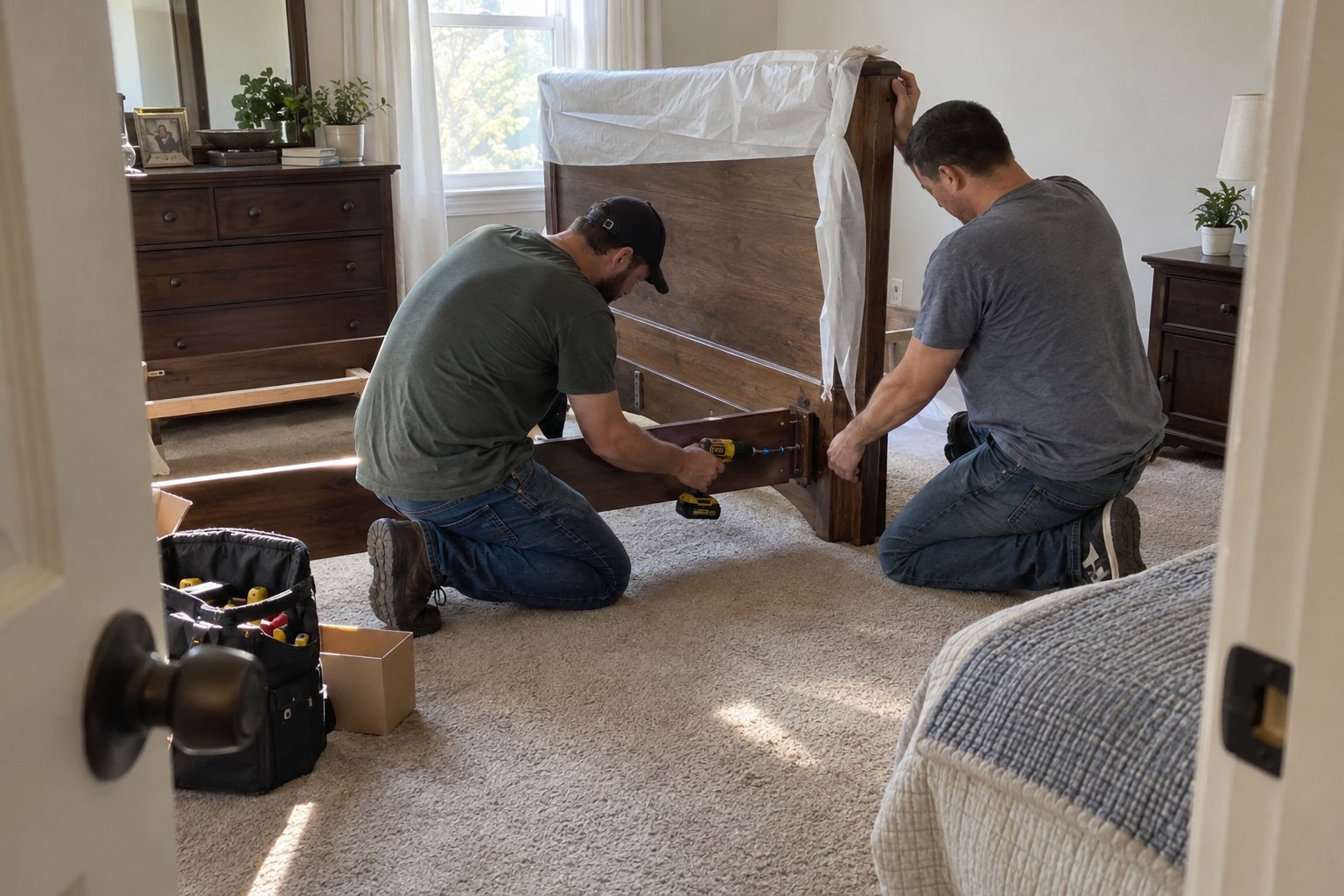
If a display cabinet, bookcase, or entertainment unit has removable shelves, take them out and wrap them separately. Remove any glass panels from cabinet doors if they can be detached, wrap and pack them as you would any glass surface, and tape the cabinet doors shut with painter's tape so they do not swing open during the move. Keep all hardware — screws, shelf pins, cam locks — in clearly labeled zip-lock bags taped to the piece they belong to.
A formal living room gallery wall can easily contain a dozen or more framed pieces in a variety of sizes, and taking it down and repacking it properly is one of the most time-consuming parts of the entire move. Start earlier than you think you need to.
Before removing a single nail or frame, take detailed photographs of the gallery wall from multiple angles. Capture both the overall arrangement and the spacing between individual pieces. This documentation makes recreating the arrangement in your new home significantly easier and removes the stress of trying to reconstruct the layout from memory.
Use picture boxes for framed pieces wherever possible, sizing the box as close to the frame as you can. Add corner protectors to each frame, wrap in packing paper or bubble wrap, and fill any space inside the box so the frame cannot shift. For particularly valuable or large pieces, consider double-boxing — placing the wrapped frame inside one box, then placing that box inside a slightly larger box with padding in between. Mark every picture box as fragile and note which room it belongs to.
Remove lamp shades and pack them separately — shades crush and dent easily and should never be placed inside a box with other items pressing against them. Wrap lamp bases in packing paper and bubble wrap, coil cords neatly and secure with a twist tie, and pack bases in appropriately sized boxes with padding. If a floor lamp has a weighted base, treat it as a heavy item and do not overpack the box it goes into.
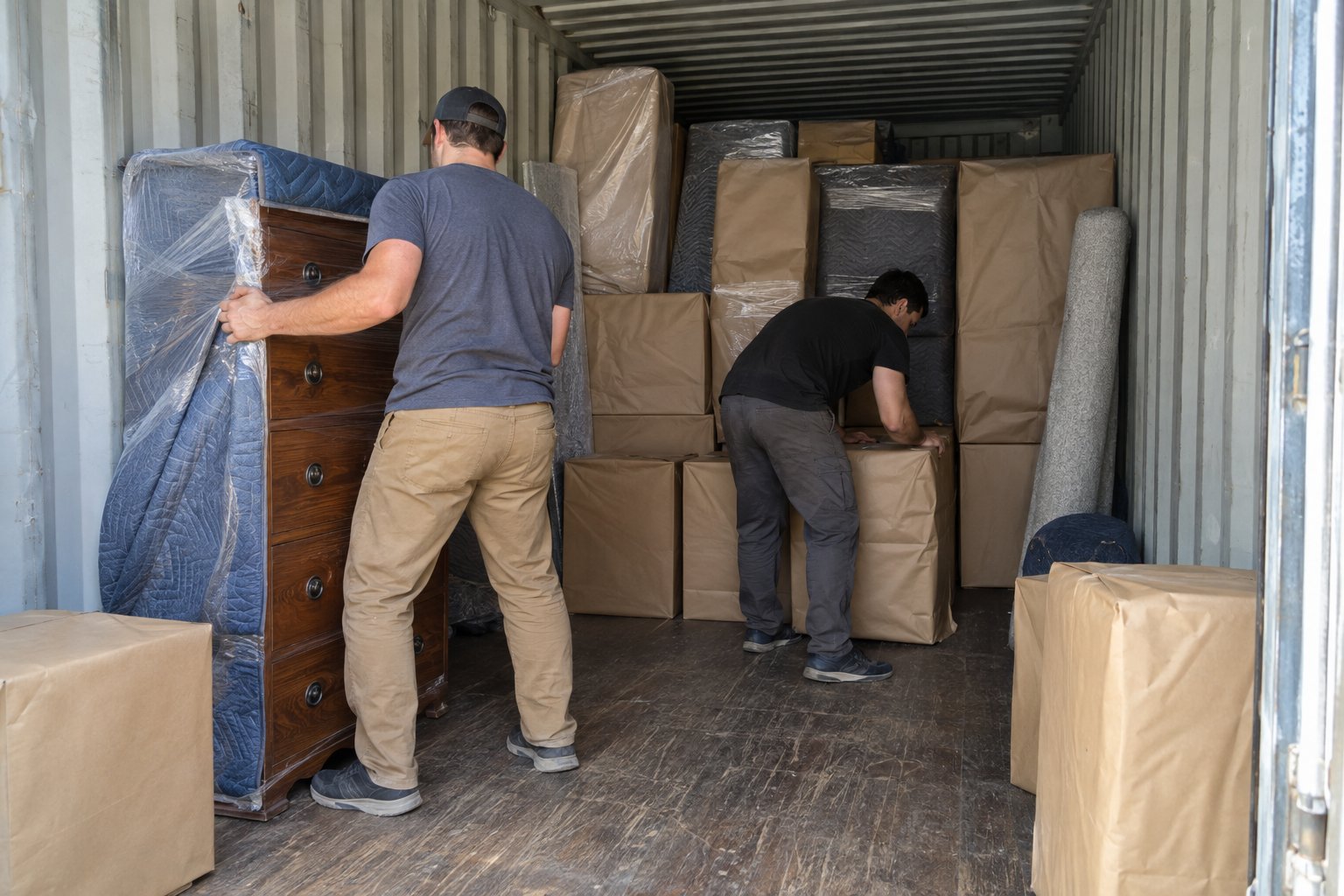
The order in which a formal living room is loaded into the moving truck matters almost as much as how individual pieces are packed. Heavy furniture — sofas, credenzas, large chairs — should be loaded first and positioned against the walls of the truck. Boxes of fragile items should be loaded last and stacked only on top of flat, stable surfaces, never wedged between furniture pieces where they can be crushed. Glass panels and mirrors should travel standing upright, braced on both sides, and clearly separated from anything that could shift into them during transport.
Use moving straps or ratchet straps to secure large furniture pieces so they cannot slide during transit. Moving blankets between furniture pieces prevent scratching and act as a cushion against road vibration. If you have any doubts about how to load a particular piece safely — or simply want the peace of mind that comes from knowing professionals are handling your most valuable furniture — the team at 2 Jacked Guyz professional movers has the equipment and experience to make it happen correctly.
Request a personalized quote and see how careful planning and reliable service make every move smoother. Our team prepares each step to handle challenges safely and efficiently.
Start by removing the sofa legs if they are detachable, which can reduce the height enough to clear many standard doorframes. Then tilt the sofa on its side and angle it through the doorway in a hooking motion — leading one end through first while rotating the other end around the door frame. Measure the doorway and the sofa's depth, height, and width in advance so you know which orientation will work before moving day. If the sofa still will not clear, a professional moving team can assess whether partial disassembly is possible or advise on the safest removal path.
Wrap the mirror in several layers of packing paper, add a layer of bubble wrap, and place it in a mirror box or picture box sized as close to the mirror's dimensions as possible. Add corner protectors to all four corners before boxing, and fill any space inside the box with crumpled paper so the mirror cannot shift. Transport the packed mirror standing upright on its edge rather than laying it flat, and brace it securely in the moving truck on both sides so it cannot tip during transit.
No. You should remove everything from every drawer and cabinet of a credenza, sideboard, or console before the piece is moved. Leaving contents inside shifts the weight unpredictably, makes the piece harder to carry safely, and risks damage to both the furniture and the items inside. Pack the contents of each drawer into clearly labeled boxes so you can easily return items to the right place after the move.
Wrap all exposed wood — legs, corners, decorative trim, and carved details — in bubble wrap or foam padding. Secure the padding with packing tape, but make sure the tape itself never contacts the wood surface or any finished surface directly, as tape adhesive can pull lacquer or stain when removed. Cover the entire piece in a moving blanket before loading it onto a dolly or hand truck, and pad any points where the furniture may contact other objects in the truck.
For most homeowners, yes — especially if the formal living room contains large upholstered furniture, oversized mirrors, glass-top tables, or genuinely valuable or irreplaceable décor. Professional movers have the right equipment (furniture dollies, moving straps, picture boxes, furniture pads) and the experience to navigate heavy pieces through tight spaces without damaging floors, walls, or the furniture itself. The cost of professional help is typically far less than the cost of repairing or replacing a damaged heirloom piece or a scratched hardwood floor.
No long forms, no delays. Just a move that’s ready when you are. Secure your moving date today.