
Learn how to pack and move a dining room the right way — from protecting fragile china and glassware to safely moving a heavy dining table and chairs.
Figuring out how to pack and move a dining room is one of those tasks that sneaks up on people during an otherwise well-organized move. The room looks manageable at first glance — a table, some chairs, maybe a buffet or hutch along one wall. But when you start getting into the details, you realize you are dealing with some of the heaviest, most awkward furniture in the entire house, paired with some of the most fragile items you own. China, crystal glassware, serving platters, and heirloom pieces that have survived decades in the same cabinet are suddenly at risk the moment they leave their usual spot. Getting the dining room right takes a real plan.
The good news is that a dining room move is completely manageable when you work through it in the right order and with the right materials. And if you would rather hand the whole job to people who have moved every type of formal dining set imaginable, the team at 2 Jacked Guyz professional movers is ready to take it from start to finish.
The dining room has a way of becoming a storage zone for things that do not belong anywhere else. Before you pull out a single box or roll of tape, do a thorough walk-through of the entire space and look at it with honest eyes.
Sort everything into three categories: keep, donate, and discard. This is the right moment to let go of the extra set of dishes you never use, the mismatched wine glasses that accumulated over the years, the holiday serving pieces you have not touched in a decade, and the table linens that are stained or worn beyond recovery. Gently used dishes, glassware, and serving pieces are almost always welcomed by local thrift stores and donation centers. Unused entertaining supplies in good condition can also be passed along to family members or listed for sale before moving day.
Evaluate your furniture too. If the dining table is scratched and you have been meaning to replace it, this is the easiest moment to let it go rather than spend time and money moving something you plan to upgrade anyway. The fewer items you move, the faster everything goes — and the less money you spend on boxes, materials, and truck space.
A dining room requires a wider range of packing materials than most other rooms in the house. Running out of supplies halfway through wrapping a full set of china is not a situation you want to be in. Gather everything before you begin:
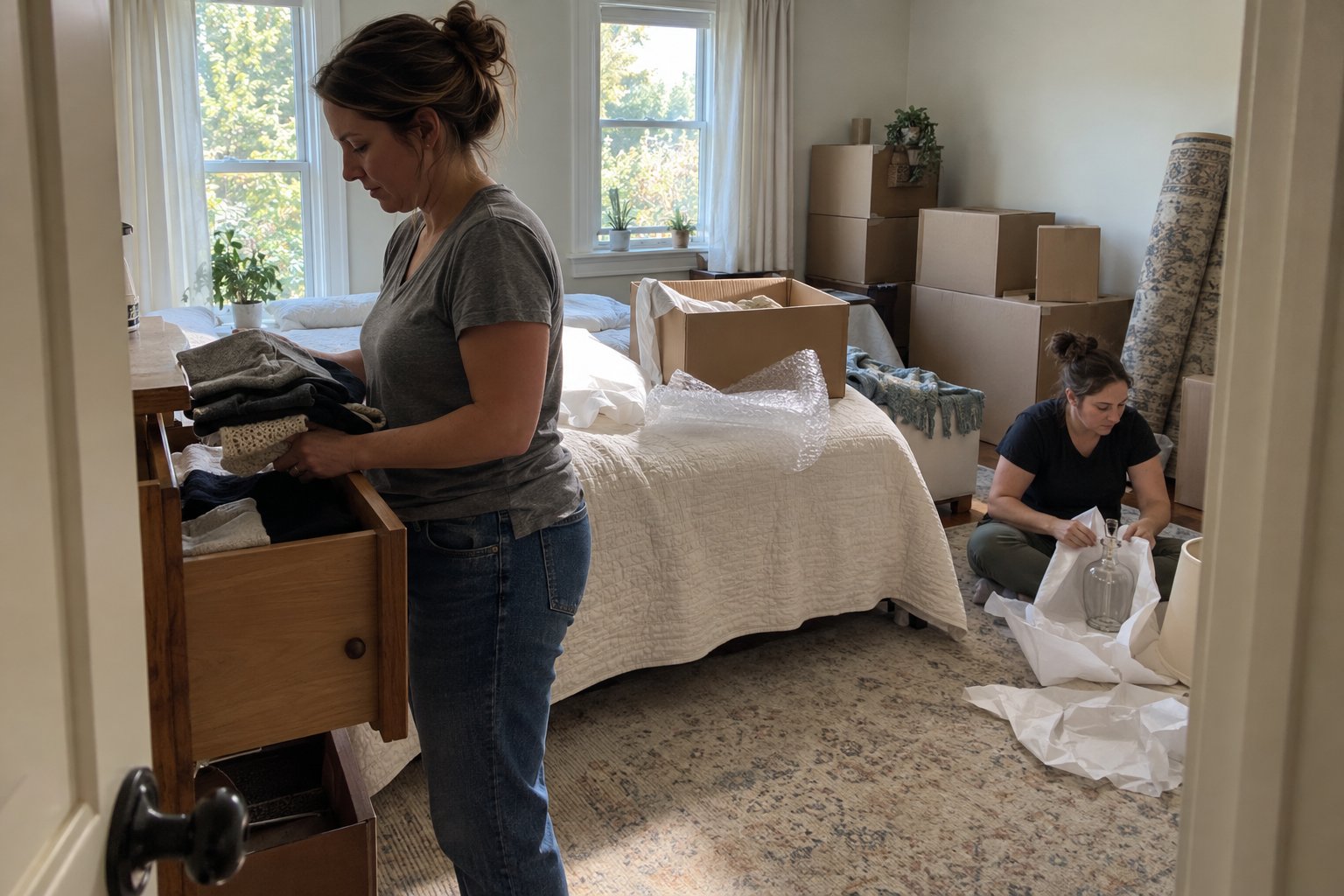
This is where most dining room moves either go well or go badly. Fragile tableware requires patience and the right technique. Rushing through this step is how you arrive at your new home to find a box of shards where your grandmother's china used to be.
Start by laying several sheets of packing paper flat on your work surface. Place a plate in the center, fold the paper up and over it completely, and then stack two or three wrapped plates together before placing them in the box. The critical rule with plates: always pack them vertically on their edges, not flat. Plates stacked flat are far more likely to crack under the weight of other items. Line the bottom of the dish pack box with crumpled packing paper or foam padding before adding anything, and fill any gaps with crumpled paper so nothing shifts in transit.
Each glass needs its own full wrap of packing paper. For stemware, wrap the stem and the bowl separately before wrapping the whole piece together. Pack glasses upright or on their sides — never stacked inside one another without individual wrapping. If you have specialty cell dividers for glassware boxes, use them. The extra structure makes a meaningful difference for crystal and fine stemware. Again, cushion the bottom of the box generously and fill all empty space with crumpled paper before sealing.
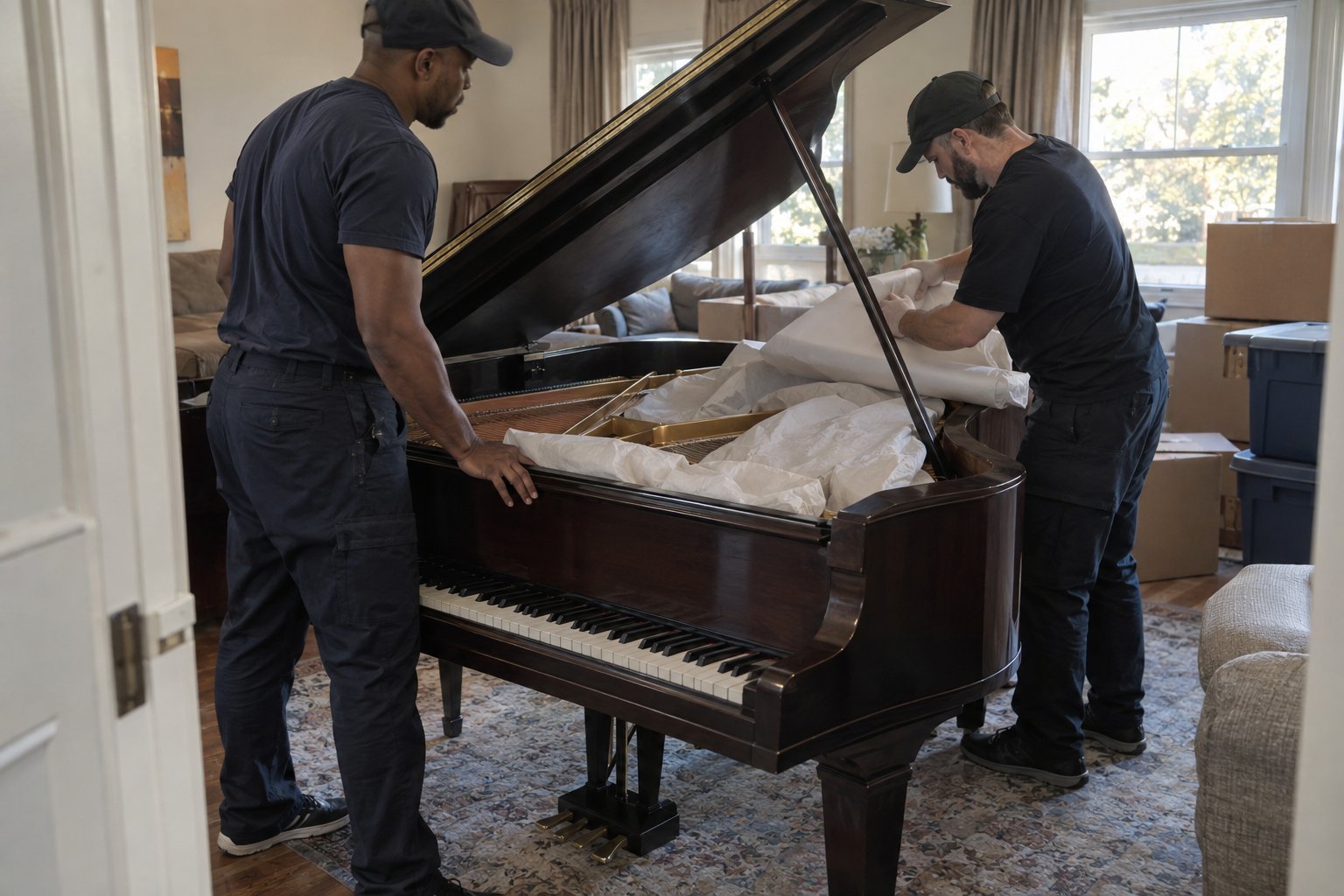
Large serving platters should be wrapped individually and packed vertically, just like plates. Bowls can be nested together only if each one is wrapped in its own layer of paper first. Decorative centerpieces, candelabras, and any ceramic or glass décor should be wrapped in bubble wrap with a layer of packing paper over the top, then packed snugly in a box with padding on all sides. No fragile item should be able to move at all inside its box — if you shake the closed box and hear shifting, add more padding.
The furniture in a dining room presents a different set of challenges. Dining tables are often heavy and awkward, chairs are numerous and stack awkwardly, and a hutch or buffet can be both heavy and fragile at the same time.
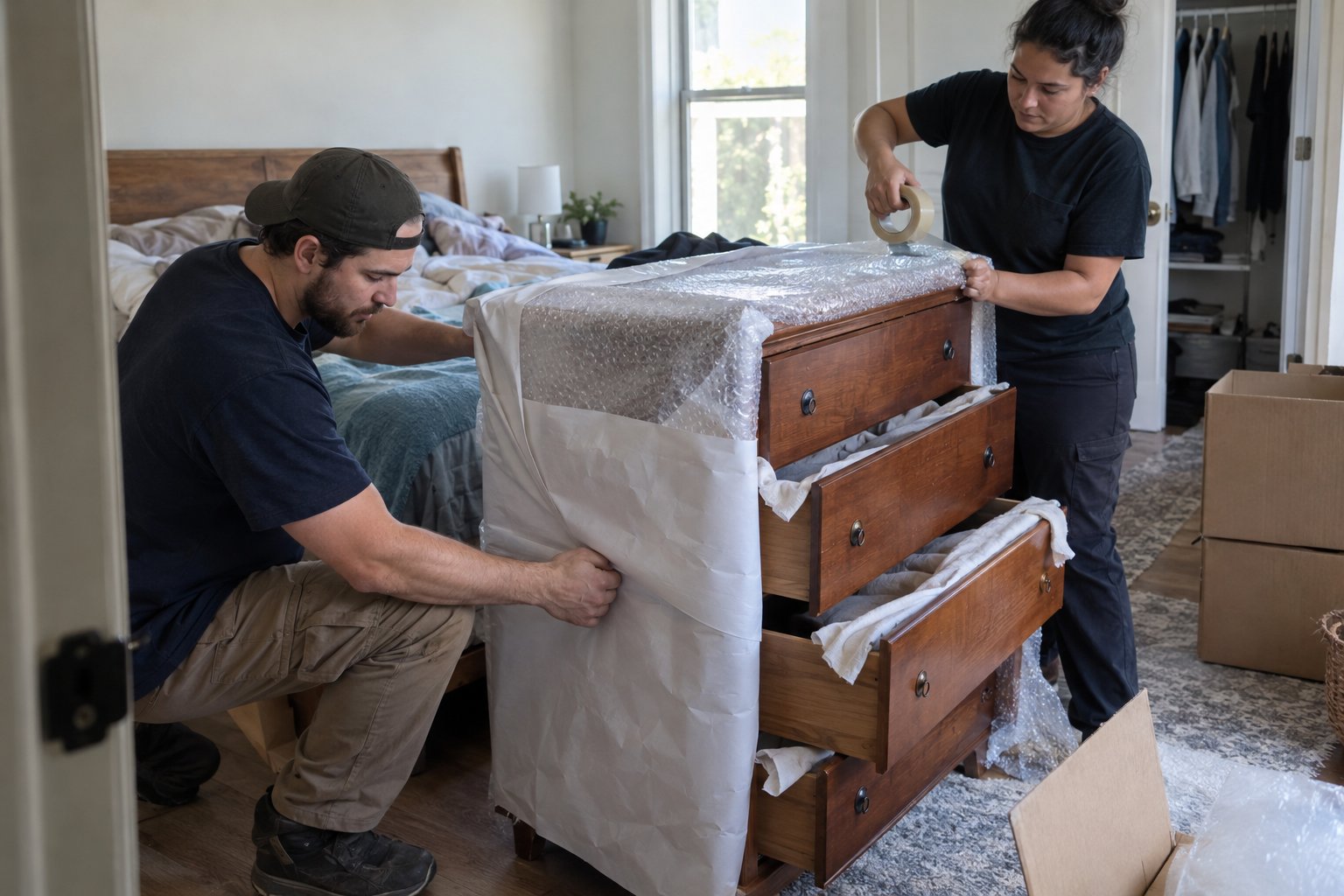
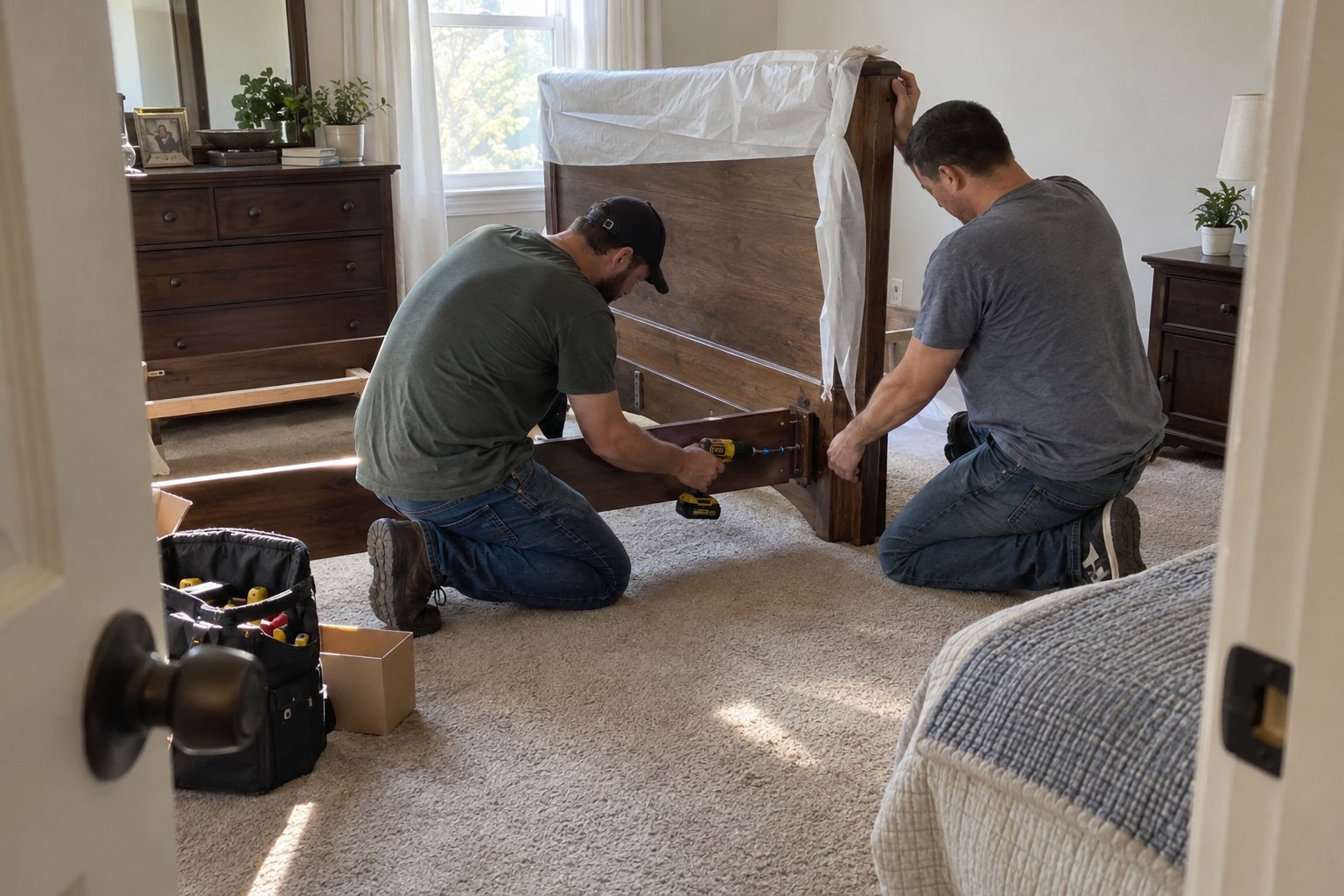
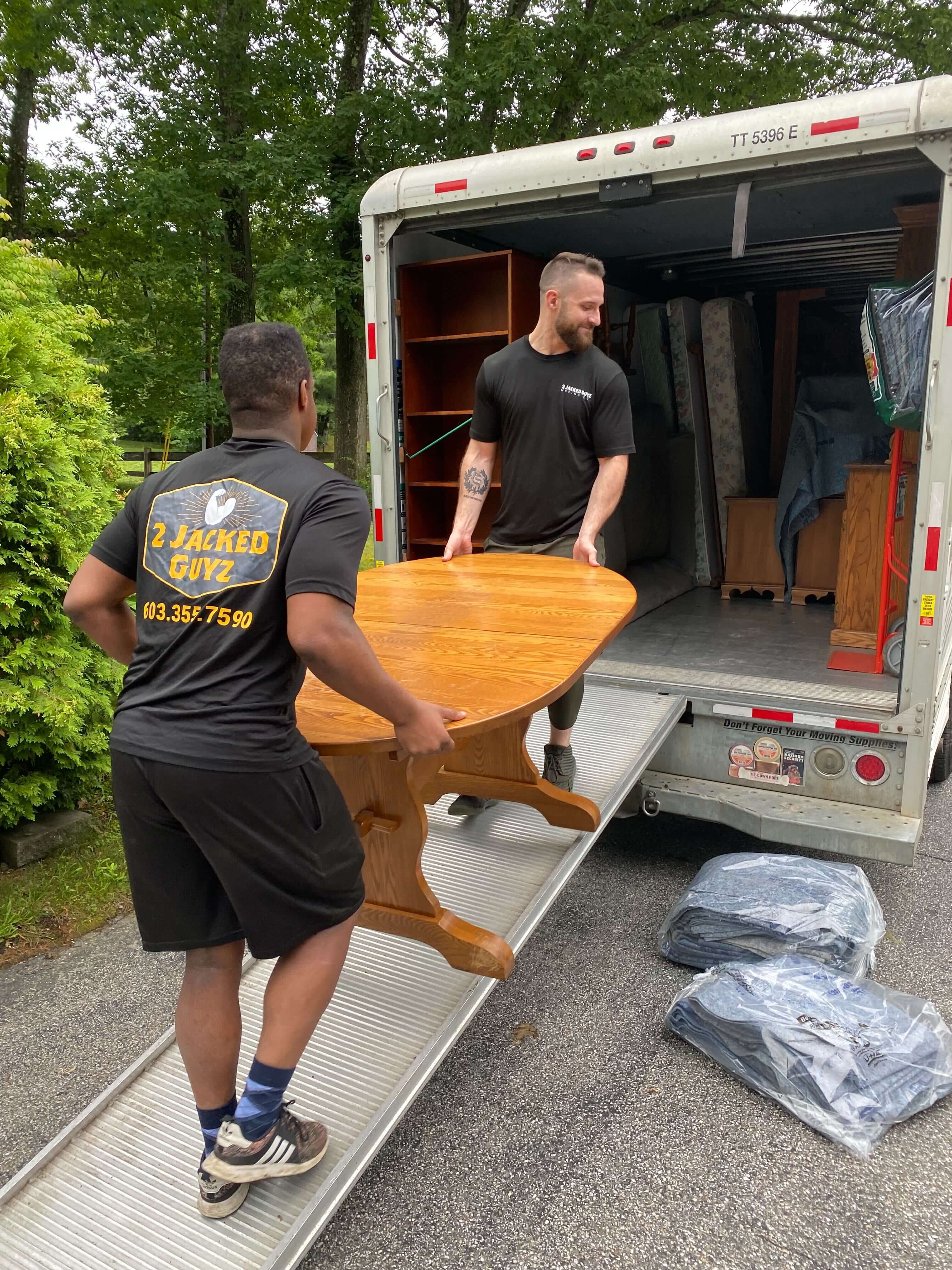
Most dining tables benefit from partial disassembly before a move. If your table has removable leaves, take them out and wrap them separately in furniture blankets. If the legs detach, remove them and bag the hardware immediately — label the bag so you know exactly which table it belongs to. Even tables that do not fully disassemble should be turned upside down to protect the surface finish, wrapped in moving blankets, and secured with stretch wrap before being loaded onto the truck.
Protect the table surface especially carefully. Dining table surfaces scratch and dent easily in transit, and refinishing a large dining table is not a trivial expense. Do not skip the blanket wrap even if the move is short.
Chair legs are the most vulnerable point during a dining room move. Wrap each chair leg individually with packing paper or furniture blankets, or use stretch wrap to protect the finish. Stack chairs seat-to-seat when possible to protect the upholstery. If you have upholstered dining chairs, consider wrapping the seats and backs in plastic stretch wrap to protect them from dirt and moisture during the move.
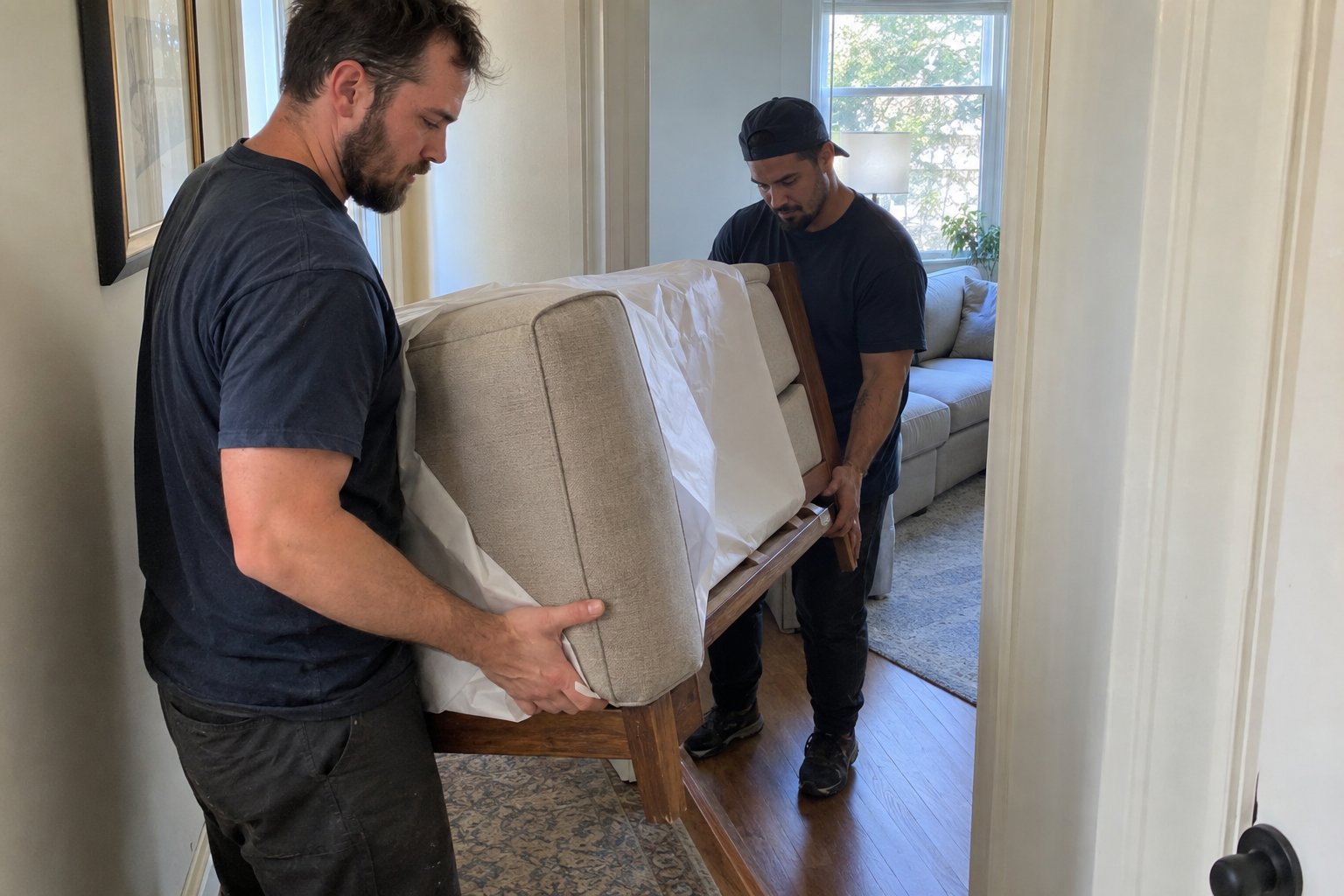
A dining hutch or buffet requires the same approach as any large case piece. Empty it completely before attempting to move it — never try to move a piece of furniture with items still inside. Remove any glass doors or glass shelves and wrap them separately in moving blankets. Secure all remaining doors and drawers with stretch wrap or furniture tape. Two people are the minimum for moving a large hutch safely, and many benefit from a third person to guide through doorways and around corners. If in doubt, this is the kind of piece where professional movers earn their fee.
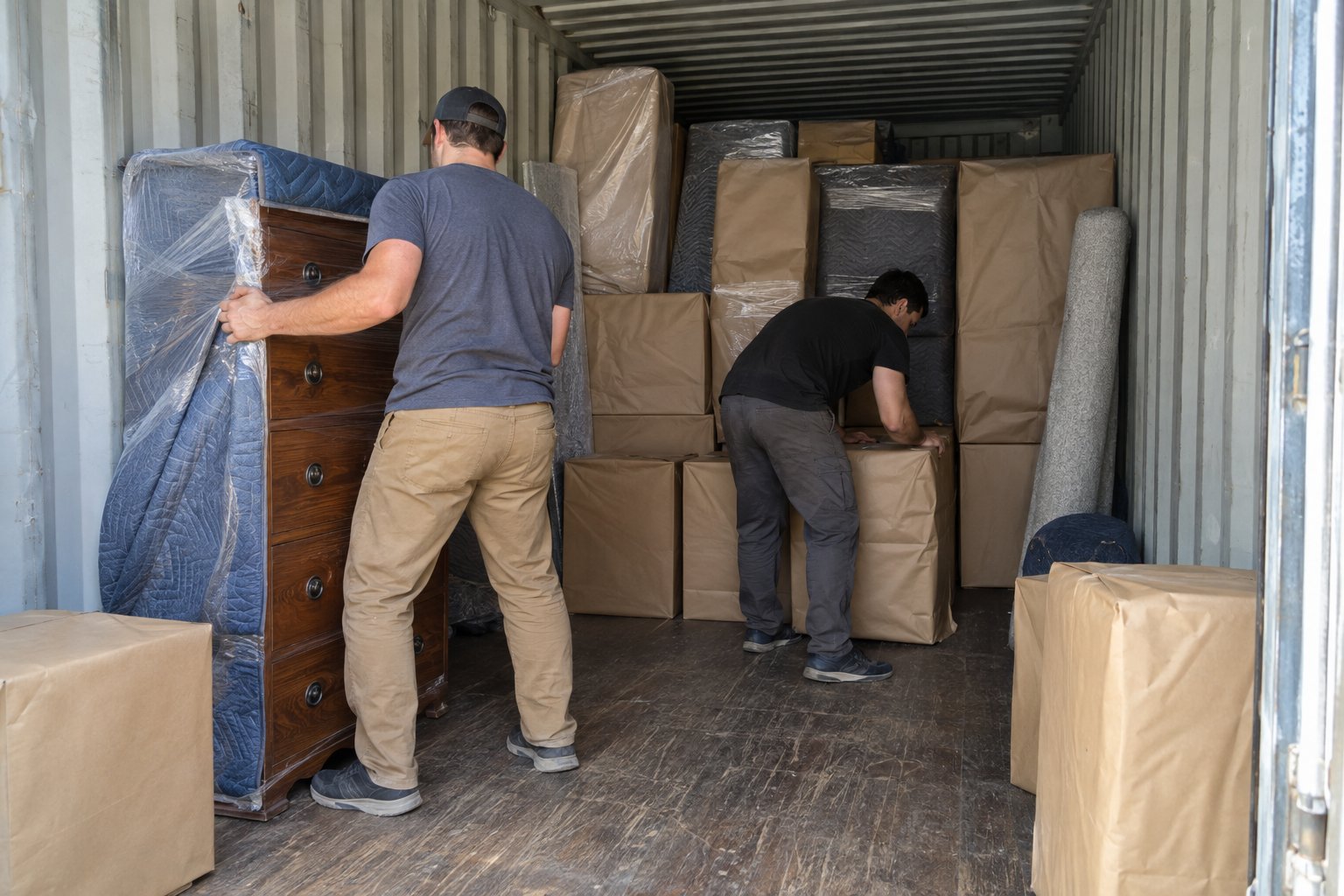
The way dining room items are loaded onto the truck matters as much as how they are packed. Heavy furniture should go on the truck first, positioned against the walls. Dish pack boxes with fragile tableware should never have anything stacked on top of them — load them high in the stack or in a position where they will not be crushed. Mark every fragile box on multiple sides so that anyone helping with the move knows not to flip them or pile things on top.
If you are moving a set of china or crystal that has real sentimental or monetary value, consider transporting those boxes in your personal vehicle rather than the moving truck. The reduced vibration and your direct oversight significantly lowers the risk of damage for irreplaceable pieces.
When you are ready to put a professional team on the job, get a quote from 2 Jacked Guyz and hand the dining room — and the rest of the move — to people who do this every day.
Unpacking the dining room is usually one of the more satisfying parts of moving into a new space. Start with the furniture placement — get the table, chairs, and any buffet or hutch positioned before you open a single box of tableware. It is much easier to unpack directly into the hutch or onto the buffet than to set everything out on the floor and move it again.
Unpack fragile items methodically, unwrapping each piece fully before placing it rather than tearing through boxes carelessly. Check each item as you go. If anything was damaged in transit, document it with photographs before discarding any packaging, as you may need that documentation for a moving insurance claim.
Take a moment to organize the hutch or buffet intentionally as you unpack. Moving into a new home is a natural opportunity to set things up the way you actually want them, rather than simply recreating whatever arrangement existed before.
Request a personalized quote and see how careful planning and reliable service make every move smoother. Our team prepares each step to handle challenges safely and efficiently.
Wrap each piece of china individually in packing paper, and pack plates vertically on their edges — never flat — inside a double-walled dish pack box. Line the bottom of the box with crumpled paper, fill all gaps so nothing shifts, and clearly mark the box as fragile on every side. For irreplaceable or high-value china, consider wrapping pieces in bubble wrap and transporting them in your personal vehicle rather than the moving truck.
Wrap each glass individually in packing paper, giving the stem and bowl of stemware separate wraps before wrapping the whole piece together. Pack glasses upright or on their sides, never nested inside one another without full individual wrapping. Cell dividers inside glassware boxes add structure that significantly reduces breakage risk. Always cushion the bottom of the box generously and eliminate any empty space with crumpled packing paper before sealing.
In most cases, yes. Removing the table leaves and detaching the legs — if your table allows for it — makes the table significantly easier and safer to transport. Bag and label all hardware immediately so it does not get lost. Even if the table does not disassemble fully, wrap the surface in furniture blankets and secure them with stretch wrap before loading the table onto the truck to prevent scratches and dents.
No. Always empty a hutch or buffet completely before attempting to move it. Moving a case piece with items inside significantly increases the risk of damage both to the piece itself and to whatever is stored inside it. Remove any glass doors or shelves separately, wrap them in moving blankets, and secure all doors and drawers with stretch wrap before moving the piece.
The furniture in a dining room typically requires at least two people, and a large hutch or heavy dining table often benefits from three. Attempting to move a dining table or hutch solo is a reliable way to damage the furniture, your floors, or yourself. If your dining room furniture is oversized, antique, or particularly heavy, hiring professional movers is often the most cost-effective option when you factor in the risk of damage during a DIY move.
No long forms, no delays. Just a move that’s ready when you are. Secure your moving date today.