

Moving a bedroom involves far more than boxes and tape — from disassembling bed frames to protecting mirrors and organizing clothing. This guide walks you through every step so your bedroom arrives at the new home intact and ready to set up.
Figuring out how to pack and move a bedroom efficiently is something most people put off until the night before moving day — and then deeply regret. The bedroom is often the most personal room in a home, packed with fragile items, bulky furniture, clothing in every direction, and sentimental objects that do not fit neatly into any category. Getting it right requires more than stuffing clothes into garbage bags and hoping for the best.
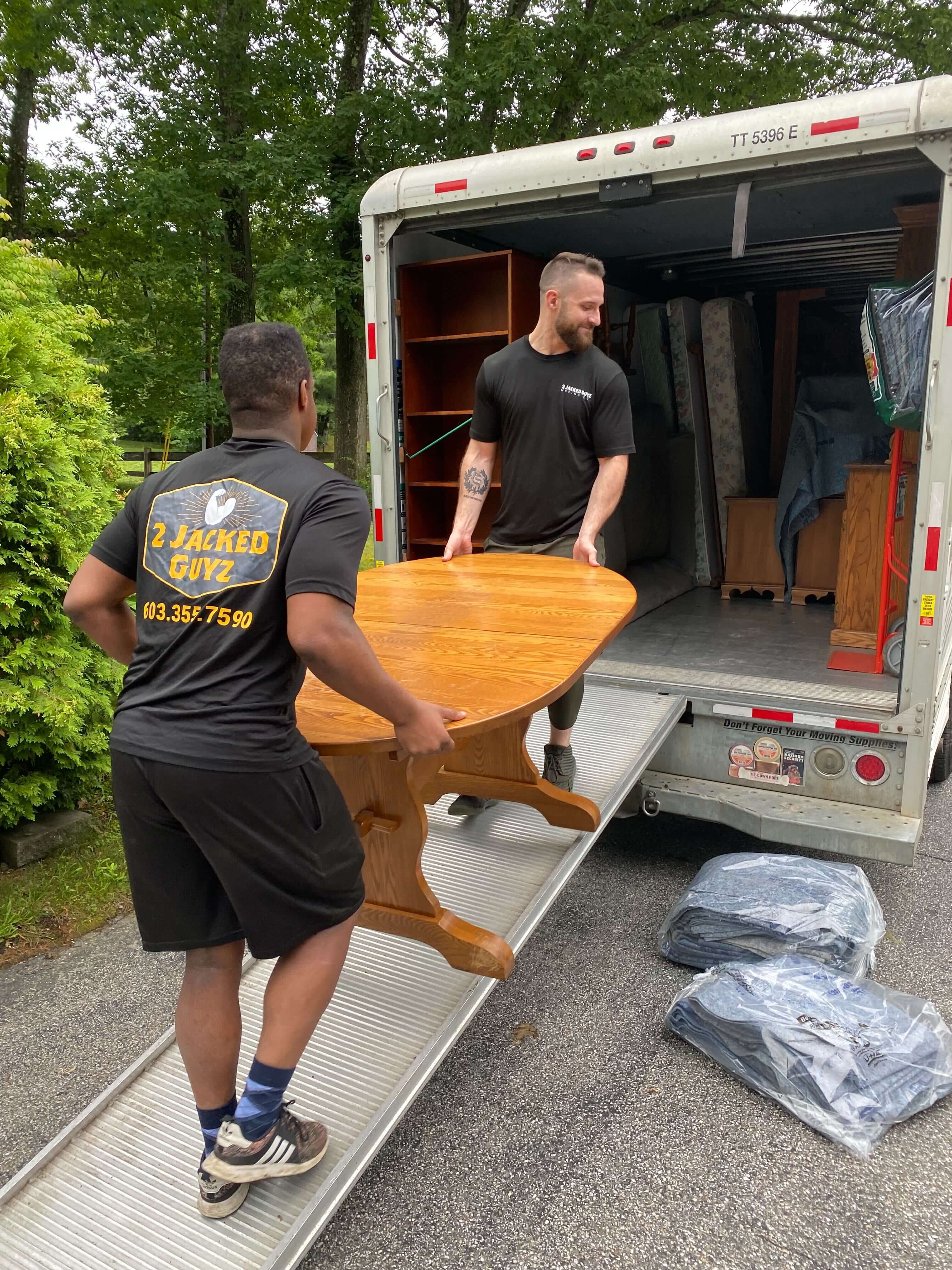
The good news is that with the right sequence and a little planning, your bedroom can be packed systematically without the chaos. If you would rather have seasoned professionals handle the heavy lifting, the team at 2 Jacked Guyz professional movers knows exactly how to move bedrooms of every size safely and efficiently.
Before you touch a box or a piece of tape, go through your bedroom with honest eyes. Moving is one of the few moments in life when you are forced to account for everything you own, and a bedroom tends to accumulate more forgotten items than almost any other room.
Pull out clothing you have not worn in more than a year. Check under the bed for items that have been sitting there since the last move. Go through nightstand drawers, the back corners of your closet, and the top shelves you rarely reach. Sort everything into three piles: keep, donate, and discard. The less you move, the less time and money the entire process costs — and the easier it will be to set up your new bedroom when you arrive.
Once your declutter is complete, you will have a much clearer sense of how many boxes you actually need and how much furniture is making the trip.
Having the right materials on hand before you start packing prevents the all-too-common situation of running out of bubble wrap halfway through wrapping your mirrors. Here is what you will want to collect ahead of time:
Buying more boxes than you think you need is always the right call. You can return unused supplies, but running short mid-pack on moving eve is a stressful situation to avoid.
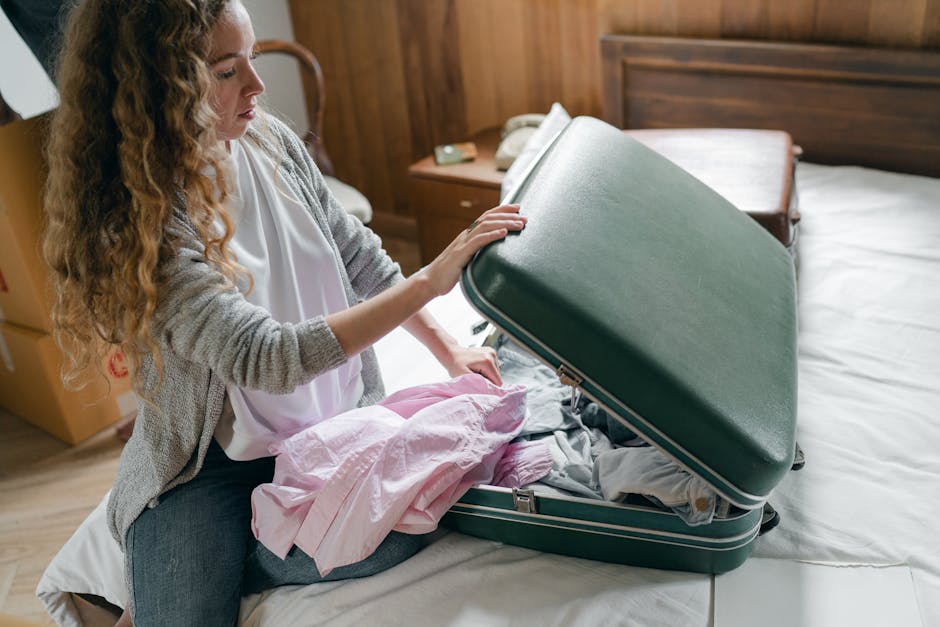
Clothing is bulky but forgiving — it will not break. That makes it a great candidate for creative packing that saves both boxes and time.
Wardrobe boxes are worth every penny for a bedroom with a closet full of suits, dresses, and delicate garments. Simply lift your hangers directly off the rod and hang them inside the wardrobe box. The clothes arrive ready to hang in your new closet without any ironing or refolding. Aim to fill each wardrobe box to no more than about two-thirds capacity so the weight stays manageable and clothes do not compress too tightly.
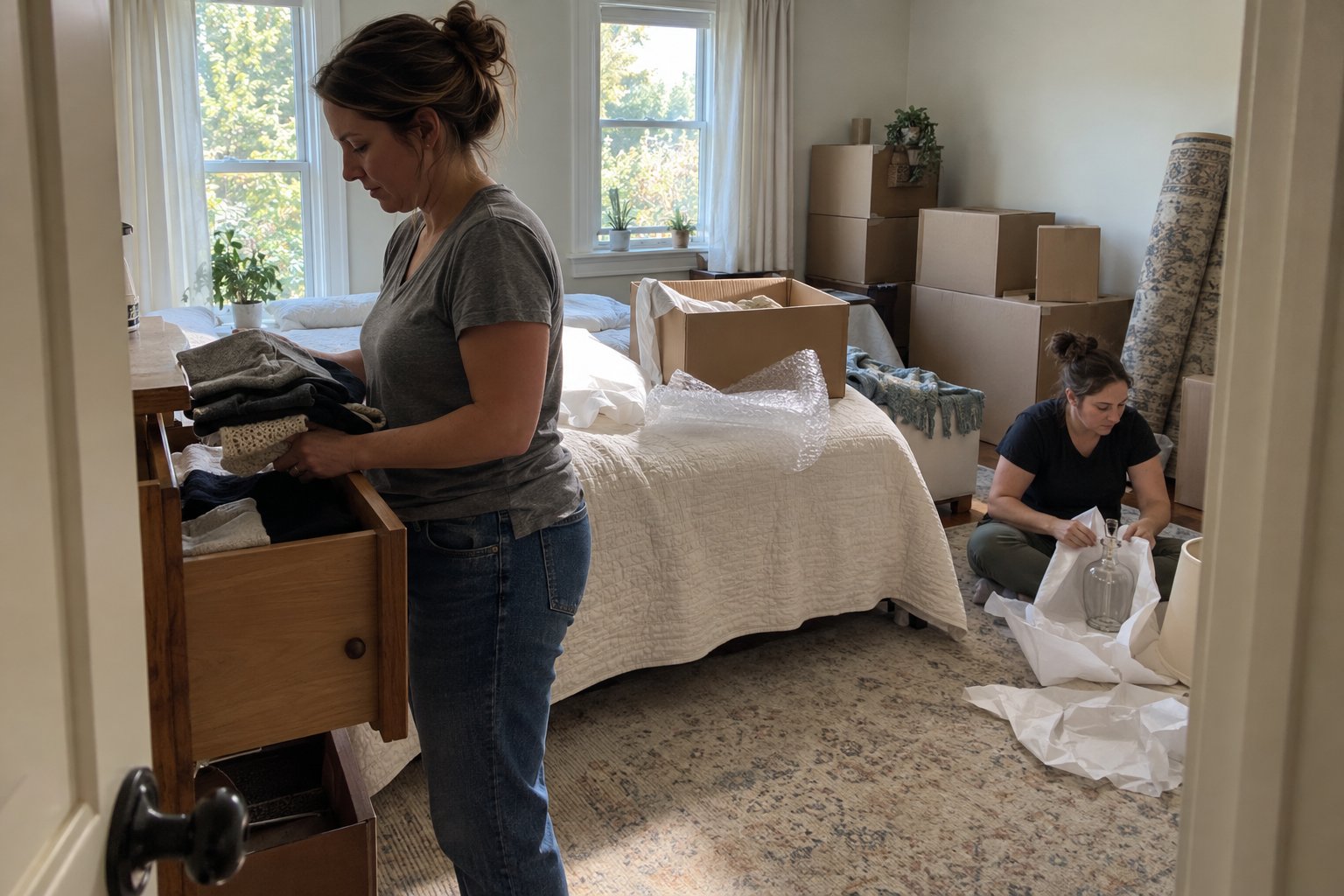
Sheets, pillowcases, and thin blankets double as excellent protective padding. Wrap them around lamps, picture frames, and fragile décor to protect those items while simultaneously transporting your linens — two birds with one box. Thicker comforters and duvets can be stuffed into large garbage bags or vacuum-seal storage bags to compress their volume significantly.
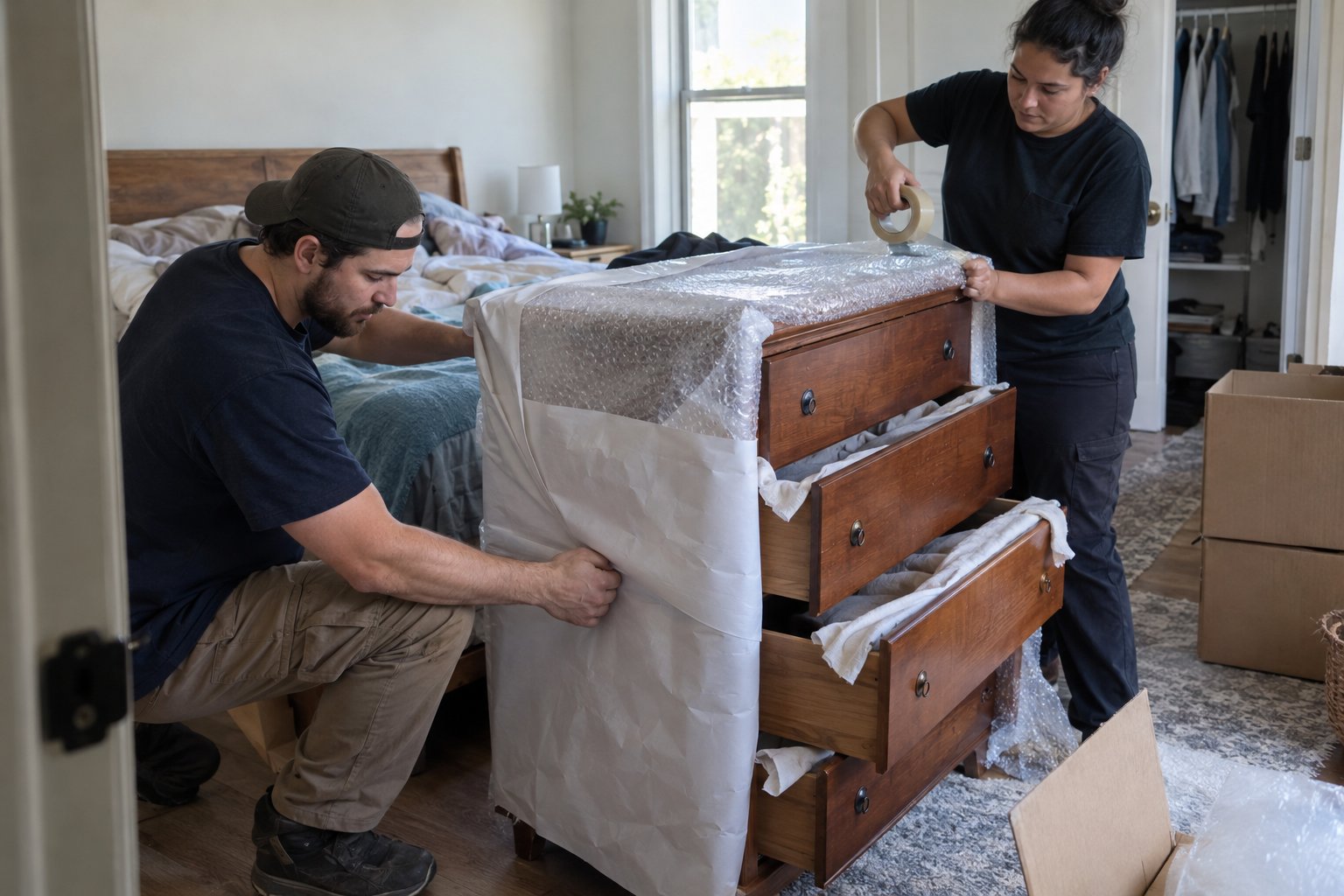
Here is a time-saving trick many people overlook: if your dresser is relatively lightweight, you may be able to leave folded clothes inside the drawers during the move. Wrap the entire dresser in stretch film to keep the drawers from sliding open, and the clothes inside will stay put. This only works if the dresser is light enough to carry safely with the drawers filled — ask your movers before assuming this approach is safe for a heavy piece.
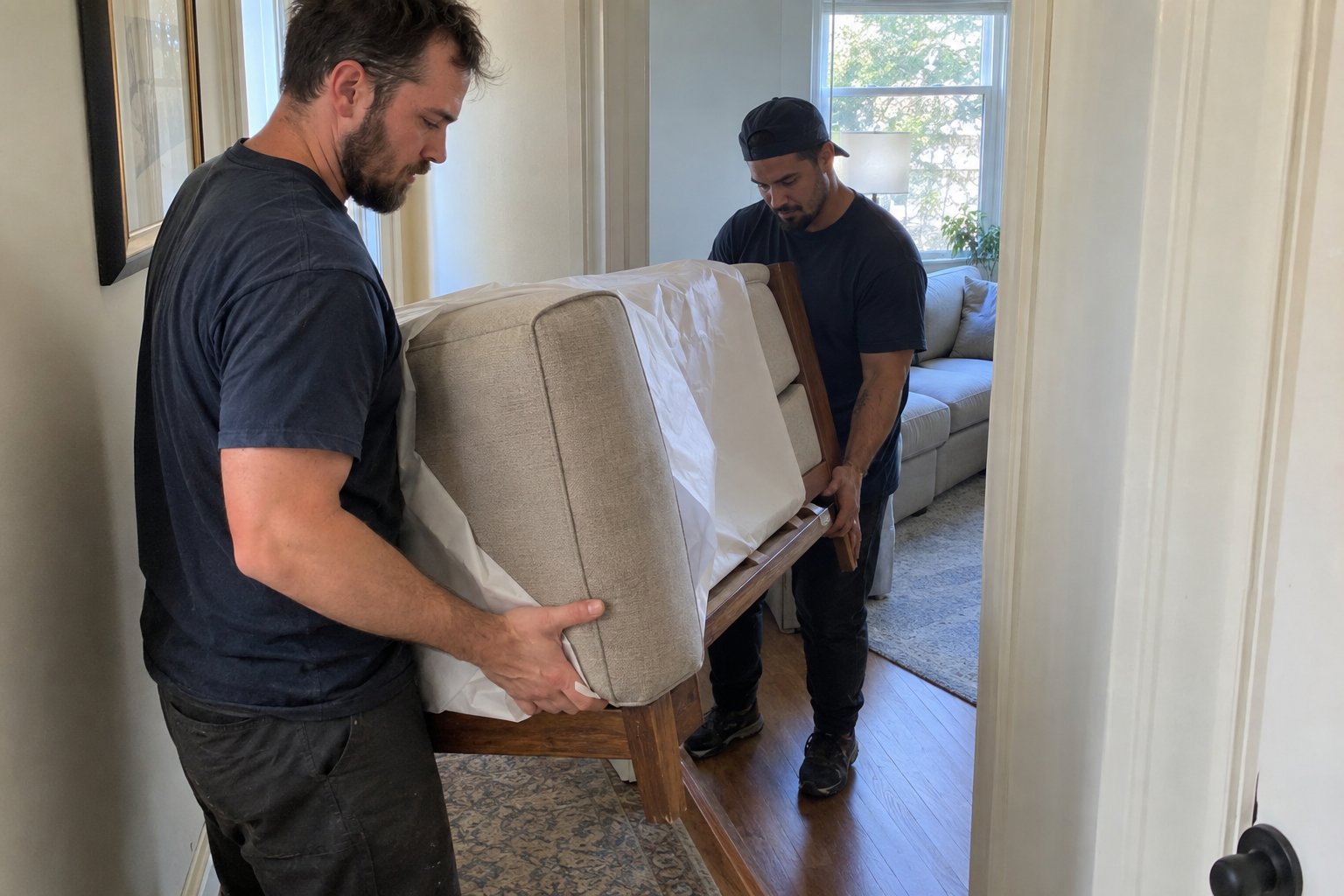
Furniture is where bedroom moves get logistically complex. The large pieces require disassembly, careful wrapping, and often some creative maneuvering to get through doorways without damaging walls or the furniture itself.
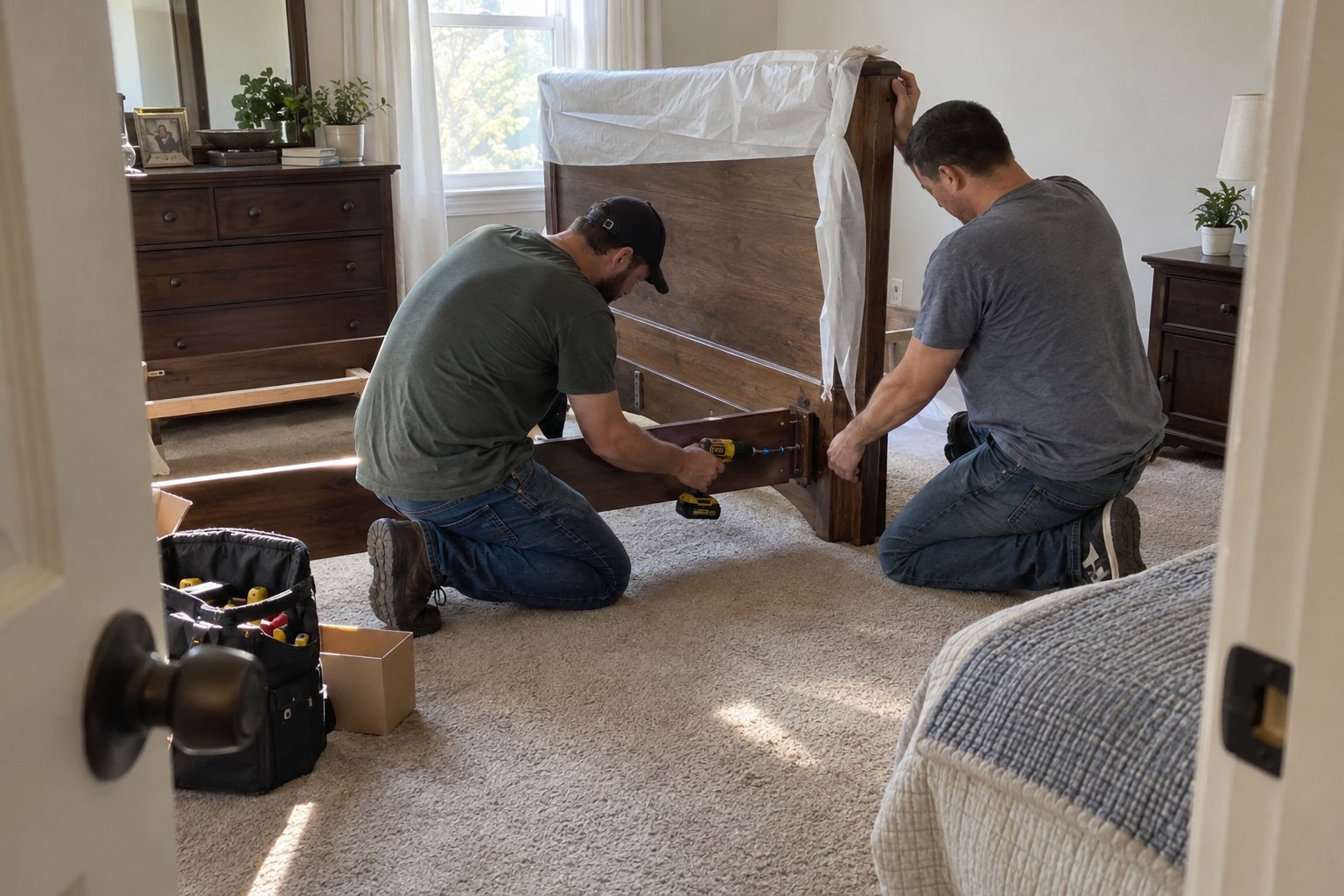
Most bed frames need to be broken down before they can move through a standard doorway. Start by stripping all bedding and setting it aside. Remove the mattress and box spring and lean them against a wall. Then disassemble the frame according to its design — most modern frames use bolts or cam-lock connectors that require only a wrench or Allen key.
As you remove hardware, place every bolt, washer, nut, and screw into a labeled zip-lock bag and tape it directly to one of the frame panels. This one habit prevents the maddening experience of reassembling a bed frame with mystery hardware that may or may not belong to it.
Slide the mattress into a mattress bag before it leaves the bedroom. These inexpensive plastic covers are available at most moving supply stores and protect your mattress from scuffs, dirt, and moisture during transport. Never carry a mattress uncovered — truck floors and walls pick up grime quickly, and a mattress is almost impossible to clean thoroughly after the fact.
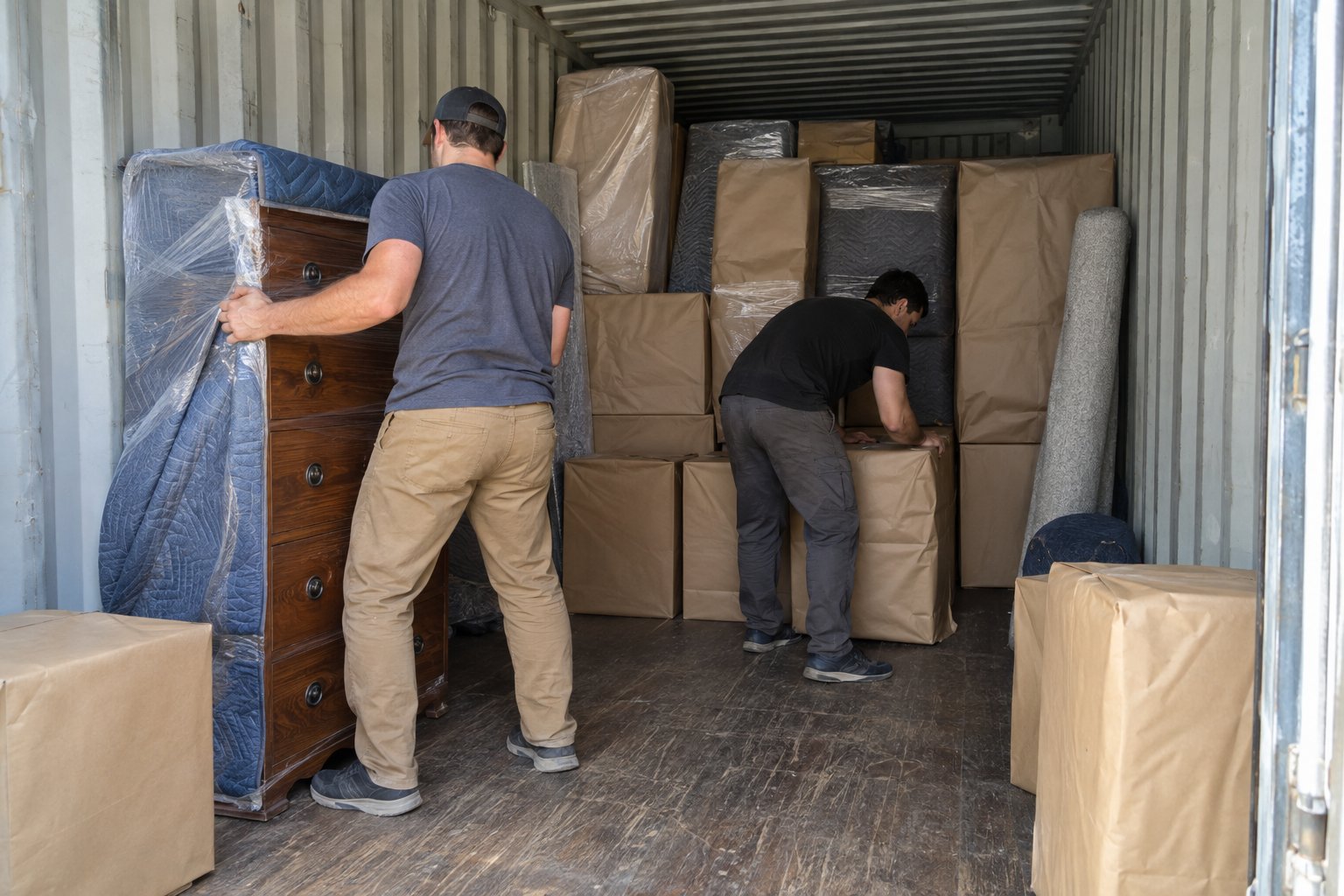
Remove anything stored on top of dressers and nightstands and pack those items separately. Wrap the corners and edges of wood furniture with moving blankets or furniture pads secured with stretch film. Pay particular attention to decorative carved edges and mirror attachments on dresser tops — these are the most vulnerable points on older or antique pieces.
Mirrors deserve their own category. Large mirrors should be wrapped in packing paper, then in a moving blanket, and transported standing upright — never laid flat. Flat mirrors under load can bow and crack even when wrapped. If you have a particularly large or valuable mirror, specialty mirror boxes are available at moving supply stores and provide a significantly better level of protection.
The final category — and often the most time-consuming — is everything that does not fit neatly into "clothing" or "furniture." Bedroom décor, personal electronics, jewelry, and sentimental items all require individual attention.
Remove lampshades and pack them separately in boxes with plenty of crumpled packing paper for cushioning — never stack lampshades directly on top of each other without a layer of paper between them. Wrap lamp bases in bubble wrap and pack them upright in medium boxes.
Televisions should ideally be repacked in their original boxes if you still have them. If not, flat-screen TV moving boxes are available and worth purchasing. Wrap the screen in an anti-static bubble wrap or moving blanket, transport it standing upright, and never lay a flat-screen television face-down. For alarm clocks, charging stations, and small electronics, photograph the cable setup before unplugging so you can reassemble easily at the new home.
Jewelry, important documents, prescription medications, and other irreplaceable personal items should travel with you in your personal vehicle rather than in the moving truck. Keep a dedicated bag or small box with you on moving day for anything that cannot be replaced or would be difficult to locate quickly after the move.
The sequence in which you pack your bedroom makes a real difference in how smoothly the day unfolds. Follow this order for a streamlined process:
Packing your bedroom in this order means you are never left scrambling for something you accidentally packed too early, and the furniture disassembly does not disrupt your ability to sleep in your own bed right up until moving day.
Some bedrooms are straightforward — a bed, a dresser, and a few boxes. Others involve antique armoires, king-size canopy beds, oversized mirrors, and decades of accumulated belongings. If the scale of your bedroom move feels like more than you want to tackle alone, bringing in a professional moving team can save hours of frustration and protect your furniture from damage that is easy to avoid with experience.
The team at 2 Jacked Guyz is experienced in handling everything from everyday bedroom furniture to large, delicate, and heavy pieces that require a careful and practiced approach. Reach out for a quote and make your bedroom move the easiest part of your relocation.
Request a personalized quote and see how careful planning and reliable service make every move smoother. Our team prepares each step to handle challenges safely and efficiently.
For most bedrooms, starting two to three weeks before moving day gives you enough time to work in stages without feeling rushed. Begin with out-of-season clothing and décor you will not need, and save everyday items and bedding for the final day or two. If your bedroom is large or heavily furnished, starting earlier is always better.
You can leave folded clothes in lighter dresser drawers as long as the fully loaded dresser can still be carried safely. Wrap the dresser in stretch film to keep the drawers from sliding open during transport. Avoid this approach with heavy solid-wood dressers, as the added weight of clothing can make them unsafe to lift.
The best protection for a mattress is a mattress bag—an inexpensive plastic cover available at most moving supply stores. Slide the mattress in before it leaves the room, seal it, and transport it standing upright whenever possible to avoid pressure on the surface. Never move a mattress without a cover, as truck surfaces can permanently soil the fabric.
Wrap the mirror in packing paper, then cover it with a moving blanket secured with stretch film or tape (avoid taping directly to the glass). Transport it standing upright—never lying flat—because a flat mirror is much more likely to crack under its own weight or from shifting loads. For very large mirrors, a specialty mirror box provides the safest solution.
Yes, wardrobe boxes are one of the most time-efficient packing supplies for a bedroom. They allow hanging clothes to transfer directly from your closet to the box and then back onto a rod at your new home, with no folding, wrinkling, or rehanging required. They are particularly valuable for suits, dresses, and delicate fabrics.
No long forms, no delays. Just a move that’s ready when you are. Secure your moving date today.