

Learn how to move a sectional couch through narrow doorways, hallways, and stairwells without wall damage, pinched fingers, or a ruined frame.
Moving a sectional couch is less about brute strength and more about breaking it into pieces your doorways can actually handle. Most sectionals are built from separate modules connected by clips, brackets, or simple friction, and the fastest way to get one stuck in a hallway is trying to muscle the whole L-shaped unit through at once. Learning how to move a sectional couch starts with separating it into its individual sections before anything gets anywhere near a doorway.
Unlike a single sofa, a sectional's size and weight are unevenly distributed. The corner piece is usually the heaviest and most awkward, while chaise sections are long but lighter. Treating every piece the same way during the move is one of the most common reasons homeowners end up with scraped walls, bent legs, or a module that simply will not fit through the frame no matter how it's angled.
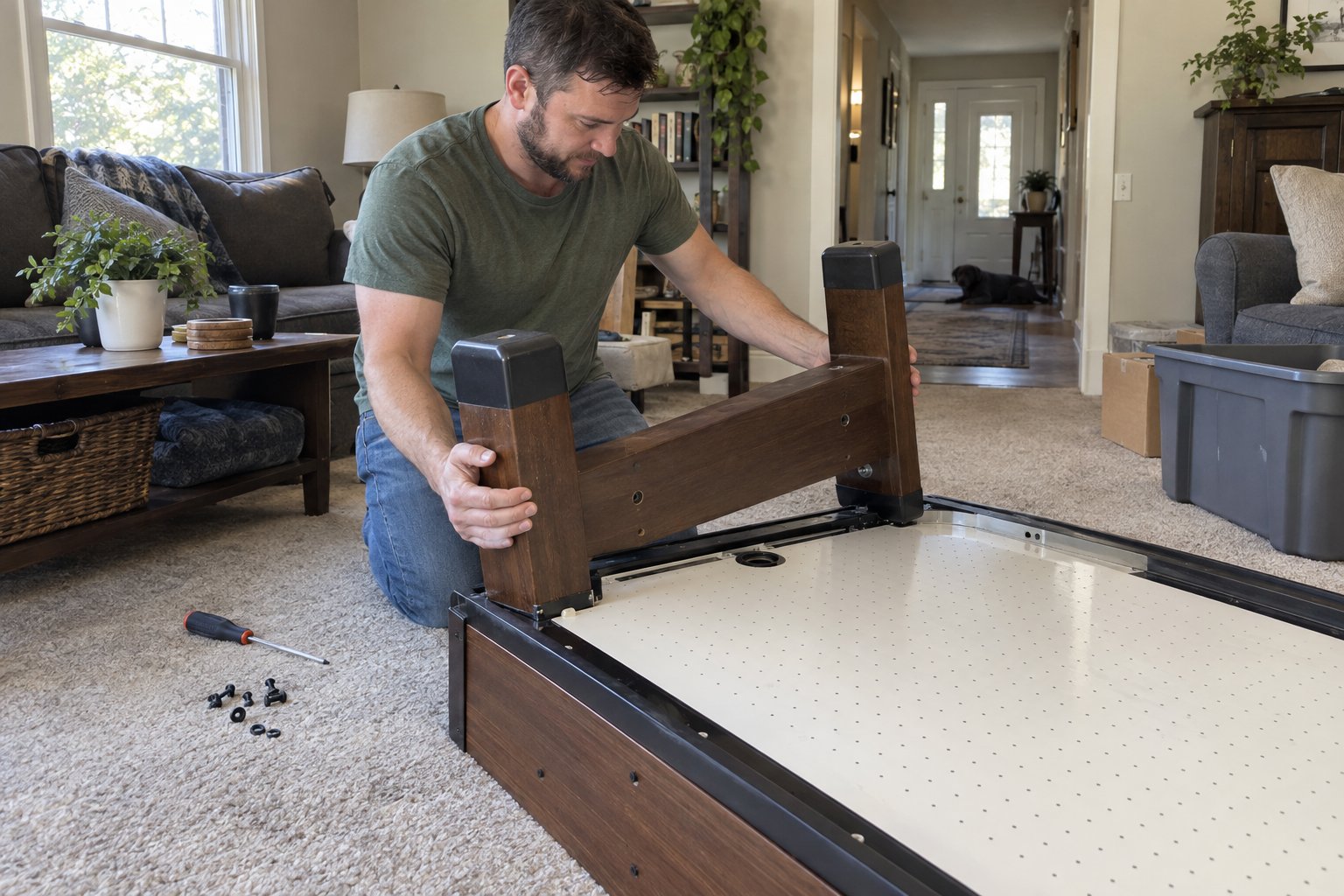
Start by locating the connector brackets or clips, usually found on the underside where two sections meet, and detach each module one at a time. Most sectionals use simple cam locks, hook-and-loop straps, or bolted brackets that separate without tools, though some older or custom pieces may need an Allen wrench or screwdriver.
Work section by section rather than trying to pull the whole unit apart at once. Lay each piece flat as you remove it so you're not holding one end while still searching for the next connector. Keep any hardware in a labeled bag taped to the underside of the matching section so reassembly at the new place doesn't turn into a guessing game.
If your sectional has removable legs, back cushions, or armrests, take those off too. Fewer protruding parts means fewer things that can catch on a doorframe or stairwell railing on the way out.
Some lower-cost or older sectionals are built as one continuous frame with no connector hardware at all. If you can't find a seam, check the manufacturer's website or the tag underneath for assembly instructions. When a sectional genuinely will not come apart, you're moving it as one oversized piece, and the clearance measurements below matter even more.
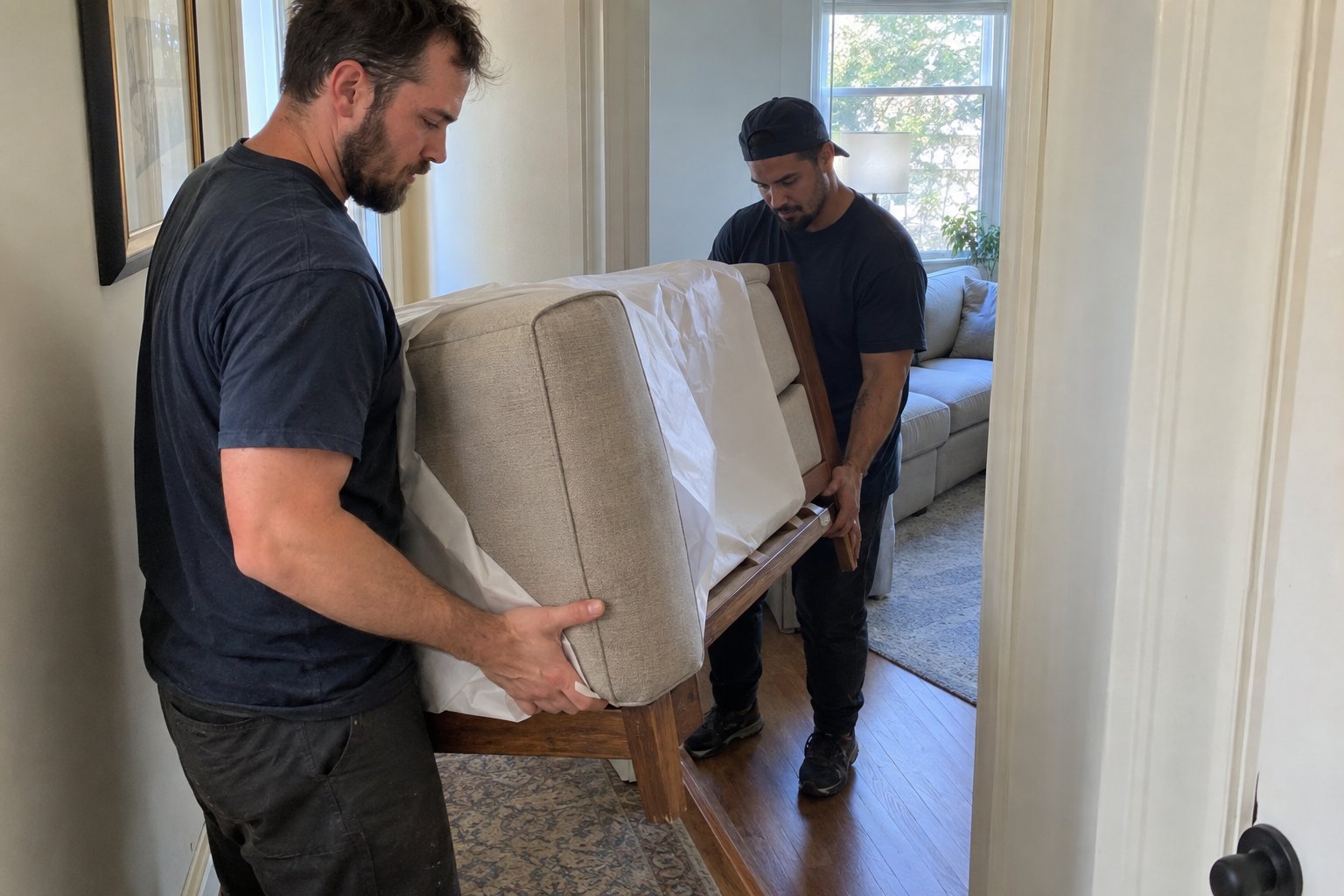
Angle the section diagonally, lead with the top corner, and tip it on its side so the deepest dimension of the piece lines up with the widest dimension of the doorway. Measure both the doorway opening and the section's height, depth, and width first; if the smallest doorway measurement is within a few inches of the couch's smallest dimension, you'll need to remove the door from its hinges before attempting the move.
Pull the door off whenever there's any doubt. It takes five minutes and removes the single most common point of collision. Also check for door stops, closet handles, and light switch plates in the direct path, since these catch fabric and cushions more often than people expect.
Two movers should communicate constantly during this step: one guiding from the front, one supporting weight from behind. Calling out "pivot," "lift," and "stop" out loud, rather than assuming the other person sees what you see, prevents the frame from twisting against the jamb.
If your new home's doorways are unusually narrow, measure them in advance and compare against each sectional piece. Knowing which specific doorway is the bottleneck lets you plan to carry that one section in last, on its side, with the most hands available.
Stairwells add a second variable on top of width: the turning radius at landings. Carry the section vertically, with the taller mover on the lower stair to keep the piece level, and pause fully at any switchback landing rather than trying to pivot mid-stride. Rushing a turn on stairs is where most back injuries and wall gouges happen.
A stair-climbing dolly or simple furniture straps redistribute weight across both movers' shoulders instead of their lower backs, and they make the controlled pauses at landings far easier to hold. If the stairwell has a tight 90-degree turn and the section's length exceeds the diagonal clearance of that turn, you may need to hoist the piece over a stair railing (with padding protecting both the railing and the fabric) rather than forcing it around the corner.
Corner modules, which are typically deeper front-to-back than regular armless sections, are usually the hardest piece to get around a stairwell turn. Move these first, while the crew is fresh, rather than saving the heaviest piece for last.
If your sectional has more than three modules, a chaise longer than a standard doorway width, or has to travel through more than one tight stairwell, professional help is worth it. The math isn't about effort, it's about risk: a scratched wall or a torn sofa arm costs more to fix than the help would have cost to book in the first place.
A trained crew also brings the right equipment on day one, shoulder straps, furniture sliders, door-removal tools, rather than improvising with what's in the garage. If you're weighing the decision between tackling it yourself or bringing in help, our guide on deciding whether to pack yourself or hire movers to pack walks through how to think about that tradeoff for bulky furniture specifically.
For sectionals that are part of a larger move, bundling the couch with the rest of your residential moving service means the same crew that disassembles your sectional is also handling your other large furniture, so nothing gets handed off between separate jobs.
Wrap each separated section in moving blankets secured with stretch wrap, paying particular attention to exposed wood legs and any metal frame corners that can gouge walls or floors on contact. Fabric upholstery should never touch bare wood legs of another piece during transport, since the friction of a bumpy ride can wear through material surprisingly fast.
Slide furniture sliders under the legs of each section before dragging it even a few feet across hardwood or tile. If you're protecting floors elsewhere in the house during the same move, the techniques in our guide to moving large furniture without scratching floors or walls apply directly to sectional modules as well.
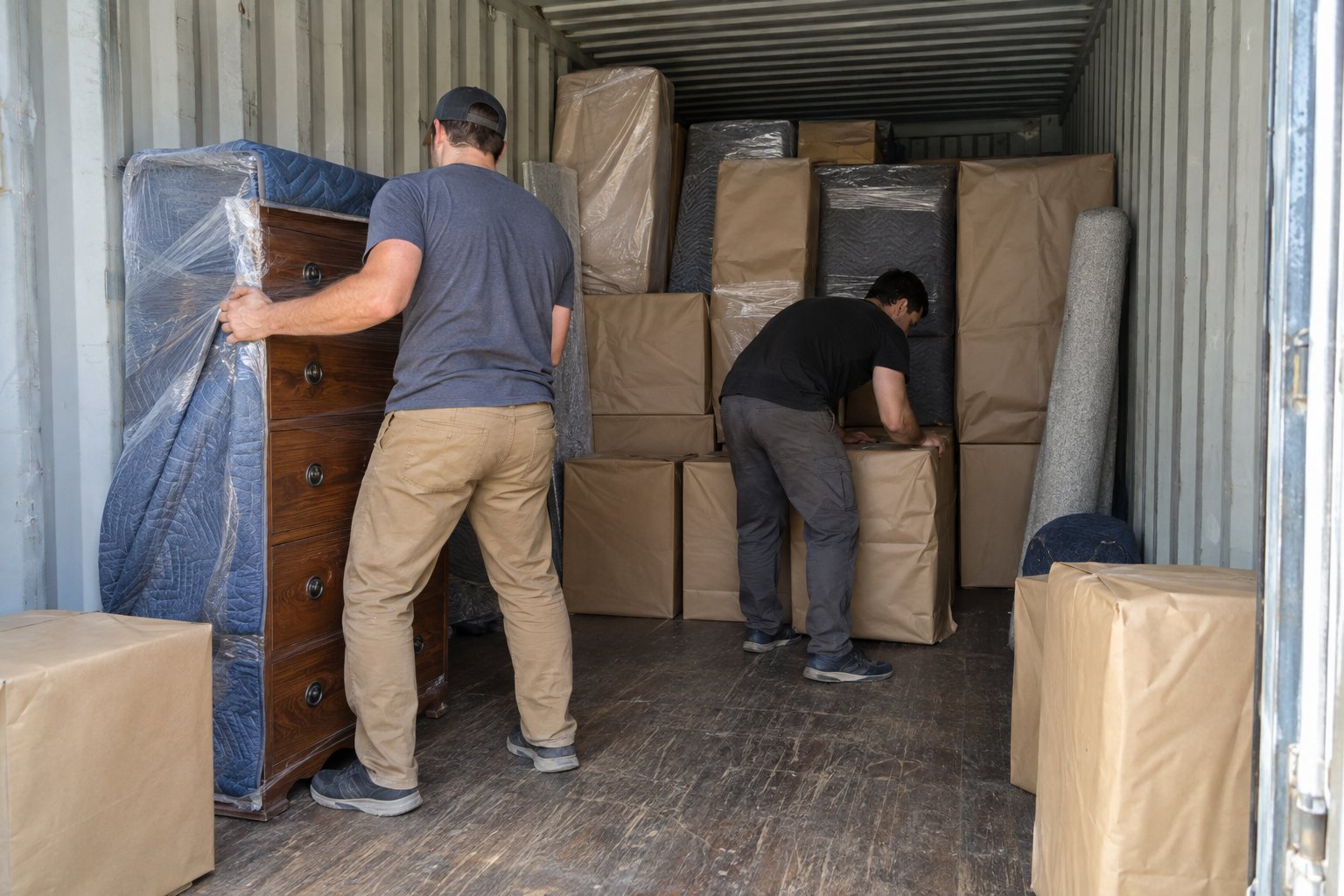
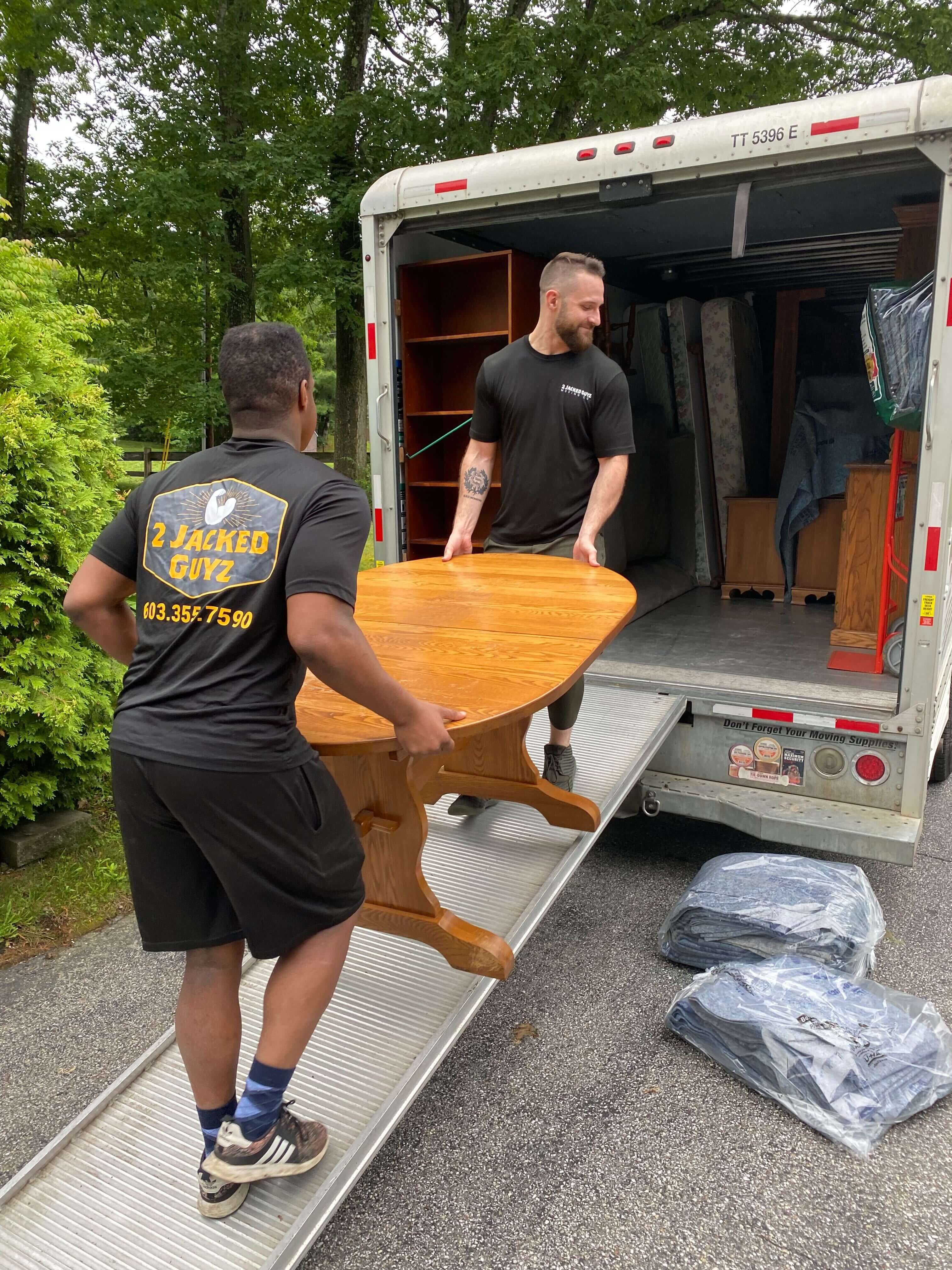
Once loaded into the truck, sections should be stood on end against a wall rather than stacked flat, with padding between each piece and strap tension keeping the stack from shifting in transit.
Lay out each section in its intended configuration before reattaching anything, confirming the room layout actually fits before you start bolting pieces together. Reconnect modules in the reverse order you removed them, using the labeled hardware bags you set aside during disassembly.
Check that all connector clips click fully into place and that no section rocks or gaps away from its neighbor. A sectional that isn't fully reconnected will separate under normal use within the first few weeks, so it's worth the extra two minutes to confirm each seam before cushions go back on.
If your move includes several large upholstered pieces across more than one room, requesting a written moving quote from our team gives you a clear plan (and clear hands) for move day instead of guessing at doorway clearances alone.
Request a personalized quote and see how careful planning and reliable service make every move smoother. Our team prepares each step to handle challenges safely and efficiently.
Sometimes, if your doorways and stairwells are wide enough, but most homeowners find it faster and safer to separate the sections first. A one-piece L-shaped or U-shaped sectional is often too deep front-to-back to clear a standard 32 or 36 inch doorway at any angle.
Measure the doorway's width and height, then measure the couch section's height, depth, and diagonal dimension (corner to corner). If the section's smallest rotating dimension is within two or three inches of the doorway opening, plan on removing the door from its hinges before you try.
Most sectionals separate using hand-operated cam locks or hook brackets that need no tools at all. Some models use bolted brackets, which typically require only an Allen wrench or a Phillips screwdriver, both usually included in the original assembly hardware kit.
This usually means the connector clips or brackets weren't fully reseated during reassembly. Go back to each seam, apply firm pressure until you hear or feel the clip lock, and check that no section is resting at a slightly different height than its neighbor.
If the sectional has several modules, a long chaise, or has to pass through more than one tight stairwell or doorway, professional movers reduce the real risk of wall damage, torn upholstery, or a back injury, often for less than the cost of repairing a mistake.
No long forms, no delays. Just a move that’s ready when you are. Secure your moving date today.